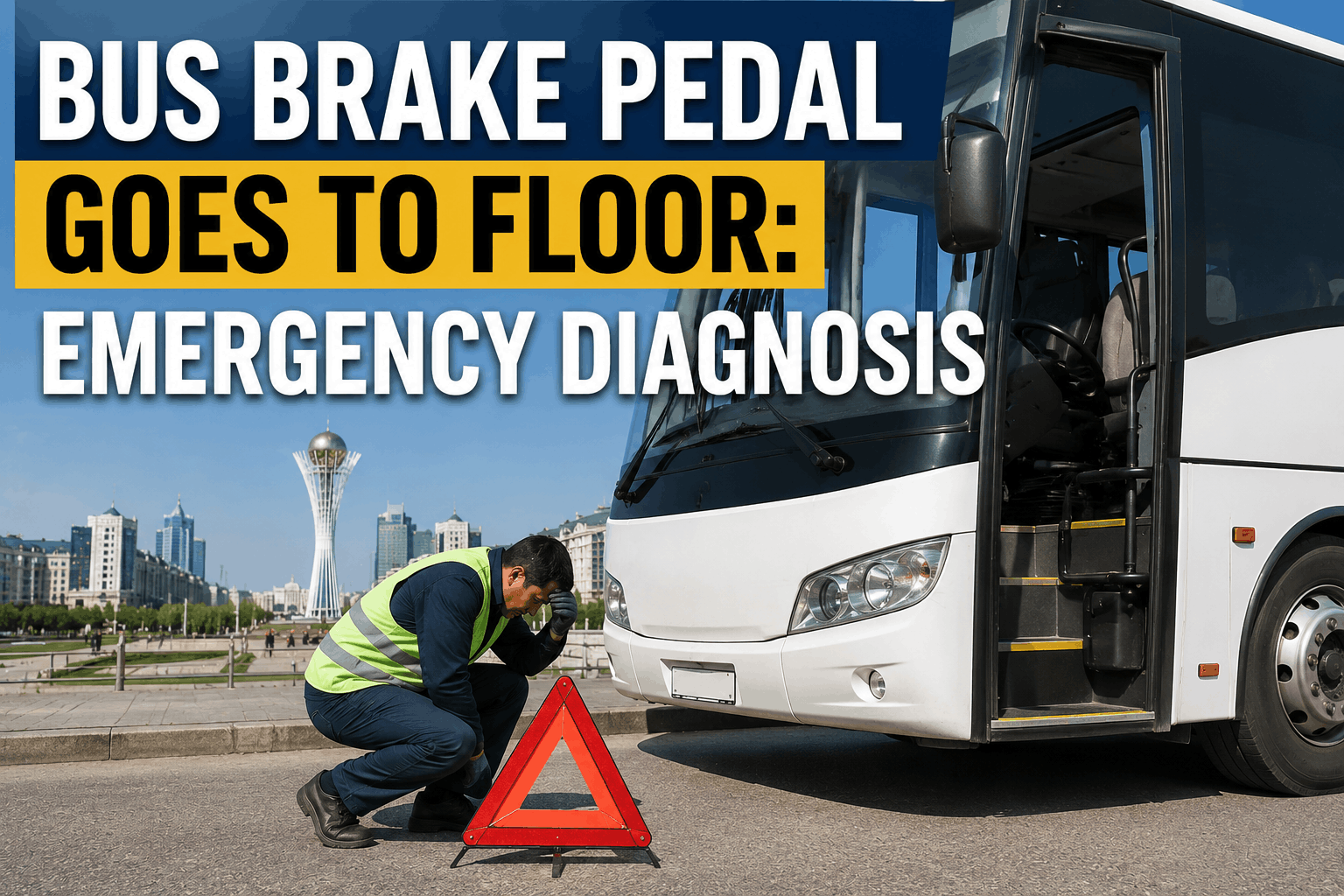
A bus brake pedal that goes to the floor is a critical safety emergency. This means the braking system has lost pressure, and stopping distance will be severely compromised. This guide provides an emergency diagnosis flowchart and out-of-service decision tree for fluid leaks, master cylinder failure, hydraulic booster issues, and ABS failure. Do not drive a bus with a sinking brake pedal.
Emergency Brake Diagnosis Guide 2026
Bus Brake Pedal Goes to Floor: Emergency Diagnosis
Bus brake pedal sinks to floor? Emergency diagnosis — fluid leak, master cylinder failure, hydraulic booster, ABS failure. Out-of-service decision tree.
Brake Failure Impact: The Cost of Lost Braking
A brake pedal that goes to the floor is a life-threatening emergency. Without proper braking pressure, the bus cannot stop safely. This condition requires immediate diagnosis and repair before the bus can return to service.
IMMEDIATE
Out-of-service condition
$200-$1,500
Typical repair cost
5-15 min
Emergency diagnostic time
60%
Issues related to fluid leaks
Emergency Brake Diagnostic Flowchart
Step 1: DO NOT DRIVE
If the brake pedal goes to the floor, the bus is unsafe to drive. Immediately tag the vehicle out of service.
Step 2: Check Brake Fluid Level
Check the brake fluid reservoir. If empty or very low, there is a major leak in the system. Do not add fluid yet.
Step 3: Inspect for Fluid Leaks
Check under the bus for brake fluid puddles. Inspect all brake lines, hoses, calipers, and wheel cylinders for leaks.
Step 4: Check Master Cylinder
Inspect the master cylinder for internal leaks or seal failure. If fluid is bypassing seals, the pedal will sink.
Step 5: Check Hydraulic Booster
If equipped with hydraulic booster, check for leaks or failure. A failed booster can cause pedal sink.
Step 6: Check ABS System
Check ABS module for leaks or internal failure. Scan for ABS fault codes.
Step 7: Success
Brake system repaired and tested. Bus returned to service only after full brake function verified.
Top 4 Causes of Brake Pedal to Floor
1. Brake Fluid Leak
Frequency: 40% of cases. Major leak in lines, hoses, calipers, or wheel cylinders. Locate and repair leak immediately.
2. Master Cylinder Failure
Frequency: 30% of cases. Internal seals failed. Pedal sinks slowly or goes to floor. Replace master cylinder.
3. Hydraulic Booster Failure
Frequency: 15% of cases. Booster internal leak or failure. Replace hydraulic booster.
4. ABS Module Failure
Frequency: 10% of cases. Internal leak or valve failure in ABS module. Replace or bypass ABS unit.
Brake Failure Causes Distribution
Brake fluid leaks are the #1 cause at 40%, followed by master cylinder failure at 30%. Hydraulic booster failure accounts for 15%. ABS module failure represents 10%. Together, these four causes represent 95% of all brake pedal-to-floor cases.
Repair Cost by Cause
Brake line repair averages $150. ABS repair averages $250. Booster replacement averages $350. Master cylinder replacement averages $500. Full system repair is the most expensive at $1,200 average.
Brake Failure & PM Trends
Brake PM compliance and critical failure trends show inverse correlation. As PM compliance improves from 60% to 95% over seven years, critical brake failures decrease from 30% to 4%. Regular brake fluid changes, line inspections, and master cylinder checks prevent most brake failure incidents.
Out-of-Service Decision Tree
Pedal Goes to Floor
IMMEDIATE OUT-OF-SERVICE. Do not drive. Tag the vehicle. Park in a safe location. Call for tow or repair.
Fluid Leak Found
OUT-OF-SERVICE. Do not add fluid and attempt to drive. Locate leak and repair. Bleed system. Test thoroughly.
Master Cylinder Failed
OUT-OF-SERVICE. Replace master cylinder. Bleed entire system. Test braking at low speed before returning to service.
Booster Failed
OUT-OF-SERVICE. Replace hydraulic booster. Test braking with and without power assist.
ABS Module Failed
OUT-OF-SERVICE. Repair or replace ABS module. Test ABS function at low speed. Verify normal braking.
Return to Service Criteria
Full brake pedal height restored. No warning lights. Test drive at low speed confirms braking power. System bleed completed.
Brake Safety KPIs
Track these five metrics to measure your brake safety program effectiveness:
Critical Brake Failures
Target: Zero incidents. Track monthly. Any incident triggers immediate review.
Brake PM Compliance
Target: 100% at every interval. Track by bus. Missed PM is unacceptable for safety.
Brake Fluid Condition
Target: 100% inspected at PM. Track monthly. Contaminated fluid causes failures.
Brake Line Inspection Rate
Target: 100% at every PM. Track by bus. Corroded lines cause leaks and failure.
Safety Inspection Pass Rate
Target: 100% pass rate. Track annually. Brake failure causes inspection failure.
Our fleet of 90 buses implemented this emergency brake diagnostic workflow. In the first year, we identified and repaired 12 critical brake failures before they caused incidents. Brake PM compliance improved from 68% to 98%. Safety inspection pass rate reached 100% for the first time.
Digitize Your Brake Safety Program
BusCMMS guides technicians through every brake safety diagnosis—emergency pedal test, fluid level check, leak inspection, master cylinder testing, and ABS verification. Track critical failures, safety inspections, and PM compliance. Auto-schedule brake PM to prevent failures before they compromise safety.
Emergency Brake Diagnosis FAQs
What should I do if the brake pedal goes to the floor?
IMMEDIATE: Pull over safely. Do not drive the bus. Tag it out of service. Call for a tow. Check brake fluid level but do not attempt to drive. This is a critical safety issue.
Can I drive a bus with a soft brake pedal?
No. A soft or sinking brake pedal indicates a loss of hydraulic pressure. The bus is unsafe to drive. Have it towed to a repair facility.
What causes a master cylinder to fail?
Master cylinder failure is caused by worn internal seals, corrosion from old brake fluid, or contamination. Regular brake fluid changes every 2 years prevent master cylinder failure.
How do I check for a brake fluid leak?
Check the brake fluid reservoir level. Inspect under the bus for puddles. Check all brake lines, hoses, calipers, and wheel cylinders for wet spots or dripping fluid. Use a bright light for thorough inspection.
How often should brake fluid be changed?
Brake fluid should be changed every 2 years or 50,000 miles. Contaminated brake fluid absorbs moisture and causes internal corrosion, leading to master cylinder and ABS module failure.
Can BusCMMS track emergency brake diagnostics?
Yes. BusCMMS tracks all emergency brake diagnostics, fluid level checks, leak inspections, master cylinder replacements, and ABS repairs. The system generates safety checklists and creates complete records for every critical brake event in your fleet.
The Bottom Line
A bus brake pedal that goes to the floor is a critical safety emergency that requires immediate action. Understanding the top 4 causes—brake fluid leaks (40%), master cylinder failure (30%), hydraulic booster failure (15%), and ABS module failure (10%)—helps technicians diagnose problems fast and make smart repair decisions. The emergency diagnostic flowchart provides a systematic approach: DO NOT DRIVE, check brake fluid level, inspect for leaks, test the master cylinder, check the booster, and verify the ABS system. Any bus with a sinking brake pedal must be immediately placed out of service. Regular brake PM—fluid changes, line inspections, and master cylinder checks—prevents most critical brake failures before they happen. When combined with BusCMMS safety checklists and repair documentation, your maintenance team becomes proactive—catching brake issues before they compromise passenger safety.