It's 6:22 AM. Your phone buzzes. Driver on Bus #31 — engine dead at Oak and 5th, 38 students onboard, the spare is already covering another route. Tow: $450. Emergency repair: $1,850. Three routes disrupted. Twelve parent calls to the superintendent. This entire morning could have been prevented for $420 — the cost of a scheduled service that got pushed "to next month" four months ago.
Maintenance Playbook 2026
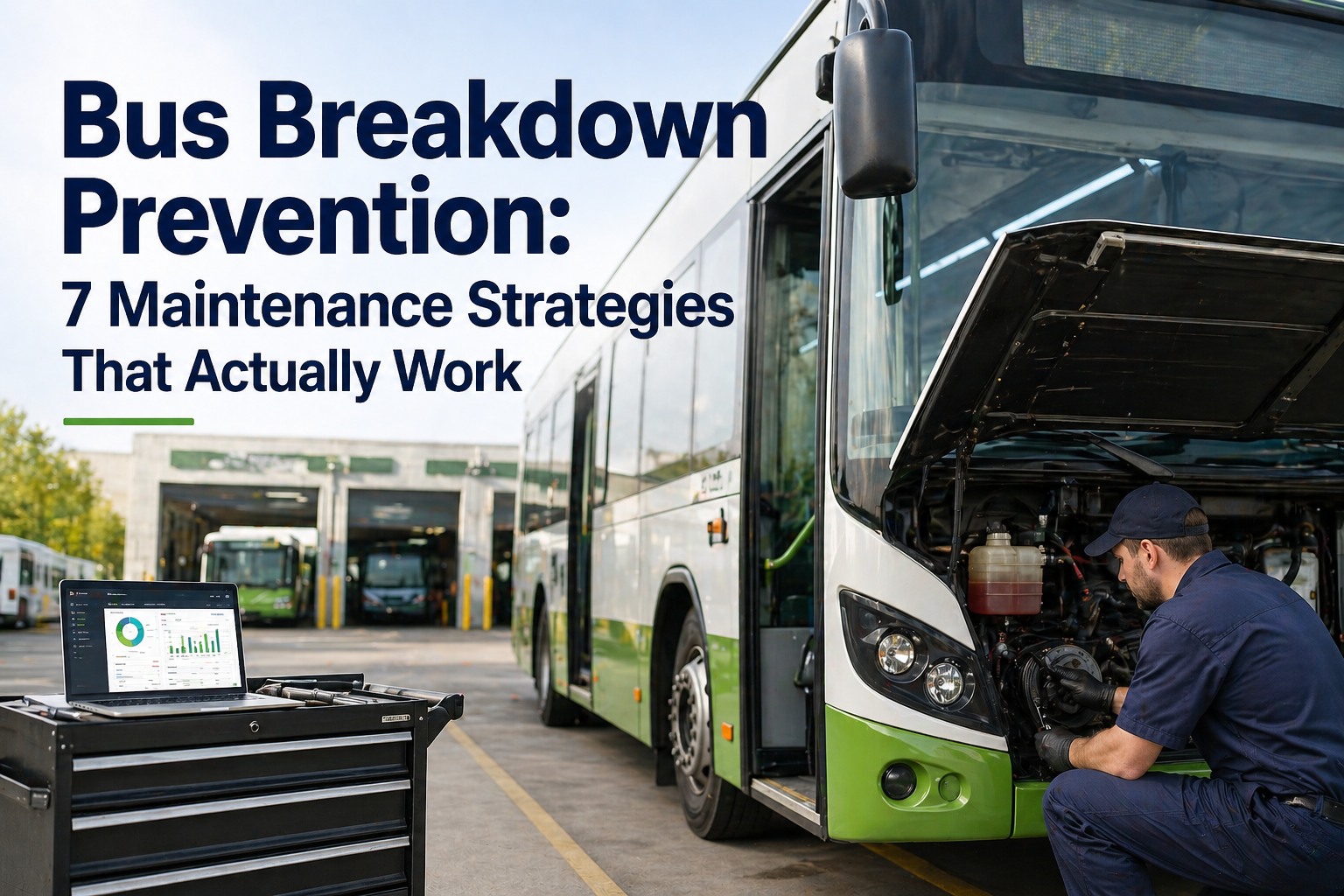
Bus Breakdown Prevention: 7 Maintenance Strategies That Actually Work
Prevent costly breakdowns with PM scheduling, digital inspections, parts tracking, and fuel management — all inside one CMMS.
$8,500
Avg. Unplanned
Breakdown Cost
3–5x
More Expensive
Than Preventive
85%
Of Breakdowns
Are Preventable
01
The Real Cost of One Breakdown — Visualized
Fleet managers count the repair bill. They forget the other 60%. Here's the full cascade for a single unplanned road failure:
$1,850
Emergency Repair
$680
Overtime Labor
$450
Tow Truck
$420
Route Disruption
$320
Sub Driver
$280
Rush Parts
Total Breakdown Cost
~$4,000 – $8,500
Same Repair Done Preventively
$420
02
7 Strategies That Prevent Breakdowns
These are the exact practices separating fleets at $0.32/mile from those bleeding at $0.58/mile — backed by 2026 data from 10,000+ bus operations.
01
Impact
Automated PM Scheduling
Every 10% PM compliance improvement reduces reactive repairs by 18–25%
Multi-trigger logic (mileage + calendar + engine hours) auto-generates work orders. Fuel-specific schedules for diesel, propane, and electric run simultaneously. Nothing slips, nothing gets pushed.
Fleets at 80%+ PM compliance spend 25–35% less on total maintenance
02
Impact
Digital Pre-Trip Inspections
Paper DVIRs: 3–5 day delay. Digital DVIRs: defects reach the shop in seconds
Pre-loaded school bus templates (stop arms, crossing gates, emergency exits). Drivers tap through on their phone with photo capture, GPS, and timestamps. A cracked brake hose flagged at 6:45 AM becomes a work order before the bus returns at 8:30.
Photo + GPS + timestamp = audit-proof and DOT-ready
03
Impact
Defect-to-Work-Order Pipeline
The gap between "driver reports problem" and "mechanic gets work order" is where breakdowns are born
Driver flags a defect during inspection — it becomes a tracked, prioritized work order in seconds. Assigned, documented, and resolved without a single phone call or paper form.
Paper-based shops average 3–5 days. Connected CMMS: seconds.
Digitize your inspections and work orders in 10 minutes — sign up free
04
Impact
Predictive Parts Inventory
Emergency parts orders carry a 35–60% rush shipping premium
Your CMMS knows which PM services are scheduled next week — and flags when parts stock drops below reorder points. No more $180 overnight shipments for a $22 filter. Wrench time jumps from 58% to 80%+.
Eliminates "waiting for parts" — the #1 wrench time killer
05
Impact
Fuel Anomaly Detection
A sudden MPG drop is one of the earliest warning signs — 2–4 weeks before breakdown
Per-bus fuel tracking auto-flags consumption anomalies before a fault code ever appears. Also catches fuel theft and fuel card fraud — costing the average fleet $5,000–$10,000/year.
Track fuel per bus, per driver, per route — auto-flag waste
See fuel tracking and parts alerts in a live demo — book now
06
Impact
Telematics Fault Code Alerts
Your buses are already broadcasting diagnostic data — most fleets just aren't listening
GPS/telematics feeds fault codes directly into your CMMS. Critical issues auto-generate prioritized work orders. A coolant temp warning at 3 PM becomes a scheduled repair at 4 PM — not a roadside breakdown at 6 AM.
Native Samsara + Geotab integration — zero custom dev
07
Impact
Data-Driven Replacement Planning
Some buses cost more to maintain than replace — your CMMS tells you which ones
Owned buses jump from $10K/year (years 1–5) to $15K–$20K (years 6–10). Per-bus lifetime cost tracking shows exactly when the repair bill exceeds the replacement math. No guessing.
Grant applications use this same per-bus cost data
Start tracking per-bus costs and never guess again — free signup
Every Strategy Lives Inside One Platform
PM scheduling, digital inspections, work orders, parts tracking, fuel monitoring, and telematics integration — purpose-built for bus fleets. No spreadsheets. No 6 AM surprises.
The Bottom Line
85% of bus breakdowns are preventable. The average costs $4,000–$8,500. Reactive repairs cost 3–5x more than preventive. Fleets with 80%+ PM compliance spend 25–35% less. These are documented results from thousands of fleets in 2026.
BusCMMS puts all 7 strategies into one platform: automated PM, digital DVIRs, instant work orders, parts tracking, fuel monitoring, telematics integration, and per-bus lifetime cost tracking. Every breakdown you prevent pays for the system many times over.
Your Next Breakdown Is Preventable.
BusCMMS gives your maintenance team every tool in this guide — PM scheduling, digital inspections, work orders, parts tracking, fuel alerts, and telematics — built for bus fleets.
Frequently Asked Questions
How much does the average bus breakdown actually cost?
The average unplanned breakdown costs $4,000–$8,500 when you count the full cascade: emergency repair labor (overtime rates), towing ($350–$550), rush parts (35–60% premium), substitute driver deployment, route disruption, and admin time. The repair itself is only 30–40% of the total. Reactive repairs cost 3–5x more than identical work done preventively.
What PM compliance rate should my fleet target?
Target 85%+ initially, aiming for 95%+ within 6 months. Every 10% improvement reduces reactive repairs by 18–25%. Fleets at 80%+ planned maintenance spend 25–35% less than reactive operations. A CMMS with auto-generated work orders from mileage, calendar, and engine hour triggers eliminates the human memory failures that cause PM to slip.
Can digital inspections really prevent breakdowns?
Yes — digital DVIRs are one of the highest-impact tools. Paper inspections average 3–5 days between defect discovery and mechanic notification. Digital inspections deliver alerts in seconds with photos and GPS. A cracked brake hose flagged at 6:45 AM becomes a work order before the bus returns at 8:30 AM. That same crack, unreported on paper, becomes an afternoon brake failure.
How does a CMMS help with parts and breakdown prevention?
A CMMS connects your PM schedule to your parts room. When Bus #31 is due for service next Tuesday, the system checks inventory and flags shortages — days before the mechanic starts. This eliminates $180 overnight shipments for $22 filters and increases productive wrench time from 58% to 80%+ by cutting "waiting for parts" downtime.
What's the fastest way to reduce breakdowns?
Three steps deliver the fastest ROI: digitize PM scheduling with auto-generated work orders (reduces breakdowns 40–50% in 90 days), switch to digital DVIRs so defects are resolved in hours not days, and connect telematics so fault codes auto-create work orders. BusCMMS does all three out of the box with school bus templates already loaded.