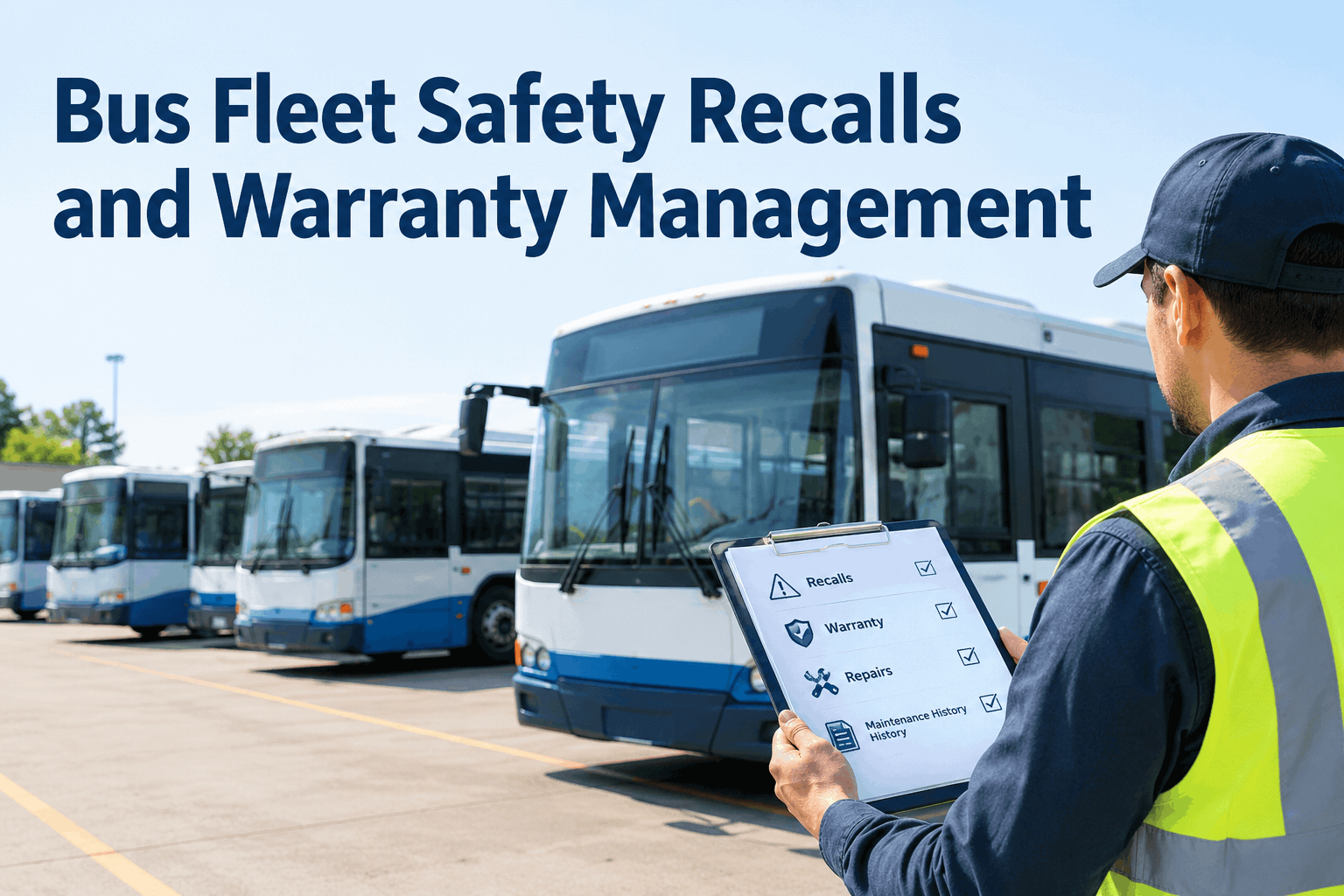
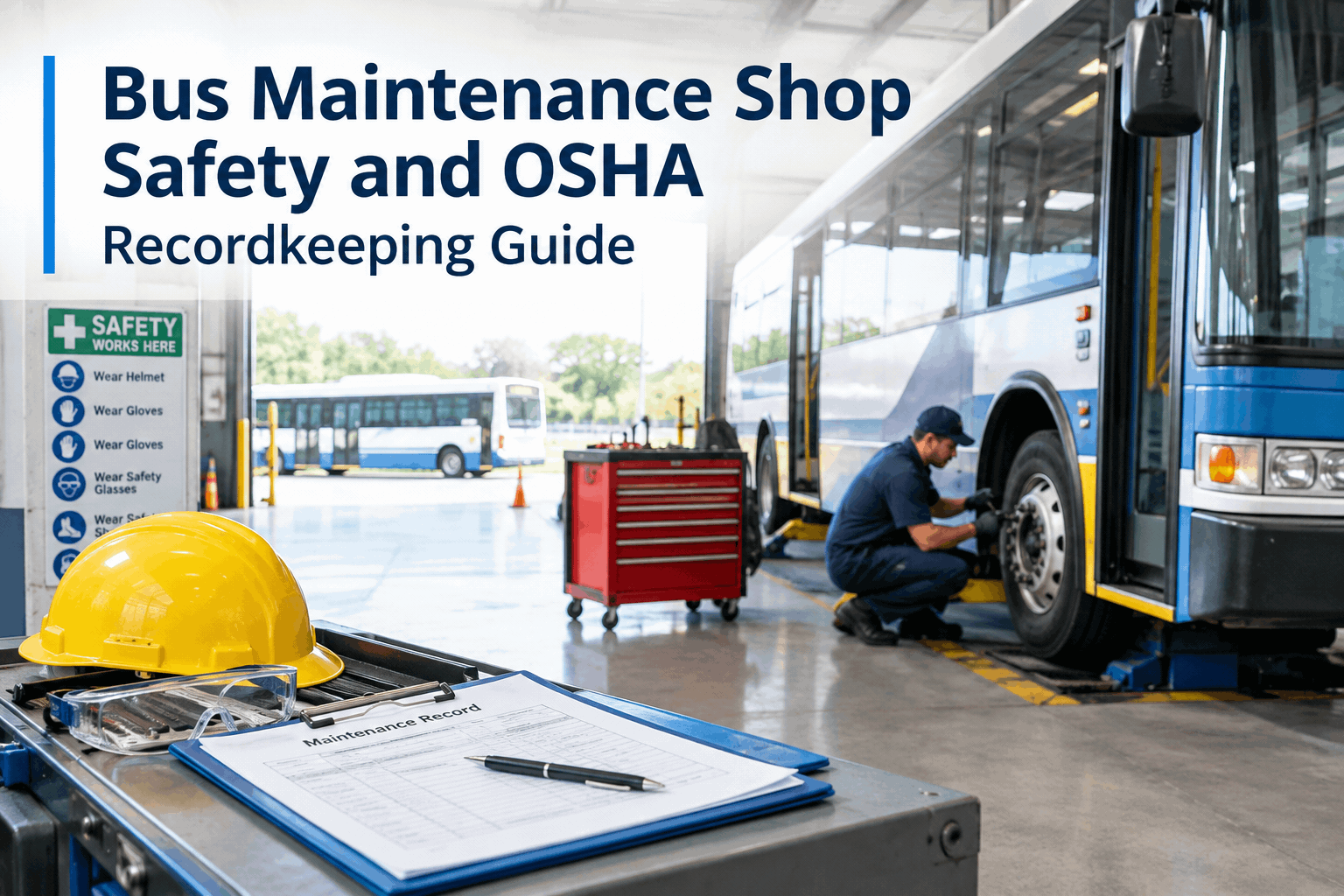
Corporate clients don't choose charter operators on price alone — they choose the one that can prove their buses are maintained, compliant, and safe. Every RFP asks for DOT compliance records, CSA scores, maintenance histories, and DVIR documentation. Only 7% of carriers pass a DOT audit without a single violation. Charter operators who win repeat contracts are the ones who hand auditors a digital report in under two minutes — not the ones digging through filing cabinets. Here's how BusCMMS delivers audit-ready compliance records that win contracts, protect your CSA score, and keep your fleet running. See what audit-ready records look like for charter fleets—book a 15-min demo.
The 3 Compliance Pillars That Win Contracts
Every corporate contract, school district outsourcing agreement, and event company RFP evaluates your fleet on three pillars. Miss any one and you lose the bid — or worse, lose a client mid-contract.
These three pillars aren't separate compliance projects — they're three outputs of one system. A CMMS that handles work orders, DVIRs, and PM scheduling produces all three automatically. See DOT audit trail + DVIRs + CSA tracking on one screen—schedule a demo.
Expert Review: The 2026 Regulatory Changes That Hit Charter Operators Hardest
2026 brought specific changes that disproportionately affect charter operators. Here's what changed and what it means for your compliance program.
In 2025, FMCSA conducted over 100,000 violations. Maintenance record gaps and driver qualification file issues were the most cited. Average penalties exceeded $125,000 in severe cases, with some audits finding 6+ violations per carrier. For charter operators, a single poor audit doesn't just cost fines — it costs contracts. Corporate clients check your FMCSA safety rating before signing. The operators who build continuous digital compliance records don't just pass audits — they win bids competitors can't touch.
Your maintenance records are your sales tool. Every digital work order, every GPS-verified DVIR, every on-time PM is a data point that tells corporate clients: this operator takes safety seriously. See how your compliance stack compares — get a free assessment.
Frequently Asked Questions
What compliance records do corporate clients check before hiring a charter operator?
Most corporate RFPs require your FMCSA safety rating, CSA scores (especially Vehicle Maintenance), maintenance histories per bus, DVIR compliance records, PM completion rates, driver qualification files, and insurance documentation. Operators who produce these digitally in minutes win contracts over operators who need days to compile paper records. See how to generate RFP-ready reports in 60 seconds—book a demo.
How does the 2026 CSA overhaul affect charter operators?
Vehicle Maintenance now splits into "Inspector Detected" and "Driver Observed" categories — meaning your drivers' pre-trip inspection quality directly impacts a separate CSA score. Severity scoring simplified to 2-tier (OOS=2, other=1), making every violation more visible. Only 12 months of history counts. Charter operators with automated PM and digital DVIRs will see score improvements; those on paper will see degradation.
How long must charter operators retain maintenance records?
Maintenance records: 1 year minimum (49 CFR 396.3). Annual inspection reports: 14 months (49 CFR 396.17). DVIRs: 3 months (49 CFR 396.11). Driver qualification files: 3 years after termination. Drug/alcohol testing records: 5 years for positives. Digital CMMS stores everything indefinitely with instant retrieval — no filing cabinets, no lost records, no audit panic. See how records auto-archive for every retention period—book a demo.
Are electronic DVIRs legal for charter bus operations?
Yes. Electronic DVIRs have been permissible since 2018 under 49 CFR 390.32. As of March 23, 2026, FMCSA rule FMCSA-2025-0115 explicitly authorizes eDVIRs. Digital platforms with electronic signatures, GPS verification, and timestamped records are fully compliant and preferred by auditors over paper. See GPS-verified digital DVIRs in action—book a demo.
How quickly can a charter operator implement a CMMS?
Cloud-based bus CMMS is typically operational in 2–4 weeks. Most charter operators with 10–50 buses are creating digital work orders within the first week. Drivers learn mobile DVIR inspections in under 1 hour. The biggest variable is migrating existing records — focus on active fleet and last 12–24 months of history. Get a walkthrough built for charter fleets—book a demo.