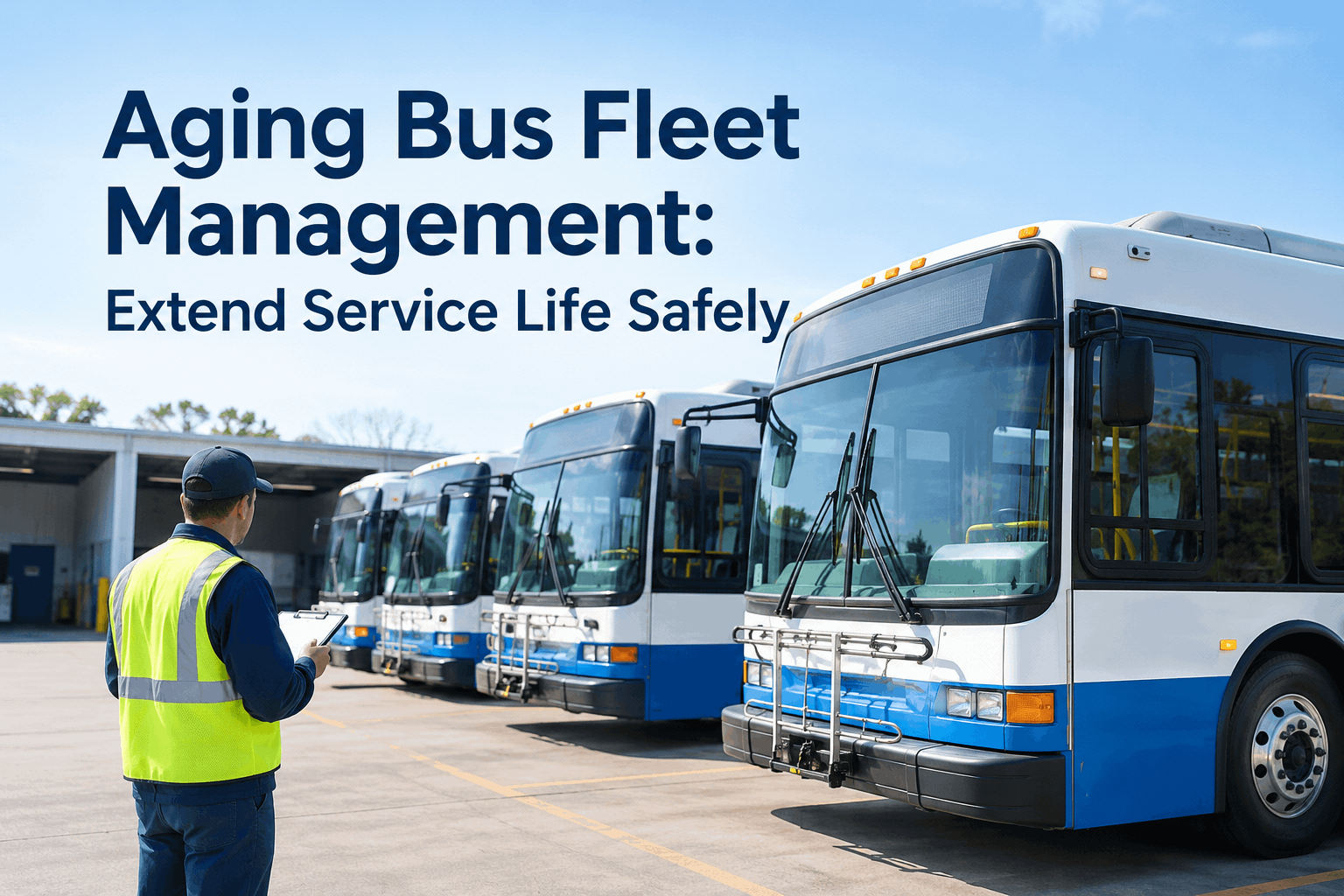
Public transit agencies across America are under pressure like never before. Aging fleets, tight budgets, and strict FTA compliance requirements demand a smarter approach to fleet asset management. A purpose-built transit CMMS gives you the centralized visibilityautomated workflows, and audit-ready reporting needed to keep buses running reliably while controlling costs.
Whether you operate 50 buses or 500, the right public transit maintenance software transforms how your team handles inspections, work orders, parts inventory, and compliance documentation. This guide explores how bus CMMS platforms address the unique challenges of transit operations—and why agencies nationwide are making the switch from spreadsheets to specialized software.
$140.2B
U.S. transit repair backlog
35%
Vehicles past useful life
21.7%
Systems rated "poor"
50%
Higher cost for reactive vs. preventive maintenance
Public Transit Maintenance Challenges
Transit agencies face maintenance challenges that generic fleet software simply cannot address. According to the Federal Transit Administration, U.S. transit systems need $140.2 billion in repairs just to reach a state of good repair—a 38% increase since 2018. For maintenance managers, this translates into daily battles with aging equipment, documentation demands, and the constant pressure to keep buses on the road.
The complexity of public transit operations requires specialized fleet asset management tools. Buses running 12-18 hours daily accumulate wear 3-4 times faster than standard commercial vehicles. Add mixed fleet types (diesel, CNG, electric), strict FTA reporting requirements, and limited budgets, and it becomes clear why spreadsheet-based maintenance tracking fails. A dedicated transit CMMS platform addresses each of these challenges systematically.
Aging Fleets
35% of transit vehicles operating past their 12-year useful life require more frequent repairs and closer monitoring
FTA Compliance Burden
Transit Asset Management plans, NTD reporting, and triennial audits demand complete, accurate documentation
Extreme Utilization
Buses running 12-18 hours daily accumulate 50,000+ miles annually—accelerating component wear significantly
Budget Constraints
Federal grants (5307, 5339) require detailed cost tracking and allocation by funding source
Zero Downtime Tolerance
Every bus out of service means missed routes, stranded passengers, and service complaints
Mixed Fleet Complexity
Diesel, CNG, hybrid, and electric buses each require unique PM schedules, parts, and expertise
CMMS Core Modules for Transit Operations
Effective public transit maintenance software integrates four essential modules that work together to streamline operations. Unlike generic fleet tools, a specialized bus CMMS understands the unique workflows of transit maintenance—from driver vehicle inspection reports to FTA-compliant asset tracking. Here's how each module contributes to operational excellence.
Fleet Asset Management
Track every asset from acquisition through retirement with complete lifecycle visibility. The fleet asset management module maintains detailed records including purchase information, specifications, warranty status, and current condition ratings aligned with FTA Transit Asset Management requirements.
Preventive Maintenance Scheduling
Automate PM scheduling based on mileage, engine hours, or calendar intervals. Configure multi-tier maintenance programs (A/B/C services) that match OEM specifications and adapt to transit-level utilization rates. The system automatically generates work orders before service is due.
Work Order Management
Manage every repair from initial defect report through completion with full documentation. Track labor hours, parts used, and costs automatically. Assign technicians based on skills and workload, prioritize safety-critical repairs, and maintain complete repair histories for each vehicle.
Parts Inventory Control
Maintain optimal inventory levels with real-time stock tracking and automatic reorder alerts. The system monitors parts consumption by vehicle type and repair category, enabling predictive ordering that reduces emergency supplier runs by up to 73% according to industry benchmarks.
These four modules form the foundation of effective transit maintenance management. When integrated properly, they create a seamless flow of information that eliminates data silos and manual handoffs. Schedule a demo to see how these modules work together in a live transit environment.
See How Transit CMMS Works
Watch a personalized demo showing asset tracking, inspection workflows, and compliance reporting built for public transit operations.
Inspection & Work Order Workflows
The inspection-to-repair workflow is where transit CMMS delivers immediate, measurable value. Traditional paper-based systems create gaps between when drivers report defects and when technicians begin repairs. Digital inspection tools close these gaps, enabling same-day response to safety issues and dramatically improving fleet availability.
Modern bus CMMS platforms support the complete inspection lifecycle—from pre-trip DVIRs through post-trip reports and scheduled PM inspections. When a driver identifies a defect, the system instantly notifies maintenance staff, categorizes the issue by severity, and can automatically generate a prioritized work order. This automated handoff eliminates the delays that plague paper-based operations.
Inspection to Repair Flow
Digital DVIR
Driver completes inspection on mobile device with photo documentation
Instant Alert
Maintenance team notified immediately of defects by severity level
Auto Work Order
System creates prioritized work order with defect details attached
Repair & Close
Tech documents repair, logs parts and labor, returns bus to service
Inspection Types Managed
Pre-Trip DVIR
Daily
Post-Trip DVIR
Daily
PM Inspections
Scheduled
Annual Safety
Yearly
ADA Equipment
Monthly
FTA Compliance
As Required
Agencies using digital inspection workflows report 40-60% reductions in emergency repairs because defects are caught and addressed before they become roadside failures. The documentation created through this process also provides the audit trail needed for FTA compliance reviews. Try digital inspections free to see the difference in your operation.
Reporting & Audit Compliance
FTA compliance isn't optional for transit agencies receiving federal funds. Transit Asset Management (TAM) plans, National Transit Database (NTD) reporting, and triennial reviews require detailed documentation that paper-based systems struggle to provide. A transit CMMS automates compliance data collection, making audits straightforward rather than stressful.
The reporting capabilities of modern public transit maintenance software extend beyond compliance to operational analytics. Understanding cost-per-mile by vehicle, identifying repeat repair patterns, and tracking technician productivity helps maintenance managers make data-driven decisions that improve efficiency and reduce costs. These insights are impossible to generate consistently from spreadsheets.
FTA/NTD Compliance
TAM condition assessments
State of Good Repair metrics
Asset inventory by mode
Maintenance expense allocation
Operations Analytics
Cost per mile by vehicle
Mean time between failures
PM compliance percentages
Technician productivity
Financial Tracking
Costs by grant source
Parts spend analysis
Labor hour distribution
Budget vs. actual variance
Audit-Ready Documentation
Every inspection, work order, and repair is timestamped, digitally signed, and stored in searchable cloud archives. When FTA triennial reviews require documentation, pull complete records in seconds—not days of filing cabinet archaeology. See the reporting dashboard in a live demo.
Results Transit Agencies Achieve
Transit agencies implementing bus CMMS platforms report significant, measurable improvements in maintenance efficiency and fleet reliability. The combination of preventive maintenance automation, streamlined work order management, and optimized parts inventory creates compounding benefits that improve over time as the system captures more operational data.
40-60%
Reduction in Emergency Repairs
Catching issues during inspections before they become roadside failures
15-25%
Lower Maintenance Costs
Through optimized PM schedules and reduced parts waste
73%
Fewer Emergency Parts Runs
Predictive inventory keeps critical parts in stock
8-18 mo
Typical ROI Timeline
Most agencies see positive returns within first year
"The biggest cost saving is eliminating breakdowns. When you have breakdowns, you bring tow vehicles in—very expensive. You have buses down, paying operators and not getting passengers to their destinations. With our transit CMMS, we hardly have any breakdowns now."
— Transit Fleet Manager, Municipal Agency
Why Choose Transit-Specific CMMS?
Generic fleet management software treats all vehicles the same—whether they're delivery vans, construction equipment, or transit buses. But public transit operations have unique requirements that demand specialized solutions. A purpose-built transit CMMS understands FTA compliance, high-utilization schedules, and the documentation standards your agency needs.
Built for FTA Compliance
TAM reporting, NTD data collection, and triennial review documentation built into every workflow—not bolted on as afterthoughts.
High-Utilization Ready
PM schedules designed for buses running 50,000+ miles annually with 12-18 hour daily operation—not standard commercial assumptions.
System Integration
Connect GPS/AVL systems, fuel management, telematics platforms, and accounting software like QuickBooks for complete visibility.
Scales With Your Agency
Whether you operate 20 buses or 2,000, the platform grows with you—no per-vehicle fees that punish fleet expansion.
Ready to Modernize Your Transit Maintenance?
Join transit agencies across the country using specialized CMMS to reduce costs, improve fleet availability, and stay FTA-compliant. See how it works for your operation.
No credit card required • Unlimited vehicles on free tier • Cancel anytime
Frequently Asked Questions
Does the bus CMMS support FTA Transit Asset Management reporting?
Yes. The platform tracks asset condition ratings using FTA's standardized scale, calculates state of good repair metrics, and generates TAM-compliant reports formatted for NTD submission. Asset hierarchies, useful life benchmarks, and condition assessments are built into the system architecture specifically for transit agency requirements.
Can we track maintenance costs by federal grant source?
Absolutely. Every work order can be tagged to specific funding sources including 5307 Urbanized Area Formula, 5339 Bus and Bus Facilities, state grants, and local funds. This enables accurate cost allocation for grant reporting and provides the documentation trail auditors require during compliance reviews.
How does the transit CMMS handle mixed fleets with diesel and electric buses?
The system supports different PM schedules, component hierarchies, inspection checklists, and maintenance procedures for each vehicle type. Electric buses have specialized templates covering battery monitoring, charging system checks, and regenerative braking components that don't apply to diesel vehicles.
What integrations are available for existing transit systems?
Common integrations include GPS/AVL systems for automatic mileage capture, fuel management systems, accounting software (QuickBooks, financial ERPs), and telematics platforms like Samsara and Geotab. API access enables custom integrations with CAD/AVL and scheduling systems specific to your operation.
How long does public transit maintenance software implementation take?
Most transit agencies are fully operational within 2-4 weeks. This timeline includes asset data import, PM schedule configuration, user training for maintenance staff and drivers, and system customization for your specific workflows. Dedicated onboarding support is included at all pricing tiers with no additional fees.