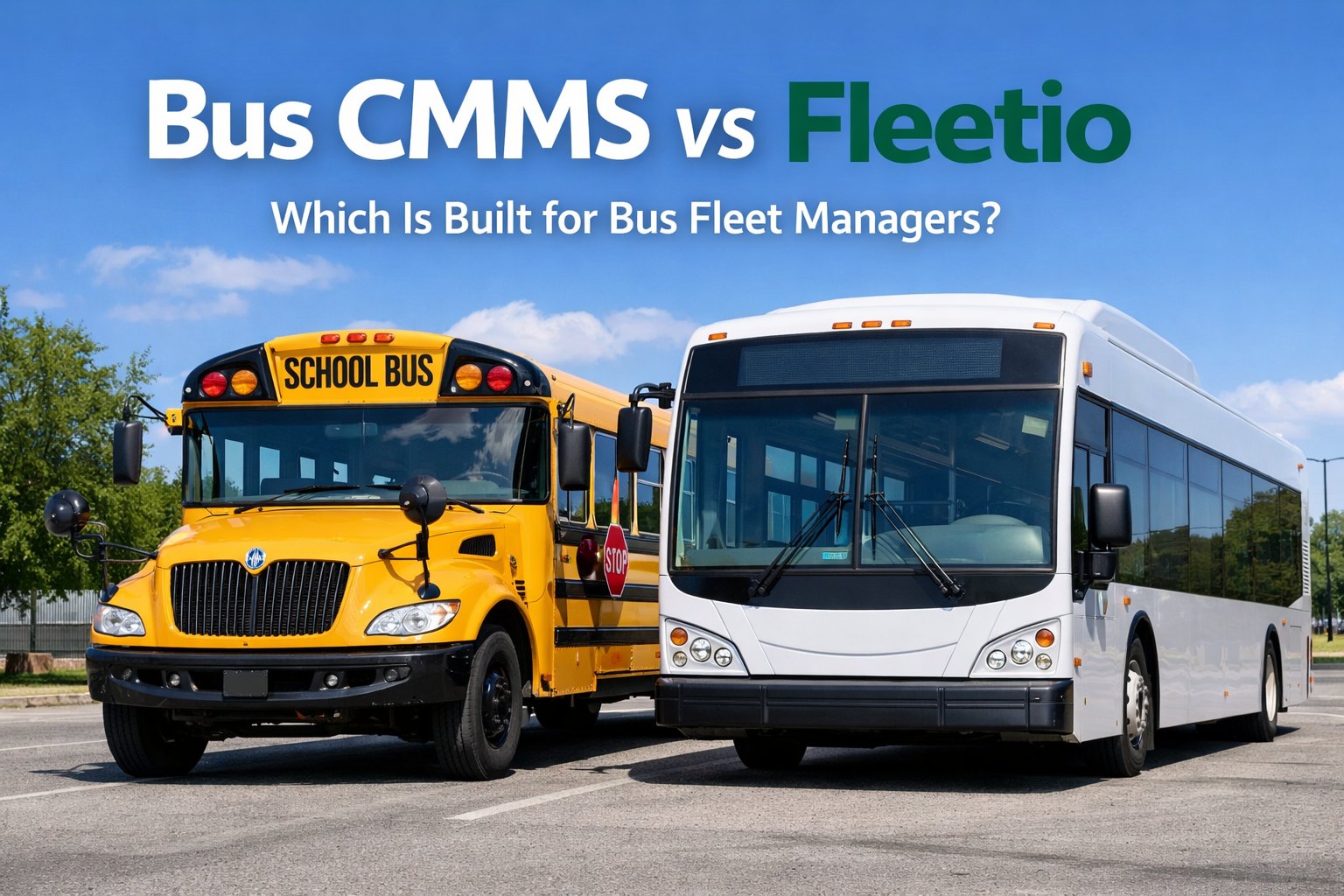
Bus CMMS vs Fleetio — Which Is Built for Bus Fleet Managers
Fleetio is a well-respected fleet management platform serving over 8,000 fleets globally. It works great for trucking companies, construction operations, and mixed vehicle fleets. But here's the question bus operators should ask: when your fleet carries passengers—students, commuters, charter groups—should you use software designed for "any fleet" or software built specifically for yours?
40+ Hours
Average time spent configuring generic fleet software for bus-specific compliance requirements
Built for Buses
BusCMMS
Every feature designed for passenger transportation
VS
Fleetio
Flexible platform for any fleet type
Comparison Note: Fleetio is a capable platform with many satisfied customers. This comparison highlights differences relevant to bus fleet operators. Fleetio is a trademark of Fleetio LLC.
Why Bus Fleets Are Different
A truck breaks down—cargo is delayed. A bus breaks down—passengers are stranded, parents panic, and compliance violations begin accumulating. Bus fleet maintenance isn't just about uptime; it's about passenger safety, ADA accessibility, and regulatory requirements that cargo fleets never face.
Passenger Safety
Every inspection, every repair, every maintenance decision directly impacts human lives—not cargo delivery times.
ADA Compliance
Wheelchair lifts require 90-day inspections under federal law. Miss one, and you face $75,000+ penalties and stranded passengers.
Different DVIRs
Passenger vehicles must complete DVIRs even when NO defects are found—unlike cargo vehicles. Many platforms miss this.
FTA Reporting
Transit agencies must submit NTD data to maintain federal funding. Generic platforms don't export these specific formats.
Fleetio promotes flexibility—you can configure it for almost any fleet type. That's genuinely useful for mixed fleets. But for bus-only operations, "configurable" means extra work before you even start:
Both platforms handle basic fleet management. The differences emerge in bus-specific capabilities:
Bus Compliance Feature
BusCMMS
Fleetio
ADA Wheelchair Lift Tracking
Native
Configure
90-Day Lift Inspection Alerts
Automated
Manual Setup
Passenger Vehicle DVIR Rules
Enforced
General DVIR
FTA/NTD Export Reports
One-Click
Custom Report
School Bus PM Templates
Pre-Built
Create Yourself
Emergency Exit Inspection
Included
Custom Field
Route-Based Maintenance
Built-In
Mileage Only
"Configure" means the feature can potentially be created using custom fields, schedules, and workflows—but requires setup time and ongoing maintenance. "Native" means it works immediately with bus-specific compliance logic built in.
Skip the Configuration. Start Managing.
See how BusCMMS delivers bus-specific compliance features from day one—no custom setup required.
We believe in honest comparisons. Fleetio has genuine strengths that matter for certain operations:
Mixed Fleet Management — If you manage trucks, vans, equipment, AND buses, Fleetio lets you handle everything in one system.
110,000+ Shop Network — Fleetio's maintenance shop network across the US and Canada is genuinely impressive for outsourced maintenance.
Telematics Integrations — Deep partnerships with Samsara, Geotab, Motive, and others for connected fleet data.
If these are your primary needs, Fleetio deserves evaluation. But if your fleet is primarily buses with passenger safety and ADA compliance requirements, purpose-built software eliminates the workarounds.
Expert Review: The Specialist Advantage
Here's what transportation directors discover after evaluating both approaches:
01
Compliance Confidence
When ADA lift inspections, passenger DVIRs, and FTA reporting are native features—not custom configurations—you know nothing falls through the cracks.
02
Faster Implementation
School districts and transit agencies go live in days, not weeks. No configuration consultants needed when the software already speaks your language.
03
Regulatory Updates Included
When FMCSA updates passenger vehicle requirements, BusCMMS updates automatically. With custom configurations, you're responsible for catching changes.
04
Bus-Focused Support
Every support conversation assumes you're managing buses. No explaining your use case to teams trained on trucking and construction.
The Bottom Line: Generic fleet software can be configured to manage buses. But when passenger safety and federal compliance are on the line, "can be configured" isn't the same as "built for this purpose."
Fleetio can be configured for school bus fleets—they even have an industry page for school transportation. The difference is configuration vs. native functionality. With Fleetio, you'll create custom fields and schedules for school bus-specific requirements. With BusCMMS, those features work immediately because the platform was built exclusively for bus operations.
What about Fleetio's 110,000 shop network?
Fleetio's maintenance shop network is a genuine strength for organizations that outsource repairs extensively. If your primary need is connecting with third-party shops across the country, that's valuable. BusCMMS focuses on in-house maintenance workflows and compliance tracking that bus fleets typically manage internally due to specialized equipment and urgent turnaround requirements.
Is BusCMMS only for large fleets?
No. BusCMMS serves fleets of all sizes—from small charter operators with 5 coaches to large transit agencies with hundreds of vehicles. The platform scales, but more importantly, even small fleets benefit from built-in compliance features that would take significant time to configure in generic software.
How does pricing compare?
Fleetio starts at $4-$10 per vehicle monthly depending on plan tier. BusCMMS offers competitive pricing with free trials available. But pricing comparisons should include implementation time, configuration effort, and ongoing maintenance of custom setups. A platform that works immediately often delivers better total value.
Should I demo both platforms?
We encourage it. Request demos from both BusCMMS and Fleetio with your specific compliance requirements. Ask each platform to show ADA wheelchair lift tracking, passenger DVIR workflows, and FTA reporting. You'll quickly see the difference between native functionality and configured workarounds.