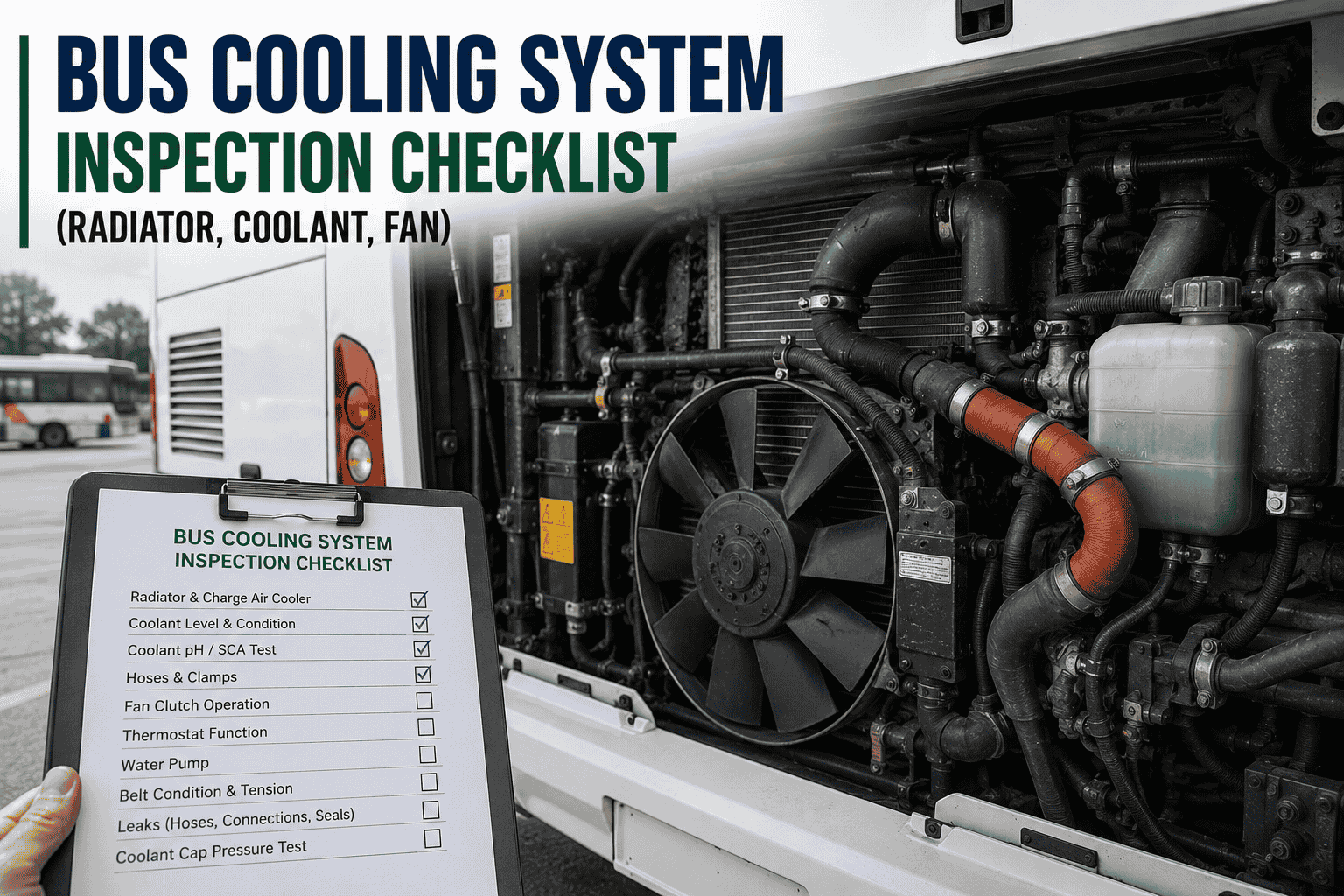
The cooling system is the unsung hero of bus engine reliability. A properly maintained cooling system keeps engine temperatures stable, prevents overheating, and extends engine life by hundreds of thousands of miles. A cooling system failure is one of the most common causes of roadside breakdowns—a burst hose, failed fan clutch, or leaking radiator can strand a bus with 44 students in minutes. This comprehensive bus cooling system inspection checklist covers radiator pressure testing, coolant condition and pH/SCA levels, hose and clamp inspection, fan clutch operation, thermostat function, charge air cooler condition, and water pump inspection. Use it as your standard procedure for every cooling system PM and seasonal inspection.
Cooling System Guide 2026
Bus Cooling System Inspection Checklist (Radiator, Coolant, Fan)
Bus cooling system inspection workflow. Radiator pressure, coolant pH/SCA, hoses, clamps, fan clutch, thermostat and charge air cooler condition.
Why Cooling System Inspections Are Critical: The Overheating Risk
Cooling system failures are among the most common causes of bus breakdowns, especially during summer months. A single overheating event can cause head gasket failure ($4,200+), warped cylinder head ($6,800+), or cracked engine block ($12,000+). The most common cooling system failures include: coolant leaks (hoses, radiator, water pump), fan clutch failure, thermostat failure, coolant degradation, and radiator blockage. Each of these failures is preventable with systematic PM compliance.
Coolant itself is a critical component that is often overlooked. Extended Life Coolant (ELC) requires regular testing for pH, nitrite levels, and SCA (Supplemental Coolant Additive) concentration. Failure to maintain proper coolant chemistry leads to liner pitting, cavitation damage, and premature engine failure. A structured cooling system inspection process is the most effective way to prevent these outcomes.
Cooling System Inspection Categories: The Complete Checklist
This comprehensive cooling system inspection checklist covers every major cooling component. Use it during every cooling system PM service, seasonal inspection, and annual DOT inspection.
Coolant Testing: Why pH and SCA Matter More Than You Think
pH Level
Target: 9.0-11.0. Low pH causes acidic coolant that corrodes metals and damages seals. High pH causes scale formation and reduced heat transfer.
Nitrite Level
Target: 1,500-3,000 ppm (ELC). Nitrite prevents liner pitting and cavitation damage. Low nitrite levels lead to cylinder liner pitting and premature failure.
Freeze Point
Target: -34°F (50/50 concentration). Too low concentration causes freezing risk. Too high reduces heat transfer and can cause overheating.
Contamination
Oil in coolant indicates head gasket or oil cooler failure. Fuel in coolant indicates injector cup or cylinder head issues. Both require immediate investigation.
Common Cooling System Issues and Root Causes
Engine Overheating
Cause: Low coolant, fan clutch failure, blocked radiator, failed thermostat, or water pump failure. Fix: Diagnose and repair root cause. Check coolant level first.
Coolant Leaks
Cause: Failed hoses, leaking water pump seal, damaged radiator, or head gasket failure. Fix: Identify leak source. Replace damaged components. Pressure test after repairs.
Coolant Contamination
Cause: Oil cooler failure, head gasket failure, or injector cup failure. Fix: Diagnose contamination source. Repair failed component. Flush cooling system.
Fan Clutch Failure
Cause: Failed thermal actuator, worn bearing, or electrical failure. Fix: Replace fan clutch. Check fan blade condition. Verify function after replacement.
Radiator Blockage
Cause: Debris (leaves, bugs, dirt) blocking airflow or internal scale buildup. Fix: Clean radiator externally. Flush internally if scale is present. Replace if damaged.
Low Coolant Level
Cause: External leak, internal leak (head gasket), or overflow. Fix: Identify and repair leak source. Add coolant to proper level. Pressure test system.
We implemented this cooling system inspection checklist across our 75-bus fleet after three overheating failures in one summer. In the first year, we caught 18 coolant hoses that were soft and at risk of failure, 6 fan clutches that weren't engaging properly, 12 coolant samples with low pH or SCA levels, and 4 radiators that were partially blocked. Our cooling-related breakdowns dropped by 85% in year one. The coolant testing program alone saved us from two potential head gasket failures by catching coolant contamination early.
Digitize Your Cooling System Inspection Process
BusCMMS guides technicians through every cooling system inspection point—coolant level and condition, pH and SCA testing, radiator pressure test, hose inspection, fan clutch verification, thermostat check, and water pump inspection. Auto-schedule cooling system PM intervals based on mileage. Complete audit trail for every cooling system component in your fleet.
Bus Cooling System FAQs
How often should engine coolant be changed?
Extended Life Coolant (ELC) typically lasts 600,000 miles or 5-6 years with regular SCA maintenance. Conventional coolant requires replacement every 50,000-100,000 miles. Always follow manufacturer recommendations. Test coolant pH and SCA levels every 15,000-20,000 miles.
What is the correct coolant concentration for a bus?
Target concentration is 50/50 antifreeze/water, which provides -34°F freeze protection. Use a refractometer to test concentration. Do not exceed 60% antifreeze, as this reduces heat transfer efficiency and can cause overheating.
What causes coolant to turn dark or brown?
Dark or brown coolant indicates contamination from oil, fuel, or rust. Oil contamination suggests head gasket or oil cooler failure. Fuel contamination suggests injector cup or cylinder head issues. Rust indicates corrosion from improper coolant maintenance.
How do I test a fan clutch?
With the engine at operating temperature (195°F+), the fan should be engaged and difficult to turn by hand. At cold engine, the fan should spin relatively freely. Inconsistent engagement or excessive free-spin when hot indicates fan clutch failure.
What are the signs of a failing water pump?
Warning signs include: coolant leaks at the weep hole, unusual noise (whining or grinding), shaft play or wobble, and overheating. Water pumps should be replaced before failure to prevent overheating and engine damage.
Can BusCMMS track cooling system inspection history?
Yes. BusCMMS tracks coolant test results, pH and SCA levels, radiator pressure test results, component replacement history, and repair records. This creates a complete cooling system history for each bus, helping identify patterns and predict maintenance needs before failures occur.
The Bottom Line
Bus cooling system inspections are critical to engine reliability and fleet uptime. A single overheating event can cause catastrophic engine damage costing $4,200-$12,000+ and removing a bus from service for days. Regular coolant testing, hose inspection, radiator cleaning, and fan clutch verification are the most effective ways to prevent cooling system failures. This checklist provides the step-by-step procedure your technicians need to inspect every cooling system component—radiator, hoses, fan clutch, thermostat, water pump, and coolant chemistry. When combined with BusCMMS digital inspection forms, auto-scheduled PM intervals, and complete cooling system history tracking, your cooling maintenance program becomes proactive—catching issues before they cause overheating and engine failure.