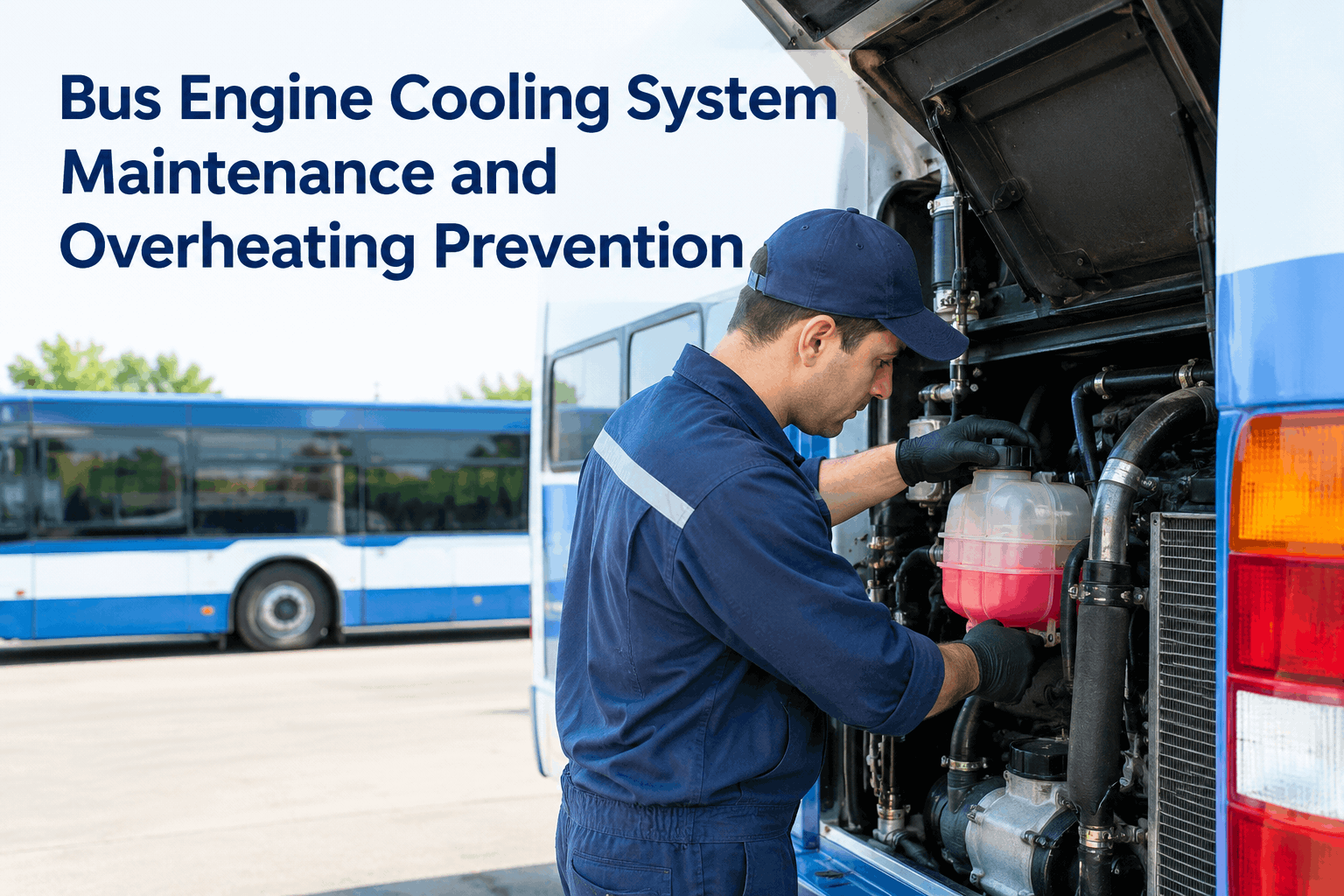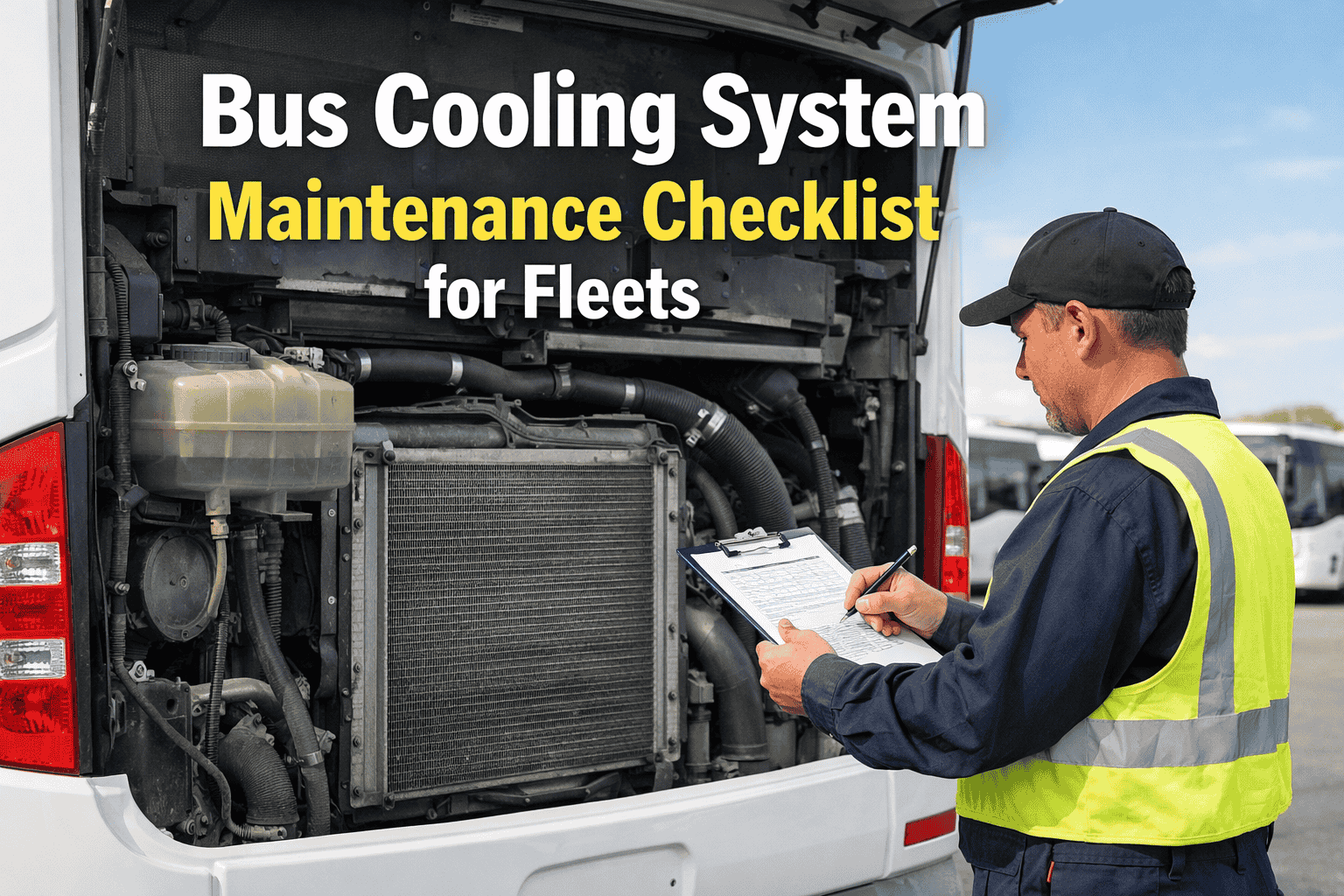
An overheated bus engine doesn't give second chances. When coolant temperatures spike past 220°F, you're looking at warped cylinder heads, blown head gaskets, and repair bills that can exceed $15,000—not to mention stranded passengers and lost revenue. The reality? Over 40% of roadside breakdowns trace back to cooling system failures, yet most are entirely preventable with systematic inspections. This checklist covers every component, warning sign, and maintenance interval you need to keep your fleet running cool.
The 6 Components That Keep Engines Cool
Your bus cooling system is a closed loop where each component depends on the others. One weak link—a stuck thermostat, failing water pump, or clogged radiator—and the entire system fails. Here's what you're inspecting and why each matters:
Understanding how these components work together helps you diagnose problems faster. Book a demo to see how BusCMMS tracks cooling system component lifecycles.
Daily Pre-Trip Cooling System Checks
These quick visual inspections take less than 3 minutes but catch 80% of cooling problems before they strand your bus on the road:
Paper checklists get skipped under time pressure. Digital inspections with photo capture ensure every check is completed and documented. Schedule a demo to see mobile inspection workflows in action.
PM Interval Schedule: What to Inspect When
Cooling system maintenance isn't one-size-fits-all. Service intervals should align with manufacturer recommendations and your fleet's operating conditions:
Extended Life Coolants (ELC) may extend replacement intervals to 100,000+ miles—but only with proper SCA testing at each PM interval. See how BusCMMS automates PM scheduling based on your fleet's specific intervals.
Warning Signs: When to Pull the Bus
Drivers trained to recognize these early warning signs can prevent catastrophic engine damage by reporting issues before they escalate:
Expert Review: Top 5 Cooling System Failures
Based on fleet maintenance data and industry research, these five issues account for the majority of cooling system failures. Understanding root causes helps you prevent them:
Tracking failure patterns across your fleet reveals which components need earlier replacement and which inspection points to emphasize. Sign up free and start building your fleet's maintenance history today.
Seasonal Considerations
Cooling systems face different stresses in summer heat versus winter cold. Adjust your maintenance approach accordingly:
Planning seasonal maintenance in advance prevents the rush when temperatures spike or plunge. Book a demo to see how BusCMMS schedules seasonal PM tasks automatically.
Frequently Asked Questions
How often should bus coolant be replaced?
Standard coolant should be flushed and replaced every 2-3 years or 50,000-100,000 miles, whichever comes first. Extended Life Coolants (ELC) can last longer—up to 300,000-600,000 miles with proper SCA (Supplemental Coolant Additive) maintenance at each PM interval. Always follow your engine manufacturer's specific recommendations and test coolant condition regularly with test strips.
What causes a bus engine to overheat?
The most common causes are coolant leaks (35% of failures), clogged radiators (25%), stuck thermostats (20%), water pump failures (12%), and fan clutch problems (8%). Other contributing factors include low coolant levels, contaminated coolant, blocked hoses, failed radiator caps, and excessive engine load in hot weather. Regular inspections catch most issues before they cause overheating.
What should a driver do if the bus overheats?
Pull over safely and shut down the engine immediately. Do not open the hood until the engine has cooled for at least 30 minutes—pressurized coolant can cause severe burns. Contact dispatch to report the breakdown. Never add cold water to a hot engine, as thermal shock can crack the engine block. Once cooled, check coolant level and look for obvious leaks before attempting to restart.
How do you pressure test a bus cooling system?
Attach a cooling system pressure tester to the radiator fill neck or expansion tank. Pump to 15 PSI and hold for 10-15 minutes. Watch the gauge—any pressure drop indicates a leak. While pressurized, inspect all hoses, connections, radiator tanks, water pump weep hole, and heater core lines for moisture or drips. Pressure testing should be performed quarterly as part of preventive maintenance.
What is the correct coolant mixture for diesel buses?
A 50/50 mixture of antifreeze concentrate and distilled water provides freeze protection to approximately -34°F and is recommended for most U.S. climates. In extremely cold regions, a 60/40 coolant-to-water ratio may be used. Never use plain water—it boils at lower temperatures than coolant mixtures and provides no corrosion protection. Always use the coolant type specified by your engine manufacturer.