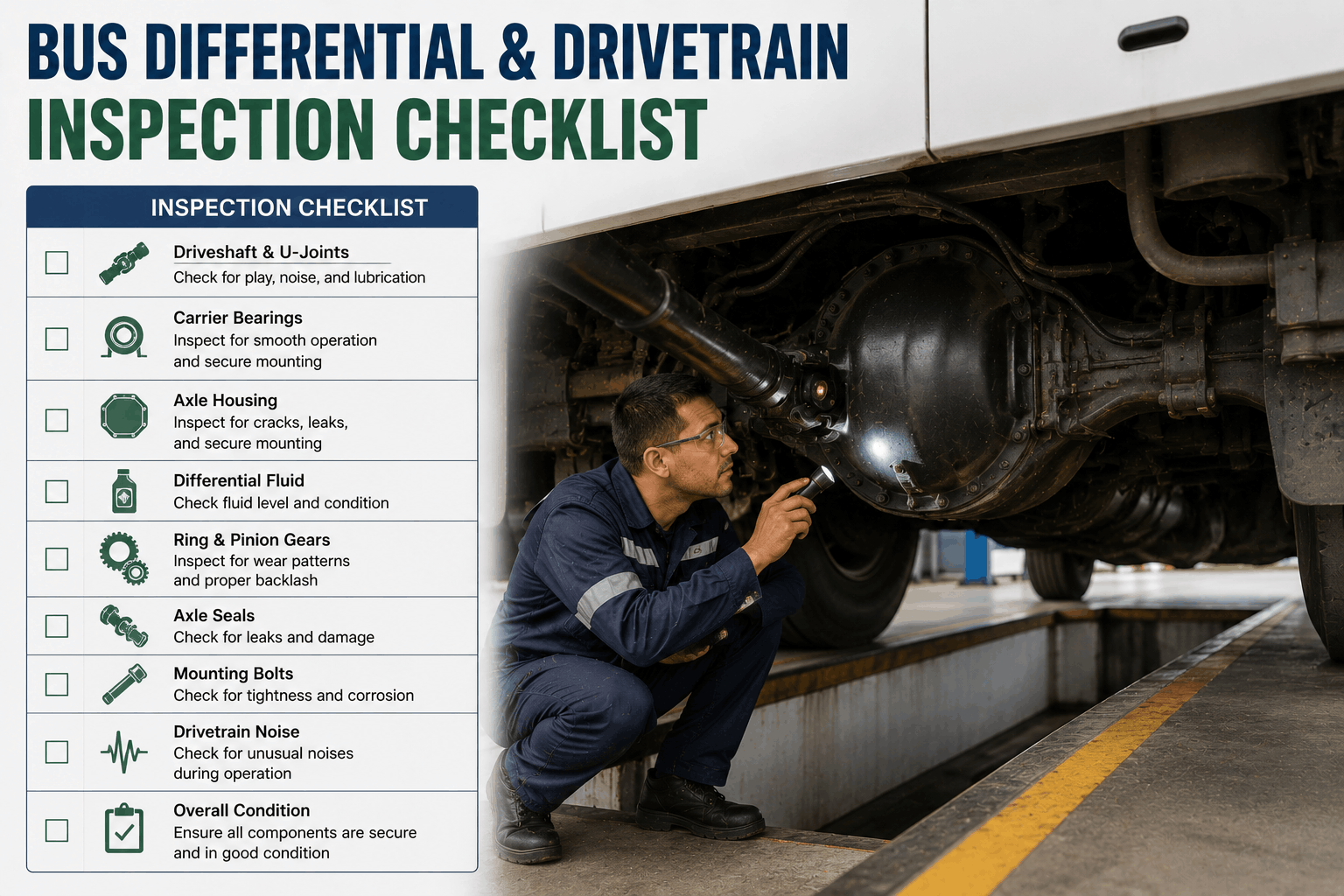
The differential and drivetrain transfer power from the transmission to the wheels. A failed U-joint, worn carrier bearing, or differential with contaminated fluid can cause catastrophic driveline failure, leaving a bus stranded on the road. Driveline vibrations, unusual noises, and fluid leaks are early warning signs that are often ignored until failure occurs. This comprehensive bus differential and drivetrain inspection checklist covers driveshaft U-joints, carrier bearings, axle housing condition, differential fluid level and condition, pinion gear inspection, and driveline vibration analysis. Use it as your standard procedure for every drivetrain PM and annual DOT inspection.
Drivetrain Safety Guide 2026
Bus Differential & Drivetrain Inspection Checklist
Bus differential and drivetrain inspection workflow. Driveshaft U-joints, carrier bearings, axle housing, differential fluid level and pinion gear inspection.
Why Differential and Drivetrain Inspections Are Critical: The Cost of Neglect
Drivetrain failures are among the most expensive and disruptive breakdowns in bus fleet operations. A failed differential can cost $5,000–$12,000 to rebuild or $15,000–$25,000 to replace. A broken driveshaft can cause underbody damage and cost $3,000–$8,000 to repair. A failed U-joint can damage the transmission and differential simultaneously, doubling repair costs. The most common drivetrain failures include: U-joint wear or breakage, carrier bearing failure, differential fluid contamination or low level, pinion bearing failure, and axle bearing failure.
Early warning signs are often overlooked: driveline vibration, clunking during acceleration, whining from the rear axle, and fluid leaks. A structured differential and drivetrain inspection process is the most effective way to catch these issues early and prevent catastrophic failures.
Drivetrain Components: The Complete Breakdown
Driveshaft U-Joints
Transfer power from transmission to differential. Inspect for play, wear, and lubrication. A failed U-joint causes vibration, clunking, and eventual driveshaft separation. Grease all fittings regularly.
Carrier Bearings
Support the driveshaft on multi-piece shafts. Inspect for wear, noise, and mounting condition. Failed carrier bearings cause vibration and can lead to driveshaft failure.
Differential
Houses ring and pinion gears, side gears, and bearings. Inspect fluid level and condition. Check for unusual noise, leaks, and proper function. The most expensive component to repair.
Axle Housings
Enclose the axle shafts and differential. Inspect for cracks, damage, or corrosion. Check mounting points and vent tubes. Housing damage can cause alignment and sealing issues.
Pinion Gear
Connects driveshaft to ring gear. Inspect for wear, preload, and backlash. Failed pinion bearings cause whining noise and eventual gear failure.
Drive Axle
Transfers power from differential to wheels. Inspect axle shafts for wear or damage. Check wheel-end connections and seals.
Differential and Drivetrain Inspection Checklist: The Complete Inspection
This comprehensive drivetrain inspection checklist covers every major component. Use it during every drivetrain PM service and annual DOT inspection.
Differential Fluid Service Cost Analysis
The chart above shows the dramatic cost difference between regular differential maintenance and major repairs. A simple fluid change costs $150–$400. A pinion seal replacement costs $400–$1,200. A differential rebuild costs $5,000–$12,000. A differential replacement costs $15,000–$25,000. Regular differential fluid service is the single most effective way to extend drivetrain life and prevent costly failures.
Common Drivetrain Issues and Root Causes
Differential Whine
Cause: Worn ring and pinion gears, incorrect backlash, or failed bearings. Fix: Inspect gear condition. Replace worn components. Set backlash to specification. Professional diagnosis recommended.
U-Joint Failure
Cause: Lack of lubrication, wear, or impact damage. Fix: Replace U-joint. Grease all fittings regularly. Inspect driveshaft for damage.
Carrier Bearing Noise
Cause: Worn bearing, damaged rubber support, or misalignment. Fix: Replace carrier bearing. Inspect support. Verify driveshaft alignment.
Differential Leak
Cause: Worn pinion seal, axle seals, or gasket failure. Fix: Replace leaking seals. Inspect seal surfaces. Check fluid level. Address root cause.
Driveline Vibration
Cause: Unbalanced driveshaft, worn U-joints, or misalignment. Fix: Balance driveshaft. Replace worn components. Verify alignment.
Axle Bearing Failure
Cause: Lubrication loss, contamination, or overload. Fix: Replace axle bearings. Inspect axle shafts. Check differential fluid condition.
We implemented this drivetrain inspection checklist across our 85-bus fleet after two differential failures in one year. In the first year, we caught 12 U-joints with excessive wear, 6 carrier bearings showing signs of failure, and 8 differentials with contaminated fluid. We prevented 5 differential failures by catching issues during scheduled PM inspections. Our drivetrain-related breakdowns dropped by 70%, and we extended differential service life by an average of 200,000 miles per bus.
Digitize Your Drivetrain Inspection Process
BusCMMS guides technicians through every differential and drivetrain inspection point—fluid level and condition, U-joint wear, carrier bearing condition, differential noise assessment, vibration analysis, and axle housing inspection. Auto-schedule drivetrain PM intervals based on mileage. Complete audit trail for every drivetrain component in your fleet.
Bus Differential and Drivetrain FAQs
How often should differential fluid be changed?
Differential fluid change intervals vary by duty cycle. Highway buses: 100,000–150,000 miles. Urban buses with frequent stops: 50,000–100,000 miles. Severe duty: 30,000–50,000 miles. Always follow manufacturer recommendations. More frequent changes are recommended for buses operating in extreme conditions.
What are the signs of a failing differential?
Warning signs include: whining or howling noise during acceleration or deceleration, clunking when shifting, vibration felt through the floor, fluid leaks at the pinion seal or axle seals, and metal particles in the fluid. Any of these symptoms should trigger immediate inspection.
What causes U-joint failure?
U-joints fail from lack of lubrication, wear from normal operation, impact damage, or misalignment. Regular greasing at every PM service prevents most U-joint failures. Inspect U-joints for play by attempting to rotate the driveshaft—any rotational or lateral play indicates wear requiring replacement.
How do I check for differential fluid contamination?
Check fluid condition at the fill plug. Milky fluid indicates water contamination. Dark or burnt fluid indicates overheating. Metallic particles in the fluid indicate bearing or gear wear. If any contamination is found, send a sample for laboratory analysis and change the fluid.
What causes driveline vibration?
Driveline vibration is typically caused by: unbalanced driveshaft, worn U-joints, failed carrier bearings, misalignment, or debris on the driveshaft. Vibration frequency often increases with speed. Inspect the entire drivetrain to identify the root cause.
Can BusCMMS track drivetrain inspection history?
Yes. BusCMMS tracks differential fluid change history, U-joint inspection results, carrier bearing condition, vibration analysis data, and all drivetrain repair records. This creates a complete drivetrain history for each bus, helping identify wear patterns and predict maintenance needs before component failure occurs.
The Bottom Line
Bus differential and drivetrain inspections are essential for fleet reliability and cost control. A single differential failure costs $5,000–$25,000 and removes a bus from service for days. Regular inspection of U-joints, carrier bearings, differential fluid, and driveline vibration is the most effective way to prevent catastrophic drivetrain failures. This checklist provides the step-by-step procedure your technicians need to inspect every drivetrain component—U-joints, bearings, fluid condition, axle housing, and pinion gear. When combined with BusCMMS digital inspection forms, auto-scheduled PM intervals, and complete drivetrain history tracking, your drivetrain maintenance program becomes proactive—catching issues before they cause breakdowns and costly repairs.