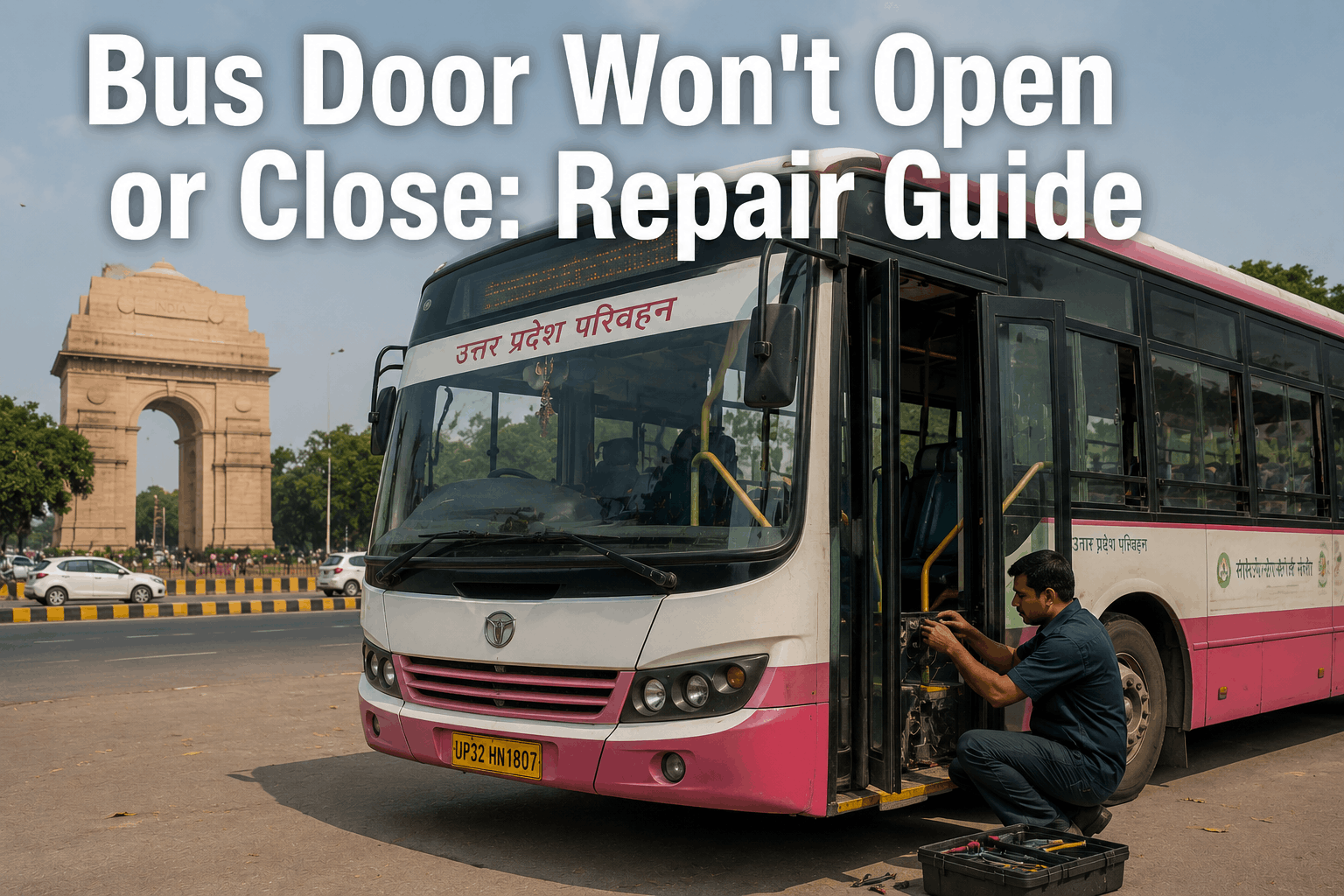
A bus door that won't open or close properly is a serious safety and operational issue. Passengers can't board or exit, schedules are disrupted, and safety is compromised. Whether your bus has pneumatic, electric, or hydraulic doors, this guide covers the most common causes—air supply issues, sensor failures, interlock problems, alignment issues, and motor failures—with diagnostic steps and repair solutions to get your doors working again.
Bus Door Repair Guide 2026
Bus Door Won't Open or Close: Repair Guide
Bus door won't open or close properly? Pneumatic, electric and hydraulic door repair guide. Air supply, sensors, interlocks, alignment and motors.
Door Failure Impact: The Cost of Inoperable Doors
A bus door that won't open or close properly is a safety hazard and operational nightmare. Passengers can't board or exit, schedules are disrupted, and safety inspections can be failed. Quick diagnosis and repair are essential for passenger safety and fleet efficiency.
$200-$800
Average door repair cost
20-40 min
Average diagnostic time
30-60 min
Average repair time
55%
Issues related to air supply
Door Diagnostic Flowchart
Step 1: Identify Door Type
Is it pneumatic (air), electric, or hydraulic? Each system has different diagnostic procedures.
Step 2: Check Air Supply
For pneumatic doors, check air pressure. Low pressure prevents door operation. Check compressor and lines.
Step 3: Check Power
For electric doors, check power and ground. Test door motor operation. Check circuit breakers and fuses.
Step 4: Check Sensors
Check door position sensors and safety sensors. Faulty sensors prevent door operation. Clean or replace sensors.
Step 5: Check Interlocks
Brake interlock and transmission interlock prevent door operation. Check interlock switches and wiring.
Step 6: Check Alignment
Check door alignment and track condition. Misaligned doors bind or won't close. Adjust or repair as needed.
Step 7: Success
Door operation restored! Document diagnosis and repair for future reference.
Top 5 Causes of Bus Door Failure
1. Air Supply Issues
Frequency: 30% of door failures. Low or no air pressure. Check compressor, air lines, and valves.
2. Sensor Failures
Frequency: 22% of door failures. Faulty position or safety sensors. Clean or replace sensors.
3. Interlock Problems
Frequency: 18% of door failures. Brake or transmission interlock issues. Check switches and wiring.
4. Alignment Issues
Frequency: 15% of door failures. Misaligned doors or tracks. Adjust alignment and clean tracks.
5. Motor Failure
Frequency: 10% of door failures. Failed electric door motor. Check power and motor operation. Replace motor.
Door Failure Causes Distribution
Air supply issues are the #1 cause at 30%, followed by sensor failures at 22%. Interlock problems account for 18%. Together, these three causes represent 70% of all door failure cases. Alignment issues and motor failures make up the remaining 30%.
Repair Cost by Cause
Alignment adjustment averages $60. Sensor replacement averages $120. Interlock repair averages $180. Air supply repair averages $250. Motor replacement is the most expensive at $400 average.
Door Failure & PM Trends
Door PM compliance and door failure trends show inverse correlation. As PM compliance improves from 60% to 95% over seven years, door failure incidents decrease from 35% to 7%. Regular lubrication, sensor cleaning, and air system checks prevent most door issues.
Door Type Quick Reference
Pneumatic Doors
Check air pressure (80-100 psi). Inspect air lines for leaks. Test door valves. Lubricate moving parts.
Electric Doors
Check power and ground. Test door motor. Check limit switches. Inspect wiring and connections.
Hydraulic Doors
Check hydraulic fluid level. Inspect hoses and fittings. Check pump operation. Test pressure.
Sensor Systems
Clean door position sensors. Check safety sensors. Test sensor outputs. Replace faulty sensors.
Interlock Systems
Check brake interlock switch. Test transmission interlock. Inspect wiring and connectors.
Quick Fix Decision
Check air pressure first (pneumatic). Check power first (electric). Check fluid first (hydraulic). Most issues are simple fixes.
Door Diagnostic KPIs
Track these five metrics to measure your door diagnostic program effectiveness:
Door Failure Incidents
Target: Decreasing trend per 100,000 miles. Track monthly. Spike indicates PM gaps.
Diagnostic Time
Target: Under 25 minutes average. Track by cause. Longer times indicate training gaps.
Door PM Compliance
Target: 100% at every PM. Track by bus. Missed PM causes door failures.
Passenger Delay Incidents
Target: Zero preventable delays. Track monthly. Spike indicates door issues.
Safety Inspection Compliance
Target: 100% pass rate. Track annually. Door failures cause inspection failures.
Our fleet of 80 buses implemented this door diagnostic workflow. In the first year, door failure incidents decreased by 55%. Average diagnostic time dropped from 35 to 18 minutes. Door PM compliance improved from 62% to 96%. Passenger delays from door issues decreased by 68%.
Digitize Your Door Diagnostic Program
BusCMMS guides technicians through every door diagnosis—air supply verification, power testing, sensor inspection, interlock checking, and alignment assessment. Track door failures, diagnostic time, and PM compliance. Auto-schedule door PM to prevent failures before they delay passengers.
Bus Door Repair FAQs
Why won't my bus door open or close?
The most common causes depend on the door type. For pneumatic doors, check air pressure (should be 80-100 psi). For electric doors, check power and motor operation. For hydraulic doors, check fluid level. Also check sensors, interlocks, and alignment.
How do I reset a bus door that won't close?
First, check for obstructions in the door track. Turn the bus off and on to reset the control module. Check the interlock systems (brake and transmission). If the door still won't close, manually check the door position and alignment.
What causes bus door sensors to fail?
Door sensors fail from dirt and debris buildup, moisture ingress, wiring damage, or age-related failure. Clean sensors regularly. Check for proper alignment. Replace sensors that fail testing.
How do I check a pneumatic door air supply?
Check the air pressure gauge on the bus dash. It should show 80-100 psi. Listen for air leaks around the door mechanism. Check air lines for cracks or damage. Test door operation with the engine running.
How often should bus doors be maintained?
Bus doors should be inspected and lubricated at every PM service (typically every 10,000-15,000 miles). Clean sensors monthly. Check air or hydraulic systems quarterly. Regular maintenance prevents most door failures.
Can BusCMMS track door diagnostics?
Yes. BusCMMS tracks all door diagnostics, air pressure readings, sensor tests, interlock checks, alignment adjustments, and repairs. The system generates diagnostic checklists and creates complete records for every door service in your fleet.
The Bottom Line
A bus door that won't open or close properly is a serious safety and operational issue that needs prompt attention. Understanding the top 5 causes—air supply issues (30%), sensor failures (22%), interlock problems (18%), alignment issues (15%), and motor failures (10%)—helps technicians diagnose problems fast and make smart repair decisions. The diagnostic flowchart provides a systematic approach: identify the door type, check air supply (pneumatic) or power (electric), inspect sensors, test interlocks, and check alignment. Most diagnoses can be completed in under 25 minutes. Regular door PM—lubrication, sensor cleaning, air system checks—prevents most door failures before they delay passengers or cause safety issues. When combined with BusCMMS diagnostic checklists and repair documentation, your maintenance team becomes proactive—catching door issues before they leave passengers stranded or buses out of service.