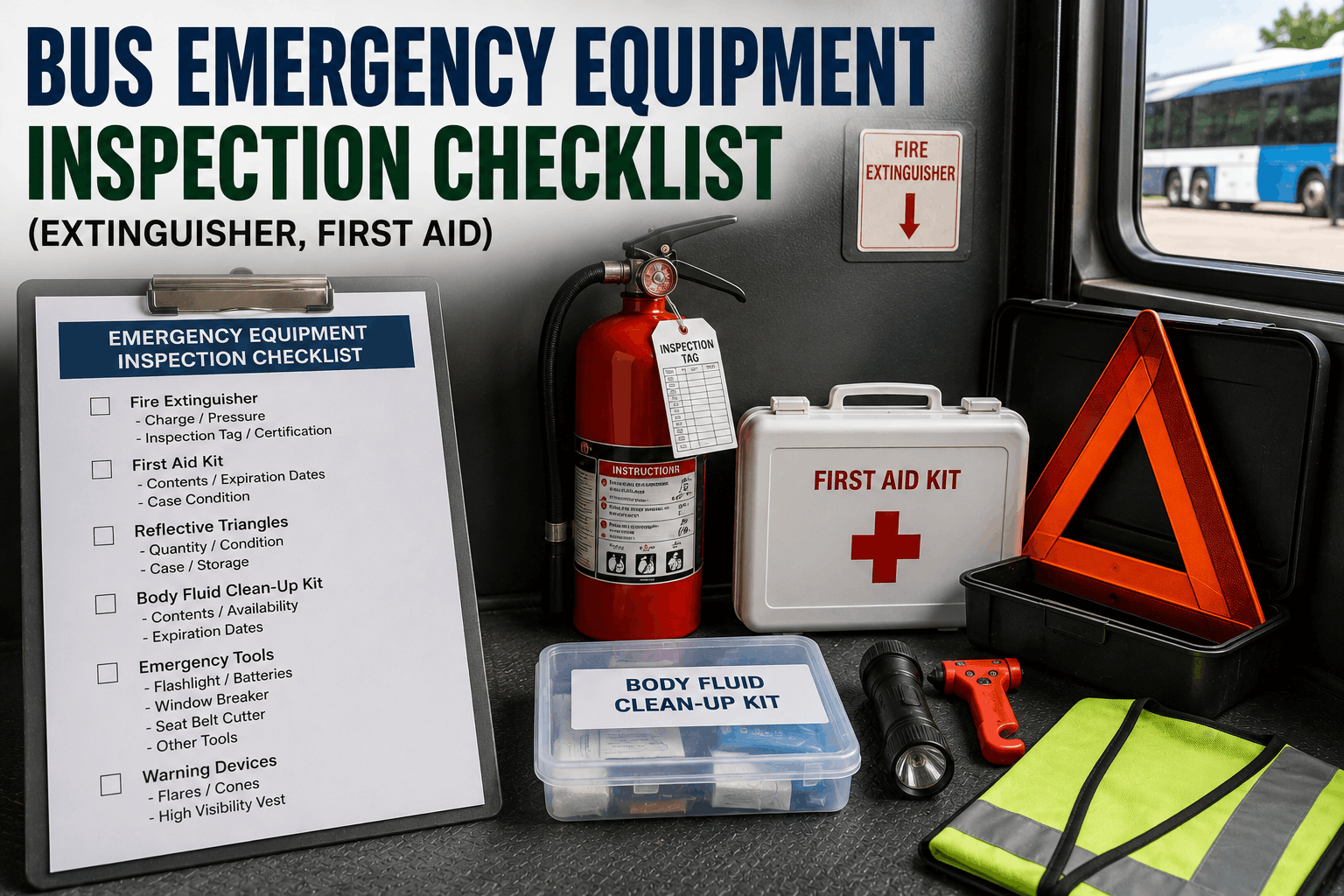
Emergency equipment is the difference between a minor incident and a major catastrophe when something goes wrong on a bus. A fire extinguisher that fails to discharge, a first aid kit that is missing critical supplies, or reflective triangles that are missing can turn a manageable situation into a tragedy. FMCSA and state DOT regulations require specific emergency equipment on every commercial bus, with documented inspections to verify condition and readiness. This comprehensive bus emergency equipment inspection checklist covers fire extinguisher charge and certification, first aid kit contents, reflective triangles, body fluid spill kits, emergency exit tools, and all other required safety equipment. Use it as your standard procedure for every emergency equipment inspection and DOT compliance verification.
Emergency Safety Guide 2026
Bus Emergency Equipment Inspection Checklist (Extinguisher, First Aid)
Bus emergency equipment inspection. Fire extinguisher charge and certification, first aid kit contents, reflective triangles, body fluid kit and emergency tools.
Why Emergency Equipment Inspections Are Critical: The Safety Reality
Emergency equipment inspections are often overlooked during routine PM services, yet they are among the most important safety checks you can perform. A fire extinguisher that has lost pressure or is past its certification date will not work when you need it most. A first aid kit that is missing supplies will not help treat injuries. Reflective triangles that are cracked or missing will not warn approaching traffic. FMCSA regulations require daily visual checks and periodic full inspections of all emergency equipment. In 2026, documented emergency equipment inspections are a key part of DOT compliance and driver qualification files.
The consequences of failed emergency equipment are severe. An expired fire extinguisher can result in fines up to $7,000 per violation. Missing first aid supplies can create liability after an incident. Inoperable reflective triangles can lead to citations and increased accident risk. A structured emergency equipment inspection process is the most effective way to ensure all safety equipment is ready when needed.
Emergency Equipment Categories: Complete Breakdown
Fire Extinguisher
Inspect for proper charge, certification date, and mounting. Must be accessible and secured. Replace if pressure gauge is in the red zone or certification has expired. Document inspection date and next due date.
First Aid Kit
Verify contents are complete and within expiration dates. Check for missing supplies, opened packages, or damage. Restock as needed. Document inspection date and next restock date.
Reflective Triangles
Inspect triangles for cracks, damage, or missing reflective material. Verify correct quantity (3 per bus). Check for proper storage location. Replace damaged units immediately.
Body Fluid Spill Kit
Inspect body fluid spill kit for completeness and expiration dates. Verify proper storage location. Check that all components (gloves, absorbent, bags) are present and sealed.
Emergency Tools
Verify emergency tools (hammer, wrench, pry bar) are present and accessible. Check for damage or wear. Ensure proper mounting and security.
Warning Devices
Inspect all warning devices (flares, warning lights, reflective vests) for condition and completeness. Verify quantities meet requirements. Check batteries in warning lights.
Emergency Equipment Inspection Checklist: The Complete Inspection
This comprehensive emergency equipment inspection checklist covers every required safety item. Use it during every emergency equipment PM service, pre-trip inspection, and annual DOT inspection.
Emergency Equipment Compliance Chart
The chart above shows typical emergency equipment compliance rates found during inspections. Fire extinguishers have the highest compliance rate because they are visually checked daily. First aid kits and body fluid kits often have expired components because they are not inspected regularly. Reflective triangles are frequently damaged or missing. Warning devices have the lowest compliance rate due to damaged flares and dead batteries. Regular inspections dramatically improve these rates.
Common Emergency Equipment Issues and Root Causes
Expired Fire Extinguisher
Cause: Forgotten certification date or no tracking system. Fix: Document expiration dates in CMMS. Set up 30-day alerts. Schedule professional inspection annually.
Missing First Aid Supplies
Cause: Kit was used without restocking, or supplies were removed. Fix: Inspect kit monthly. Restock immediately after use. Use sealed kits to prevent unauthorized removal.
Damaged Reflective Triangles
Cause: Improper storage or impact damage. Fix: Store triangles in protective cases. Inspect monthly for damage. Replace damaged units immediately.
Expired Body Fluid Kit
Cause: Forgotten expiration dates or no tracking system. Fix: Document expiration dates in CMMS. Set up alerts. Replace expired items immediately.
Missing Emergency Tools
Cause: Tools removed and not returned. Fix: Verify tools during monthly inspections. Secure tools with tamper-evident seals. Document missing tools immediately.
Expired Warning Devices
Cause: Forgotten expiration dates (flares, batteries). Fix: Document expiration dates in CMMS. Set up alerts. Test battery-operated devices monthly.
We implemented this emergency equipment inspection checklist across our 95-bus fleet after a first aid kit inspection found expired supplies in 62% of buses. In the first year, we identified and corrected over 200 emergency equipment issues—replaced 14 expired extinguishers, restocked 38 first aid kits, replaced 27 reflective triangles, and upgraded 43 body fluid kits. Our emergency equipment compliance rate improved from 68% to 97%. The checklist is now part of our monthly PM inspection routine, and we caught a leaking fire extinguisher during a PM inspection—before it failed during a real emergency.
Digitize Your Emergency Equipment Inspection Process
BusCMMS guides technicians through every emergency equipment inspection point—fire extinguisher pressure and certification, first aid kit contents and expiration dates, reflective triangle condition, body fluid kit completeness, and warning device verification. Auto-schedule emergency equipment PM intervals. Complete audit trail for every safety item in your fleet.
Bus Emergency Equipment FAQs
How often should fire extinguishers be inspected?
Fire extinguishers should be visually inspected daily (check pressure gauge, pin, and seal). Monthly inspections should check for physical damage and mounting. Professional annual inspection and certification are required. Hydrostatic testing is required every 5-6 years depending on extinguisher type.
What is required in a bus first aid kit?
FMCSA requires specific first aid kit contents for commercial vehicles. At minimum: adhesive bandages, gauze pads, roller bandages, adhesive tape, antiseptic wipes, gloves, scissors, and a first aid instruction booklet. School buses may have additional state-specific requirements. Always follow your state's guidelines.
How many reflective triangles does a bus need?
FMCSA requires three reflective triangles on all commercial vehicles, including buses. Some states require additional warning devices such as flares or reflective vests. Triangles must be kept in good condition with no cracks or missing reflective material. Check state regulations for additional requirements.
How often should first aid kits be checked?
First aid kits should be checked monthly for completeness and expiration dates. Kits should be checked immediately after any use and restocked the same day. Documentation of kit inspections is recommended for compliance records.
What is a body fluid spill kit and is it required?
A body fluid spill kit contains materials to safely clean up blood or other bodily fluids—gloves, absorbent powder, scoop, disinfectant, and disposal bags. It is required for school buses in most states and is recommended for all buses. Check your state regulations for specific requirements.
Can BusCMMS track emergency equipment inspection history?
Yes. BusCMMS tracks fire extinguisher certification dates, first aid kit expiration dates, reflective triangle condition, and all emergency equipment inspection results. This creates a complete safety equipment history for each bus, helping ensure regulatory compliance and passenger safety.
The Bottom Line
Bus emergency equipment inspections are not optional—they are safety-critical tasks that protect your passengers, your drivers, and your fleet's reputation. A fire extinguisher that fails to discharge, a first aid kit that is missing supplies, or reflective triangles that are missing or damaged can turn a manageable incident into a tragedy. Regular inspection of fire extinguisher pressure and certification, first aid kit contents, reflective triangles, body fluid kits, and warning devices is the most effective way to ensure safety equipment works when needed. This checklist provides the step-by-step procedure your technicians need to inspect every emergency equipment item. When combined with BusCMMS digital inspection forms, auto-scheduled PM intervals, and complete safety equipment history tracking, your emergency equipment program becomes proactive—catching issues before they become compliance violations or safety hazards.