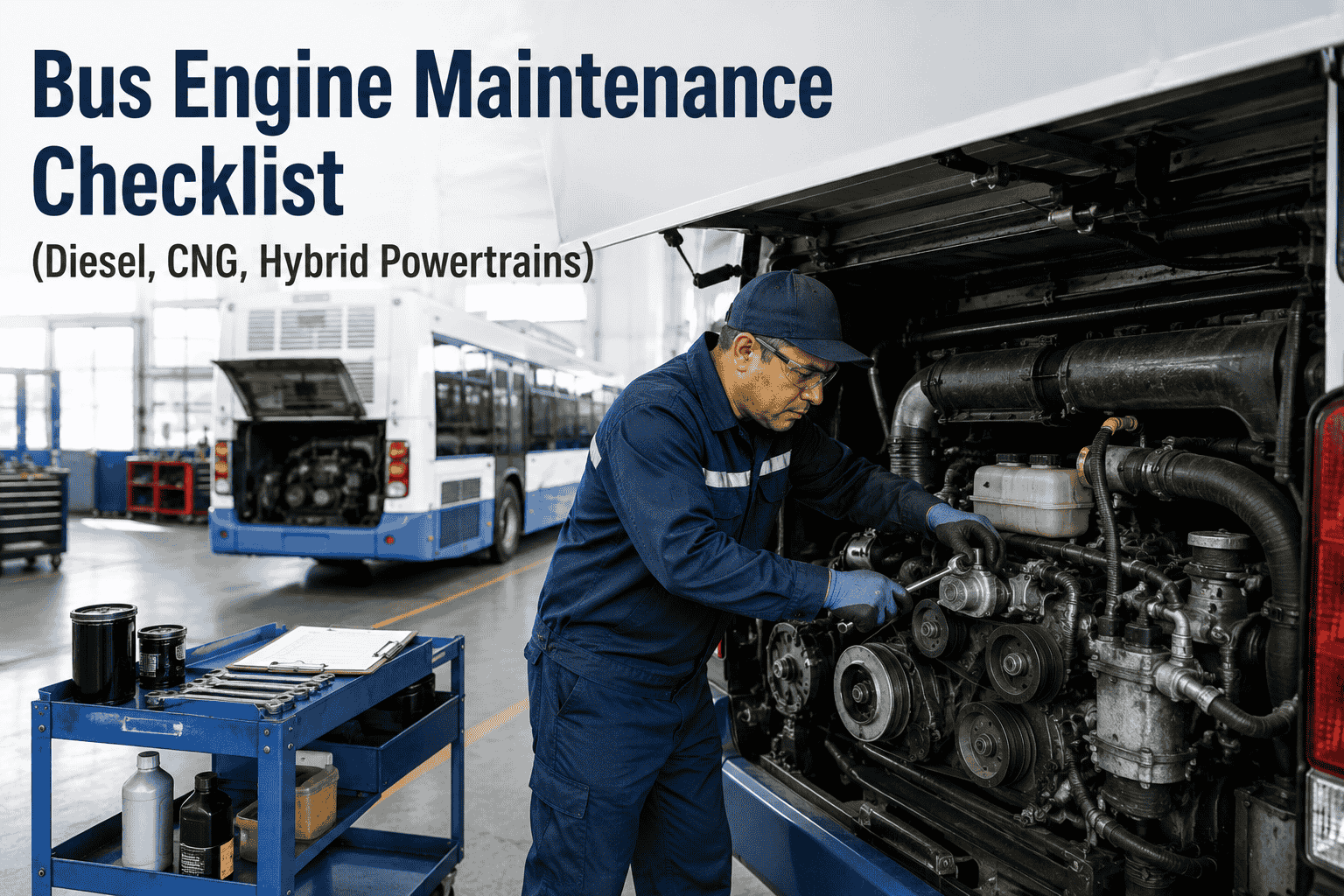
Bus engine maintenance is the most critical factor in fleet reliability and longevity. Whether your fleet runs diesel, compressed natural gas (CNG), or hybrid powertrains, engine maintenance intervals determine uptime, fuel efficiency, and emissions compliance. A properly maintained engine delivers 15-25% better fuel economy, lasts 30-50% longer, and experiences 60-70% fewer unplanned breakdowns. This comprehensive engine maintenance checklist covers oil and filter changes, coolant and belt inspections, injector service, emissions system maintenance, and powertrain-specific intervals for diesel, CNG, and hybrid buses. Use it as your standard engine PM procedure for every bus in your fleet.
Powertrain Maintenance Guide 2026
Bus Engine Maintenance Checklist (Diesel, CNG, Hybrid Powertrains)
Bus engine maintenance checklist for diesel, CNG and hybrid powertrains. Oil, filters, coolant, belts, injectors and emissions intervals by mileage.
Why Engine Maintenance Is the #1 Factor in Fleet Reliability
The engine is the heart of every bus. It is also the most expensive component to repair or replace. A major engine failure—head gasket, turbocharger, or bottom-end failure—typically costs $12,000–$25,000 and removes the bus from service for 3–8 days. Preventive engine maintenance costs a fraction of that: an oil change is $300–$600, a coolant flush is $400–$800, and a belt replacement is $150–$300. The ROI of engine PM is undeniable: every dollar spent on preventive engine maintenance saves $8–$12 in future repairs.
Engine maintenance is also the #1 factor in emissions compliance. Diesel engines require proper DPF regeneration, DEF dosing, and EGR system function to meet EPA standards. CNG engines require fuel system integrity and spark plug maintenance. Hybrid engines require cooling system management and electrical component inspection. Each powertrain type has specific requirements that must be documented and tracked.
Engine Maintenance Intervals: Diesel, CNG, Hybrid Comparison
The chart above shows typical engine maintenance intervals across powertrain types. Diesel oil changes are typically scheduled at 10,000–15,000 miles, CNG at 12,000–18,000 miles, and hybrid at 15,000–20,000 miles. DPF cleaning intervals depend on duty cycle and driving conditions, typically 20,000–30,000 miles for urban buses and 40,000–60,000 for highway routes. Coolant changes are recommended every 50,000–60,000 miles or 5 years, whichever comes first.
Diesel Engine Maintenance Checklist
Diesel engines remain the most common powertrain in U.S. bus fleets. Click each checkbox as your technician completes the inspection during every diesel engine PM service.
CNG Engine Maintenance Checklist
CNG engines have different maintenance requirements than diesel. Click each checkbox as your technician completes the inspection during every CNG engine PM service.
Hybrid Engine Maintenance Checklist
Hybrid powertrains combine internal combustion engines with electric motors. Click each checkbox as your technician completes the inspection during hybrid engine PM service.
Engine Oil Analysis: The Predictive Maintenance Tool
Oil analysis is the most effective predictive maintenance tool for bus engines. A laboratory oil analysis provides a wear snapshot showing which engine components are degrading before failure occurs. Regular oil analysis can extend engine life by 30-50% and reduce unplanned downtime by 60%. Most fleet managers should perform oil analysis at every oil change or at least annually.
Wear Metals
Iron, copper, lead, tin, aluminum levels indicate bearing, ring, and cylinder wear. Rising trends signal component degradation before failure occurs.
Fuel Dilution
Fuel in oil indicates injector or fuel system issues. Can also signal excessive idle time. If fuel dilution exceeds 4%, investigate immediately.
Coolant Contamination
Coolant in oil indicates head gasket or EGR cooler failure. Immediate investigation required to prevent catastrophic engine damage.
Oxidation & Viscosity
Oxidation indicates oil breakdown from high temperatures. Viscosity change suggests coolant or fuel contamination. Both require immediate attention.
"We standardized engine PM with this checklist across our 85-bus fleet. In the first year, we reduced engine-related breakdowns by 62%. Oil analysis caught three EGR cooler leaks before they caused engine damage. DPF cleaning intervals are now scheduled based on actual duty cycles, not guesswork. The checklist gives our technicians a consistent process that ensures no engine system is overlooked."
Digitize Your Engine Maintenance Process
BusCMMS guides technicians through every engine inspection point, captures oil analysis data, schedules PM intervals by mileage and time, and auto-generates work orders for repairs. No skipped steps. No measurement gaps. Complete audit trail for every engine PM.
Bus Engine Maintenance FAQs
What is the recommended oil change interval for diesel buses?
Typical oil change intervals for diesel bus engines are 10,000–15,000 miles, depending on manufacturer recommendations and duty cycle. Urban stop-and-go routes may require shorter intervals (8,000–10,000 miles), while highway routes can extend to 15,000–20,000 miles. Oil analysis should guide interval decisions. BusCMMS tracks mileage-based PM triggers automatically.
How often should DPF cleaning be performed?
DPF cleaning intervals depend on duty cycle. Urban buses with frequent starts and stops may require cleaning every 20,000–30,000 miles. Highway buses can extend to 40,000–60,000 miles. DPF regeneration frequency should be monitored through engine ECM data. If regeneration occurs too frequently or with excessive soot loading, inspect the DPF system.
What is the difference between diesel and CNG engine maintenance?
CNG engines require regular spark plug replacement (20,000–30,000 miles), ignition coil and wire inspection, and CNG fuel system maintenance. Diesel engines require fuel filter changes, DPF/SCR system maintenance, and EGR system cleaning. CNG engines typically use low-ash oil and may have different oil change intervals. Both require regular oil analysis and coolant system maintenance.
How often should engine coolant be changed?
Engine coolant should be changed every 50,000–60,000 miles or 5 years, whichever comes first. Coolant concentration should be checked annually (50/50 antifreeze/water). Test pH and freeze point. Hybrid vehicles require separate coolant changes for the engine and inverter cooling systems.
What are the common signs of engine failure in diesel buses?
Warning signs include: excessive exhaust smoke (white = coolant, blue = oil, black = over-fueling), unusual engine noise (knocking, tapping, or grinding), rough idle, reduced power, high oil consumption, coolant consumption without visible leaks, and illuminated engine warning lights. Any of these symptoms should trigger immediate diagnostic action.
Does BusCMMS support hybrid and CNG bus maintenance tracking?
Yes. BusCMMS supports all powertrain types with configurable PM templates. You can create separate PM templates for diesel, CNG, and hybrid buses with different inspection points, intervals, and parts requirements. The system tracks mileage, engine hours, and calendar intervals for each bus independently.
The Bottom Line
Bus engine maintenance is the single most important factor in fleet reliability, emissions compliance, and total cost of ownership. Diesel, CNG, and hybrid engines all require systematic, documented maintenance to prevent failures and extend service life. This checklist provides the step-by-step procedure your technicians need to maintain every engine type in your fleet. When combined with BusCMMS digital PM tracking, oil analysis history, and auto-scheduled work orders, your engine maintenance program becomes proactive rather than reactive—catching issues before they cause breakdowns, not after.