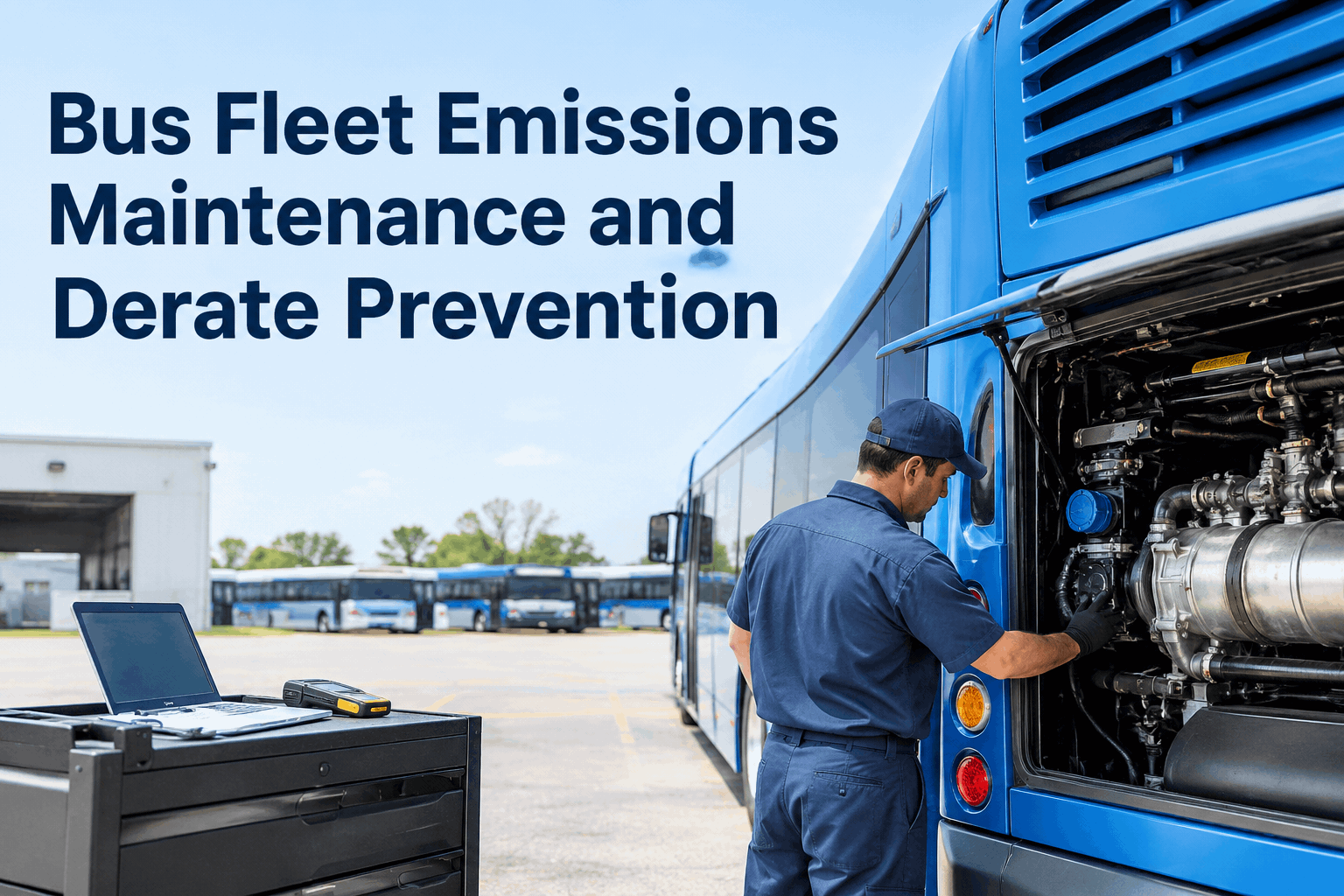
The exhaust and emissions system is one of the most complex and expensive systems on modern diesel buses. DPF (Diesel Particulate Filter), EGR (Exhaust Gas Recirculation), and SCR (Selective Catalytic Reduction) systems work together to meet EPA emissions standards—but they require regular inspection and maintenance to function properly. A clogged DPF can reduce fuel economy by 15-25% and cause engine derating. A failed EGR cooler can cause coolant loss and engine damage. An SCR system with low DEF quality can trigger derating and emissions violations. This comprehensive bus exhaust system inspection checklist covers DPF regeneration frequency and cleaning, EGR cooler inspection, SCR and DEF system verification, sensor function, and emissions readiness. Use it as your standard procedure for every exhaust system PM and emissions compliance inspection.
Emissions System Guide 2026
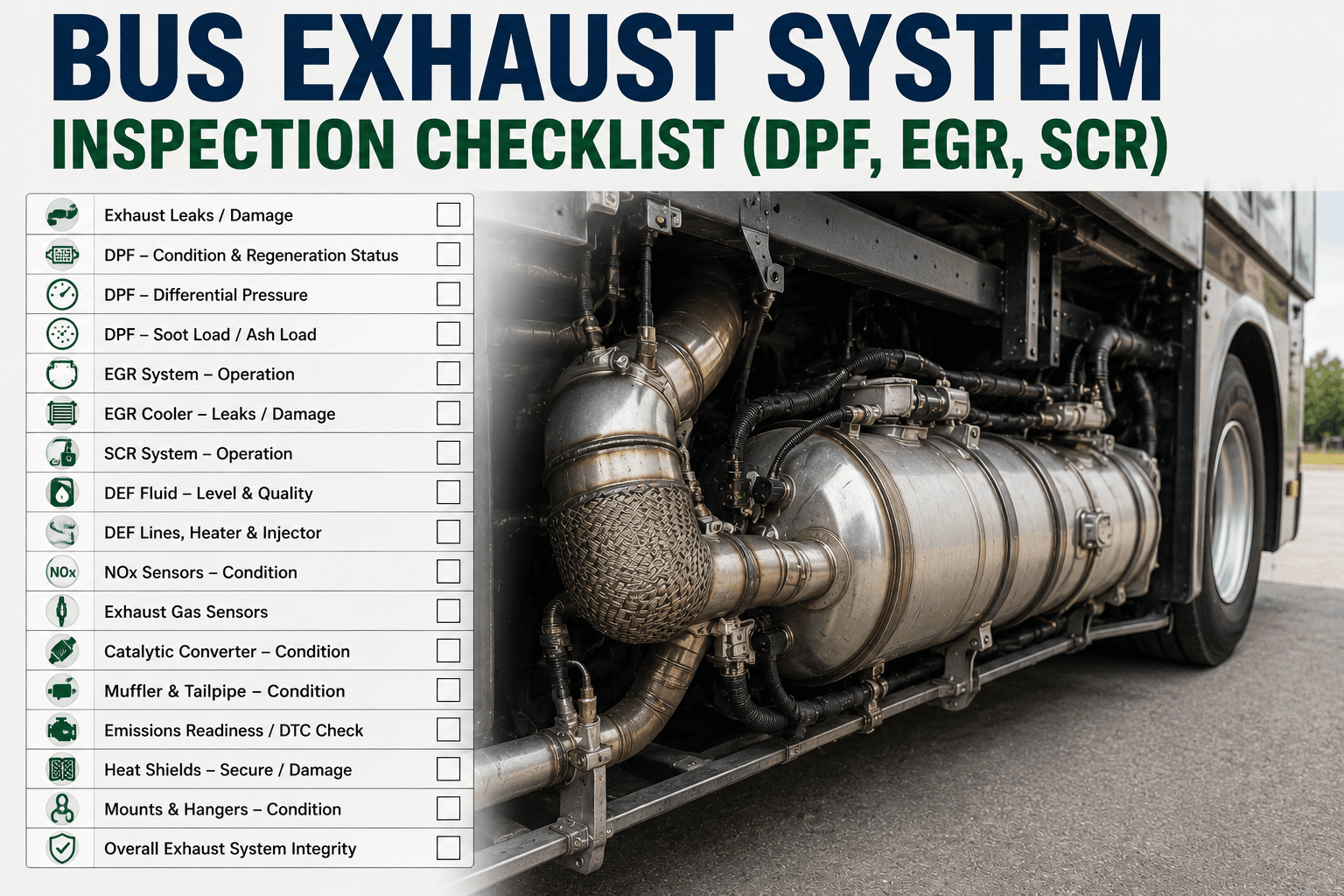
Bus Exhaust System Inspection Checklist (DPF, EGR, SCR)
Bus exhaust system inspection workflow. DPF regeneration, EGR cooler, SCR DEF system, particulate filter cleaning intervals, sensors and emissions readiness.
Why Exhaust System Inspections Are Critical: Emissions Compliance Reality
Exhaust system failures are among the most expensive and disruptive breakdowns in modern diesel bus fleets. A clogged DPF can derate the engine, reducing power and speed. A failed EGR cooler can cause coolant loss and catastrophic engine damage. An SCR system with low-quality DEF can trigger emissions warnings and derating. The most common exhaust system failures include: DPF clogging (requiring cleaning or replacement), EGR cooler failure (leaking coolant into exhaust), DEF quality issues (contamination or crystallization), NOx sensor failure, and exhaust leaks.
Regulatory requirements for exhaust systems are strict. EPA emissions compliance requires functioning DPF, EGR, and SCR systems. Annual DOT inspections include exhaust system checks. A single emissions system failure can trigger engine derating that limits bus speed and acceleration. A structured exhaust system inspection process is the most effective way to prevent emissions failures and maintain regulatory compliance.
Exhaust System Components: The Complete Breakdown
DPF (Diesel Particulate Filter)
Traps soot particles from exhaust. Requires periodic regeneration (burning off trapped soot). Inspect for excessive back pressure, damage, or ash accumulation. Clean at manufacturer intervals.
EGR (Exhaust Gas Recirculation)
Recirculates exhaust gas to reduce NOx emissions. Inspect EGR valve, cooler, and passages for carbon buildup. Check for coolant leaks in EGR cooler. Clean EGR system regularly.
SCR (Selective Catalytic Reduction)
Uses DEF to convert NOx to nitrogen and water. Inspect DEF quality and level. Check injector and lines for leaks. Verify system function through emissions data.
DEF (Diesel Exhaust Fluid)
32.5% high-purity urea solution injected into exhaust. Check fluid quality with refractometer. Inspect tank, pump, and lines for leaks. Maintain DEF at proper concentration.
Exhaust Sensors
NOx sensors, temperature sensors, and pressure sensors monitor system function. Inspect sensors for damage or contamination. Verify sensor readings are within specification.
Exhaust Pipes and Muffler
Inspect exhaust pipes for leaks, corrosion, or damage. Check hangers and supports. Verify muffler condition. Replace damaged components.
Exhaust System Inspection Checklist: The Complete Inspection
This comprehensive exhaust system inspection checklist covers every major emissions component. Use it during every exhaust system PM service, emissions compliance inspection, and annual DOT inspection.
DPF Regeneration Performance Analysis
The chart above shows DPF regeneration frequency over time. A healthy DPF regenerates every 200-400 miles in normal operation. When regeneration frequency increases (interval decreases), it indicates the DPF is becoming clogged with ash that cannot be burned off during normal regeneration. This is the most important performance metric for DPF health—when regeneration interval drops below 200 miles, the DPF should be cleaned or replaced.
Common Exhaust System Issues and Root Causes
DPF Clogging
Cause: Excessive idling, short trips preventing regeneration, fuel contamination, or oil ash accumulation. Fix: Perform DPF cleaning or replacement. Address root cause.
EGR Cooler Failure
Cause: Coolant contamination, thermal stress, or corrosion. Fix: Replace EGR cooler. Inspect cooling system for contamination. Flush system as needed.
DEF Quality Issues
Cause: Contamination, water absorption, or crystallization. Fix: Drain and replace DEF. Inspect tank, pump, and lines for contamination. Use only API-certified DEF.
NOx Sensor Failure
Cause: Thermal stress, exhaust contamination, or electrical failure. Fix: Replace NOx sensor. Inspect sensor wiring and connectors. Verify sensor after replacement.
Exhaust Leak
Cause: Failed gasket, cracked pipe, or broken flex joint. Fix: Replace damaged components. Verify leak repair with smoke test.
Emissions Derating
Cause: DPF clogging, DEF system failure, or sensor failure. Fix: Diagnose root cause. Repair system. Clear derating condition.
We implemented this exhaust system inspection checklist across our 85-bus fleet after repeated DPF clogging issues. In the first year, we caught 14 DPF systems that needed cleaning before they caused derating, 8 EGR coolers with leaks, and 12 DEF quality issues. We also identified 7 NOx sensors that were failing and would have triggered emissions codes. Our exhaust-related breakdowns dropped by 75%, and our emissions compliance pass rate improved to 100%. The DPF regeneration trend analysis is particularly valuable—it gives us 2-3 weeks of warning before a DPF would have clogged and caused derating.
Digitize Your Exhaust System Inspection Process
BusCMMS guides technicians through every exhaust system inspection point—DPF condition and regeneration frequency, EGR valve and cooler inspection, SCR and DEF system verification, NOx sensor monitoring, emissions readiness, and exhaust leak detection. Auto-schedule exhaust system PM intervals based on mileage. Complete audit trail for every exhaust component in your fleet.
Bus Exhaust System FAQs
What is DPF regeneration and how often should it occur?
DPF regeneration is the process of burning off trapped soot by raising exhaust temperature. Active regeneration should occur every 200-400 miles in normal operation. Passive regeneration occurs during highway driving. Excessive regeneration (more than once per 100 miles) indicates DPF clogging or sensor issues requiring service.
How often should a DPF be cleaned?
DPF cleaning intervals vary by duty cycle. Highway buses: 150,000-250,000 miles. Urban buses: 100,000-150,000 miles. Severe duty: 80,000-100,000 miles. Monitor DPF pressure drop and regeneration frequency—cleaning is needed when pressure drop exceeds specification.
What is DEF and why is it important?
DEF (Diesel Exhaust Fluid) is a 32.5% urea solution injected into the exhaust stream to reduce NOx emissions. DEF quality is critical—contaminated or low-quality DEF can damage the SCR system and trigger derating. Always use API-certified DEF and test quality regularly.
What are the signs of a failing EGR cooler?
Signs include: coolant loss without visible leaks, white smoke from exhaust, coolant smell in exhaust, EGR cooler pressure test failure, and elevated engine temperatures. Any of these symptoms should trigger immediate inspection.
What causes NOx sensor failure?
NOx sensors fail from thermal stress, exhaust contamination, or electrical failure. They typically last 100,000-150,000 miles. Monitor sensor readings—if readings are inconsistent or out of specification, replace the sensor promptly.
Can BusCMMS track exhaust system inspection history?
Yes. BusCMMS tracks DPF cleaning history, regeneration frequency trends, EGR and SCR inspection results, DEF quality test results, and emissions fault codes. This creates a complete exhaust system history for each bus, helping identify wear patterns and predict maintenance needs.
The Bottom Line
Bus exhaust system inspections are essential for emissions compliance, engine performance, and fleet reliability. DPF clogging, EGR cooler failure, and SCR system issues are among the most expensive and disruptive breakdowns in modern diesel fleets. Regular inspection of DPF regeneration frequency, EGR valve and cooler condition, DEF quality, and NOx sensor function is the most effective way to prevent emissions failures and maintain engine performance. This checklist provides the step-by-step procedure your technicians need to inspect every exhaust system component—DPF, EGR, SCR, DEF, sensors, and exhaust pipes. When combined with BusCMMS digital inspection forms, auto-scheduled PM intervals, and complete emissions history tracking, your exhaust maintenance program becomes proactive—catching issues before they cause derating, emissions violations, or engine damage.