Buying a bus is one of the biggest checks a small operator writes, and how you pay for it matters almost as much as which bus you buy. Loan, lease, or equipment financing — each bus financing option shapes your cash flow, your taxes and what you own at the end. This compares them in plain language; your lender and accountant settle the terms. You can see what a bus really costs to own in a demo as you plan the purchase.
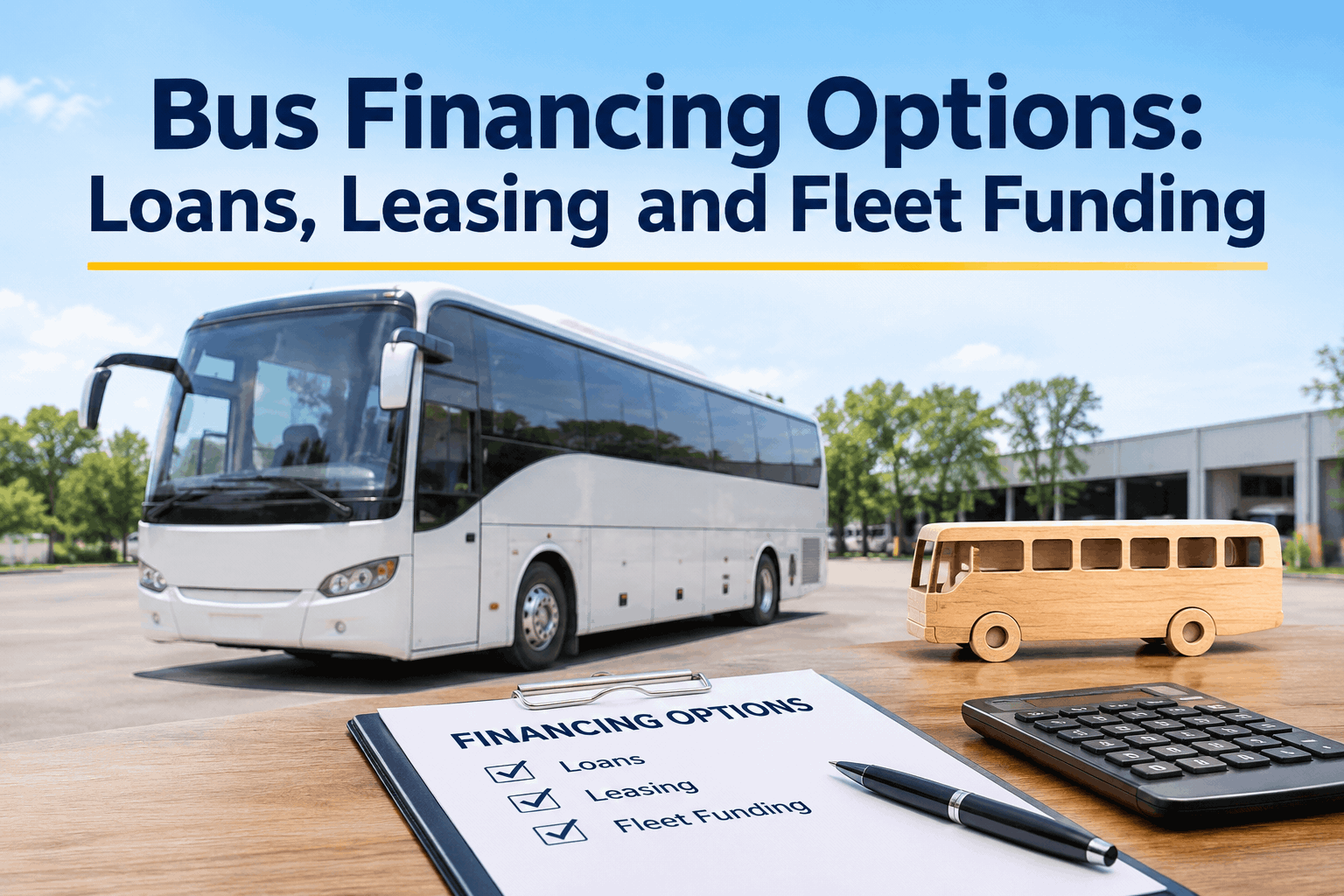
Bus Financing Options: Loans, Leasing and Fleet Funding
Every way of paying for a bus sits somewhere between pure flexibility and full ownership. Knowing where each option falls is the fastest way to find the one that fits a small operator's cash flow.
The Main Bus Financing Options, Plainly
Most small bus and shuttle operators end up choosing among three structures, with a few variations. The right bus financing option depends less on the headline rate than on how long you will keep the bus and how much cash you want to keep free.
Commercial or equipment loan
You borrow to buy, make payments over a set term, and own the bus free and clear at the end. Higher monthly cost, but it becomes an asset and you build equity.
Operating lease
Closer to a long-term rental — lower monthly payments, often little down, and you hand the bus back at term end. Good for cycling into newer buses, but watch the mileage cap.
Finance / $1-buyout lease
A lease structured so you own the bus at the end for a nominal amount. Lower payment than a loan while still ending in ownership — a common middle path.
SBA loans & lines of credit
SBA-backed loans can offer flexible terms for qualifying operators, and a line of credit keeps bank capital free. Both are worth asking your lender about.
There are more variations — TRAC leases, sale-leaseback, dealer financing — but these cover most small-operator decisions. Which one wins for you is a cash-flow and tax question as much as a rate question, so sign up free and start tracking the costs that feed that decision, and run the terms past your accountant.
Don't Compare the Payment — Compare the Total Cost
The single most common financing mistake is choosing the lowest monthly payment. The payment is only the tip of what a bus costs you. Fuel, maintenance, downtime and insurance run underneath it for years, and they dwarf the financing line — so the real comparison is total cost of ownership, not the quote.
A bus with a slightly higher payment but lower fuel burn and fewer road calls can be far cheaper over five years than the one with the tempting low lease rate. You can only see that if you track the whole picture per bus — which is exactly where a CMMS earns its keep. Book a demo to see a full cost-of-ownership view built from real data.
Loan vs Lease: A Side-by-Side Comparison
Here is how the three main structures stack up on the factors a small operator actually feels — payment, cash up front, ownership and what happens at the end of the term.
| Factor | Commercial loan | Operating lease | Finance / $1 buyout |
|---|---|---|---|
| Monthly payment | Higher (full price + interest) | Lowest (pay for use only) | Lower than a loan |
| Cash up front | Often 10–20% down | Little to none | Low |
| Own it at the end? | Yes, outright | No — unless you buy it | Yes, for a nominal sum |
| End-of-term options | Keep, sell or refinance | Return, renew or upgrade | You own it — keep or sell |
| Best suited to | Long holds, building equity | Cycling to newer buses | Lower payment but want to own |
None of these is "best" in the abstract — a charter operator cycling coaches every four years and a school contractor keeping buses twelve years will land in different columns. See how the asset side fits a passenger operation on the passenger and transit page, and confirm the numbers with a lender and your accountant before you sign.
Before You Finance a Bus: A Readiness Checklist
Walk through this before you sit down with a lender. The critical items are the ones that change which option is right — and that get you better terms when you apply.
- You know the bus's total cost of ownership, not just the quoted paymentThe cheapest payment and the cheapest bus are rarely the same unit.CRITICAL
- You know what you need to finance and whenA replacement plan tells you the amount and the timing before you borrow.CRITICAL
- Your fleet records and condition support the applicationA documented, well-kept fleet strengthens your case and the residual.CRITICAL
- You've compared loan vs lease over the full term, not month oneTotal cost over the whole hold is what separates the options.PLAN
- You've checked lease mileage and condition limits against your routesA mileage cap you blow past turns a cheap lease into penalty fees.PLAN
- You've confirmed rates, terms and tax treatment with the prosA lender sets the rate; an accountant handles the tax side.PLAN
The three critical items are all data about your own fleet — and that is what BusCMMS keeps ready. You can sign up free and start building that record before you apply.
How BusCMMS Supports a Financing Decision
BusCMMS is not a lender, a broker or a financial advisor — it is the asset side of the decision. It gives you the numbers that make a financing choice a smart one and keeps the bus worth what you financed it for.
Know what & when to finance
A replacement forecast from age, mileage and cost data tells you the amount and the timing before you ever talk to a lender.
Compare on true total cost
Cost per mile and full ownership cost per bus, so you weigh loan against lease on what the bus really costs, not the quoted payment.
Protect residual & lease-end
Service records plus mileage and condition tracking keep resale value up and help you avoid lease-end penalty charges.
Financing gets the bus on the road; this is what keeps the deal a good one across the whole term it is on your books — you can book a demo to see these numbers for your own fleet.
A Small Operator's Take
Key Takeaways on Bus Financing Options
The right bus financing option is the one that fits how long you keep buses and how much cash you want free — judged on total cost, not the monthly quote.
Use-to-own is a spectrum
Operating lease for flexibility, loan for ownership, finance lease in between.
Total cost beats the payment
Fuel, maintenance and downtime dwarf the financing line — compare the whole.
Mind the lease fine print
Mileage caps and condition charges can erase a low lease rate's advantage.
Bring data to the lender
A documented fleet and a replacement plan win better terms and the right amount.
Know what each bus truly costs, plan what you need and when, and keep clean records — and whichever financing route you take, you walk in prepared and come out with a deal that fits. The payment is where it starts; the total cost is where it is won.