Your district approved the budget for 6 new buses. You buy 6 brand-new Type C school buses at $120,000 each — $720,000 total. Three years later: Bus #51 has cost $0.74/mile in maintenance. Bus #52 has cost $0.31/mile. Same make, same model, same year, same routes. The difference? Bus #51 was a dealer's demo with 18,000 miles of undisclosed stop-and-go driving. If you'd inspected it before buying, you'd have negotiated $8,000 off or walked away. Instead, you've spent $14,200 more in 3 years. The bus you buy matters. The inspection before you buy matters more. The system that tracks cost from mile one tells you the truth about every decision you made.
2026 Buyer's Guide
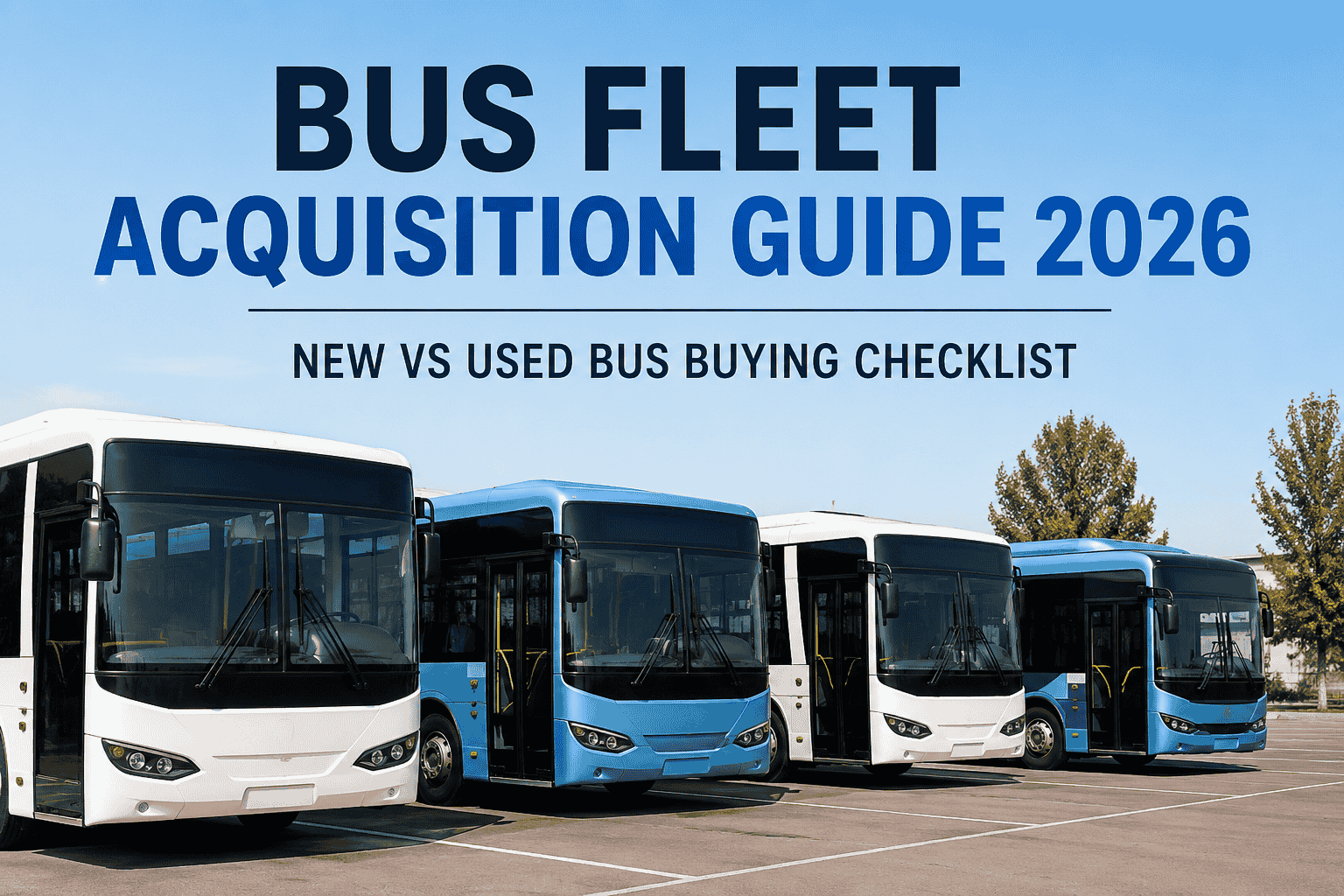
Bus Fleet Acquisition Guide 2026: New vs Used Bus Buying Checklist
Pre-purchase inspection. New vs used decision framework. OEM comparison. Lifecycle cost analysis. And how to track every dollar from mile one.
The True Cost of a Bus
01
2026 Bus Pricing — What Buses Actually Cost
02
The $35K "Cheap" Bus That's Actually 55% More Expensive
Used Bus
Purchase
$35,000
Cost/mile
$0.71
Service life
5 years
Total mileage
180,000 mi
Total cost
$163,000
Cost per year
$32,600
vs
New Bus
Purchase
$120,000
Cost/mile
$0.31
Service life
12 years
Total mileage
360,000 mi
Total cost
$253,000
Cost per year
$21,100
The "cheaper" bus costs 55% more per year of service. You can't see this without per-bus cost data — and that data starts the day you add the bus to BusCMMS.
03
New vs Used: The Decision Framework
Buy New When
- Capital budget or bond financing available
- Plan to operate 12–15 years
- Clean School Bus rebates cover incremental cost
- Warranty coverage essential (3–5 yr powertrain)
- Standardizing one make/model for parts
- Transitioning to electric or CNG
Buy Used When
- Budget is tight — 30–50% savings upfront
- Need buses now (new = 6–12 mo lead time)
- Your shop handles higher maintenance demands
- Buying from district with documented records
- Avoiding first-year depreciation (25–35% loss)
- Short-term need (5–8 years)
Track both new and used bus costs from day one — sign up now
04
Pre-Purchase Inspection: 8 Areas That Reveal the Truth
A $300–$500 inspection saves $5,000–$15,000 in hidden costs. Click items as inspected:
1–4
Mechanical & Structural
The systems that cost the most if missed
5–8
Electrical, Safety & Documentation
The items sellers don't disclose
Use this checklist digitally as your baseline record — book a demo
05
5 Red Flags That Kill a Used Bus Deal
Incomplete Records
Hidden cost: $3K–$5K deferred maintenance
High Idle Hours vs Low Miles
60K mi + 8K idle hrs = more worn than 120K mi
Salt-Belt Frame Rust
Structural failure risk. Sunbelt buses = 10–15% premium
DPF at 80%+ Soot
Cleaning $800 · Replacement $3,500+
Seller Blocks Inspection
Walk away. $300 inspection saves $5K–$15K
06
Day One: 25-Minute CMMS Onboarding for Every Acquisition
Step 1 — VIN Entry (3 min)
Enter VIN — BusCMMS auto-populates make, model, year, engine type from manufacturer database
Step 2 — Fuel Type (2 min)
Select diesel, electric, CNG, or propane — system auto-loads the correct PM template per powertrain
Step 3 — Purchase Price + Docs (5 min)
Enter acquisition cost, upload inspection results, warranty, insurance — cost tracking baseline set
Step 4 — PM Configuration (5 min)
Multi-trigger PM: mileage + calendar + engine hours all active. Whichever hits first generates work order
Step 5 — Driver + Route (3 min)
Link driver, assign route, connect GPS device. DVIRs auto-route. Odometer syncs automatically.
Step 6 — First DVIR (2 min)
Bus is live. Every mile, cost, PM, and work order tracked from this point forward. Audit-ready from day one.
Every bus without a CMMS profile is accumulating invisible costs. No cost-per-mile. No replacement threshold. No data for the next purchase. The onboarding takes 25 minutes. The visibility lasts 12–15 years.
The Bottom Line
Whether new or used, diesel or electric — purchase price is 30% of total cost. The other 70% is maintenance, fuel, and operations over 12–15 years. Pre-purchase inspection catches hidden problems. Per-bus cost tracking proves which decisions were right. BusCMMS does both — baseline record on day one, lifetime tracking from mile one, replacement alerts when it's time to buy again.
Start your fleet's cost story today — sign up free for 14 days
Frequently Asked Questions
Should I buy new or used school buses?
Depends on budget, timeline, and service life. New: capital available, 12–15 year plan, warranty needed, EV transition. Used: tight budget (30–50% savings), immediate need, 5–8 year plan. Lifecycle cost per year of service is the real metric — not sticker price.
How much does a school bus cost in 2026?
New Type C diesel: $110K–$150K. Type D: $150K–$200K. Electric Type C: $350K–$400K (before EPA rebates up to 100%). Used Type C (5–10 yrs): $15K–$50K. Used (10–15 yrs): $8K–$15K.
What should I check before buying a used bus?
Five critical areas: (1) Complete maintenance records, (2) Idle hours vs mileage ratio, (3) Frame rust at crossmembers, (4) DPF/aftertreatment condition ($3,500+ repairs), (5) Annual inspection history. Always get an independent inspection ($300–$500).
How does BusCMMS track acquisition cost?
Enter purchase price at onboarding. Every PM, work order, part, and labor hour tracks per bus. Cost-per-mile calculates automatically. Replacement threshold alerts at $0.60–$0.75/mile. Plans start at $4/bus/month with a free 14-day trial.
What funding is available for bus purchases in 2026?
EPA Clean School Bus Program ($5B, up to 100% for electric), municipal bonds (25–35% lower interest), lease-to-own (5–7 year spread), state transportation aid (50–80% reimbursement). Electric has the strongest incentives in 2026.