Hottest afternoon of the summer, the bus is full on a grade, and the temperature gauge is creeping toward the red. Almost every overheat that ends in a tow was preventable — which is the point of bus engine cooling system maintenance. Catch a low coolant level or a tired thermostat on a routine check, and the gauge never climbs. You can see how cooling-system checks get scheduled and tracked in a demo.
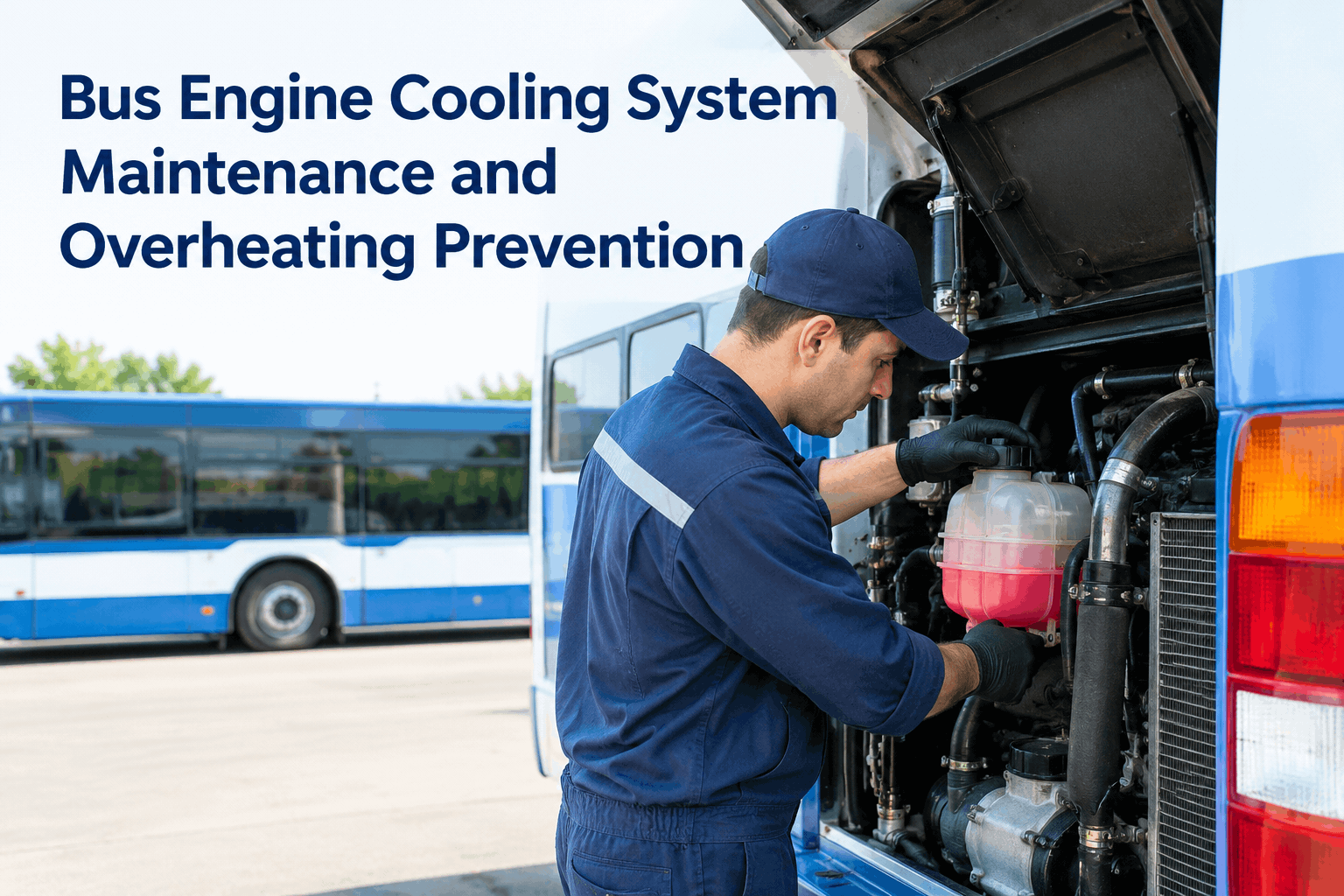
Bus Engine Cooling System Maintenance and Overheating Prevention
An overheated engine is one of the most expensive failures a bus can have — and one of the most preventable. Here is how the cooling system works, the five things that make a bus overheat, and the maintenance routine that catches them first.
How a Bus Cooling System Works — and Why It Matters
The job is simple to describe and brutal when it fails: the engine makes heat, coolant carries that heat away, and the radiator sheds it to the air. The water pump keeps the coolant moving, and the thermostat decides when to send it to the radiator. When any one of those links weakens, heat has nowhere to go — and a diesel bus engine does not forgive overheating. A single bad overheat can warp a cylinder head or crack a block, turning a routine coolant check into a five-figure rebuild.
Overheating is almost never sudden. It is a slow drift a routine check would have caught — a dropping coolant level, a weeping hose, a radiator packed with road grime.
Because the warning signs show up in the bay well before the gauge does, keeping those checks on a schedule is the whole prevention strategy — you can walk through how those checks are scheduled per bus in a demo.
The 5 Causes of Bus Overheating — and How to Catch Each
Nearly every overheating event traces back to one of five points on that cooling loop. Knowing the tell for each is how a driver's "it's running a little warm" becomes a specific check instead of a guess.
Low coolant or a leak
The most common cause by far. A weeping hose, a seeping radiator, or a bad cap drops the level until there is not enough coolant to carry the heat.
Catch it: coolant level on the pre-trip, and look for puddles and crust.A failing thermostat
Stuck closed, it blocks coolant from reaching the radiator and the temperature spikes fast — even with a full system and a good pump.
Catch it: temp that climbs quickly then runs hot; test on PM.A clogged or blocked radiator
Bugs, leaves, and road grime pack the fins; internal scale restricts flow. Either way the radiator cannot shed the heat it is handed.
Catch it: inspect and clean the core; flush coolant on interval.Water-pump failure
A worn impeller or a failing bearing stops moving coolant. Listen for a whine or a weep from the pump; a dead pump overheats a bus in minutes.
Catch it: check for weeping and bearing noise during inspection.Fan, belt, or fan clutch
At low speed the fan does the cooling. A slipping belt or a failed fan clutch means no airflow through the radiator in stop-and-go service.
Catch it: belt condition and fan engagement on the PM.The pattern is clear: every one of these is visible on a routine inspection before it becomes a roadside event. The trick is making sure those checks actually happen on every bus, every interval — start free and put cooling-system checks on a schedule.
What an Overheat Actually Costs — Caught vs Missed
The reason cooling maintenance pays for itself is the sheer gap between catching a problem early and letting it run to failure. The same root cause lands in two wildly different places depending on when you find it.
Caught on inspection
- Top off coolant, replace a hose or a cap
- Flush the system, clean the radiator core
- Swap a thermostat or a belt on a PM
- Bus stays in service, planned shop time
Run to overheat
- Warped cylinder head or blown head gasket
- Cracked block — often a full engine rebuild
- A bus towed off a route, riders stranded
- Unplanned downtime hitting fleet availability
That gap — a hose clamp versus an engine — is the entire argument for preventive cooling maintenance. Book a demo to see how a flagged coolant defect becomes a work order before it becomes a rebuild.
A Preventive Cooling-System Maintenance Schedule
Overheating prevention is not one big job — it is a few small checks at the right intervals. Daily eyes catch the obvious, periodic inspections catch the developing, and a coolant service on interval keeps the whole system healthy. Here is a practical cadence to build from.
Swipe sideways to see all columns
Coolant service intervals vary by engine and coolant type, so follow your OEM's schedule rather than a generic number. The win is making sure none of these intervals quietly slips on a busy fleet — book a demo to see cooling-system PM scheduled per bus.
The Bus Cooling-System Inspection Checklist
Run this on each bus at the right interval. It is the short list that keeps a temperature gauge where it belongs — and the items left unchecked are where an overheat starts.
- Coolant level and condition checkedLevel is full and the coolant is clean, not rusty or oily, on every pre-trip.DAILY
- No leaks, puddles, or coolant crustLook under the bus and around hoses, the pump, and the radiator for seepage.DAILY
- Hoses, clamps, and belts inspectedNo soft, cracked, or bulging hoses; belts tensioned and not glazed or frayed.PERIODIC
- Radiator core clean and unobstructedFins clear of bugs, leaves, and grime so air can pull through.PERIODIC
- Thermostat and water pump functioningTemp holds steady in range; no pump whine or weep; tested on service PM.PERIODIC
- Coolant flush done on OEM intervalSystem flushed and refilled on schedule, with a pressure test to confirm no leaks.SERVICE
The daily items take a driver seconds; the periodic and service items are where a tracked PM schedule earns its keep. Start free and turn this checklist into a tracked inspection.
How BusCMMS Helps Prevent Bus Overheating
Overheating prevention is really a scheduling-and-follow-through problem — the checks are simple, but they have to happen on every bus, every interval, with defects actually acted on. That is exactly what a bus-built CMMS keeps from slipping.
Cooling checks in the DVIR + PM
Coolant level and temp sit in the daily pre-trip; radiator and cooling-system inspections schedule by mileage or time.
Defects become work orders
A flagged leak or soft hose turns into a tracked work order with an owner, so it is fixed before it strands a bus.
High-temp fault codes auto-flag
With telematics connected, a high-coolant-temperature fault code can open a work order automatically — an early warning, logged.
The result is a cooling program that runs on a schedule instead of on memory, with every check and repair kept in the bus's record. You can book a demo and see cooling-system tracking on your own buses.
A Shop Foreman's Take
We used to lose a couple of engines a year to overheats — always the same story, a slow coolant leak nobody logged until the gauge spiked on a hot day. We put coolant level on the daily pre-trip and the radiator and hose checks on a real PM schedule. Last year, zero overheats and zero engine rebuilds from cooling. The checks were never the hard part. Making sure they actually happened on all forty buses was. Now they do.
Key Takeaways on Bus Engine Cooling System Maintenance
Overheating is preventable
Nearly every overheat is a slow drift a routine check would have caught early.
Five causes, all catchable
Low coolant, bad thermostat, blocked radiator, pump, and fan/belt — each has a tell.
The cost gap is enormous
A hose clamp caught early versus a cracked block is the whole case for PM.
The schedule is the real work
The checks are simple; making them happen on every bus is where tracking wins.
Treat bus engine cooling system maintenance as a short, reliable routine — daily coolant eyes, periodic inspections, a coolant service on interval — and overheating stops being a summer emergency and becomes a line item you never worry about. The system is simple; the discipline to keep every bus on it is what saves the engine.