The forecast says 98°F by Thursday, and you've got a bus whose AC was “a little weak” last week and another that ran hot on a hill in June. Heat doesn't break a fleet gradually — it breaks it all at once, on the first brutal afternoon. Bus fleet heat-wave readiness is the prep you do before that afternoon, not during it. You can see how heat-prep checks get scheduled across every bus in a demo.
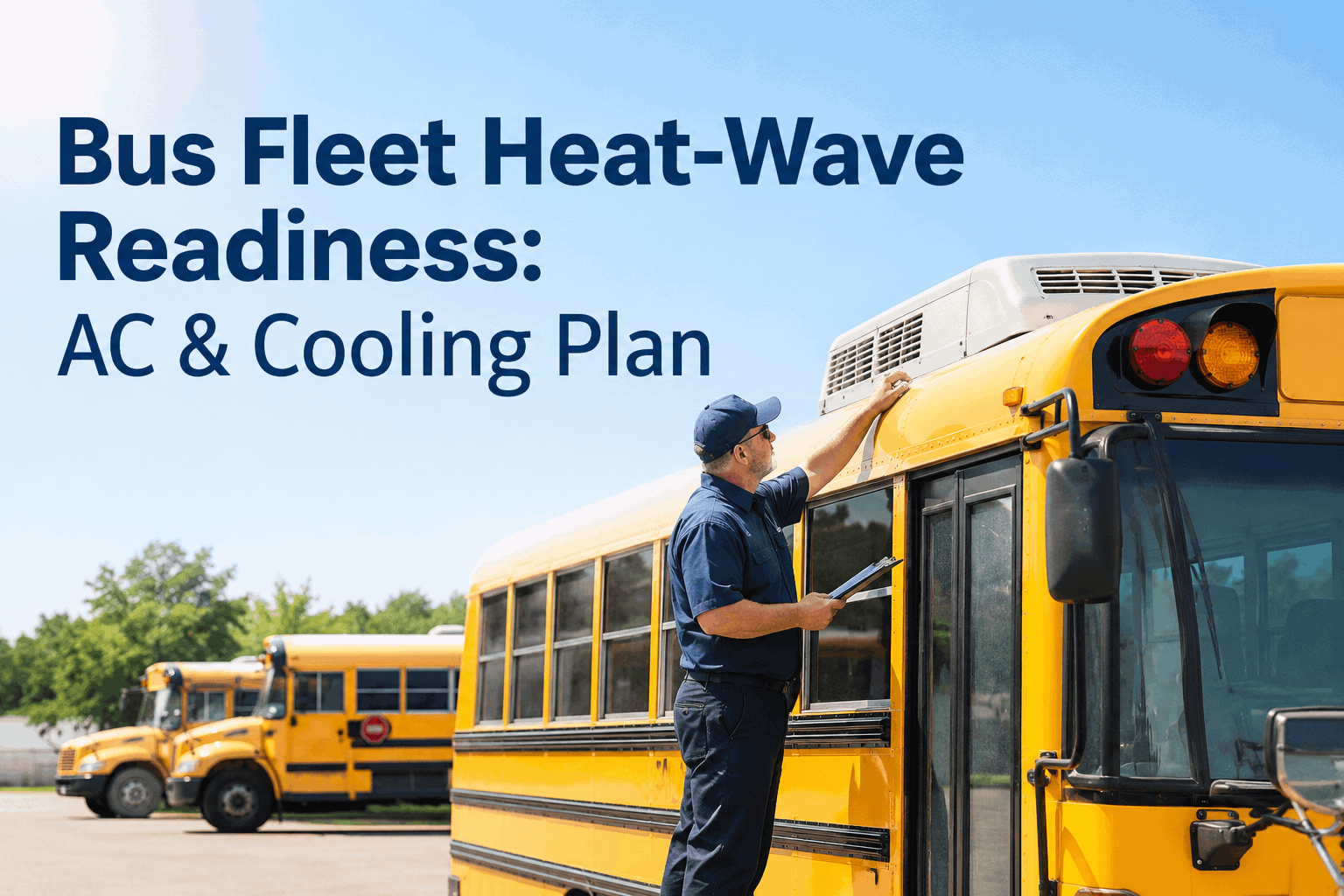
Bus Fleet Heat-Wave Readiness: AC & Cooling Plan
As the temperature climbs, two systems decide whether your buses run: the AC that keeps riders safe and the engine cooling that keeps the bus moving. Here is how to get both ready before the heat arrives.
Why Heat Breaks a Bus Fleet Two Ways
A heat wave attacks a bus on two fronts at once. Inside, the air conditioning gives out exactly when it's needed most — and a hot bus is a real safety problem, not just a comfort one. During recent heat waves, interior temperatures on buses have been reported above 100°F, which is dangerous for any rider and especially for young students or passengers with medical needs. Outside, under the hood, the engine cooling system is fighting the same heat under load, and a marginal coolant level or a tired thermostat that coped fine in spring tips into an overheat on a 98-degree grade.
Both failures share one cause: a marginal system that coped in mild weather and gives out under heat — and both are catchable on a check before the hot day, not during it.
That's the whole game of heat readiness: find the marginal AC and the marginal cooling now, while it's still cool enough to fix them calmly. You can start free and put a heat-prep check on every bus.
The Two Systems to Get Heat-Ready
Heat prep is really two inspection jobs running in parallel — the cabin AC for the people inside, and the engine cooling for the bus itself. Here's what “ready” looks like for each.
Air conditioning & HVAC
The system that keeps riders safe when it's 100°F in the cabin. Check it before the heat, not after a complaint.
- Refrigerant charge & no leaks
- Compressor, belt & clutch engaging
- Cabin airflow, vents & blower
- Filters clean, thermostat accurate
Engine cooling system
The system that keeps the bus moving when the engine is fighting heat under load on a full route.
- Coolant level, condition & no leaks
- Radiator core clean & unblocked
- Thermostat & water pump healthy
- Fan, belt & fan clutch working
Both lists are short; the hard part is making sure they actually get run on every bus before the forecast turns. You can see both check sets built into the pre-trip and PM in a demo.
The Heat-Wave Readiness Checklist
Run this on every bus before the heat arrives, in priority order — the safety-critical items first. Every box ticked is a bus that will run cool and safe through the hottest afternoon; every box skipped is a bus that will find the heat the hard way.
- AC cools the cabin to specRefrigerant charged, compressor and clutch engaging, vents blowing cold — test it, don't assume.SAFETY FIRST
- Coolant level, condition & no leaksFull, clean coolant and no weeping hoses — the marginal level is what overheats under load.SAFETY FIRST
- Radiator core clean & unobstructedFins clear of bugs and grime so air pulls through when the engine needs it most.HIGH
- Belts & hoses inspectedNo glazed, cracked, or soft belts and hoses — they drive both the AC and the cooling fan.HIGH
- Thermostat, water pump & fan clutchTemp holds in range, no pump whine, fan engages — tested on the pre-summer PM.PM
- Cabin filters & airflowClean filters and clear vents so the AC that works can actually move cold air to the back rows.PM
The two safety-first items — working AC and healthy coolant — are where heat does real harm, so start there. You can load this checklist as a tracked heat-prep inspection in a demo.
Working Backward From the First Hot Day
Readiness is a countdown, not a reaction. Work backward from when the heat usually hits your area and the whole fleet is ready before the first 95-degree afternoon — not scrambling during it.
Stand up the heat-prep PM cycle
Schedule the AC and cooling-system checks across the fleet while the weather is still mild and the shop has slack.
Run checks & fix what's flagged
Inspect every bus, turn weak AC and marginal coolant into work orders, and order any parts with a lead time now.
Verify & confirm fleet-ready
Re-check the repaired buses and confirm every unit is heat-ready on the board — no open safety items left.
Run cool through the wave
The fleet handles the heat because the prep happened in the cool — no mid-route overheats, no 100-degree cabins.
Worked backward, heat readiness is a scheduled cycle, not a week-of panic. You can start free and build your pre-summer prep cycle today.
How BusCMMS Keeps the Fleet Heat-Ready
Heat readiness is a scheduling-and-follow-through problem — the checks are simple, but they have to happen on every bus before the heat, with every flagged defect fixed. That is exactly what a bus-built CMMS keeps from slipping.
AC & coolant checks on the pre-trip
Cabin cooling and coolant level sit in the daily DVIR; a full heat-prep inspection schedules by date before summer.
Flagged problems become work orders
A weak AC or a soft hose turns into a tracked work order with an owner, so it's fixed before the heat arrives, not after.
High-temp fault codes auto-flag
With telematics connected, a high-coolant-temperature fault opens a work order automatically — an early warning, logged.
Fleet readiness at a glance
See which buses are heat-ready and which still have open AC or cooling items, so nothing goes out hot.
The result is a heat program that runs on a schedule instead of on memory, with every check and repair kept in the bus's record — readiness you can see, not hope for.
A Shop Foreman's Take
Every summer used to be the same fire drill — first heat wave hits and suddenly I've got five AC complaints and a bus overheating on a field trip, all on the same 100-degree Monday. Now we run a heat-prep cycle every spring: AC, coolant, radiators, belts, all checked and fixed while it's still mild. Last July we didn't pull a single bus for heat. The work was the same work — I just stopped doing it in a panic during the wave and started doing it before.
Key Takeaways on Heat-Wave Readiness
Heat breaks buses two ways
The cabin AC that keeps riders safe, and the engine cooling that keeps the bus moving.
Marginal systems fail under heat
What coped in spring tips into failure at 95°F+ — find it before the hot day.
A hot cabin is a safety issue
Interiors can top 100°F — working AC is about rider safety, not just comfort.
Prep in the cool, not the wave
Work backward from the first hot day so readiness is a cycle, not a scramble.
Treat bus fleet heat-wave readiness as a scheduled spring cycle — AC and engine cooling checked, flagged, and fixed before the first 95-degree afternoon — and the heat stops being a yearly emergency. The checks are simple; making sure every bus gets them before the heat is what keeps your fleet, and your riders, cool.