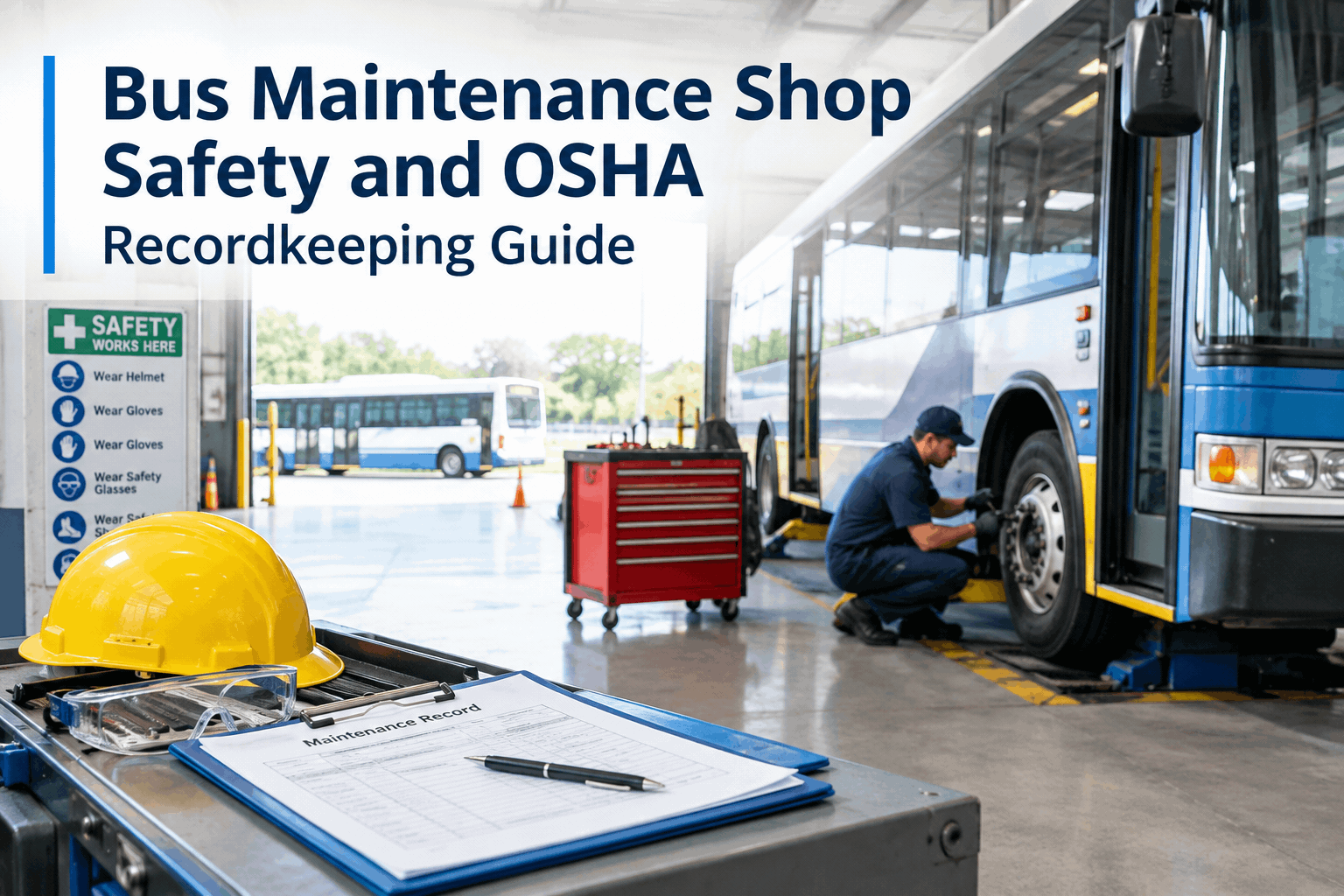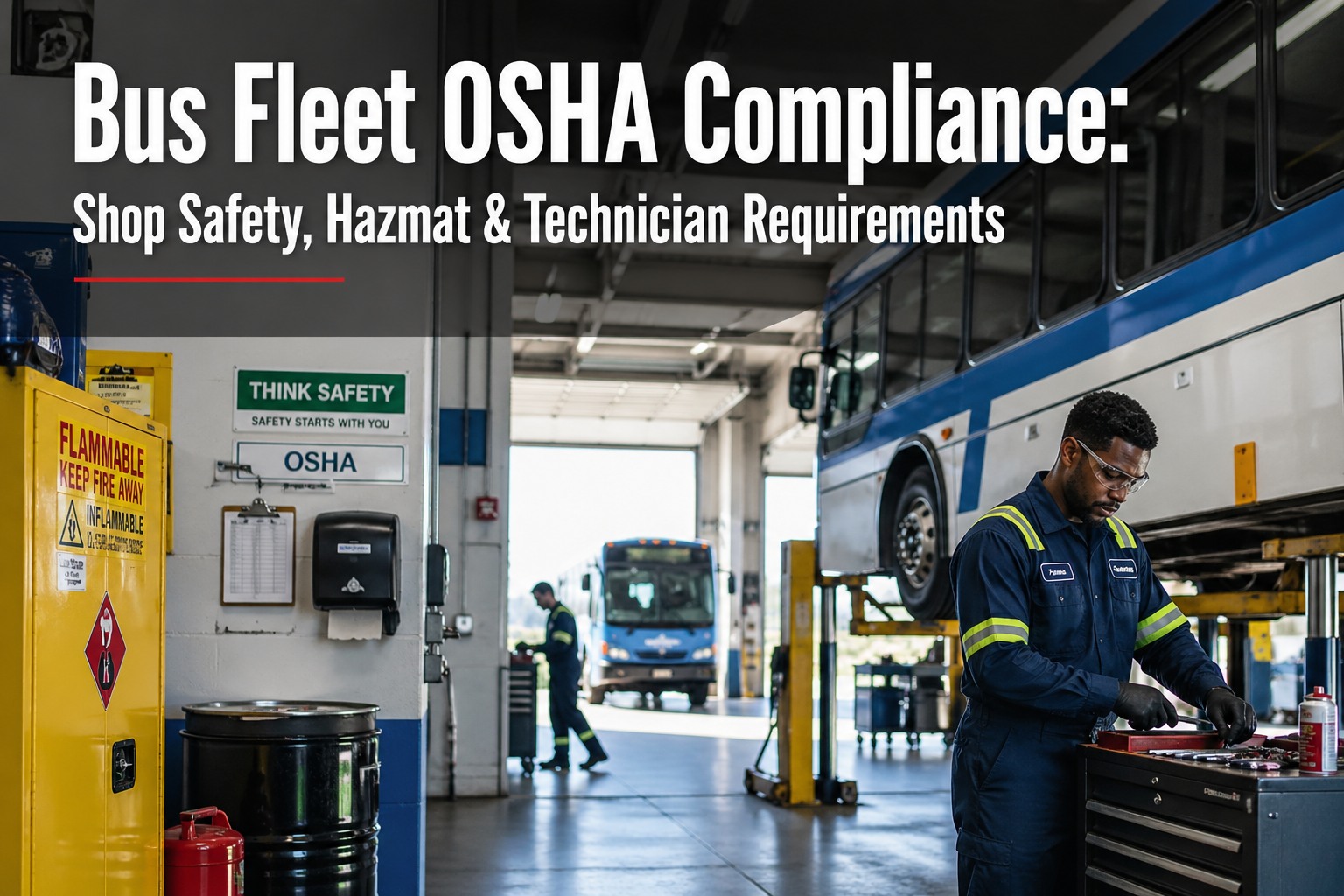
Bus fleet OSHA compliance isn't optional — it's the difference between a safe shop and a $165,514 willful violation penalty. Your maintenance facility handles hydraulic fluid, brake cleaner, diesel exhaust, heavy lifts, and high-voltage systems daily. OSHA regulates every one of these hazards under 29 CFR 1910. The question isn't whether you need compliance — it's whether your documentation proves it when an inspector walks through the door.
Compliance Guide
Bus Fleet OSHA Compliance
Shop Safety, Hazmat & Technician Requirements
Document every inspection, training, and work order for audit-ready records
2025 OSHA Maximum Penalties
Serious Violation
$16,550
per violation
Willful / Repeat
$165,514
per violation
The 6 OSHA Standards Every Bus Shop Must Know
Core regulations that apply to fleet maintenance facilities
29 CFR 1910.1200
Hazard Communication (HazCom)
Written program, SDS access, container labels, employee training on chemical hazards
29 CFR 1910.132
Personal Protective Equipment
Hazard assessment, PPE selection, training, and proper maintenance of safety gear
29 CFR 1910.147
Lockout/Tagout (LOTO)
Energy isolation for servicing equipment — applies to lifts, buses on hoists, and powered systems
29 CFR 1910.106
Flammable Liquids
Proper storage cabinets, grounding, ventilation, and fire prevention for fuels and solvents
29 CFR 1910.134
Respiratory Protection
Written program, fit testing, medical evaluations for brake dust and paint fume exposure
29 CFR 1910.178
Powered Industrial Trucks
Forklift operator certification, daily inspections, and safe operating procedures
Shop Hazard Zones: What Inspectors Look For
Common citation areas in bus maintenance facilities
Chemical Storage
SDS binder current & accessible
Flammables in rated cabinets
Secondary containment in place
Incompatible chemicals separated
Lift / Pit Area
Annual lift inspections documented
Safety stands used under buses
LOTO procedures posted
Pit guardrails in place
PPE Station
Hazard assessment on file
Correct PPE for each task
Respirator fit test records
PPE training documented
Tool / Work Area
Compressed air <30 PSI
Guard on grinders
Fire extinguishers inspected
Electrical cords maintained
Hazmat in the Bus Shop
Common chemicals and their OSHA requirements
Chemical
Hazard Class
Key Requirements
Flammable
Rated cabinet, ventilation, no ignition sources
Corrosive
Eye wash station, face shield, secondary containment
Toxic / Hazmat
Proper disposal, spill containment, EPA manifests
Health Hazard
Exhaust extraction, ventilation, exposure monitoring
Respiratory
Wet cleaning, HEPA vacuum, respirator program
Technician Training Requirements
OSHA-mandated training for bus maintenance personnel
HazCom Training
At hire + when new chemicals introduced
PPE Training
At hire + when PPE changes
Lockout/Tagout
Initial + annual refresher
Respirator Program
Initial + annual fit test
Forklift Certification
Initial + 3-year refresher
Fire Extinguisher
Initial + annual
Documentation That Proves Compliance
What OSHA inspectors want to see — and how CMMS delivers it
Work Order Records
Timestamped repairs showing who did what, when, and with what PPE — proves procedures were followed
Training Certificates
Linked to technician profiles — shows each employee completed required OSHA training
Inspection Logs
Daily lift checks, fire extinguisher inspections, PPE condition — all dated and signed
Corrective Actions
Defects identified → work orders created → repairs completed — shows you fix hazards promptly
Expert Insight
What fleet managers get wrong about OSHA compliance
The biggest misconception about OSHA compliance in bus shops isn't which rules apply — it's thinking that compliance means having the right equipment. Equipment is table stakes. What OSHA inspectors actually look for is documentation proving your safety systems work in practice.
You can have a state-of-the-art flammables cabinet, but if there's no record of employee training on chemical hazards, you'll get cited. You can have lift inspections posted on the wall, but if they're not linked to maintenance work orders showing defects were corrected, you're exposed.
The shops that pass OSHA inspections aren't necessarily the ones with the biggest budgets. They're the ones where every safety procedure generates a traceable record — and that record is retrievable in minutes, not hours.
Does OSHA require safety stands when buses are on lifts?
OSHA's Lockout/Tagout standard (29 CFR 1910.147) applies to the hazard of a falling bus during maintenance. Portable hoists alone may not provide sufficient protection — OSHA expects employers to follow ANSI B153.1 standards for automotive lifts and manufacturer recommendations. In-ground hoists may provide adequate protection depending on design, but safety stands are generally recommended as an additional safeguard.
What records must we keep for OSHA compliance?
Key records include: written HazCom program with SDS sheets, PPE hazard assessment, training documentation (HazCom, PPE, LOTO, respirator, forklift), respirator fit test results, equipment inspection logs (lifts, fire extinguishers, eyewash stations), and injury/illness records (OSHA 300 log). Most records must be kept for duration of employment plus 30 years for exposure records.
How often must lift inspections be performed?
OSHA doesn't specify lift inspection frequency, but industry standards (ANSI/ALI ALOIM) recommend daily operator checks before use and annual inspections by qualified inspectors. Many states have additional requirements. Document all inspections and any defects found — and link defect reports to maintenance work orders showing the repair.
What PPE is required for bus maintenance work?
OSHA requires a documented hazard assessment to determine appropriate PPE for each task. Common requirements for bus shops include: safety glasses (grinding, cutting, brake work), chemical-resistant gloves (handling fluids), hearing protection (above 85 dB exposure), steel-toe boots (heavy parts handling), and respirators (brake dust, paint fumes) with proper fit testing and medical clearance.
Can BusCMMS help with OSHA documentation?
Yes. BusCMMS creates audit-ready documentation by linking work orders to technician training records, tracking inspection schedules with automatic reminders, documenting PPE requirements for specific tasks, and maintaining a traceable path from defect identification to corrective action. Reports can be generated in seconds for OSHA inspectors.