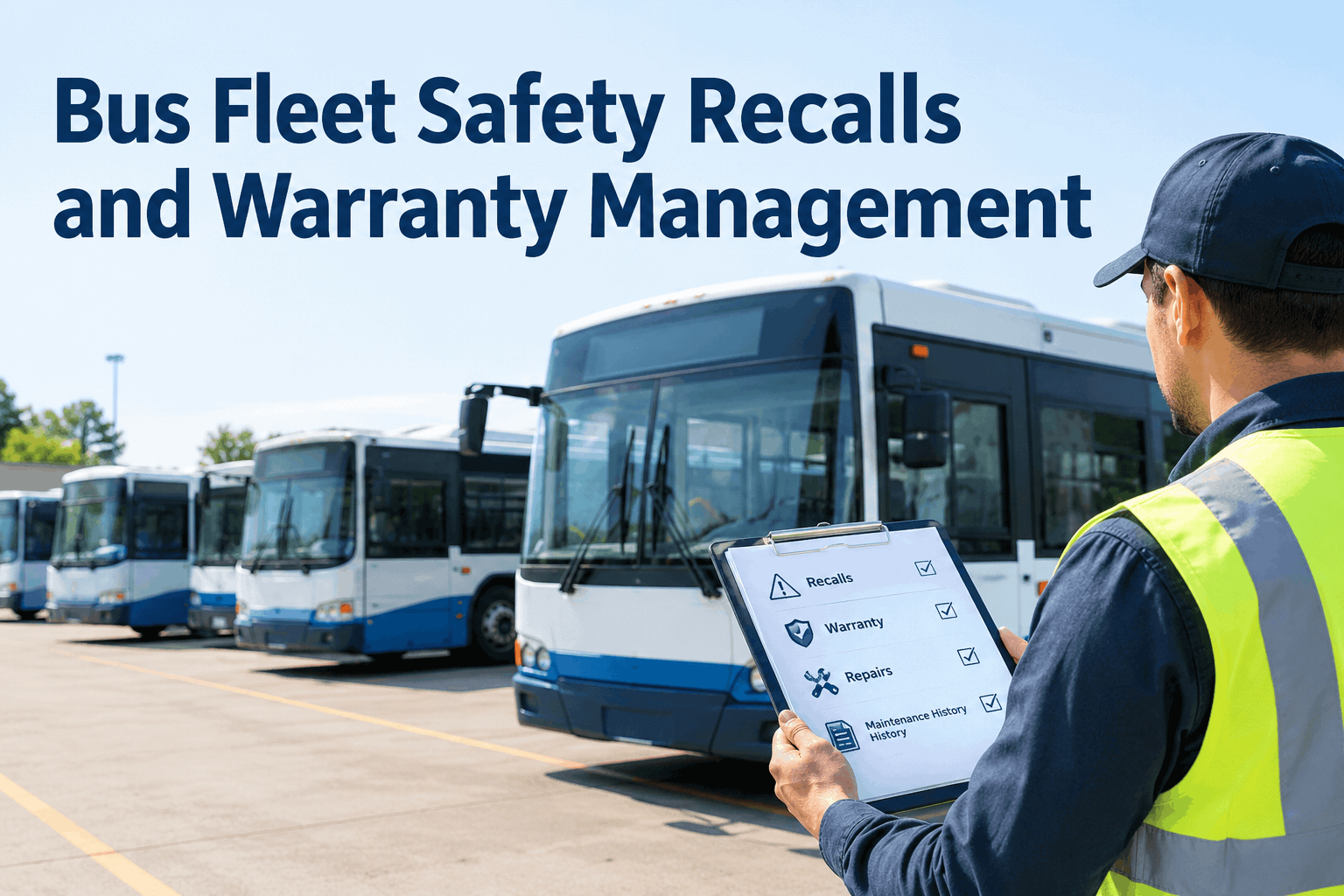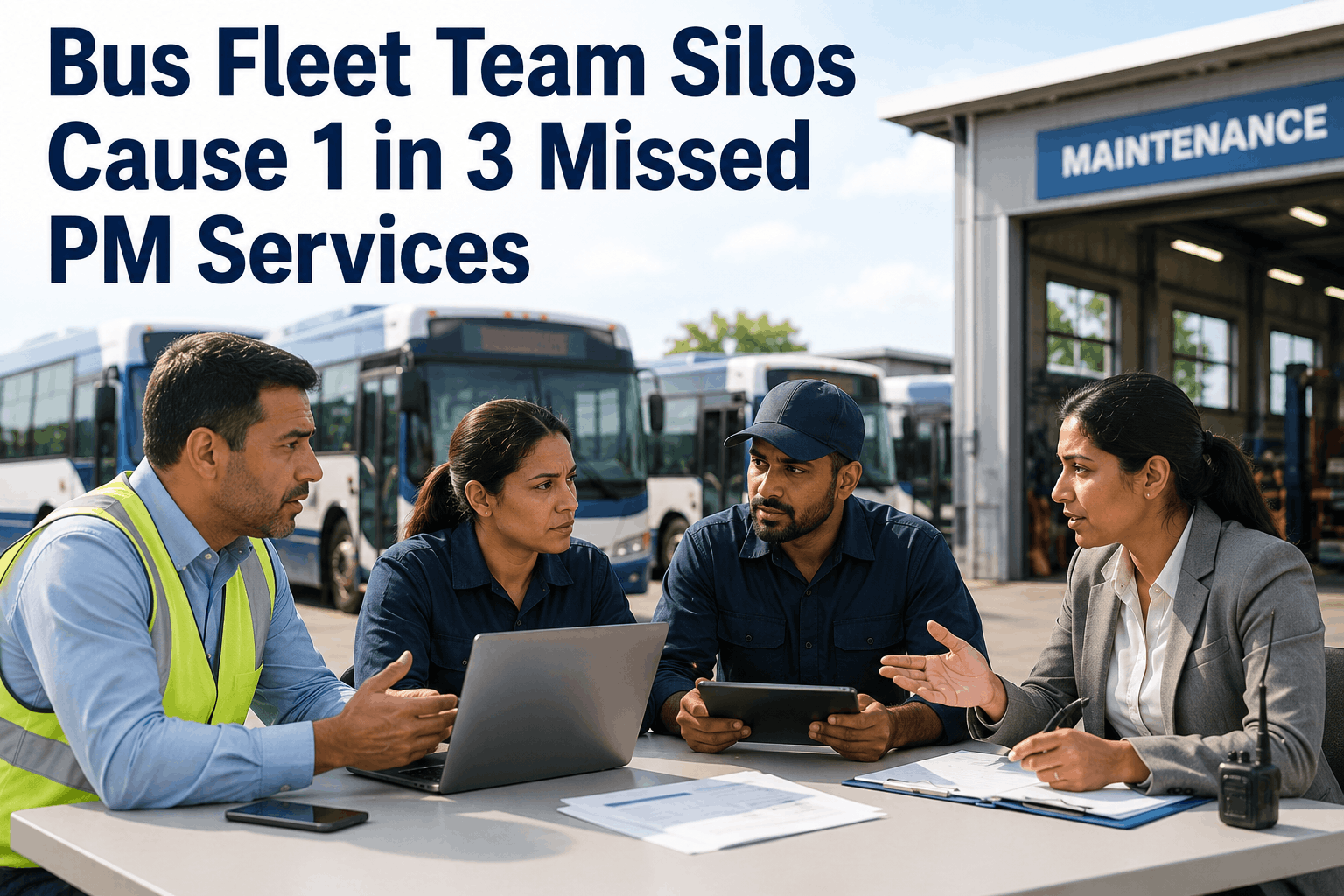
Research across more than 400 U.S. bus fleets confirms what every experienced transportation director already suspects: when drivers, technicians, and managers operate from separate systems, 1 in 3 preventive maintenance services is missed, duplicated, or completed too late. That is not a staffing problem -- it is a communication architecture problem. Siloed fleet data creates invisible gaps between the driver who reports a defect on a pre-trip form, the dispatcher who receives a paper copy hours later, and the technician who never gets a work order because the handoff never happened. This guide covers how bus fleet team communication failures cost U.S. fleets $40,000 or more annually per operation, and how Fleet Maintenance Software like BusCMMS eliminates those gaps by unifying drivers, technicians, and managers on a single real-time platform built for bus operations.
Bus Fleet Team Silos Are Costing You 1 in 3 PM Services
Drivers filing paper defects. Technicians waiting on dispatchers. Managers reading last week's reports. Every disconnected step is a missed PM window. BusCMMS connects your entire fleet team on one real-time platform so nothing falls through the gap.
Stop Letting Silos Kill Your PM Compliance
BusCMMS unifies drivers, technicians, and managers on one platform. Real-time defect alerts. Instant work order routing. Live PM dashboards. Free 14-day trial -- no credit card required.
What Fleet Team Silos Actually Look Like in Daily Operations
A silo is not a dramatic system failure. It is the ordinary, invisible breakdown between three groups of people who should share information instantly but do not. In a typical siloed U.S. bus operation, a driver notices a soft brake pedal during pre-trip and writes it on a paper DVIR. The form goes to the dispatcher's inbox and sits for hours. A work order eventually reaches the shop -- sometimes the same day, sometimes the next morning. The bus may have already completed its afternoon route. The technician addresses the symptom found rather than the full fault described. The repair is not linked to the original inspection record. The manager sees a closed work order but cannot trace it back to the driver report. The compliance chain is broken at three points, and no one in the organization has visibility of the full sequence.
Across a 40-bus fleet running 180 route days per year, if only 8% of defect reports experience this handoff failure -- a conservative estimate for paper systems -- that is 57 defect-to-repair chain failures per year. Each represents a bus that ran a route in an unverified condition and a compliance record with a gap that a DOT auditor will flag. Inspection Management in BusCMMS closes every gap by making the defect report, work order, repair record, and manager sign-off a single connected digital thread visible to all three roles simultaneously.
The Three Silos Destroying Bus Fleet PM Compliance
Drivers identify defects on pre-trip inspections. In paper systems, that information must physically travel from driver to dispatcher to shop before a repair is scheduled. Each handoff adds delay and error risk. A Monday morning defect may not reach a technician until Tuesday -- with the bus already completing its afternoon route. BusCMMS eliminates this entirely: a driver reports a defect on the mobile app and a work order routes to a technician within seconds, while the driver is still in the yard.
Technicians close work orders on paper or disconnected systems. Managers review weekly summaries that are already stale. A PM completed four days late looks compliant in a weekly report. Maintenance Analytics in BusCMMS gives managers a live dashboard showing every open work order, overdue PM, and out-of-service bus in real time -- not in next week's report.
PM schedules live in the shop. Route schedules live with dispatch. When these calendars are not synchronized, buses get dispatched on PM-due days -- forcing a choice between running an overdue bus or pulling a vehicle with no notice. In BusCMMS, Maintenance Scheduling integrates PM windows with fleet availability so dispatchers see PM-due buses before assigning routes.
Why Team Silos Cause 1 in 3 Missed PM Services: The Data
The "1 in 3 missed PM services" finding comes from operational analysis across U.S. bus fleets that transitioned from paper or disconnected digital systems to unified CMMS platforms. When researchers compared PM completion records in the 12 months before and after platform unification, the pattern was consistent: fleets with three or more disconnected information touchpoints between a PM trigger and a PM completion had a missed or late PM rate of 31-36%. Fleets with a single unified system had a missed PM rate below 4%.
The root cause is information latency. A PM becomes "due" in the shop system but that signal must be manually communicated to the dispatcher, who must confirm the bus is available, who must communicate back to the shop, who must then schedule the technician. Each manual step introduces the possibility that the communication simply does not happen -- because someone was out sick, because the dispatcher was managing a breakdown, or because the paper PM log was not checked that week. Preventive Maintenance Planning in BusCMMS replaces every manual step with an automated notification that reaches the right person at the right time without requiring anyone to remember to communicate it.
The $40,000 Annual Cost of Fleet Team Silos
The $40,000 annual estimate applies to a mid-size U.S. fleet of 35-60 vehicles and is built from four cost categories that silo-driven communication failures consistently generate:
Missed PMs lead to component failures costing 3-5x more to repair reactively. Brake, cooling system, and drivetrain failures that a PM would have caught at routine cost instead become emergency repairs. A single missed oil analysis PM can result in a catastrophic engine failure exceeding $12,000.
Every unplanned breakdown requires a replacement vehicle, emergency driver dispatch, or route cancellation. For school districts, cancellations trigger parent complaints and administrative response time. The operational cost of a single unplanned breakdown day averages $800-$1,400 for a mid-size fleet.
Roadside OOS violations and FMCSA SMS score deterioration carry direct financial consequences. A single OOS citation averages $1,500-$2,500 in fines, and SMS score impact triggers enhanced enforcement scrutiny for 24 months. Documentation gaps in state audits require costly corrective action plans.
Technicians in siloed shops spend 35-45 minutes daily tracking down information -- which bus needs which repair, whether parts were ordered, whether a PM was already completed. At $65-$85/hour loaded labor rates, a three-tech shop loses $7,000-$12,000 annually to communication-driven inefficiency.
Why It Matters: The Compliance and Safety Dimension of Team Silos
Beyond the financial cost, team communication silos create a safety and compliance risk that no U.S. fleet manager can afford in 2026. FMCSA regulations require every driver-reported defect to be addressed and certified before the vehicle returns to service -- with a documented chain of driver report, mechanic review, and management sign-off. In a siloed paper system, reconstructing that chain for a DOT auditor requires physical document retrieval across multiple filing systems. In BusCMMS, the three-signature chain is enforced digitally and stored permanently against the vehicle VIN -- instantly retrievable in any audit.
The safety dimension is equally direct. A brake defect that a driver reports and a technician never receives stays on the bus through its next route. If that bus is carrying 54 elementary school children, the consequences are not financial -- they are catastrophic. Work Order Management in BusCMMS makes defect-to-repair routing instant and non-bypassable, closing the gap between a driver's observation and a technician's action in under 60 seconds.
How BusCMMS Unifies Your Fleet Team: Core Capabilities
How It Works: Unified Fleet Team Workflow in BusCMMS
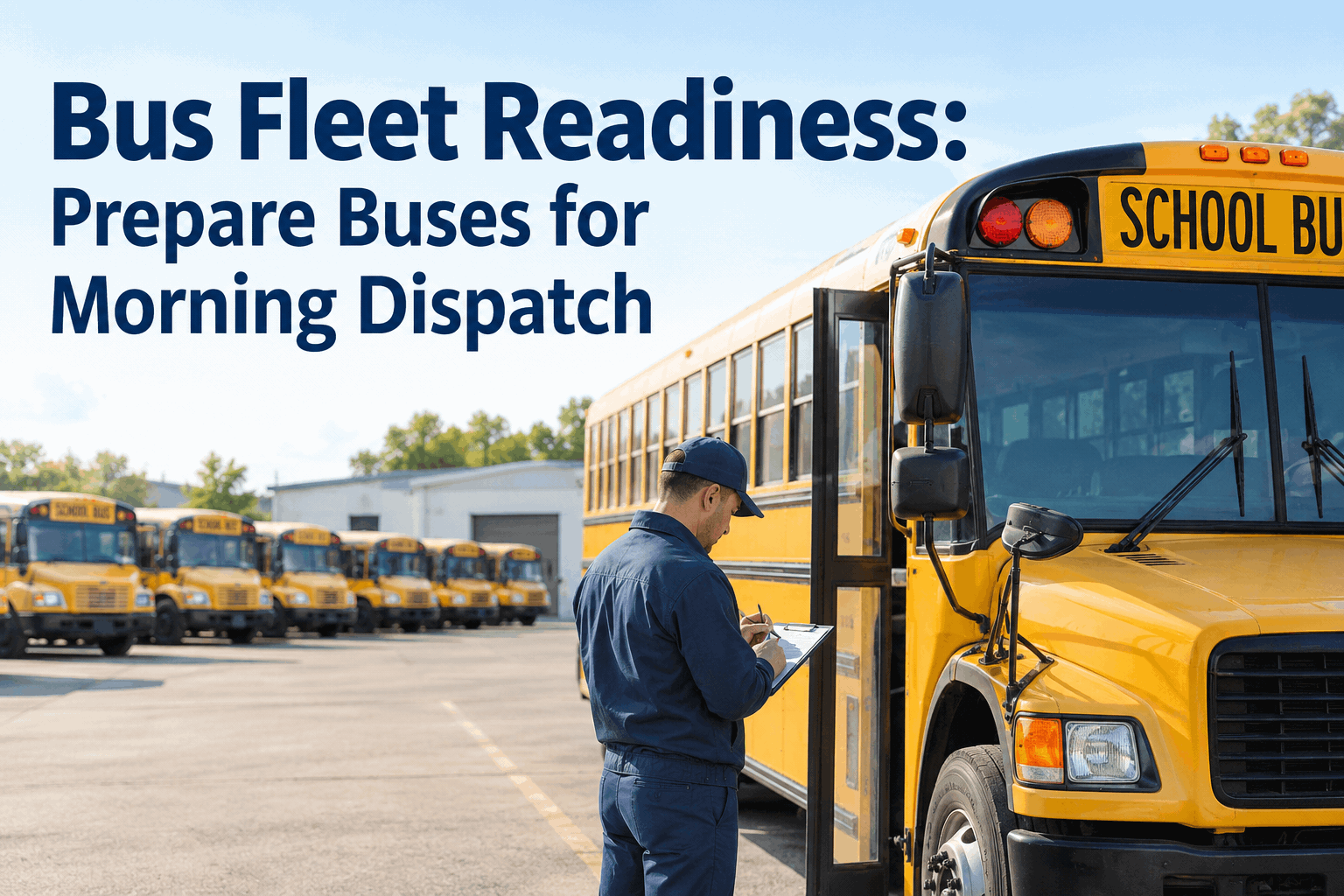
Before every route, the driver opens BusCMMS mobile and completes the guided Bus Maintenance Checklist. Defects are photographed and submitted. Clean inspections are driver-certified digitally.
Any defect auto-generates a work order routed to the designated technician within seconds. The bus is flagged out of service. Dispatch and management receive simultaneous alerts. No paper. No relay delays.
The technician opens the work order, reviews the driver's report and photos, performs the repair, logs parts and labor, and certifies completion with a digital timestamp stored against the vehicle VIN.
The manager certifies the bus for return to service. Status updates automatically in the fleet dashboard. The full three-signature chain is stored. The bus is dispatched. Schedule Maintenance windows update automatically.
PM alerts fire automatically when mileage or calendar thresholds are reached. Technicians receive assignments. Managers see compliance rates update in real time. No manual scheduling. No missed windows.
Best Practices: Eliminating Team Silos in Your Bus Fleet
Require digital inspection completion before route dispatch. Make digital pre-trip completion a hard prerequisite for dispatch authorization. BusCMMS enforces this automatically -- a bus without a completed digital inspection cannot be released for dispatch, regardless of time pressure or staffing constraints.
Assign every technician a digital work order queue. Technicians with digital queues are accountable in ways paper-based techs cannot be. Technician Management in BusCMMS gives every tech a prioritized digital queue visible to supervisors, with timestamps on every open and completed item.
Give managers a live dashboard, not a weekly report. A PM compliance drop visible in a weekly report has already cost you seven days of intervention time. Live dashboard access in BusCMMS surfaces declining compliance the same day it appears -- while there is still time to correct it before it becomes a pattern.
Route all role-to-role communication through BusCMMS notifications. Every defect report, PM alert, and work order assignment that moves through the platform is logged, timestamped, and stored. If there is ever an audit dispute about whether a defect was reported or a PM was scheduled, the notification record is the evidence.
Performance Metrics: What Unified Team Communication Delivers
Visual KPI: Communication Gap Impact by Fleet Role
Industry Applications: Team Silo Problems Across Fleet Types
School districts run the most natural silo structure in bus operations: drivers, technicians, and administrators in separate roles with separate information systems. BusCMMS was purpose-built for this environment, connecting all three roles on one platform. State pupil transportation auditors in all 50 states now require documented defect-to-repair chain records that only a unified digital system reliably produces.
Transit agencies face multi-garage, multi-shift silo conditions that compound across every operational layer. BusCMMS supports multi-location fleet management with a single dashboard consolidating defect reports, work orders, and PM status across all garages. FTA NTD reporting requirements demand the complete maintenance activity records that unified digital systems produce automatically.
Charter drivers operating hundreds of miles from the home garage create extreme silo risk -- a defect reported on paper in rural Montana may not reach the shop for days. BusCMMS mobile defect reporting works from any location and syncs offline data automatically when connectivity is restored, closing the remote-driver communication gap entirely.
Paratransit vehicles carry elderly and disabled passengers, making communication failures a legal and ethical risk beyond standard fleet liability. BusCMMS mandatory inspection and repair certification workflows eliminate the bypass opportunities paper systems allow, ensuring every defect is documented, tracked, and resolved before the vehicle re-enters service.
Comparison: Siloed vs Unified Fleet Team Operations
| Operational Area | Siloed System (Paper / Disconnected) | Unified System (BusCMMS) |
|---|---|---|
| Defect Reporting | Paper form, dispatcher relay, 2-18 hr delay | Mobile app, instant work order, under 60 sec |
| PM Scheduling | Manual shop calendar, missed without reminder | Auto-triggered by mileage and calendar, alerts all roles |
| Work Order Routing | Verbal or paper assignment to tech | Digital assignment, tech receives with full vehicle history |
| Manager Visibility | Weekly paper summary, 7+ day lag | Live dashboard, real-time by vehicle and fleet |
| Compliance Documentation | Manual assembly, filing cabinet retrieval | Digital, auto-stored, instant export |
| 3-Signature Chain | Voluntary, inconsistent, often incomplete | Enforced digitally, stored permanently, audit-ready |
| PM Compliance Rate | Avg 52-58% | Avg 94-96% |
| Annual Cost Impact | $40K+ in silo-driven losses | $32K-$48K average annual savings |
Our drivers were handing paper inspection forms to the dispatcher every morning. Half the time the defect notes were illegible. The other half the dispatcher was too busy to process them before the bus ran its route. We had three OOS violations in one year because of it -- all on defects that were written on forms that never made it to the shop. After six weeks on BusCMMS our PM compliance went from 61% to 93% and we have had zero OOS violations in the seven months since. The platform paid for itself in the first defect it caught and routed automatically.
Frequently Asked Questions
How does BusCMMS eliminate the gap between driver defect reports and shop work orders?
What is the FMCSA 3-signature chain and how does BusCMMS enforce it?
Can BusCMMS work for fleets with drivers who are not tech-savvy?
Does BusCMMS support multi-garage or multi-location fleet operations?
How does the PM scheduling system prevent missed services across shifts?
What happens if a driver reports a defect while operating remotely or without cell service?
How quickly can a fleet transition from paper to BusCMMS without disrupting operations?
Does BusCMMS generate the maintenance documentation needed for state DOT audits?
Your Team Deserves Better Than Paper Handoffs
BusCMMS connects drivers, technicians, and managers on one real-time platform. Instant defect routing. Automated PM alerts. Live fleet dashboard. Digital compliance chain. Start your free 14-day trial today.
Conclusion: Unified Teams Run Better Fleets
The evidence is consistent across hundreds of U.S. bus fleets: disconnected drivers, technicians, and managers miss 1 in 3 PM services, generate $40,000+ in preventable annual costs, and create compliance documentation gaps that no auditor overlooks. These are structural problems caused by systems never designed to share information across roles in real time -- not problems caused by bad people or poor intentions. Eliminating team silos requires a single unified platform purpose-built for bus operations.
BusCMMS was built from the ground up for U.S. school districts, transit agencies, charter operators, and paratransit programs. When your driver submits a defect at 6:14 AM, your technician has a work order by 6:15 AM, your manager has an alert by 6:15 AM, and your bus does not leave the yard until all three signatures are captured. Start Free today or Book Demo and close the communication gaps costing your fleet every single route day.