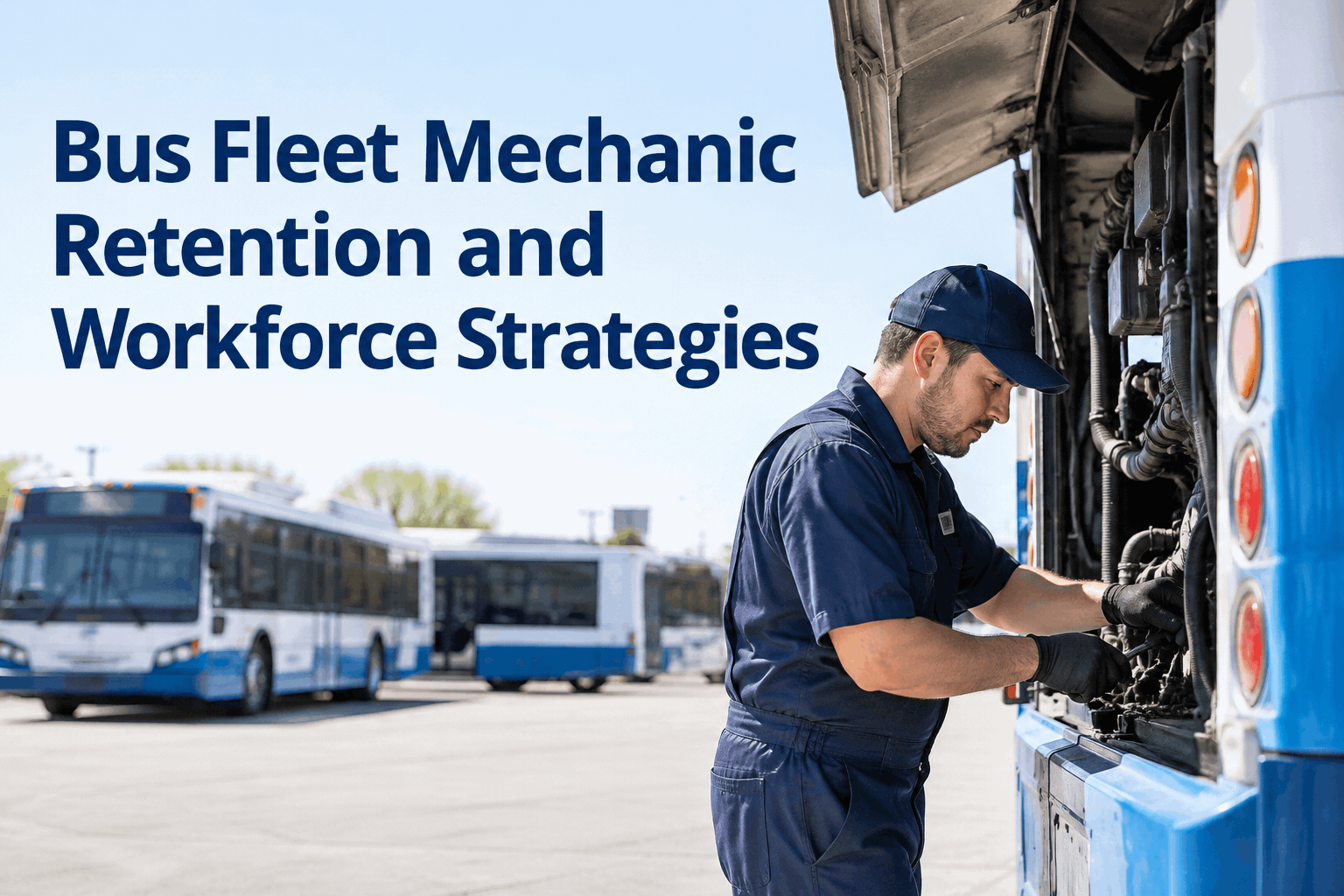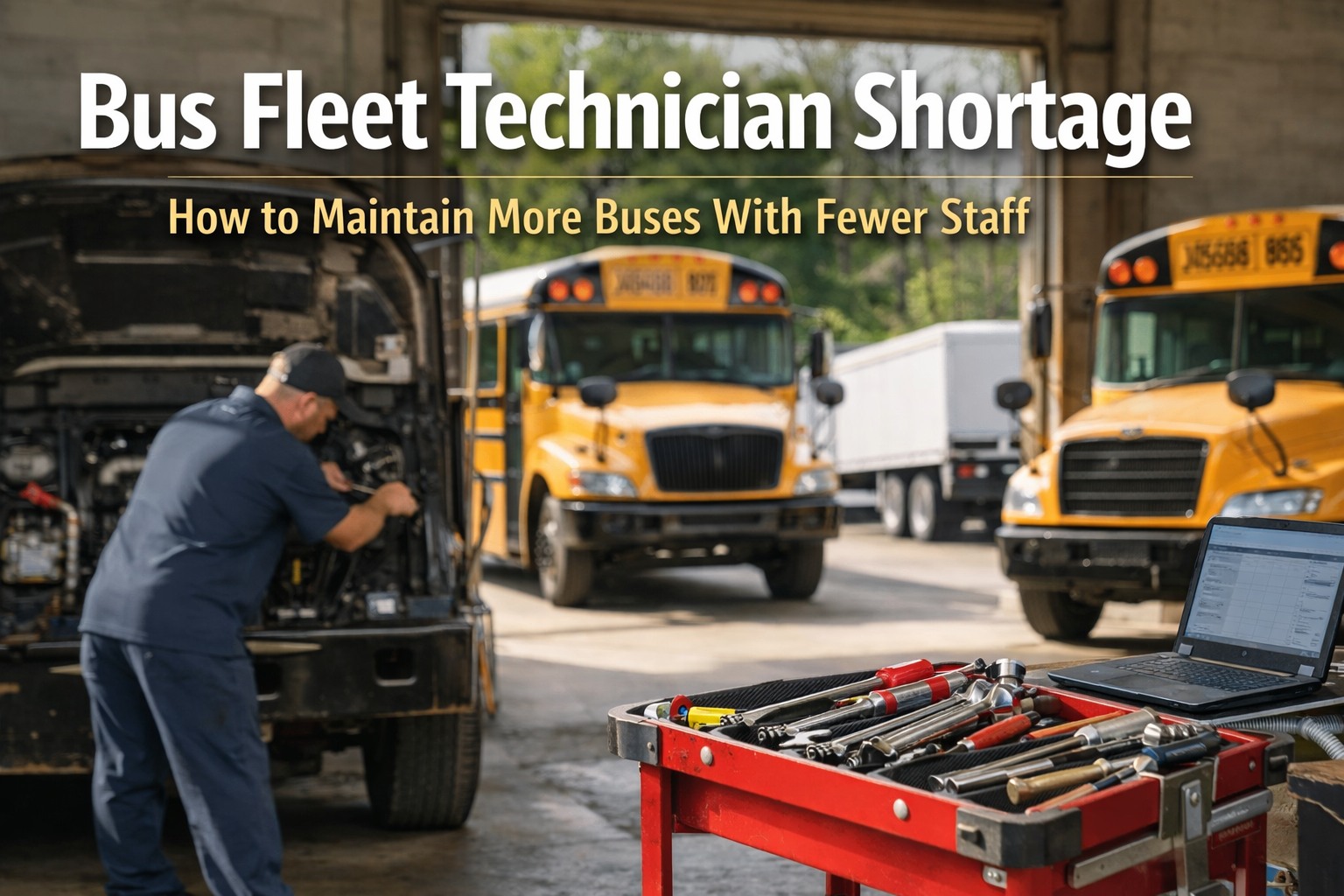
The bus technician shortage isn't a temporary hiring problem—it's a structural crisis reshaping fleet maintenance. TechForce Foundation projects 971,000 new technicians needed across transportation sectors by 2028, while 65% of maintenance facilities already operate understaffed. Fleets waiting to hire their way out will wait forever. The operators maintaining fleet reliability aren't finding more technicians—they're multiplying the productivity of the ones they have through systems that eliminate wasted time and amplify every hour of skilled labor.
Where Your Technicians' Time Actually Goes
Industry research reveals a troubling reality: technicians spend only 25–35% of their day on actual repairs. The rest disappears into administrative tasks, hunting for parts, waiting for information, and unclear work orders. In poorly planned environments, "wrench time" drops to 20–30%—meaning you're paying skilled labor costs for time spent not turning wrenches.
Every percentage point of recovered wrench time multiplies your maintenance capacity without adding headcount. Book a demo to see how BusCMMS eliminates administrative time waste.
5 Ways CMMS Multiplies Technician Productivity
You can't hire your way out of a structural shortage. But you can systematically eliminate the non-productive time consuming your technicians' days. Here's how digital maintenance management turns one technician into the equivalent of 1.5.
ASE-certified technicians in fleet shops are 19% more productive than non-certified peers. Combined with CMMS efficiency gains, that gap compounds. Schedule a demo to see productivity tools in action.
The Real Cost of Unfilled Positions
Each unfilled technician position doesn't just mean less capacity—it triggers a cascade of costs that compound across your operation.
You may not be able to hire another technician—but you can stop losing the equivalent of half a technician to administrative waste. Book a demo to see how fleets are doing more with less.
Expert Review: Training New Hires Faster
Over 60% of new technicians enter without formal training, requiring an average of 357 hours and $8,211 in supervised wages before reaching baseline productivity. CMMS can cut that ramp-up time dramatically.
Every month a new hire spends unproductive is a month you're paying full wages for partial output. Schedule a demo to see guided workflows for new technicians.
Building a Shortage-Proof Operation
The technician shortage isn't going away—82% of fleet managers agree it's a long-term issue. The fleets thriving aren't the ones who found more technicians. They're the ones who built systems that maximize every hour of skilled labor they do have.
Frequently Asked Questions
How severe is the bus technician shortage?
TechForce Foundation projects the transportation industry needs approximately 971,000 new technicians between 2024 and 2028 across automotive, diesel, collision, and aviation sectors—far exceeding current training capacity. Research indicates 65.5% of maintenance facilities operate understaffed, with an average of 19.3% of positions remaining vacant. Annual industry churn reaches 120,000 workers, while baby boomer retirements accelerate the problem.
What is "wrench time" and why does it matter?
Wrench time measures the percentage of a technician's paid hours spent on actual hands-on maintenance—not travel, waiting for parts, paperwork, or searching for information. World-class operations target 55% wrench time, but most facilities only achieve 25–35%. In poorly planned environments, wrench time drops to 20–30%. Every percentage point recovered effectively adds maintenance capacity without hiring.
How much does it cost to train new technicians?
Industry research estimates approximately 357 hours of supervised training and $8,211 in wage investment per untrained hire before reaching baseline productivity. Even candidates with formal education require an average of 172 hours and $3,956 in additional training. Over 60% of new hires enter without formal training, compounding onboarding costs.
How does CMMS improve technician productivity?
CMMS eliminates non-productive time through automated work order generation, mobile access to complete tasks at the bay, digital parts lookup with real-time inventory visibility, instant access to vehicle service history, and standardized procedures built into every work order. These features can recover 2–3 hours daily per technician that would otherwise be lost to administrative tasks, parts hunting, and paperwork.
What's the financial impact of unfilled technician positions?
Industry observers estimate the technician shortfall contributes to approximately $2.4 billion in lost revenue annually across trucking and fleet operations due to underutilized vehicles and deferred repairs. Individual fleets report losses exceeding $1,200 daily per unfilled position when accounting for overtime costs, outsourced repairs, and vehicle downtime.