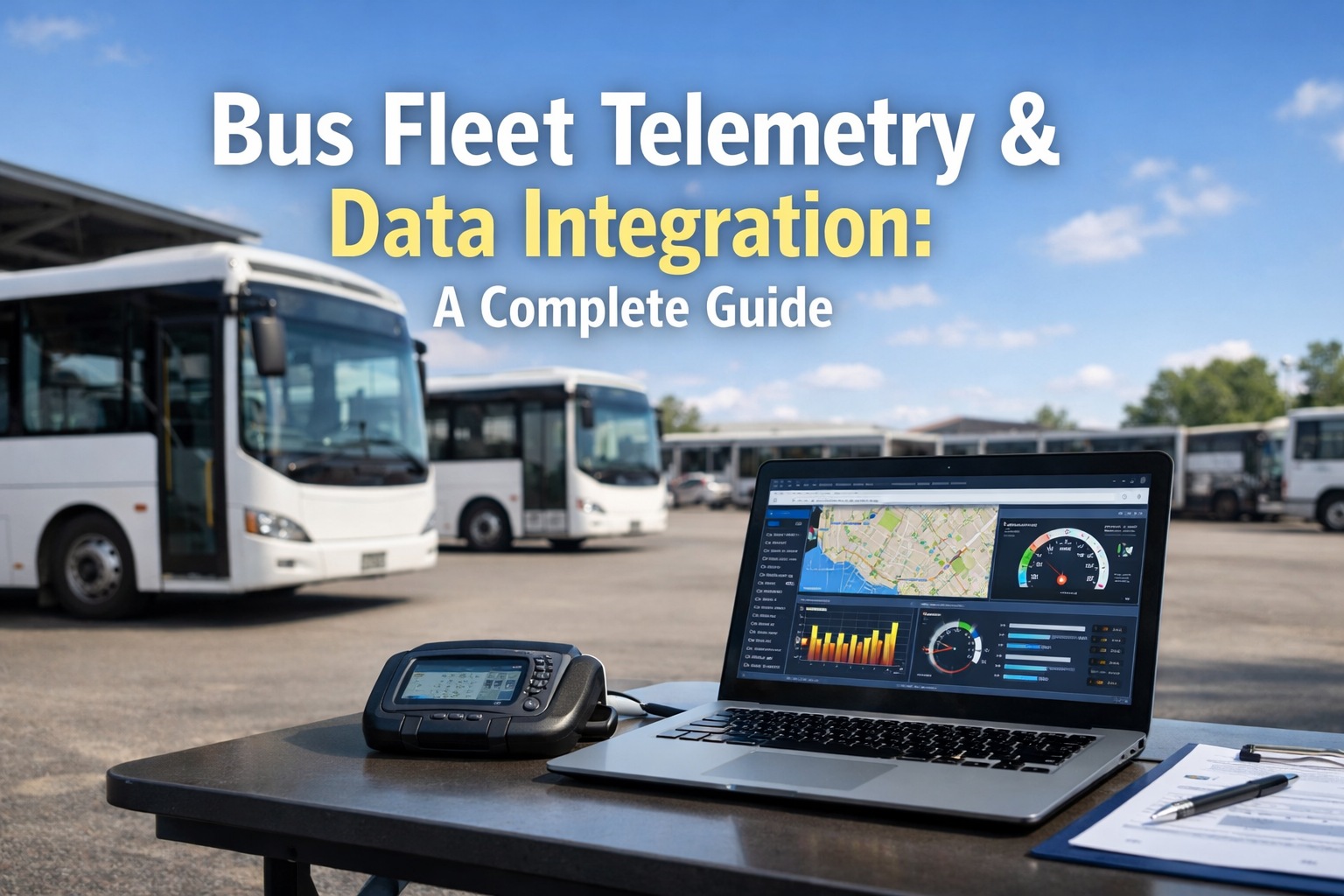
Your buses are already talking—broadcasting hundreds of data points every second about engine health, fuel consumption, location, and driver behavior. The question is: are you listening? By the end of 2025, 98% of school buses will have telematics installed, and the commercial vehicle telematics market is projected to reach $130 billion by 2030. But here's the gap most fleet managers face: data collection isn't the problem. It's connecting that data to systems that actually do something with it. This guide shows you how telemetry integration transforms raw vehicle signals into predictive maintenance alerts, automated work orders, and measurable cost reductions.
What Telemetry Actually Captures
Modern bus telematics combines GPS technology, onboard diagnostics (OBD), and wireless communication to create a continuous stream of vehicle intelligence. Here's what your buses are broadcasting right now:
The challenge isn't collecting this data—it's connecting it to systems that trigger action. Sign up free and see how telemetry data feeds directly into maintenance workflows.
The Integration Architecture
Effective telemetry integration connects your vehicles to your maintenance management system through a unified data pipeline. Here's how the pieces fit together:
Want to see this integration in action? Book a demo and watch real telemetry data flow into maintenance workflows.
What Integration Actually Delivers
When telemetry connects to your maintenance system, every data point becomes actionable. Here's the real-world impact fleets are documenting:
Replace a $50 sensor before it causes a $5,000 engine failure. Real-time monitoring of oil pressure, coolant temp, and diagnostic codes identifies problems weeks before breakdowns.
Track consumption per vehicle, identify buses needing tune-ups, and spot driver behaviors like excessive idling that waste fuel. Integration enables cost-per-mile tracking that drives decisions.
Equipment stays online 38% longer when systems catch degradation early. Automated alerts mean technicians address issues before they strand passengers mid-route.
Telematics data auto-populates inspection records, tracks driver hours, and maintains the audit trail regulators require. Documentation happens without manual entry.
Expert Review: ROI Reality Check
The numbers from documented fleet implementations tell a clear story about telemetry integration returns.
The commercial vehicle telematics market is projected to reach over $130 billion by 2030. AI-powered predictive maintenance is moving from competitive advantage to baseline expectation. Fleets operating without real-time visibility will face cost penalties of 20-35% compared to data-driven competitors.
Ready to calculate your specific ROI? Schedule a demo and get a personalized savings projection.
Implementation Roadmap
Successful telemetry integration doesn't require replacing everything at once. Here's how fleets actually make the transition:
Need help planning your integration? Start free and our team will guide you through connecting your existing telematics.
Frequently Asked Questions
Do I need to install new hardware to get telemetry data?
Usually not. Most buses manufactured after 2015 already have factory telematics (Geotab, Zonar, OEM systems) that broadcast diagnostic data. Modern CMMS platforms act as a "universal translator" for this existing data—no expensive sensor retrofits required. For older vehicles without embedded telematics, affordable aftermarket OBD-II devices ($15-50/unit/month) provide the sensor data needed for integration.
What ROI can I expect from telemetry integration?
Fleets typically achieve 3:1 to 6:1 ROI within the first 12 months through reduced collision costs, optimized fuel usage, and lower maintenance expenses from predictive analytics. Bus fleets specifically see positive ROI within 3-6 months, with the first prevented breakdown often covering the entire system cost. Element Fleet documents average annual savings of $487 per vehicle from proper telematics integration.
How accurate is predictive maintenance from telemetry data?
Leading platforms achieve 90%+ accuracy on component failure prediction, with some specific models (like collision detection) reaching 98-99%. Accuracy improves over time as AI learns your fleet's specific patterns and operating conditions. A 2025 industry report found that 52% of fleet managers reported AI-powered predictive maintenance directly reduced vehicle downtime.
What telematics providers integrate with CMMS systems?
Modern CMMS platforms integrate with major telematics providers including Geotab, Samsara, Verizon Connect, Zonar, and OEM systems from manufacturers like Bosch, ZF, Ford Pro, and Volvo. The best platforms handle multiple providers in one unified dashboard, eliminating the need to check separate systems for different vehicle makes in mixed fleets.
How long does telemetry integration take to implement?
Basic integration with existing telematics typically takes 2-4 weeks, including system connection, threshold configuration, and team training. Quick wins emerge within 60 days—reduced emergency repairs from better visibility. Full predictive capabilities develop over 2-3 months as AI algorithms learn your fleet's specific operating patterns. Most fleets require no dedicated IT resources; cloud-based platforms handle the technical integration via API.