Bus fleet weather readiness: maintenance checks for cold and heat extremes
Most bus breakdowns during weather extremes are preventable. Extreme cold stresses batteries, thickens fluids, cracks rubber, and gels diesel fuel. Extreme heat accelerates coolant failures, causes tire blowouts, degrades oil, and overloads HVAC systems. Fleets with structured seasonal PM programs report 85% fewer unexpected breakdowns and up to 40% lower maintenance costs—because they address weather-specific failure modes before conditions trigger them. A $150 battery test prevents an $8,500 roadside failure. A $300 coolant flush prevents a $5,000 engine overheat. But only if the test happens in October—not in January when the bus won't start. This guide maps exactly what fails in cold, what fails in heat, and how to build seasonal triggers into your PM schedule so your fleet is ready before the weather turns.
Cold doesn't just make things uncomfortable—it fundamentally changes how bus components behave. Fluids thicken, metals contract, rubber becomes brittle, and batteries lose up to 60% capacity. Here are the six systems most vulnerable to cold-weather failure and the PM action that prevents each one.
Batteries & Electrical
Battery capacity drops 30–60% below 20°F. Cold-cranking amps can't start the engine. Glow plugs fail to preheat diesel cylinders.
Load-test every battery before October. Replace any below 80% capacity. Verify glow plugs. Install block heaters for overnight-parked buses.
Fuel System (Diesel)
Diesel fuel gels when paraffin wax crystallizes. Water separators freeze. Fuel filters clog. Engine stalls mid-route.
Switch to winter-blend diesel or add anti-gel additives. Drain water separators weekly. Replace fuel filters at season start.
Belts, Hoses & Seals
Rubber becomes brittle. Serpentine belts crack. Coolant hoses split at clamps. Door seals harden and leak cold air.
Inspect all belts and hoses before November. Replace any showing surface cracking. Lubricate door seals and hinges to prevent freeze-sticking.
Fluids & Lubricants
Engine oil thickens, increasing cold-start wear. Antifreeze at wrong concentration freezes in the block. Washer fluid freezes in lines.
Switch to winter-grade oil. Test antifreeze to your region's lowest expected temp. Use winter-rated washer fluid. Check transmission fluid.
Tires & Traction
Every 10°F drop loses ~1 PSI. Under-inflated tires increase stopping distance on ice. Tread compounds harden and lose grip.
Check pressure weekly and adjust to spec. Switch to winter-rated tires for snow/ice routes. Verify tread depth. Stock tire chains if needed.
Heating & Defrost
Heater cores clog with sediment. Blower motors burn out. Defroster ducts disconnect. Windshield fog = safety hazard.
Test full heating before cold season. Check blower motor amps. Verify defrost at all vents. Flush heater core if weak. Replace cabin filters.
Battery failures are the #1 winter breakdown cause. A $150 test and $200 replacement prevent an $8,500 roadside event. But only if the test is on the October schedule—not triggered by the first no-start in January. See how seasonal PM triggers automate winter prep—book a demo.
What Fails in Heat: The Summer Breakdown Map
Heat degrades systems gradually until something gives. Engine oil breaks down faster. Coolant efficiency drops. Tire pressure spikes into blowout territory. HVAC compressors run at max load for months. These six systems need a different PM cycle for hot weather.
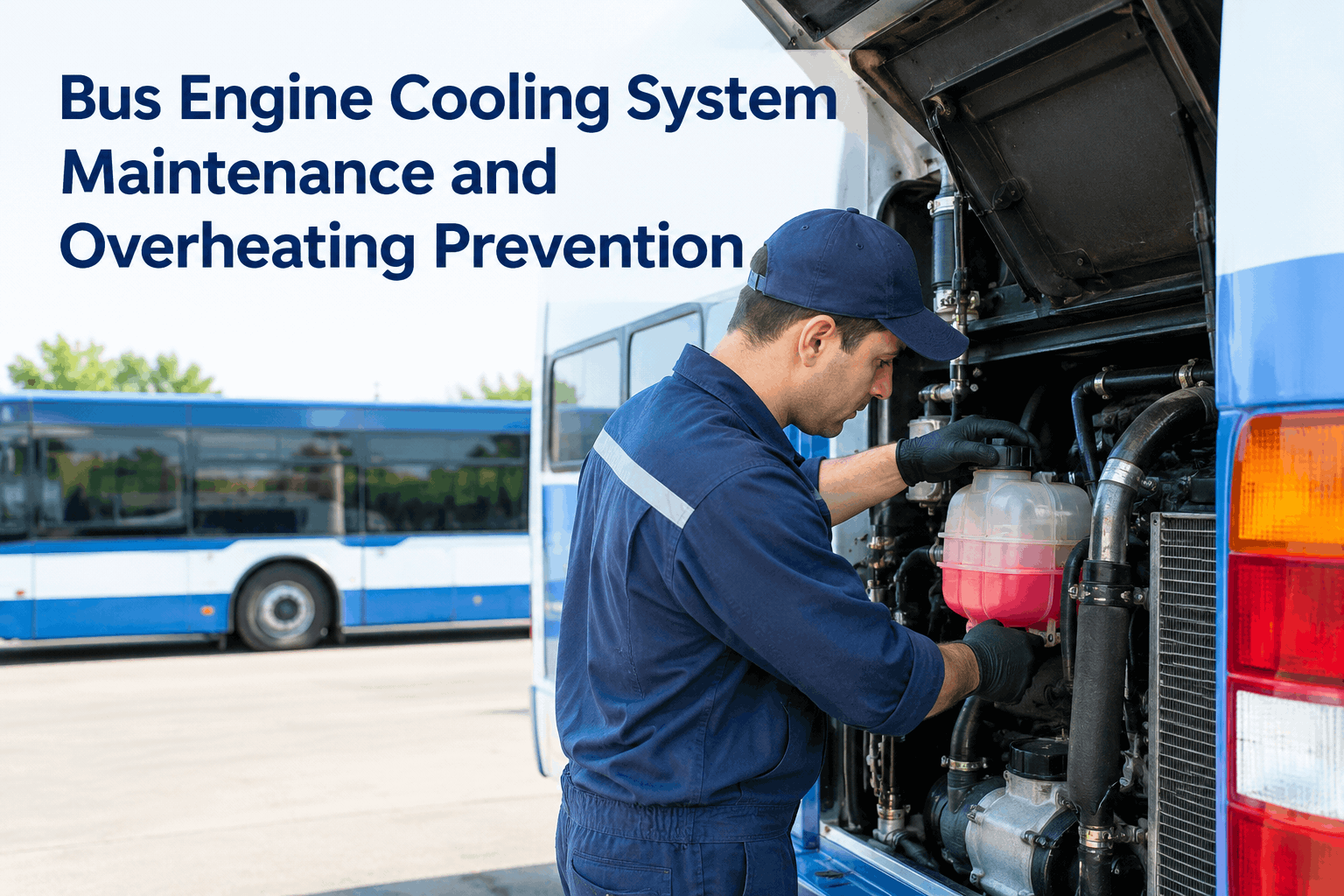
Cooling System
Radiator hoses soften and burst. Coolant degrades and loses efficiency. Thermostats stick. Water pumps fail under sustained heat.
Inspect hoses for soft spots. Test coolant concentration and pH—flush if discolored or older than 2 years. Verify thermostat. Check water pump.
HVAC & Air Conditioning
Compressors fail under full load. Refrigerant leaks from heat-expanded seals. Cabin filters clog. Condenser fins block with debris.
Test AC in all bus sections before May. Check refrigerant levels and inspect for leaks. Clean condenser fins. Replace cabin air filters.
Check pressure weekly and adjust down if over spec. Inspect for sidewall cracking and bulges. Verify alignment. Replace any heat-damaged tires.
Engine Oil & Fluids
High temps degrade oil faster—viscosity breaks down. Transmission fluid overheats. Brake fluid absorbs moisture, lowering boiling point.
Shorten oil change intervals on heavy routes. Test brake fluid moisture. Check transmission fluid. Monitor DEF quality (heat degrades urea).
Batteries & Electrical
Heat shortens battery life more than cold. Plates corrode faster. Electrolyte evaporates. Alternators work harder under AC load.
Inspect for corrosion and swelling. Clean terminals. Verify alternator output under AC load. Check wiring near heat sources for insulation damage.
Brakes & Stopping
Brake fade on downhill routes. Air brake moisture condenses and corrodes valves. Brake fluid with moisture boils under heavy braking.
Measure rotor thickness and pad depth before summer. Drain air tanks daily in humid months. Test brake fluid boiling point. Replace air dryer desiccant.
BusCMMS lets you build seasonal maintenance triggers—winter battery tests in October, coolant checks in April, tire adjustments by temperature—so your buses are prepared before conditions turn hostile.
Every seasonal PM costs a fraction of the breakdown it prevents. These four comparisons show why seasonal preparation delivers 10–50x returns on every dollar invested.
A single static PM schedule can't handle the fact that rubber behaves differently at 10°F than at 100°F, or that oil degrades twice as fast in a Phoenix summer versus a Seattle winter. The fleets that maintain uptime through extremes build seasonal triggers into their PM schedule—and the system enforces them automatically, not from memory.
The difference between fleets that survive extremes and those that get caught is whether seasonal prep is built into the system or left to someone's memory. Here's the four-step configuration.
01
Create Seasonal PM Templates
Build two work order templates: "Winter Prep" (battery test, fluid swap, belt/hose inspection, fuel system, heating check) and "Summer Prep" (coolant system, AC test, tire audit, oil condition, brake fluid). Attach checklists so nothing gets missed.
Set up once, reuse every year
02
Set Calendar-Based Auto-Triggers
Configure your CMMS to auto-generate "Winter Prep" for every bus in October and "Summer Prep" in April. The system schedules across shop capacity so the entire fleet is ready before conditions change—not after the first failure.
October + April auto-triggers
03
Tighten Intervals for Extreme Months
Oil degrades faster in heat. Tire pressure fluctuates more in cold. Shorten oil change intervals in summer, add weekly tire checks in winter, and relax back to standard during mild months. The CMMS adjusts automatically.
Dynamic intervals by season
04
Track Failures Year Over Year
After each season, report on weather-related work orders: which components failed, which buses were hit, which failures were caught by PMs vs. discovered as breakdowns. This data refines templates for next year—making each cycle smarter.
Post-season review every May and November
The best seasonal programs are built on failure data from the previous year and refined annually. A CMMS that tracks work orders by component, season, and vehicle turns each cycle into a learning loop. Walk through seasonal PM setup in a live environment—book a demo.
Be Ready Before the Weather Turns
BusCMMS builds seasonal PM templates, auto-triggers by month, adjusts intervals for extreme conditions, and tracks weather-related failures year over year. Your buses stay on the road—snow, rain, or 110°F heat.
October for most U.S. regions. Battery load tests, fluid swaps, belt/hose inspections, heating verification, and fuel system prep should be completed before the first sustained cold. A CMMS with calendar-based triggers generates work orders fleet-wide in October so preparation happens systematically—not in a last-minute scramble. See how auto-triggers schedule winter prep fleet-wide—book a demo.
What's the #1 cause of winter bus breakdowns?
Battery failures. Cold reduces capacity 30–60%, and batteries that tested marginal in warm weather fail when cold-cranking demands spike. A $150 load test catches weak batteries before they strand passengers. Diesel fuel gelling is the second most common cause—prevented by winter-blend fuel and anti-gel additives before temperatures drop below the fuel's cloud point.
What's the #1 cause of summer bus breakdowns?
Cooling system failures. Hoses that pass inspection in mild weather burst under sustained 95°F+ operation. Degraded coolant loses heat-transfer efficiency even at full level. A pre-summer coolant test and hose inspection catches the majority of these for under $100 in labor and parts. See how summer PM templates catch cooling failures early—schedule a demo.
Should I use different PM schedules for summer and winter?
Yes. A static schedule can't account for oil degrading faster in heat, tire pressure fluctuating more in cold, or HVAC systems under seasonal load. Maintain your standard mileage-based PM year-round, then layer seasonal templates: "Winter Prep" in October, "Summer Prep" in April. A CMMS supporting both calendar and mileage triggers makes this straightforward.
How does a CMMS help with seasonal maintenance?
Three capabilities make seasonal prep reliable. Calendar-based auto-triggers generate work orders at the right time without relying on memory. Seasonal templates with built-in checklists ensure every weather-specific item is covered. Year-over-year failure tracking refines templates annually. The result: systematic preparation instead of reactive scrambling. See seasonal automation in a live walkthrough—book a demo.