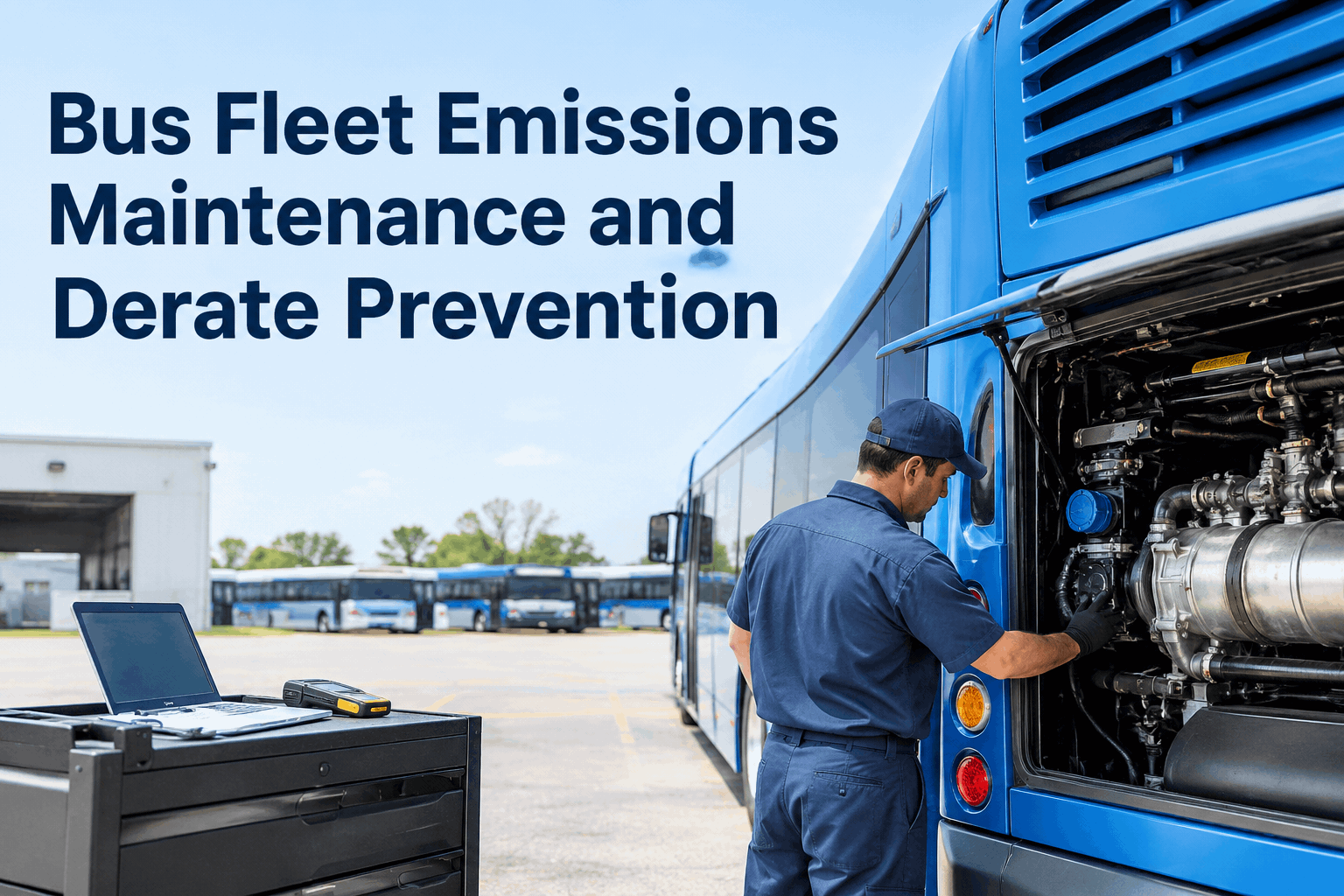
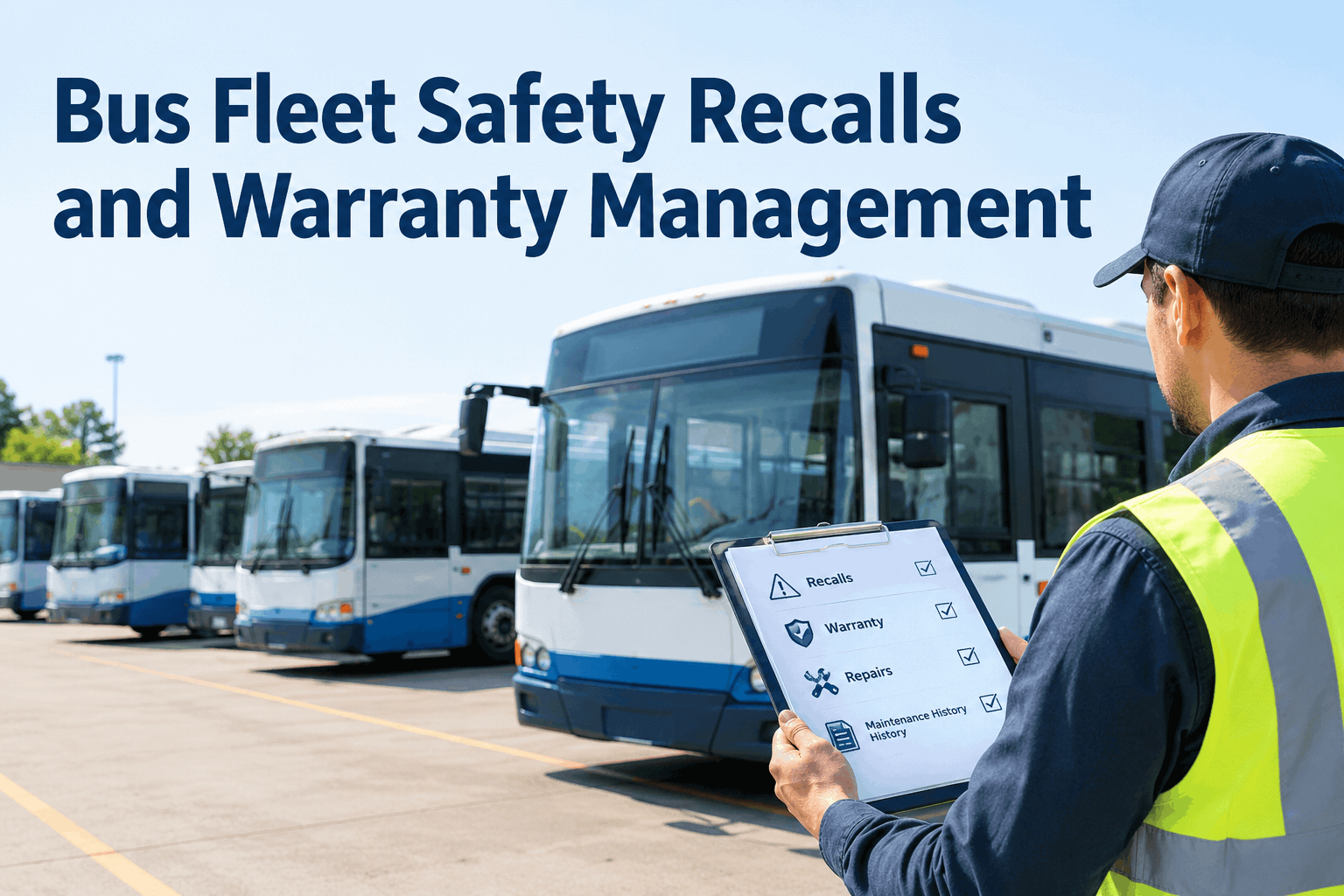
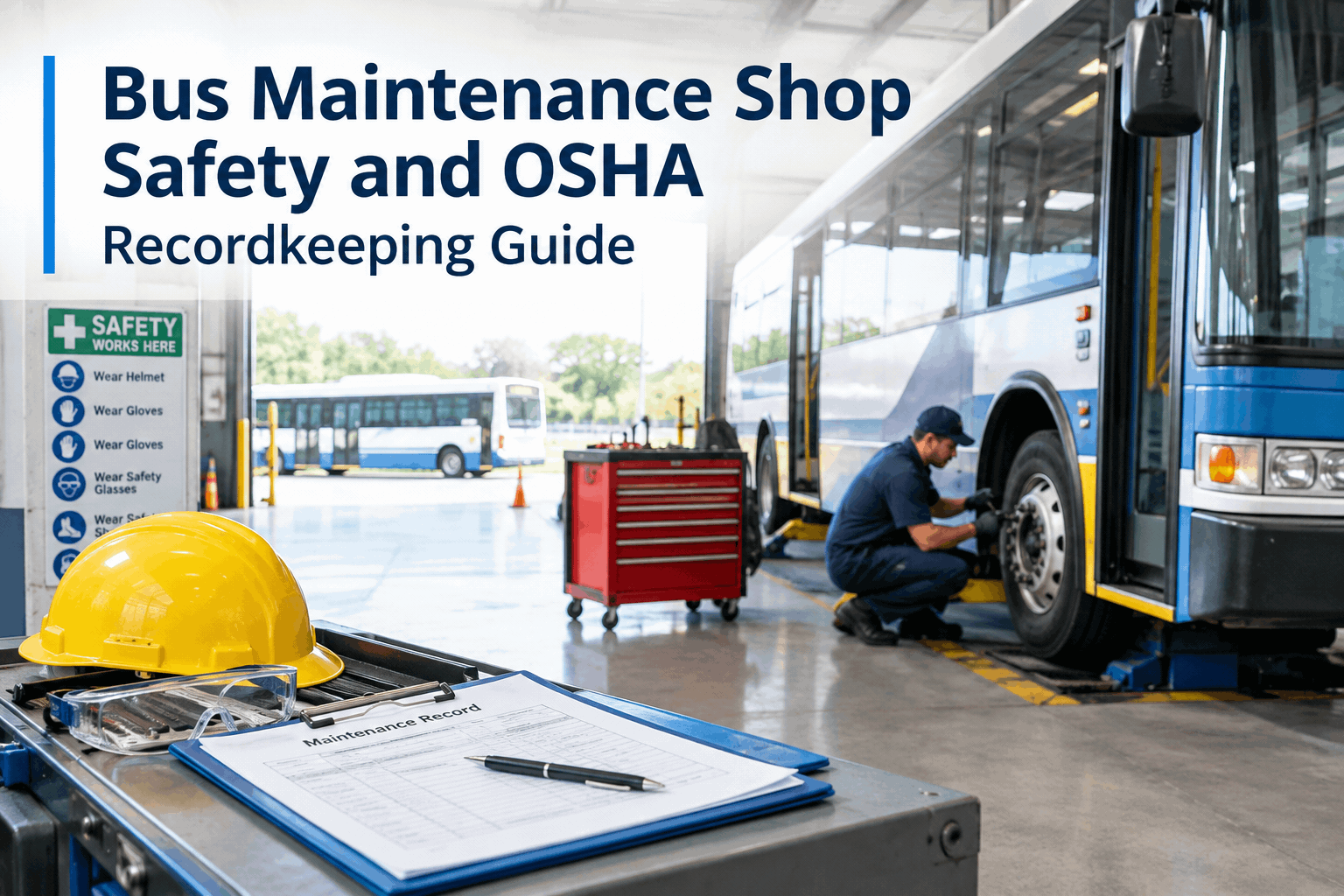
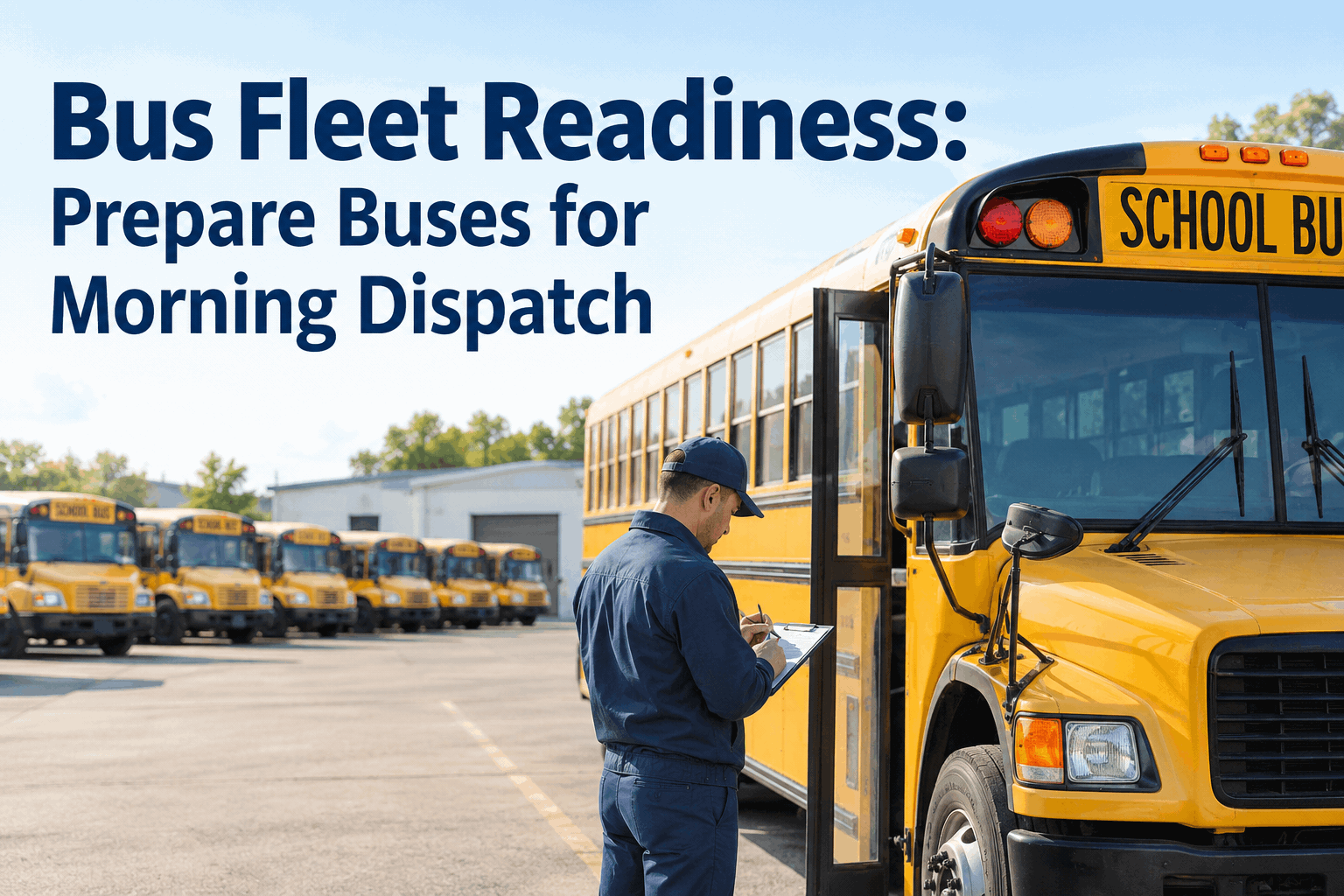
18.1% of commercial vehicles fail roadside inspections. Brakes, tires, and lights cause most out-of-service orders. A 10-minute pre-trip inspection catches defects before they become DOT violations, route disruptions, or safety incidents. This is the complete 2026 checklist every school bus driver needs.
2026 DOT-Compliant
School Bus Pre-Trip Inspection Checklist
50+ inspection points. 7 walk-around zones. 10 minutes to protect every student on your bus.
10 min
Daily inspection time
50+
Inspection points
85%
Breakdowns prevented
01
Why Pre-Trip Inspections Matter: The 2025 Data
18.1%
Vehicle Out-of-Service Rate
CVSA International Roadcheck 2025
56,178
Inspections Conducted
10,148
Vehicles Pulled Off Road
Top Out-of-Service Violations
02
The 7-Zone Walk-Around Inspection
Follow this clockwise pattern starting from the driver's door. Consistent routine = nothing missed.
1
Front/Engine
2
Driver Side Front
3
Driver Side
4
Rear
5
Passenger Side Rear
6
Passenger Side Front
7
Interior/Cab
03
Complete Pre-Trip Checklist by Zone
Zone 1
Engine Compartment
Oil level — check dipstick, between marks
Coolant level — in reservoir, proper color
Power steering fluid — at proper level
Belts — no cracks, proper tension
Hoses — no leaks, bulges, or cracks
Wiring — secure, no fraying or exposed
No fluid leaks under engine
#1 Violation
Brake System
Air pressure builds to 120-140 psi
Low-air warning at 60 psi
Air loss ≤3 psi/minute (service brake applied)
Parking brake holds on grade
Service brake stops vehicle smoothly
No brake fluid leaks visible
Brake hoses — no cracks, chafing, or leaks
21.4% OOS
Tires & Wheels
Steer axle tread depth ≥4/32"
Other axles tread depth ≥2/32"
No cuts, bulges, or sidewall damage
Proper inflation (visual + pressure check)
All lug nuts present and tight
No cracks in rims or wheels
Hub seals — no leaks
Zone 2-6
Lights & Signals
Headlights — high and low beam
Turn signals — front and rear
Hazard lights — all flashing
Brake lights — both sides
Clearance/marker lights
8-light warning system (amber/red)
Stop arm lights functional
School Bus
Safety Equipment
Stop arm — deploys fully, retracts
Crossing control arm — extends fully
Emergency exits — open freely
Emergency exit alarm — sounds when open
Fire extinguisher — charged, accessible
First aid kit — stocked, accessible
Reflective triangles — 3 present
Zone 7
Interior & Cab
Mirrors — adjusted, clean, secure
Windshield — no cracks in wiper sweep
Wipers — functional, good blades
Horn — works properly
Seats — secure, no damage
Aisle — clear, no obstructions
Dashboard gauges — all normal
Replace Paper Checklists With Digital Inspections
BusCMMS guides drivers through every checkpoint. Defects auto-create work orders. Records are stored forever — audit-ready in seconds, not days.
04
Air Brake Test Sequence
This 5-step sequence is required for CDL tests and catches brake failures before they strand students:
1
Build Pressure
Start engine. Allow air pressure to build to governor cut-off (120–140 psi).
Target: 120–140 psi
2
Static Leak Test
Turn off engine. Release parking brake. Apply firm pressure to service brake. Hold 1 minute.
Pass: ≤3 psi drop
3
Low-Air Warning Test
Fan service brake to reduce pressure. Warning light/buzzer must activate.
Trigger: Before 60 psi
4
Spring Brake Test
Continue fanning. Spring brakes must engage automatically.
Engage: 20–45 psi
5
Parking Brake Hold
Set parking brake. Attempt to move vehicle in low gear. Bus should not move.
Pass: No movement
05
Paper vs Digital Inspections
Paper
Digital
Time to complete
15–20 min
8–12 min
Defect notification
End of day
Instant alert
Audit retrieval
Hours/Days
Seconds
Photo documentation
Auto work orders
Lost records risk
High
None
06
DOT Compliance Requirements
Daily Pre-Trip
FMCSR 396.13
Required before each trip. Driver must be satisfied vehicle is safe.
Annual Inspection
49 CFR 396.17
Full inspection every 12 months. Report retained 14 months.
Emergency Exits
49 CFR 396.3
Inspected every 90 days. All exits must open freely.
DVIR Records
49 CFR 396.11
Retain for 3 months minimum. Digital satisfies requirement.
Your Daily Pre-Trip Summary
Engine compartment — fluids, belts, leaks
Brakes — air test sequence complete
Tires — tread depth, inflation, damage
Lights — all external lights functional
Safety equipment — stop arm, exits, extinguisher
Interior — mirrors, seats, gauges
10 Minutes That Protect Every Student
Pre-trip inspections prevent 85% of breakdowns. Digital inspections catch defects instantly, create work orders automatically, and keep audit records forever. Start protecting your students today.
Frequently Asked Questions
How long should a school bus pre-trip inspection take?
A thorough pre-trip inspection takes 10–15 minutes. Rushing defeats the purpose — this is the single most important safety ritual of your day. With digital checklists, drivers complete inspections in 8–12 minutes while capturing more detail than paper forms.
What are the most common inspection failures?
According to CVSA 2025 Roadcheck data: brake systems are #1 (causing over 5,500 out-of-service orders), followed by tires/wheels (21.4% of violations), lighting defects, and steering issues. Pre-trip inspections catch these defects before they become violations.
What's the minimum tire tread depth for school buses?
Steer axle tires require minimum 4/32" tread depth. All other tires require minimum 2/32". Any tire with exposed belt/ply material, bulges, or flat spots is an automatic out-of-service violation regardless of tread depth.
What air brake pressure thresholds must I know?
Governor cut-off: 120–140 psi. Low-air warning: activates before 60 psi. Spring brakes engage: 20–45 psi. Static air loss: ≤3 psi/minute with brakes applied. Any failure of these thresholds means the bus should not operate.
Are digital pre-trip inspections DOT compliant?
Yes. Digital DVIRs are fully compliant with FMCSR 396.11 and 396.13 when they capture all required information. FMCSA rule FMCSA-2025-0115 (effective March 2026) explicitly allows electronic DVIRs. Digital records are actually preferred by auditors for their completeness and instant retrieval.