The delivery slip said 6,000 gallons went into the bulk tank Monday. By Friday your pump totals and the stick reading do not add up — you are 160 gallons short and nobody can say where it went. Multiply that across a year and it is real money walking off the depot. That gap has a name, and it is trackable. You can see how fuel reconciliation closes the gap on your bulk tank.
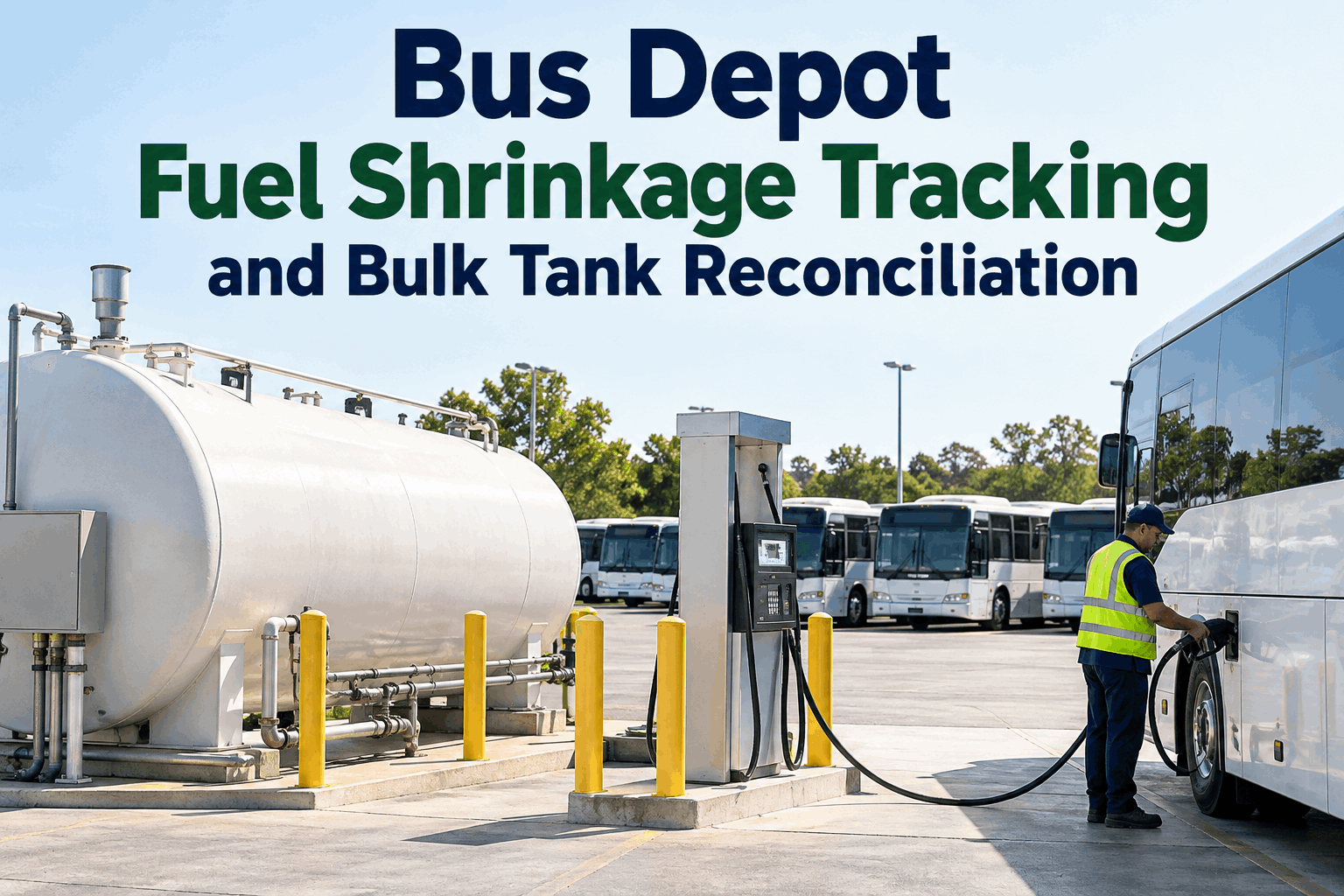
Bus Depot Fuel Shrinkage Tracking and Bulk Tank Reconciliation
Fuel shrinkage tracking is simply knowing the difference between the fuel your records say should be in the bulk tank and the fuel actually there. Deliveries in, fuel dispensed out, and a physical dip reading should all reconcile. When they do not, the gap is shrinkage — and until you measure it daily, you cannot tell evaporation from a miscalibrated meter from fuel walking out the gate.
Where Bus Depot Fuel Shrinkage Actually Goes
Not all shrinkage is theft — and assuming it is sends you chasing the wrong problem. Most of a depot's fuel loss is physical and mundane, which is exactly why reconciliation matters: it separates the gallons you can recover from the ones you simply have to account for.
Proportions are illustrative of a typical depot mix, not a fixed rule — the point is that most shrinkage is physical and data loss, so the only way to know your real split is to reconcile and watch the trend.
Temperature and evaporation
Diesel expands and contracts with temperature. Fuel delivered cold contracts in the tank and reads low against the slip, and open-vent evaporation quietly takes its share — real loss that is not anyone's fault but still has to be counted.
Meter drift and paper gaps
Dispenser meters wander between calibrations, and hand-written fuel slips get skipped, misread or entered twice. As fuel vendors like Veeder-Root note, bad data looks exactly like missing fuel until you reconcile it against a physical reading.
Theft and siphoning
It is the smallest slice for most depots, but the one that hurts — siphoned fuel, a meter bypassed, a nozzle run into a personal can. You only catch it when the tracked variance rules out the ordinary causes and still comes up short.
The lesson from every fuel-loss study is the same: you cannot fix what you cannot separate. A tracked reconciliation turns one vague shortage into named, sized causes you can act on. It is worth starting a free fuel log and seeing your own shrinkage split.
Why Daily Bulk Tank Reconciliation Beats a Monthly Guess
Reconcile once a month and a small daily leak hides inside a big number until it is thousands of gallons. Reconcile every day and the same loss shows up as a trend line creeping toward your tolerance — caught while it is still a question, not a loss.
Veeder-Root and other fuel-systems vendors recommend reconciling deliveries and dispensing daily and tracking the variance — because the pattern, not any single day, is what reveals a real loss. You can see daily reconciliation running on a live depot dashboard.
How BusCMMS Handles Fuel Shrinkage Tracking
Reconciliation only works if the data arrives clean and the math runs itself. Four things make fuel accountability real on a bus depot instead of a spreadsheet nobody trusts.
Every delivery and dispense logged
Deliveries, pump transactions and dip readings all land in one record, so book stock builds itself instead of living on paper slips that get lost or double-entered.
Automatic variance alerts
The system reconciles the tank daily and flags the variance the moment it crosses your tolerance — the early warning that turns a slow leak into a same-week fix.
Fuel per bus, driver and route
Consumption tracked to the bus, driver and route surfaces the MPG drop or the one vehicle pulling more than it should — so a shrinkage source has a name, not just a number.
Fuel card reconciliation
Fuel-card charges match back against logged fills, so off-site fueling reconciles alongside the bulk tank and the whole fuel spend lives on one auditable dashboard.
That is the difference between absorbing shrinkage and controlling it — the bulk tank, the pumps and the fuel cards reconcile in one place instead of three disconnected logs. The fastest way to judge it is a short walkthrough on your own depot's numbers.
For years I reconciled the tank once a month and the variance was always this big ugly number I would argue about with accounting. Nobody could say if it was evaporation or someone helping themselves. We went to a daily dip and logged every dispense, and within two weeks the trend pointed right at a drifting meter on pump two — not theft at all. Fixed the meter, the variance dropped back under half a percent. I sleep better knowing the number instead of guessing at it.
Fuel Shrinkage Tracking: The Key Takeaways
Shrinkage is the reconciliation gap
It is the difference between the book stock your records predict and the physical dip reading — measurable the moment you track deliveries, dispensing and a dip together.
Most of it is not theft
Temperature, evaporation, meter drift and paper gaps make up the bulk of depot shrinkage. Tracking separates recoverable loss from the loss you simply account for.
Daily beats monthly
A running variance trend flags a problem days before a monthly count would, while it is still small enough to investigate and fix cheaply.
One dashboard, one fuel truth
Bulk tank, pump transactions and fuel cards reconciling in one place is what makes the number auditable — and defensible to a board or a state review.
Fuel shrinkage tracking is not about catching a thief — it is about accounting for every gallon so the rare real loss has nowhere to hide. Reconcile daily, watch the trend, and the bulk tank stops being a budget leak you cannot explain. You can set up bulk-tank reconciliation for your depot in minutes.
Fuel Shrinkage Tracking: Frequently Asked Questions
What is fuel shrinkage in a bus depot?
Fuel shrinkage is the gap between the fuel your records say should be in the bulk tank and the fuel actually there. You build a book stock from opening inventory plus deliveries in, minus everything dispensed to buses, then compare it to a physical dip or gauge reading. When the dip comes up short of the book stock, that difference is shrinkage. Fuel shrinkage tracking simply means measuring that gap regularly so you know its size and, over time, its cause.
What causes bulk tank fuel loss if it is not theft?
Most depot shrinkage is physical and data loss, not theft. Diesel expands and contracts with temperature, so fuel delivered cold reads low against the slip, and open-vent evaporation takes a steady share. Dispenser meters drift between calibrations and hand-written fuel slips get skipped, misread or entered twice, which looks exactly like missing fuel until you reconcile against a physical reading. Fuel-systems vendors such as Veeder-Root group these as physical loss and data loss. Theft is usually the smallest slice, which is why you only trust a theft conclusion after reconciliation rules out the ordinary causes.
What is an acceptable fuel variance or shrinkage percentage?
There is no single universal number, and it depends on your equipment, climate and how tightly you measure. The practical point is not a magic threshold but a stable baseline: once you reconcile daily you learn your own normal variance, and what matters is catching a drift away from it. As a reference, fuel-management provider Banlaw reports its customers sustaining a fuel stock reconciliation record above 99.5 percent, implying a very small ongoing variance — but treat that as a reported result to aim toward, not a mandated tolerance. Set your own tolerance from your tracked history.
How often should a bus depot reconcile its bulk fuel tank?
Daily is the standard that actually catches problems. Reconcile once a month and a small ongoing loss hides inside a large number until it is thousands of gallons; reconcile each day and the same loss appears as a trend creeping toward your tolerance, caught while it is still small. Veeder-Root and other fuel-systems vendors recommend reconciling deliveries and dispensing daily and tracking the variance, because the pattern over days — not any single reading — is what reveals a real loss versus normal noise.
How does fuel management software reduce shrinkage?
It removes the two things that break manual reconciliation: messy data and slow math. A bus-specific system like BusCMMS logs every delivery, pump dispense and dip reading in one place, builds book stock automatically, reconciles the tank daily, and alerts you the moment variance crosses your tolerance. It also tracks fuel per bus, driver and route and reconciles fuel-card charges against logged fills, so off-site fueling and the bulk tank live on one auditable dashboard. That turns a vague monthly shortage into a named, sized, early-flagged variance you can act on — and defend in an audit.