You rotated the tires on your two newest electric buses right on schedule, and three months later the drive tires are already down to the wear bars — while the diesel coach that runs a longer route is still fine. Nobody warned you an electric bus would chew through tires like this. If you want to get ahead of it, you can see how tracking tire wear per bus catches the fast-wearing ones early.
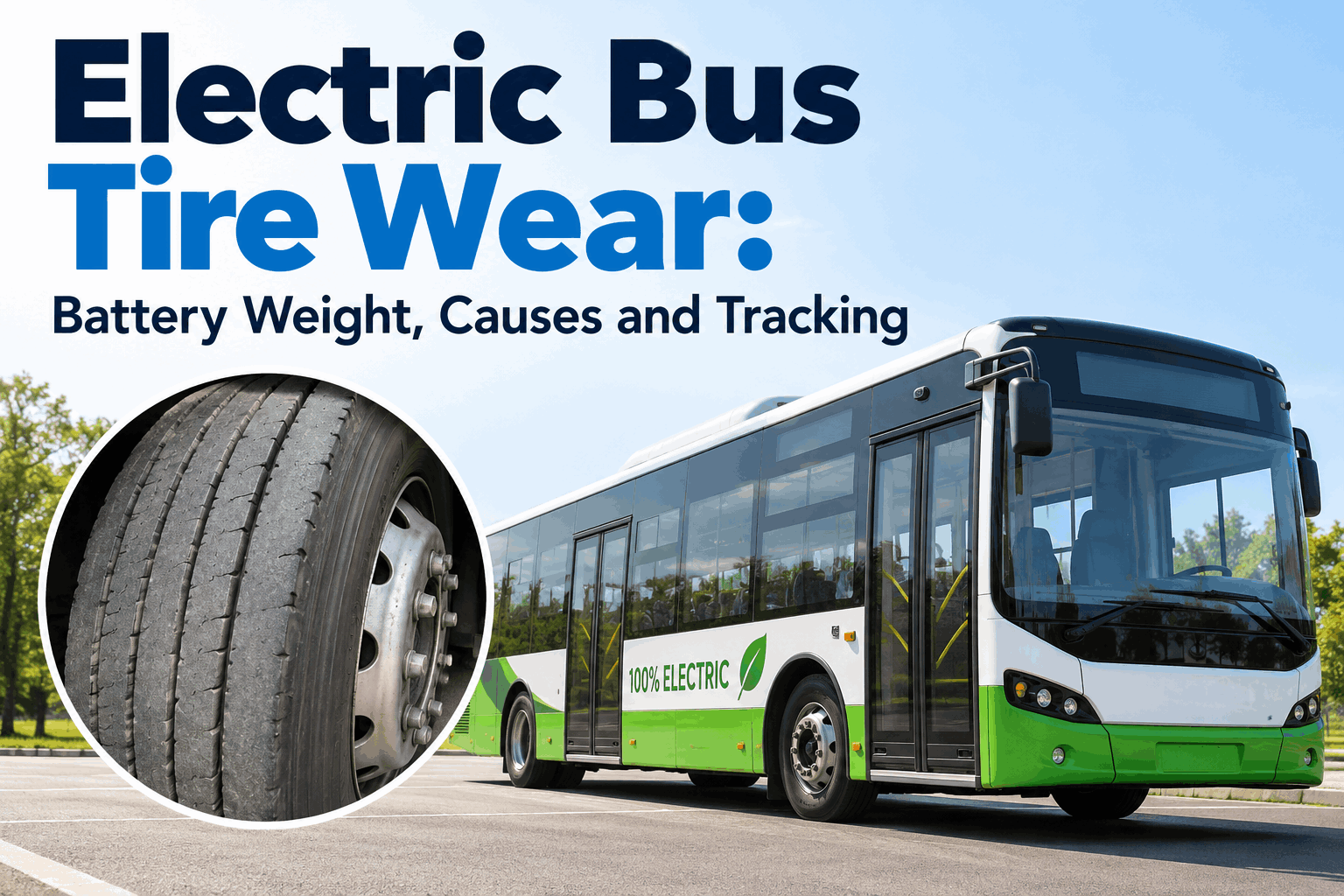
Electric Bus Tire Wear: Battery Weight, Causes and Tracking
Electric bus tire wear is not bad luck — it is physics. A battery pack adds thousands of pounds of dead weight, instant torque scrubs the drive tires, and that load pushes down on every contact patch, mile after mile. The fix is not a better tire alone; it is knowing which bus is wearing fastest before the tread runs out on a route.
Why Electric Bus Tire Wear Runs Ahead of Diesel
Three forces stack up on an electric bus, and they all land on the tires. None of them are a defect — they are the trade-off that comes with the powertrain. Knowing which one is hitting your fleet hardest tells you where to act.
Battery weight
The pack is the single biggest factor. Industry sources put electric vehicles roughly 10 to 20 percent heavier than their combustion equivalents, and on a transit bus that is thousands of extra pounds pressing on the same contact patches all day.
Instant torque
An electric motor delivers full torque from a standstill. On a stop-and-go route that means dozens of hard pull-aways a day, each one scrubbing a little rubber off the drive tires in a way a diesel's gradual power never did.
Duty cycle and route
Weight and torque bite hardest on tight urban loops with constant stops, turns and curb contact. The same electric bus on a flat, steady run wears far slower — which is exactly why wear has to be tracked per bus, not assumed fleet-wide.
Regenerative braking is the one force working in your favor — by slowing the bus with the motor it can cut brake wear by 80 percent or more, as EV fleet sources report. But as those same sources note, it does not remove the forces still passing through the tires. The rubber keeps paying the bill. You can sign up free and separate EV wear from diesel wear on one dashboard.
What Faster Electric Bus Tire Wear Costs You
The gap is not small. Put a representative electric drive tire next to a diesel one on the same mileage axis and the shorter service life is easy to see — and EV-rated tires cost more to replace on top of that. It adds up fast enough to be worth a look at your real tire cost per mile.
Figures are representative of the electric-versus-diesel wear gap, not a guaranteed result — BusCMMS reports electric buses wearing tires roughly 30 to 40 percent faster, and your real numbers depend on route, load and tire choice.
Tracking Electric Bus Tire Wear Per Unit
A fleet average hides the problem. One bus on a punishing downtown loop can hit the wear limit months before another on an easy run — and the only way to catch it is to watch tread depth per bus over miles, not as one number for the whole fleet.
Catch the fast-wearing bus early and you have options — rotate it to a lighter route, order the tires before they are urgent, or flag the alignment issue that is accelerating the wear. You can start tracking tread depth per bus for free and stop averaging the problem away.
How BusCMMS Manages Electric Bus Tire Maintenance
Managing EV tire wear is not one task — it is tracking, reordering and scheduling that all have to talk to each other. Four things make that work on a mixed-fuel fleet.
Tread depth logged per position
Each tire position on each bus carries its own wear history, so you see the fast-wearing drive tires on your heavy routes long before they reach the limit.
Cost per mile, by bus and tire
Real-time dashboards show tire cost per mile for every bus, so the EV wear penalty is a line you can take to the board instead of a vague complaint.
Fuel-type-specific PM schedules
Electric buses get their own shorter rotation and inspection intervals, triggered by mileage or calendar, running right alongside diesel and CNG on the same calendar.
Tire inventory and auto-reorder
Usage tracking and auto-reorder alerts keep the right EV-rated tires on the shelf, so a fast-wearing bus never waits on a part and you never double-order.
That is the difference between reacting to worn tires and planning for them — the same bus-specific system already handles your diesel and CNG wear, so EV is just one more schedule on the dashboard. The quickest way to judge it is a short walkthrough on your own fleet's numbers.
When we rolled out our first electric buses, I budgeted tires like they were diesels and blew through it in half a year. The weight and the stop-and-go downtown just eats drive tires. Once we started logging tread depth per bus, the pattern was obvious — two buses on the loop route were the whole problem. We moved them to a straighter run and our tire spend finally made sense. You cannot manage a wear rate you are not writing down.
Electric Bus Tire Wear: The Key Takeaways
Weight is the root cause
A battery pack makes an electric bus meaningfully heavier, and that load rides on the tires every mile — faster wear is built into the powertrain, not a defect.
Route decides the rate
Instant torque and tight stop-and-go loops punish tires hardest, so two identical buses can wear at very different rates depending on the run.
Track per bus, not fleet-wide
A fleet average hides the one bus about to run out of tread on a route. Per-unit tread tracking is what turns a surprise into a plan.
One dashboard for every fuel
EV tire wear sits next to diesel and CNG schedules, cost-per-mile and auto-reorder in one place, so nothing about the electric buses gets managed on the side.
Electric bus tire wear is predictable once you measure it — and predictable is exactly what a board-approved budget needs. For a broader view of tire care across your fleet, the bus tire maintenance guide for electric and diesel fleets covers inspection, pressure and rotation basics.
Electric Bus Tire Wear: Frequently Asked Questions
Why do electric buses wear tires faster than diesel buses?
Electric bus tire wear runs ahead of diesel mainly because of battery weight. The pack makes the bus meaningfully heavier — industry sources estimate electric vehicles are roughly 10 to 20 percent heavier than combustion equivalents — and that extra load presses on every tire contact patch. Add the instant torque of an electric motor, which scrubs the drive tires on each hard pull-away, and the rubber simply does more work for the same miles. BusCMMS reports electric buses wearing tires roughly 30 to 40 percent faster than comparable diesels.
How much shorter is electric bus tire life?
It varies with route, load and tire choice, but the gap is real. Where a diesel drive tire might reach around 50,000 miles, a comparable electric bus drive tire on a demanding stop-and-go route can reach the wear limit roughly a third sooner. The key point is that the number is not uniform across a fleet — a bus on a tight urban loop wears far faster than the same bus on a steady, flat run, which is why tread depth should be tracked per bus rather than assumed.
Does regenerative braking reduce electric bus tire wear?
Regenerative braking helps your brakes, not your tires. By slowing the bus with the motor it can cut friction-brake wear by 80 percent or more, which is a genuine maintenance saving. But EV fleet sources are clear that it does not remove the cornering, acceleration and weight forces still passing through the tires. So you get real brake savings while tire wear stays elevated — another reason to track tire cost separately from brake cost on each bus.
How often should electric bus tires be rotated and inspected?
Electric buses generally need shorter rotation and more frequent inspection intervals than diesels because they wear faster. Tire experts recommend an "earlier is better" approach for newly deployed fleet EVs, and many operators tighten rotation intervals and check pressure more often on their electric buses. The practical answer is to set EV-specific intervals triggered by mileage or calendar, rather than running electric buses on the same schedule as the diesels — which is exactly what fuel-type-specific preventive maintenance scheduling is for.
How do you track electric bus tire wear across a fleet?
The reliable way is per-unit tracking: log tread depth by tire position on each bus over miles, so every bus carries its own wear curve instead of hiding behind a fleet average. A bus-specific CMMS like BusCMMS records tread depth, rotation history and tire cost per mile for each bus, auto-reorders EV-rated tires before you run short, and keeps electric, diesel and CNG schedules on one dashboard. That turns a fast-wearing bus into an early flag you can act on — move it to a lighter route, order tires ahead, or catch the alignment issue driving the wear.