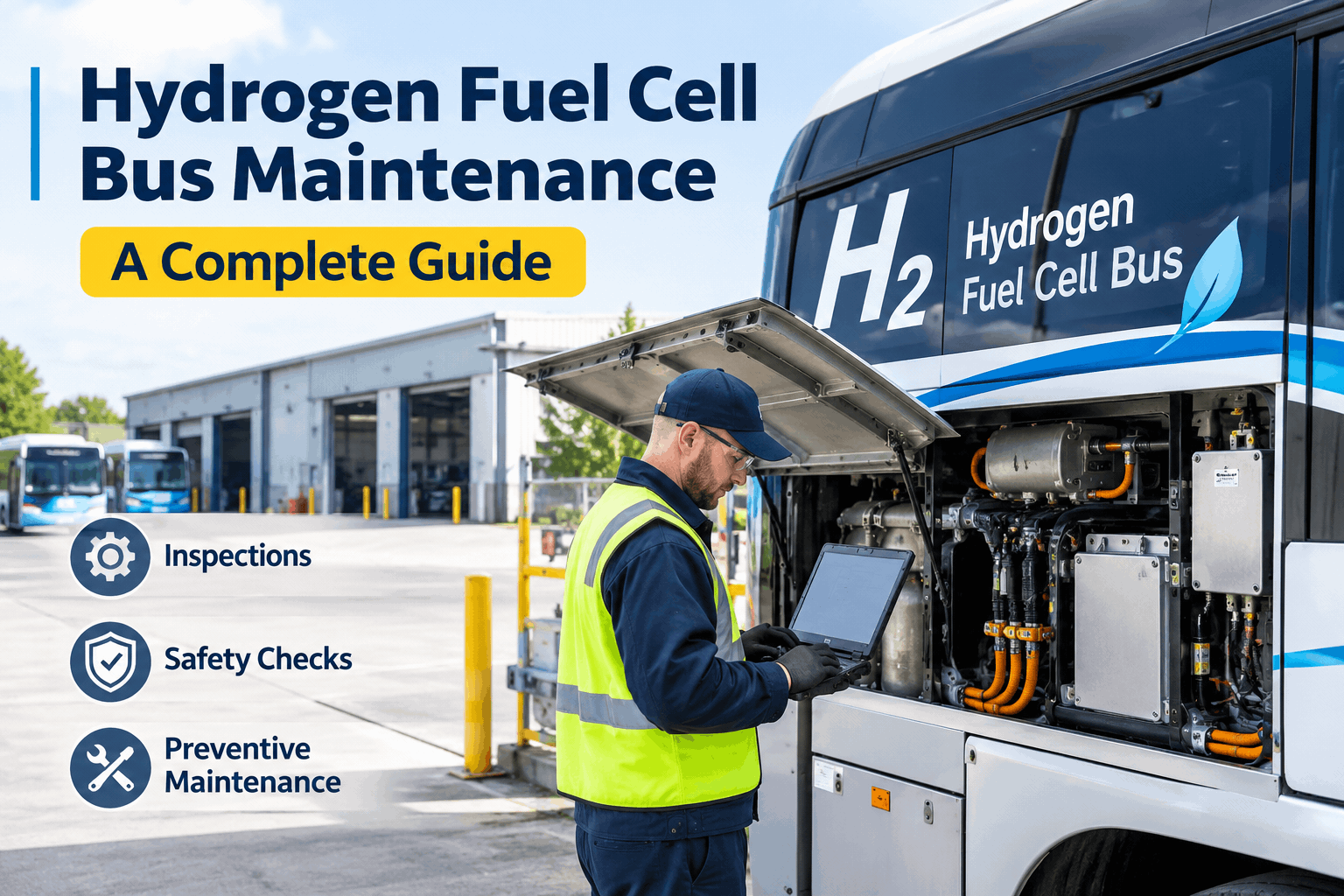
A hydrogen fuel cell bus is mostly an electric bus under the skin — battery, motors, high-voltage — with a hydrogen layer on top: a fuel cell stack, high-pressure tanks, and leak detection your diesel shop has never touched. Hydrogen fuel cell bus maintenance is that extra layer, where safety and records matter as much as mechanics. Here's what changes, and how to schedule it in a demo.
Hydrogen Fuel Cell Bus Maintenance: A Complete Guide
An FCEB is an electric bus plus a hydrogen system — so you maintain both. Here's the hydrogen-specific work, how it compares to diesel and battery-electric, and what your shop needs.
How It Differs From Diesel and Electric
The fastest way to understand FCEB maintenance is side by side with the fuels you already run. Same chassis work — very different fuel system.
| Diesel / CNG | Battery-electric | Hydrogen fuel cell | |
|---|---|---|---|
| Fuel system | Tanks, injectors, exhaust | Battery pack, charging | Stack, H₂ tanks, fueling |
| What's new to maintain | Mature, well known | HV battery & thermal | Stack, leak detection, tanks |
| Key safety item | Fuel spill / fire | High-voltage safety | Hydrogen leak detection |
| Shop change needed | None | HV bay, chargers | H₂ detection, ventilation, defueling |
Note the overlap: an FCEB carries the same high-voltage work as a battery-electric bus, then adds the hydrogen column on top. If you've already gone electric, you're partway there. You can see all three fuel types scheduled on one dashboard in a demo.
The Hydrogen-Specific Maintenance Items
These are the tasks no diesel or battery-electric bus ever needed. Most are recurring, and several are safety-critical.
Fuel cell stack
Leak tests, cell voltage monitoring, stack vent fan checks, and diffuser inspections keep the stack converting hydrogen cleanly and flag degradation early.
Leak detection system
Hydrogen is invisible and odorless, so the onboard detection system is tested and calibrated on a schedule — most incidents trace back to a leak that went unnoticed.
High-pressure tanks
The carbon-fiber storage tanks run at high pressure and get inspected on the OEM's interval — visible damage or thermal exposure pulls the tank from service.
Coolant & thermal
Fuel cells run on tight thermal limits. Coolant-leak inspection is a normal interval item — it's exactly the kind of check real FCEB programs build into every PM.
The good news practitioners report: once techs get past the unfamiliarity, fuel cell maintenance procedures are often simpler than expected — it's the safety discipline and the records that have to be airtight.
Your Shop Changes Too
You can't just roll an FCEB into a diesel bay for stack or fuel-system work. Four facility items come with the fuel.
Hydrogen detection & alarm
Added to your existing fire alarm and sprinklers — visible and audible, triggering well below the explosion limit.
Ventilation
Hydrogen is lighter than air and rises, so the work area needs adequate air exchange and H₂ sensors at height.
Defueling procedures
Any work that could release large amounts of hydrogen needs a defueling system and a written procedure before it starts.
Trained technicians
Hydrogen handling plus high-voltage qualification — and a record of who's current, so only cleared techs do the work.
These are one-time setups plus ongoing discipline — and the discipline is where a maintenance system earns its keep. You can sign up free and start tracking tech qualifications before your first FCEB lands.
FCEB Maintenance & Safety Checklist
Run this against your program. The first three are safety-critical hydrogen tasks; the rest keep the fleet reliable and the records clean.
- Hydrogen leak detection tested & calibratedOn schedule — most hydrogen incidents trace to an undetected leak.CRITICAL
- Fuel cell stack leak tests performedLeak-down checks and cell voltage monitoring catch stack issues early.CRITICAL
- High-pressure tank inspection on OEM intervalCheck for visible damage or thermal exposure — pull from service if found.CRITICAL
- Coolant & thermal system checksCoolant-leak inspection is a normal interval item on real FCEB programs.STRONG PLUS
- Technicians qualified for H₂ + high-voltageCurrent certifications tracked — only cleared techs on the fuel system.STRONG PLUS
- Shop set up: detection, ventilation, defuelingThe facility items in place before FCEB fuel-system work begins.STRONG PLUS
If each of these has a schedule, an owner, and a record, your FCEB program is as auditable as your diesel one. You can book a demo and see the hydrogen checklist built in.
How BusCMMS Handles Hydrogen Buses
BusCMMS doesn't service the stack or recertify tanks — your OEM and qualified techs do that. It schedules, routes, and documents the work, so a new fuel type runs on the same disciplined system as the rest of your fleet.
Hydrogen fuel-type PM profile
A dedicated FCEB maintenance schedule — stack, leak detection, tanks, coolant — running right alongside your diesel, CNG, and electric buses on one dashboard.
H₂-specific inspection forms
Custom digital checklists for leak detection, stack, and tank checks — the hydrogen equivalent of a bus-specific DVIR, completed and logged every time.
Technician certification tracking
Who's qualified for hydrogen handling and high-voltage work, with expiry dates — so fuel-system jobs only route to cleared, in-date techs.
Leak tests & defects to work orders
A failed leak test or flagged tank auto-opens a work order with the full repair trail — nothing relies on a technician's memory.
Specialist parts & inventory
Track the FCEB-specific parts and consumables a small hydrogen fleet depends on, with reorder alerts so a specialist item is never the thing that parks a bus.
Audit-ready records & uptime
Safety-check history, availability, and miles-between-roadcall in one place — the documentation an FTA review and your own board both want to see.
New to the category? Our complete guide to what a bus CMMS does covers the basics, and transit agencies can see how BusCMMS supports passenger transit fleet operations. Planning a hydrogen rollout? book a demo and bring your deployment timeline.
What U.S. Transit Data Shows
Real numbers from U.S. agency deployments — useful when you're making the case to leadership.
The technology works in revenue service today — the agencies seeing the best results are the ones that treated maintenance and safety as a program from day one, not an afterthought.
A Maintenance Supervisor's Take
Key Takeaways on Hydrogen Fuel Cell Bus Maintenance
Hydrogen fuel cell bus maintenance is an electric bus's work plus a safety-driven hydrogen layer. Four things to carry into planning.
It's electric, plus hydrogen
Same HV base as a battery-electric bus, with a fuel cell and tanks on top.
Leak detection is the safety core
Most incidents come from undetected leaks — test and calibrate on schedule.
The shop changes too
Detection, ventilation, and defueling before any fuel-system work.
Records make it auditable
Scheduled, logged safety checks turn a new fuel into routine maintenance.
Treat hydrogen fuel cell bus maintenance as a disciplined program — fuel-type-specific PM, safety-critical leak and tank checks, qualified techs, and clean records — and FCEBs run as reliably in your yard as they do in the agencies already proving them. The fuel is new; the maintenance discipline isn't.