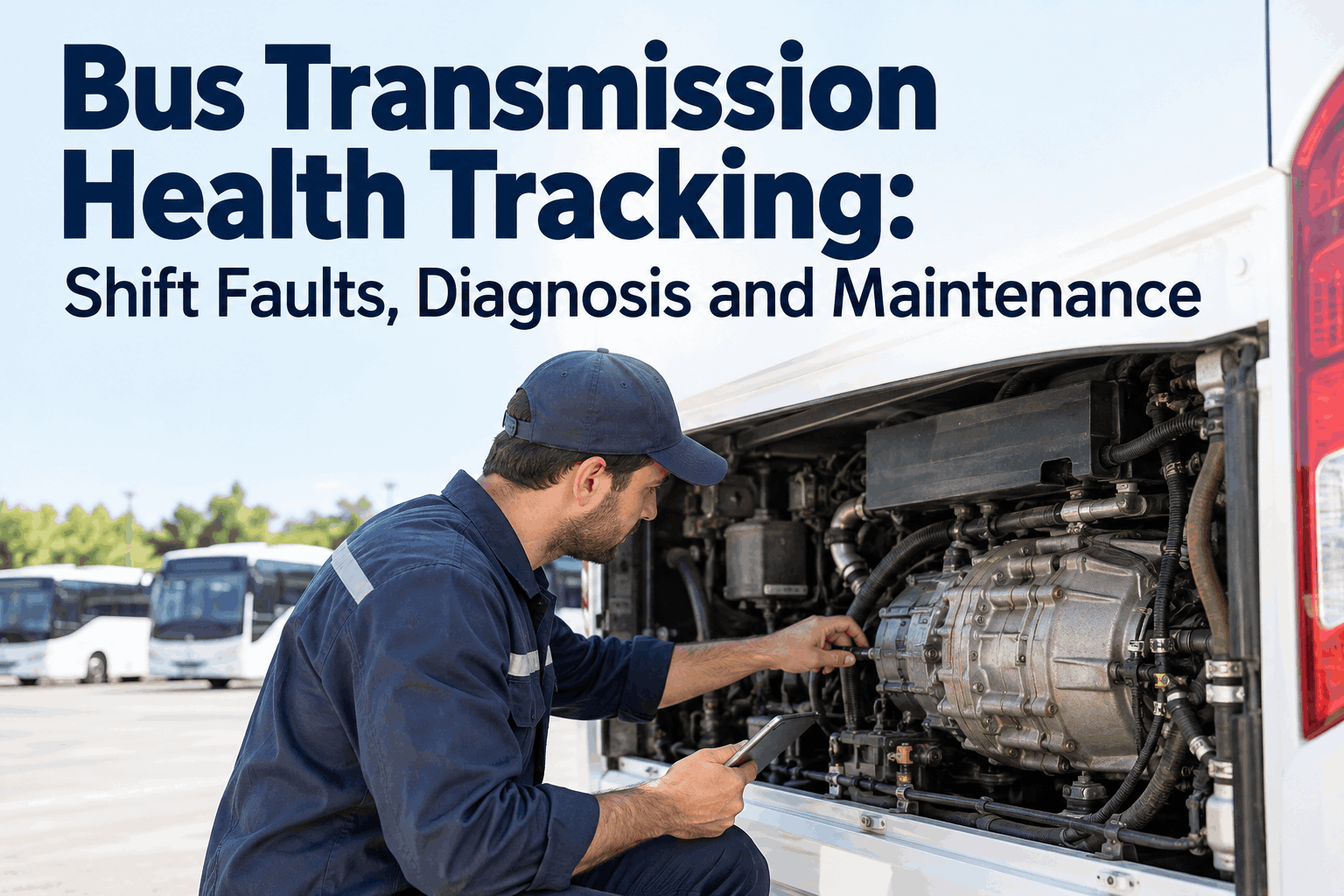
Bus transmission health tracking starts with a pattern that is easy to miss: a driver reports a harsh shift, the shop clears the immediate problem, and the same bus returns weeks later with delayed engagement or another transmission warning. A useful maintenance process captures each symptom, confirms the diagnosis with the correct equipment, and connects the repair to the bus's service history so repeat faults do not disappear between work orders.
One Hard Shift Is a Symptom. Repeated Hard Shifts Are a Pattern.
Make transmission complaints easier to investigate. Connect driver observations, technician findings, diagnostic results, corrective work and post-repair verification in a single vehicle history.
Which Bus Transmission Problems Deserve Attention?
Transmission behavior can change for different reasons. A driver complaint is the beginning of the diagnosis, not proof that a gearbox must be replaced. Record what happened, when it happened and whether a warning appeared.
Harsh or unexpected shifts
Note the gear change, operating condition and whether the event repeats.
Delay selecting drive or reverse
Capture the delay and conditions; arrange qualified assessment before normal operation continues if drivability is affected.
Slipping or loss of drive
Record the symptom promptly and follow the fleet's safe-removal-from-service process.
Fault indicators or overheating
Preserve the diagnostic information and check the applicable manufacturer procedure.
When symptoms are consistently attached to the vehicle, they become useful for the next technician. See how BusCMMS connects defects to vehicle history.
From Shift Complaint to Verified Root Cause
Use the exact bus and transmission manufacturer's diagnostic instructions. A fault code can point to a monitored condition or affected circuit, but it does not automatically identify the part to replace.
Driver's words, date, mileage and operating conditions
Safe operation and qualified inspection
OEM tools, codes, fluid or system checks as directed
Document actual cause, repair and parts
Confirm repair by approved procedure
A Transmission Fault Code Is Evidence, Not a Parts Order
Electronic transmissions can report faults related to operating conditions, controls, sensors or other systems. Interpret codes with the correct manufacturer software and service information. The same driver-visible symptom can have different causes across bus models.
Storing this information alongside the repair helps prevent “code cleared” from being mistaken for “problem solved.” Start building a searchable transmission repair history.
Track Transmission Health Across Multiple Shop Visits
A single work order tells you what was done today. A chronological history helps reveal whether a similar symptom returned after an adjustment, service or component replacement.
Complaint recorded; inspection completed.
Compare conditions with the earlier event.
Open previous tests and repairs before selecting a new action.
Preserve the result for future comparison.
Prioritize Transmission Complaints by Risk, Not Just Age
Safety and drivability decisions require a qualified assessment and your fleet's out-of-service rules. A maintenance system should help route concerns for review—not assign universal safety ratings from a symptom alone.
Follow the operator's stop, secure, report and qualified-assessment procedures.
Review history and determine serviceability under manufacturer guidance.
Schedule the OEM-specified service and retain completion records.
Transmission Maintenance Is More Than a Fluid Change
Service intervals, approved fluids, filters, levels and inspection procedures depend on the transmission model, duty cycle and manufacturer. Avoid applying one mileage interval or fluid specification to every bus in the fleet.
Use approved products, test methods and service intervals for the specific transmission.
Inspect relevant lines, seals, cooling connections and signs of overheating.
Record visible harness or connector concerns and use OEM diagnostics where indicated.
Review recurring complaints, previous repairs and maintenance exceptions.
BusCMMS can schedule the applicable maintenance tasks and keep completion records associated with each unit. Explore preventive maintenance scheduling for mixed bus fleets.
Make Every Transmission Repair Explain the Next One
A strong transmission work order records the complaint, actual diagnosis, repair and verification. That evidence helps a manager distinguish an isolated event from an unresolved repeat problem.
With these records linked to a vehicle, technicians can compare previous repairs without rebuilding the case from scratch. Keep work orders and transmission history together.
Use Repeat Shift Faults to Decide What to Investigate Next
Look for recurring faults on the same bus and similar complaints across comparable models. A trend is a reason to investigate operating conditions, maintenance practices, parts and diagnostic findings—not proof of a particular failure mechanism.
Reviewing the history before the next repair can reduce guesswork. See BusCMMS vehicle and maintenance history in action.
Do Not Close a Shift-Fault Work Order Without a Recorded Outcome
After corrective work, verify the transmission using the applicable manufacturer procedure and fleet release-to-service requirements. Record whether the original symptom was resolved, which checks were performed and any follow-up needed.
Bus Transmission Health Tracking Turns Shift Faults Into Useful History
Bus transmission health tracking works best when every complaint has context. Record the symptoms, use manufacturer-approved diagnostics, identify the cause, document corrective work and verify the result. With BusCMMS connecting defects, PM and repair history by vehicle, fleet teams can spot repeat shift faults sooner and make more informed maintenance decisions without confusing software records with automatic transmission diagnosis.
Common Questions About Bus Shift Faults
Clear answers for maintenance managers and technicians investigating transmission reliability.
01What are common symptoms of bus transmission problems?+
Possible signs include harsh or delayed shifts, slipping, unusual noise, loss of drive, warning indicators and temperature concerns. These symptoms are not a definitive diagnosis; use qualified inspection and the applicable manufacturer procedure.
02Can a transmission fault code tell you which part to replace?+
Not necessarily. A code identifies a detected condition and helps direct testing. The technician must interpret it with the correct manufacturer documentation and confirm the cause before replacing parts.
03How often should a bus transmission be serviced?+
There is no single correct interval for every bus. Follow the transmission manufacturer's current requirements for the model, fluid, duty cycle and operating conditions.
04How can fleets investigate repeat shift faults?+
Compare complaints, operating conditions, diagnostic results, previous repairs and verification records for the same bus. Similar issues across comparable buses may justify a broader review.
05Does BusCMMS automatically diagnose transmission failures?+
No. BusCMMS helps organize inspections, defects, preventive maintenance, work orders and service history. Diagnosis still requires qualified technicians and appropriate manufacturer-approved tools.