It is the fourth time this summer bus 22 has come in warm, and the fourth time someone topped off the refrigerant and sent it back out. Nobody wrote down that it was the same bus every time — so a slow leak that a two-hour repair would fix keeps eating refrigerant, driver complaints and shop time all season. Tracking the charge is what breaks that loop. You can see how refrigerant tracking spots the recurring leaker.
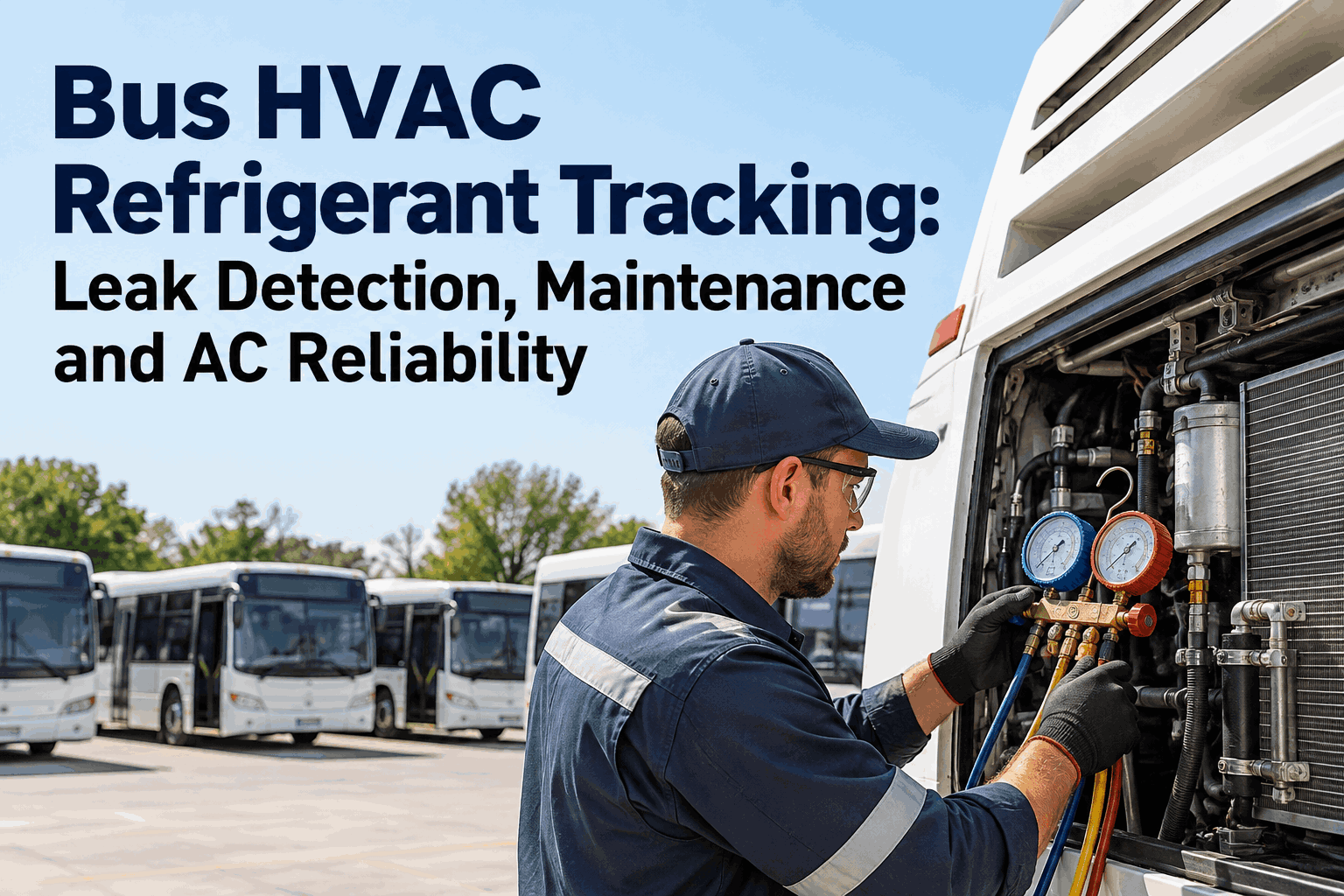
Bus HVAC Refrigerant Tracking: Leak Detection, Maintenance and AC Reliability
Bus HVAC refrigerant tracking means logging how much refrigerant each bus takes and when — so a vehicle that needs topping off three times a season shows up as a leak to fix, not a recharge to repeat. Without that record, the same bus quietly drinks refrigerant all summer, cooling fails on the hottest days, and your EPA service records are scattered across paper tickets.
Why Recurring Recharges Hide a Bus AC Refrigerant Leak
A top-off makes the bus cold again for a week or two, so it feels like a fix. It is not. Each recharge just resets a leak that comes back faster — and because the charge falls below the point where cooling quits on exactly the hottest, highest-demand days, the failures cluster when you can least afford them.
The pattern is the tell: recharge intervals that shrink season over season mean a leak that is getting worse, not a system that just needs gas. Tracking the charge per bus is what makes that shrinking interval visible before the breakdown.
The leak gets worse, unseen
A seal or fitting that weeps a little this month weeps more next month. Without a logged charge history, each recharge looks like a fresh problem instead of the same leak accelerating toward total failure.
Refrigerant and labor walk out the door
Every top-off is refrigerant you buy and a technician you pay, over and over, for a bus that would be fixed once if anyone saw the pattern. The repeat visits cost far more than the repair they keep deferring.
Cooling quits at the worst time
Low charge fails hardest under peak heat load, so the no-cool call comes on the 95-degree afternoon with a full bus of students or riders aboard — the reliability hit that makes AC a passenger-comfort and safety issue, not a nicety.
None of this is a mystery once the charge is tracked — the recurring leaker names itself. You can start logging refrigerant per bus free and let the pattern do the diagnosing.
The Refrigerant Records the EPA Expects You to Keep
Refrigerant is not just a cost line — it is regulated. Servicing a bus AC system for pay means working under EPA rules, and those rules come with records a scattered stack of paper tickets cannot satisfy. Here is what has to be on file, and for how long.
Requirements per EPA Section 609 (and the Section 608 venting ban) for servicing motor-vehicle AC systems. A digital record that stamps each refrigerant job to the bus, the tech and the date is what turns audit day from a scramble into a search.
A paper ticket in a binder cannot prove a three-year history on demand; a tracked record can. That is the difference between passing an EPA or state review and spending a week reconstructing it — worth a look at how refrigerant records stay audit-ready.
How BusCMMS Handles Bus HVAC Refrigerant Tracking
Refrigerant tracking only works if the charge, the repair and the compliance record live on one bus history instead of three places. Four things make that work on a real fleet.
Every charge logged to the bus
Each top-off records the amount, date and tech against that vehicle, so a bus recharged three times in a season surfaces as a leak to fix instead of a ticket that disappears.
Recurring-leak alerts
When the same bus crosses a recharge threshold, it is flagged for a leak-detection job instead of another top-off — the shrinking interval becomes an alert, not a surprise breakdown.
Section 609 records, audit-ready
Refrigerant received, recovery and technician certification stay on one record for the three years the EPA expects, so a review is a search, not a week of digging through binders.
HVAC on the PM calendar
A pre-season AC check lands on the schedule before the first heat wave — because an idle system degrades too, and the cheapest leak is the one found in the shop in spring.
That turns AC from a summer scramble into a planned, documented part of maintenance — the same system already runs your PM and compliance, so HVAC lives right alongside it. The fastest way to judge it is a short walkthrough on your own fleet's AC history.
We were buying refrigerant like it was coffee. Every heat wave, three or four buses would come in warm, we would gas them up and move on. Once we started logging every charge against the bus, two units jumped out — they were back every two weeks. Turned out to be a cracked fitting on one and a tired condenser seal on the other. Fixed both, and our refrigerant spend dropped by a third. The records paid for themselves the first time the state asked to see them.
Bus HVAC Refrigerant Tracking: Key Takeaways
A recharge is a symptom
Topping off cools the bus for a week but never fixes the leak. Only a logged charge history turns repeat recharges into a leak you can see and repair.
The interval is the tell
Recharge intervals that shrink season over season mean a worsening leak. Track the charge per bus and that shrinking interval shows up before the breakdown.
Refrigerant is regulated
EPA Section 609 requires certified techs, certified recovery equipment, no venting, and records kept three years. Digital records make that provable on demand.
One history, cooling and compliance
Charge, repair and compliance on one bus record is what turns AC from a summer scramble into planned, documented, reliable maintenance.
Bus HVAC refrigerant tracking is the rare fix that saves money and keeps you compliant at once — the leak gets found, the refrigerant stays in the system, and the records are ready when someone asks. Log the charge, watch the interval, and the AC stops failing on the hottest day of the year. You can set up refrigerant tracking for your fleet free and start on the next recharge.
Bus HVAC Refrigerant Tracking: Frequently Asked Questions
What is bus HVAC refrigerant tracking?
It is the practice of logging how much refrigerant each bus takes and when, against that specific vehicle. Instead of treating every warm-bus call as a one-off top-off, you build a charge history per bus. That history makes a recurring leak obvious — a vehicle recharged three times in a season is clearly leaking, not just low — and it keeps the refrigerant service records the EPA expects in one place. Tracking turns refrigerant from an untraceable cost into a signal you can act on and a record you can prove.
Why does my bus AC keep needing a refrigerant recharge?
Because a recharge treats the symptom, not the cause. A sealed AC system should hold its charge; if a bus needs topping off repeatedly, it has a leak — usually a weeping seal, a cracked fitting or a tired condenser — that gets worse over time. Each top-off cools the bus for a week or two, then the charge falls again, and the interval between recharges shrinks as the leak grows. The only real fix is to find and repair the leak, which is why tracking the recharge pattern per bus matters: the shrinking interval is what tells you a repair, not more gas, is overdue.
What EPA records are required for bus air conditioning service?
Under Section 609 of the Clean Air Act, anyone servicing a motor-vehicle AC system for pay must be EPA-certified, must use certified equipment that recovers and recycles refrigerant before recharging, and must keep records proving each technician is certified along with the name and address of any facility that receives recovered refrigerant. Those records must be retained for three years. Section 608 separately prohibits intentionally venting refrigerant during service. A digital system that stamps each refrigerant job to the bus, technician and date keeps all of this on file and produces it on demand for an EPA or state review.
How do you detect a refrigerant leak on a bus AC system?
Technicians use a few methods — electronic handheld leak detectors, nitrogen pressure testing, and UV dye traced with a light — because leaks are notoriously hard to find by eye, as seals dry out and components degrade quietly. But the first signal is usually in the records, not the shop: a bus whose recharge interval keeps shrinking is telling you it has a growing leak before any detector is used. Tracking the charge per bus flags which vehicle to put on the detector, so leak-detection time goes to the bus that actually needs it instead of guesswork.
When should bus AC maintenance be scheduled?
Before the cooling season, not during it. A pre-summer inspection — checking charge, connections, the condenser and controls — catches a weak system in the shop in spring instead of on a 95-degree afternoon with a full bus aboard. AC should not be treated as seasonal, either: long periods of inactivity can harm the system as seals dry out, so it belongs on the year-round preventive-maintenance calendar. Scheduling that seasonal HVAC check ahead of the heat, rather than waiting for a no-cool complaint, is what keeps cooling reliable when passengers need it most.