You drain the wet tank on a cold Monday and a cup of water pours out with a slick of oil on top. That water should never have gotten past the air dryer — and every ounce of it is now sitting in a brake system that is one freeze away from a bus that will not stop. The air dryer is the quiet part that keeps the brakes dry, and it only fails silently. You can see how tracking air dryer service protects the brake system.
Bus Air Dryer Maintenance: Performance Tracking and Brake Safety
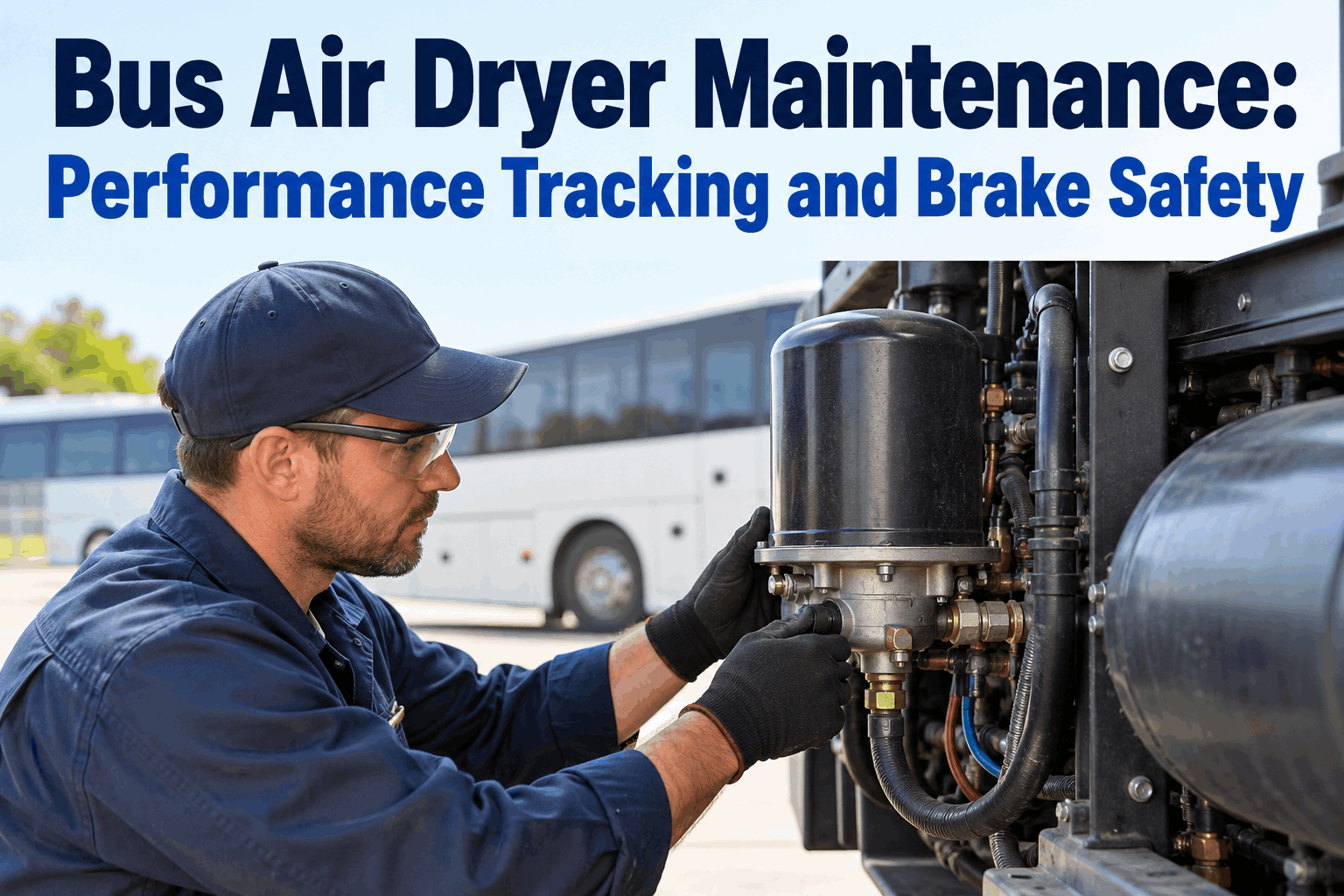
Bus air dryer maintenance is brake maintenance by another name. The dryer sits between the compressor and the air tanks and strips moisture and oil out of the compressed air before it can reach the brakes. When its desiccant wears out, water slips through to the tanks — where it corrodes valves in summer and freezes brake lines in winter. Tracking the dryer is how you keep the whole air brake system dry and safe.
Why a Worn Air Dryer Becomes a Brake Safety Problem
The desiccant inside the dryer does not quit all at once. It removes moisture well for a long time, then its capacity falls off a cliff — and the day it can no longer keep up, water starts reaching the tanks on every charge cycle. Miss that point and the failure is not an inconvenience, it is a brake problem.
Most makers put the desiccant cartridge on a 12-to-18-month or 100,000-to-150,000-mile replacement cycle. Past that window its moisture capacity drops fast, which is why the interval exists — the curve is illustrative of that fall-off.
Winter: frozen brake lines
Water that reaches the lines freezes below 32 degrees, and a frozen valve means brakes that release slowly, drag, or will not release at all. As one air-system guide puts it, cold weather does not create moisture — it exposes how much you already had.
Year-round: corrosion and valve damage
Even when it never freezes, moisture rusts the inside of tanks and lines and eats at the brake valves. Oil carryover from a worn dryer coats the desiccant and attacks the rubber seals, so one failure accelerates the next.
On the road: a bus that will not stop right
Dragging or stuck brakes overheat drums, flat-spot tires and strand the bus — and a soft or slow brake response on a loaded bus is a safety risk measured in stopping distance, not dollars.
Every one of these traces back to one worn part that gave no warning on the dash. The only early signal is in the service record. You can start tracking air dryer service free and keep the water out of the brakes.
The Warning Signs a Bus Air Dryer Is Failing
The dryer tells you it is losing the fight long before the brakes freeze — if someone is reading the signs at the morning drain. Each of these is a symptom worth logging against the bus, because a pattern across days is what turns a shrug into a work order.
Water or oily sludge when you drain the tanks
The clearest sign. A dry dryer means the tanks come out dry — water, or an oily film, means moisture and compressor oil are getting through, especially from the wet or supply tank.
The dryer purges too often, or not at all
Constant purging can mean an air leak or high air use; a dryer that never purges points to a sticking purge valve or governor fault. Either way the regeneration cycle is not working as it should.
Compressor short-cycling or slow air build-up
If the compressor runs more often than it used to, or the gauges build pressure slowly, the system is working harder to hold air — a knock-on effect that often starts at a tired dryer.
Rapid pressure loss after shutdown
Air that bleeds off fast once the bus is parked points to a leak or a check-valve fault tied to the dryer — and a system that cannot hold pressure overnight is a system to inspect before the next route.
None of these throws a warning light — they live in the drain valve and the air gauges, where only a tracked routine catches them. It is worth a look at how daily air-system checks roll up into a dryer-health record.
How BusCMMS Handles Air Dryer Performance Tracking
Air dryer maintenance works when the interval, the daily checks and the brake-safety record live on one bus history. Four things make that real on a fleet.
Cartridge replacement scheduled
The 12-to-18-month or 100,000-to-150,000-mile interval is triggered by mileage or date per bus, so the cartridge gets changed inside its window instead of after the desiccant has already given up.
Drain checks logged to the bus
Water or oil at the drain valve gets recorded against the vehicle, so a bus that keeps coming out wet surfaces as a dryer problem instead of a note the next shift never sees.
Failed check becomes a work order
A failed purge-valve or air-system inspection auto-creates a work order, so a dryer flagged on a pre-trip moves straight into the shop queue with the finding attached, not onto a sticky note.
Brake-safety history on one record
Dryer service, air-system checks and brake work sit together per bus, so a DVIR or DOT inspection finds a documented record of a brake system kept dry — not a scramble to reconstruct it.
That turns the air dryer from an out-of-sight part into a scheduled, documented piece of brake safety. For the hands-on procedure, the guide to servicing a bus air dryer walks the drain, purge and cartridge steps; this is how you keep that service on schedule across the fleet.
We lost a bus to frozen brakes one January — it would not release in the yard and we missed a route. When we pulled it apart, the air dryer cartridge was years overdue and the tanks were full of water. Nobody had tracked it because it never threw a code. Now every dryer is on a mileage schedule and the drivers log what comes out of the drain valve. We have not had a wet tank since, and the one thing I never worry about anymore is water in the brakes.
Bus Air Dryer Maintenance: Key Takeaways
The dryer protects the brakes
It is the only thing between wet compressor air and the air tanks. A worn dryer is not a comfort issue — it is water heading straight for the brake system.
Desiccant fails off a cliff
Moisture removal holds, then drops fast past the replacement window. Change the cartridge on its 12-to-18-month or 100k-to-150k-mile interval, not after it quits.
The signs live at the drain
Water or oil at the tanks, abnormal purging, short-cycling and fast pressure loss are the early warnings — none throw a dash light, so they have to be logged.
Tracking is brake safety
A scheduled interval plus logged daily checks keeps the brake system dry and leaves a record that stands up to a DVIR or DOT inspection.
Bus air dryer maintenance is one of the highest-leverage, lowest-visibility jobs on the fleet — a cheap cartridge on schedule prevents a frozen-brake no-start and a corroded air system. Track the interval, read the drain, and the brakes stay dry through the worst week of winter. You can set up air dryer tracking for your fleet free and keep every bus on schedule.
Bus Air Dryer Maintenance: Frequently Asked Questions
What does a bus air dryer do?
It removes moisture and oil from the compressed air before that air reaches the brake system. The engine-driven compressor makes hot, wet air; the dryer sits between the compressor and the air tanks, and a desiccant bed inside it pulls the moisture out by adsorption while separating oil. When the system reaches its cut-out pressure, the dryer purges, sending dry air back through the desiccant to regenerate it for the next cycle. The result is clean, dry air in the tanks — which is what keeps the air brakes from corroding or freezing.
How often should a bus air dryer cartridge be replaced?
Most manufacturers recommend replacing the desiccant cartridge every 12 to 18 months, or every 100,000 to 150,000 miles, whichever comes first. The interval exists because the desiccant's moisture capacity holds up well for most of its life and then falls off sharply, so replacing it inside the window keeps the dryer working before water starts reaching the tanks. Duty cycle matters too: heavy stop-and-go service, high humidity and a compressor passing oil all shorten cartridge life, which is why tracking the interval per bus beats a single fleet-wide date.
What are the symptoms of a failing air dryer on a bus?
The clearest symptom is water or an oily film coming out when you drain the air tanks, especially the wet tank — a healthy dryer keeps them dry. Others include the dryer purging constantly or not at all, the compressor short-cycling or building air slowly, and rapid pressure loss after shutdown. None of these trigger a dashboard warning light, so they only get caught at the morning drain and on the air gauges. Logging each one against the bus is what turns a one-off observation into a pattern that justifies replacing the dryer before it fails.
Can a bad air dryer cause brake failure?
Yes, indirectly but seriously. When the dryer stops removing moisture, water collects in the tanks and lines. In cold weather that water can freeze inside valves and couplings, causing brakes that release slowly, drag, or will not release at all — and driving on a frozen brake can overheat drums and flat-spot tires. Year-round, the moisture corrodes tanks and damages brake valves, and oil carryover attacks the rubber seals. So while a dryer does not apply the brakes, letting it fail puts water and corrosion directly into the system that does, which is why it is treated as a brake-safety item.
How do you prevent moisture in a bus air brake system?
Keep the air dryer healthy and verify it daily. That means replacing the desiccant cartridge on its mileage or time interval, draining the tanks regularly and checking what comes out, testing the purge valve and heater, and watching for the early warning signs at the gauges. Because none of this throws a code, it depends on a tracked routine rather than memory: a scheduled cartridge interval, logged drain-tank checks, and a failed inspection that turns into a work order. Done consistently, that keeps the compressed air dry from the dryer all the way to the brakes, through summer corrosion season and winter freeze alike.