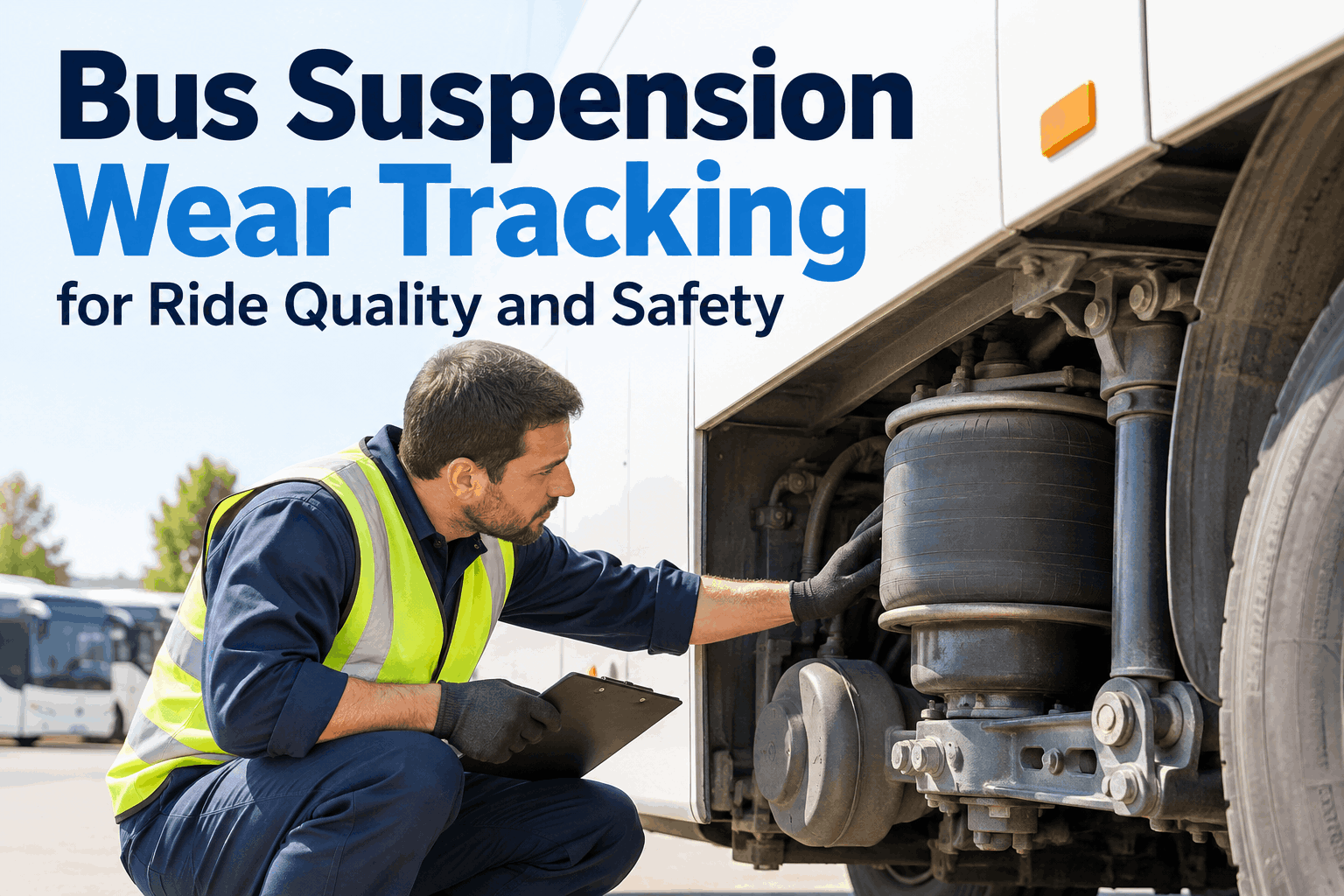
Bus suspension wear tracking starts with a familiar complaint: a bus rides rougher than it did last month, leans at a stop, or returns to the shop for another suspension repair. A single inspection can identify damage, but comparing findings across service visits helps fleet teams see what is changing, which vehicles need attention, and whether the last repair actually resolved the problem.
Don't Just Inspect Suspension Wear. Track What Changes.
Follow air springs, shocks, bushings and ride-height concerns from the first driver report through inspection, repair and verification. Make each bus's history useful at the next service visit.
One Rough Ride Is a Complaint. Repeated Complaints Are a Pattern.
A driver may report excessive bounce on a familiar route. Another driver may notice a lean when the bus is parked. A technician may find damaged air-spring rubber or deteriorating bushings during PM. Each observation is useful, but the pattern across dates, locations and repairs is often more valuable than an isolated pass/fail result.
Harsh ride over familiar bumps
Shock and mounting area inspected
Similar concern recorded again
Work order and retest recorded
Use BusCMMS vehicle history to connect those events instead of starting each visit from scratch. See how inspection findings connect to maintenance work.
What Suspension Changes Should a Fleet Record?
The goal is not to invent a universal wear score. Record the component, location, observed condition, supporting measurement when specified by the OEM, and action taken. Use manufacturer inspection procedures and qualified technicians for all physical checks.
Cracks, abrasion, leaks, abnormal height
Damage, leakage, mount condition, ride symptoms
Cracking, separation, excessive play, noise
Fractures, shifting, loose or damaged mounting
For step-by-step inspection points, link technicians to the existing Bus Suspension Inspection Checklist; this article focuses on tracking change between inspections.
Turn Inspection Notes Into a Wear Timeline
Use consistent labels and precise descriptions. “Suspension bad” is hard to act on. “Right-rear air spring shows new abrasion; photo attached; clearance and ride height to be checked per OEM procedure” gives the next technician something to compare.
Keeping inspection and work-order details together helps a fleet review repeat defects. Start building vehicle-specific service histories.
Which Findings Need Immediate Action?
Suspension defects are not all equal. A minor observation that meets OEM limits may be monitored under an approved maintenance plan. Structural damage, insecure components or serious air-suspension defects may require removing a vehicle from service. Use applicable regulations, OEM instructions and qualified judgment—not a generic blog severity score—to make that decision.
Potentially unsafe condition
Broken or insecure load-bearing components, serious suspension damage or other conditions that fail applicable safety criteria.
Hold the vehicle for qualified evaluation.Confirmed service defect
Documented wear or damage requiring correction under the manufacturer or fleet maintenance procedure.
Assign work and verify completion.Observation within limits
A condition that is permitted to remain in service under applicable criteria but warrants documented follow-up.
Record the baseline and next check.In the United States, 49 CFR 393.207 addresses suspension-system conditions for applicable commercial motor vehicles. Confirm jurisdiction, vehicle applicability and current out-of-service criteria before deciding whether a bus may operate.
If the Same Air Spring or Shock Fails Again, Investigate the System
A repeat replacement should prompt a review of surrounding conditions. An air spring with repeated abrasion may require an investigation of mounting, alignment, clearance or ride-height control. Recurring shock problems may call for inspection of mounts, bushings, adjacent suspension parts and duty conditions. The correct root cause must be established through the applicable diagnostic procedure.
Instead of counting only parts purchased, compare repeated work orders by bus, component and axle position. Explore repeat-repair history in BusCMMS.
Use Wear History to Improve the Next Suspension PM
A practical preventive maintenance program combines manufacturer-required inspection intervals with evidence from your own fleet. If multiple buses show similar suspension complaints, review the component locations, route conditions, vehicle models and maintenance practices before changing inspection frequency.
Use consistent inspection fields and component locations.
Review recurring findings by bus and model.
Assign OEM-aligned PM and follow-up work.
Verify repair outcomes at subsequent service.
BusCMMS can help keep mileage- or calendar-based PM tasks and repair histories organized. Try a more consistent suspension PM workflow.
Five Questions That Turn Suspension Data Into Decisions
Which buses have new ride-quality or height complaints?
Which suspension defects remain unresolved?
Which vehicles had repeat repairs at the same position?
Are any OEM-required inspections overdue?
Was each corrective repair verified and documented?
These questions help managers identify what needs investigation, not automatically predict component life. See how BusCMMS keeps fleet maintenance records accessible.
Bus Suspension Wear Tracking Is About Change, Not Just Checkmarks
Bus suspension wear tracking works when a driver complaint, inspection finding, repair and follow-up are all visible in the same vehicle history. Use manufacturer procedures to inspect air springs, shocks, bushings and structural components; apply the correct safety criteria; and investigate repeat failures rather than simply replacing the same part again. BusCMMS helps organize the maintenance evidence so teams can act on what changed.
Questions About Wear, Safety and Maintenance History
Practical answers for fleet managers and technicians tracking suspension condition.
01What is bus suspension wear tracking?+
It is the practice of recording suspension observations by bus, component, location and date, then comparing findings with earlier inspections and repairs. It helps identify recurring problems; it does not replace physical inspection or OEM diagnostics.
02What are common signs of suspension wear on a bus?+
Possible signs include unusual ride harshness, excessive bouncing, leaning, clunking, visible damage, air leaks and uneven tire wear. These symptoms can have multiple causes and require qualified inspection.
03How often should bus air springs and shocks be inspected?+
Use the bus and suspension manufacturer's inspection schedule and applicable regulations. Add follow-up inspections when new symptoms or defects appear; there is no single universal interval for every bus.
04Can a bus operate with a suspension defect?+
That depends on the defect, applicable vehicle standards, current out-of-service criteria and qualified evaluation. Do not operate a bus with a condition that makes it unsafe or violates applicable requirements.
05How does BusCMMS help track suspension wear?+
BusCMMS helps connect inspection findings, defects, preventive maintenance, work orders and vehicle service history. Teams can compare documented issues over time without claiming that the software physically measures wear or independently diagnoses component failure.