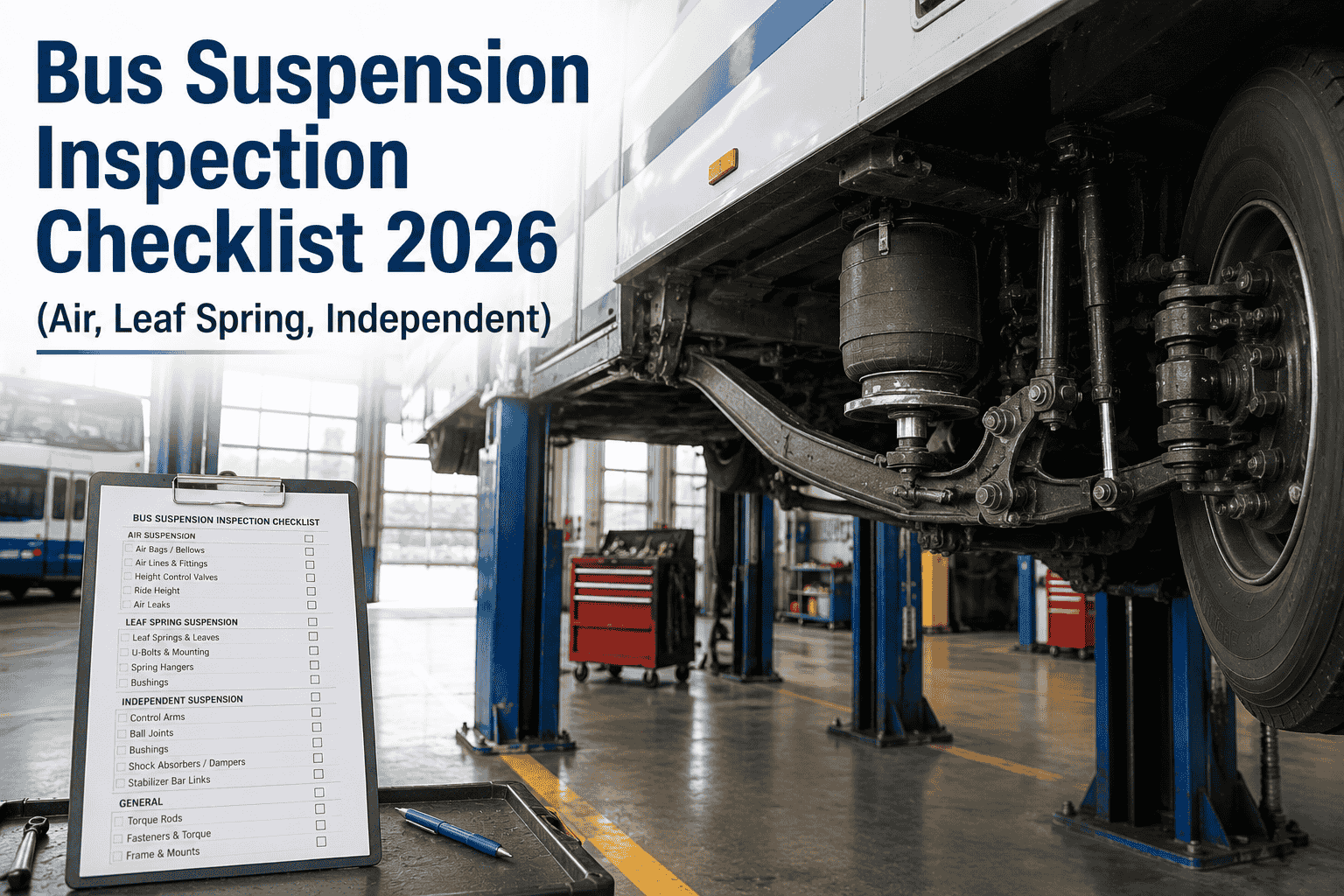
The suspension system is what separates your passengers from the road. A poorly maintained suspension causes discomfort, excessive tire wear, component fatigue, and—in extreme cases—loss of vehicle control. Air suspension failures leave buses sitting on the ground, unable to move. Leaf spring failures cause sudden ride height changes that affect steering and braking. Shock absorber failures allow excessive body roll that makes passengers uncomfortable and drivers less confident. This comprehensive bus suspension inspection checklist covers air suspension systems, leaf springs, independent front suspension, shock absorbers, ride height measurement, air bag inspection, bushings, and torque rods. Use it as your standard procedure for every suspension PM and annual DOT inspection.
Suspension System Guide 2026
Bus Suspension Inspection Checklist (Air, Leaf Spring, Independent)
Bus suspension inspection across air, leaf and independent setups. Air bags, shocks, ride height, leaf packs, bushings and torque rod inspection points.
Why Suspension Inspections Are Critical: The Hidden Safety Risk
Suspension system failures are among the most dangerous and unpredictable bus breakdowns. An air bag failure at speed causes sudden ride height loss and potential loss of control. A broken leaf spring can cause the axle to shift, affecting steering and braking. Worn shock absorbers increase stopping distance by 15-20% in emergency braking situations. The most common suspension violations found during roadside inspections include: cracked or broken leaf springs, damaged air bags, excessive ride height variation, worn shock absorbers, and loose or damaged suspension mounting bolts.
The financial impact of suspension failures is significant. Air suspension repairs typically cost $800–$2,500 per axle. Leaf spring replacement costs $1,200–$3,000 per axle. Shock absorber replacement costs $400–$1,200 per bus. A structured suspension inspection process is the most effective way to catch these issues before they become catastrophic failures.
Suspension Types: Inspection Points by System
Air Suspension
Inspect air bags for cracks, bulges, or damage. Check ride height at specified points. Verify leveling valves function correctly. Inspect air lines and fittings for leaks. Check torque rods for bushing wear.
Leaf Spring Suspension
Inspect leaf packs for broken, cracked, or shifted leaves. Check spring bushings for wear. Verify spring eye pins are secure. Inspect U-bolts and spring clips for proper torque.
Independent Front Suspension
Inspect upper and lower control arms for damage. Check ball joints for wear. Verify CV axle boots for damage. Inspect torsion bar or coil spring condition.
Suspension Inspection Categories: The Complete Checklist
This comprehensive suspension inspection checklist covers every major suspension component. Use it during every suspension PM service, pre-trip inspection, and annual DOT inspection.
Shock Absorber Condition: Why They Matter More Than You Think
Shock absorbers are often overlooked during PM inspections, yet they are critical to safety and passenger comfort. Worn shocks increase stopping distance by 15-20%, cause excessive tire wear, reduce driver confidence, and make passengers uncomfortable. Shock absorbers should be tested at every PM service and replaced in pairs when worn. A simple bounce test—pushing down on each corner of the bus and releasing—can identify worn shocks. The bus should rebound once and stop. If it continues to bounce, shocks are worn.
Common Suspension Issues and Root Causes
Air Bag Failure
Cause: Cracked rubber from age, chafing against components, or contamination. Fix: Replace air bag in pairs. Inspect air lines for damage. Check ride height after replacement.
Broken Leaf Spring
Cause: Fatigue from heavy loads, corrosion, or impact damage. Fix: Replace leaf spring pack. Check spring bushings. Verify U-bolt torque after replacement.
Ride Height Incorrect
Cause: Failed leveling valve, leaking air bag, or broken spring. Fix: Diagnose cause. Repair or replace failed components. Adjust ride height to specification.
Excessive Body Roll
Cause: Worn shock absorbers, damaged sway bar, or broken suspension component. Fix: Replace shocks in pairs. Inspect sway bar links and bushings. Replace worn components.
Suspension Noise
Cause: Worn bushings, broken leaf springs, or loose torque rods. Fix: Inspect all suspension components. Replace worn bushings. Tighten loose hardware.
Uneven Tire Wear
Cause: Misalignment, worn suspension components, or incorrect ride height. Fix: Check alignment. Inspect suspension for wear. Set ride height to specification.
We implemented this suspension inspection checklist across our 85-bus fleet after an air bag failure caused a bus to drop onto its bump stops at 55 mph. The driver was able to pull over safely, but it was a serious event. In the first year, we caught 37 suspension issues during PM inspections—12 broken leaf springs, 8 cracked air bags, 11 worn bushings, and 6 failed shocks. Our suspension-related breakdowns dropped by 72%. The checklist gives our technicians a systematic process for inspecting every suspension component.
Digitize Your Suspension Inspection Process
BusCMMS guides technicians through every suspension inspection point—air bag condition, ride height measurement, leaf spring inspection, shock absorber testing, bushing wear check, and torque rod verification. Auto-schedule suspension PM intervals based on mileage. Complete audit trail for every suspension component in your fleet.
Bus Suspension System FAQs
How often should air suspension air bags be inspected?
Air bags should be inspected at every preventive maintenance service (typically every 15,000–20,000 miles or 6 months). Pre-trip inspections should include a visual check for obvious damage or deflation. Annual DOT inspections require comprehensive air suspension inspection.
What is the correct ride height for a bus?
Ride height varies by bus model and suspension type. Always reference the bus manufacturer's specification (usually found on a placard or in the service manual). Typical ride height is measured from the frame to the axle at specified points. Incorrect ride height causes alignment issues, tire wear, and handling problems.
What are the signs of a failing air bag?
Warning signs include: visible cracks or bulges in the rubber, chafing marks against adjacent components, the bus leaning to one side, air compressor running excessively, and loss of ride height. Replace air bags immediately if any damage is detected.
How do I check shock absorbers on a bus?
Perform a bounce test: push down firmly on each corner of the bus and release. The bus should rebound once and stop. If it continues to bounce, shocks are worn. Also inspect for oil leaks, damage, and worn mounting bushings. Replace shocks in pairs.
What causes leaf springs to break?
Leaf springs typically fail from fatigue over time, heavy loads, corrosion, or impact damage. Broken leaves often occur at the center bolt or near the spring eyes. Regular inspection catches cracks before complete failure. Replace entire leaf spring packs when broken leaves are found.
Can BusCMMS track suspension component wear history?
Yes. BusCMMS tracks suspension inspection results, ride height measurements, component replacement history, and repair notes. This creates a complete suspension system history for each bus, helping identify wear patterns and predict replacement needs before component failure occurs.
The Bottom Line
Bus suspension inspections are not optional—they are safety-critical maintenance tasks that protect your passengers, your drivers, and your fleet's reputation. A single suspension failure can cause loss of vehicle control, passenger injury, and significant liability. This checklist provides the step-by-step procedure your technicians need to inspect every suspension component—air bags, leaf springs, shocks, bushings, ride height, and torque rods. When combined with BusCMMS digital inspection forms, auto-scheduled PM intervals, and complete suspension system history tracking, your suspension maintenance program becomes proactive—catching issues before they become safety hazards or roadside violations.