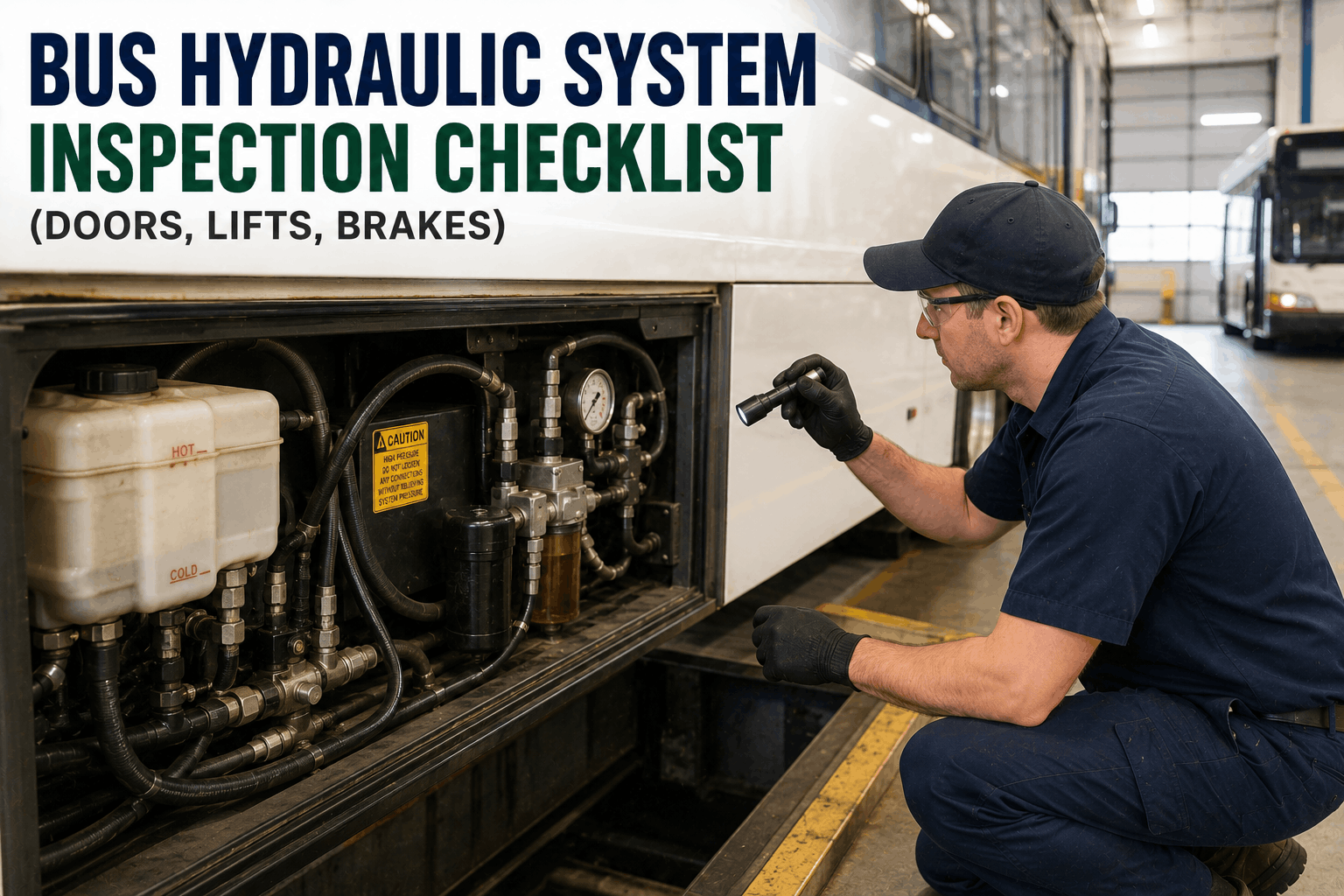
Hydraulic systems are essential to modern bus operations—powering wheelchair lifts, entry doors, and hydraulic brake boosters. A hydraulic failure can trap passengers, prevent boarding, or compromise braking performance. Hydraulic fluid leaks are not just messy; they are safety hazards that can cause system failure and environmental contamination. This comprehensive bus hydraulic system inspection checklist covers hydraulic fluid levels, pump pressure and operation, hose and fitting integrity, cylinder and ram seal condition, reservoir condition, and power pack function. Use it as your standard procedure for every hydraulic system PM and safety inspection.
Hydraulic Safety Guide 2026
Bus Hydraulic System Inspection Checklist (Doors, Lifts, Brakes)
Bus hydraulic system inspection workflow. Hydraulic fluid levels, pump pressure, hose integrity, cylinders, ram seals and reservoir condition.
Why Hydraulic System Inspections Are Critical: The Safety and Accessibility Reality
Hydraulic systems are among the most critical safety and accessibility systems on buses. Wheelchair lifts must operate reliably to ensure ADA compliance and passenger safety. Entry doors must open and close smoothly to prevent passenger injury. Hydraulic brake boosters must provide consistent braking performance. The most common hydraulic failures include: fluid leaks from hoses or seals, pump pressure loss, cylinder seal failure, contaminated fluid, and reservoir damage.
ADA compliance requires wheelchair lifts to be inspected monthly with documented operational checks. A lift failure can strand a passenger with mobility challenges and create liability. A door hydraulic failure can trap passengers or prevent emergency egress. A structured hydraulic system inspection process is the most effective way to ensure system reliability and passenger safety.
Hydraulic System Components: The Complete Breakdown
Hydraulic Fluid
Check fluid level and condition. Fluid should be clear amber—dark or cloudy indicates contamination. Use manufacturer-specified fluid type. Change fluid at recommended intervals.
Hydraulic Pump
Inspect pump for noise, vibration, and performance. Listen for unusual whining or grinding. Check pump pressure output. Replace pump if pressure is low or noise is excessive.
Hoses and Fittings
Inspect hoses for cracks, chafing, or leaks. Check fittings for tightness and condition. Replace any damaged hoses immediately. Verify proper routing and secure mounting.
Cylinders and Rams
Inspect cylinders for leaks at seals. Check for smooth operation without binding or jerking. Look for scoring on cylinder rods. Replace seals or cylinders as needed.
Reservoir
Inspect reservoir for leaks, contamination, and proper fluid level. Check vent and breather cap. Inspect return filter if equipped. Clean reservoir if contaminated.
Power Pack
Inspect power pack for leaks, noise, and performance. Check electrical connections and wiring. Test emergency backup function if equipped.
Hydraulic System Inspection Checklist: The Complete Inspection
This comprehensive hydraulic inspection checklist covers every major component. Use it during every hydraulic system PM service, ADA lift inspection, and annual DOT inspection.
Common Hydraulic Issues and Root Causes
Fluid Leaks
Cause: Worn seals, damaged hoses, or loose fittings. Fix: Identify leak source. Replace seals or hoses. Tighten fittings. Clean up spilled fluid.
Pump Noise
Cause: Low fluid, contaminated fluid, or failing pump. Fix: Check fluid level. Change fluid if contaminated. Replace pump if worn.
Slow Operation
Cause: Low fluid, failing pump, or clogged filter. Fix: Check fluid level. Inspect pump performance. Replace or clean filter.
Erratic Operation
Cause: Air in system, failing valve, or contaminated fluid. Fix: Bleed air from system. Inspect valve function. Change fluid if contaminated.
Cylinder Scoring
Cause: Contaminated fluid causing scoring on cylinder rods. Fix: Replace cylinder. Change fluid. Identify and eliminate contamination source.
Lift Failure
Cause: Power pack failure, low fluid, or hydraulic lock. Fix: Test power pack. Check fluid level. Inspect system for blockage. Document repairs.
We implemented this hydraulic inspection checklist across our 85-bus fleet after a wheelchair lift failure stranded a passenger. In the first year, we caught 17 hydraulic fluid leaks during PM inspections, replaced 23 worn hoses before they failed, and repaired 8 cylinder seals that were leaking. We identified 5 power packs with deteriorating performance and replaced them proactively. Our hydraulic-related breakdowns dropped by 80%, and our ADA lift compliance improved to 100%. The checklist gives our technicians a systematic process for every hydraulic system.
Digitize Your Hydraulic System Inspection Process
BusCMMS guides technicians through every hydraulic inspection point—fluid level and condition, pump pressure, hose integrity, seal condition, cylinder operation, and ADA lift function. Auto-schedule hydraulic PM intervals based on mileage or calendar. Complete audit trail for every hydraulic component in your fleet.
Bus Hydraulic System FAQs
How often should hydraulic fluid be changed?
Hydraulic fluid change intervals vary by application. For wheelchair lifts: change fluid annually or every 5,000 cycles. For door hydraulics: change fluid every 50,000 cycles or 2 years. Always follow manufacturer recommendations. More frequent changes are needed in severe-duty applications or when contamination is detected.
What are the signs of hydraulic system failure?
Warning signs include: slow or jerky operation, unusual noise from pump (whining or grinding), visible fluid leaks, fluid darkening or cloudiness, cylinder drift, and power pack overheating. Any of these symptoms should trigger immediate inspection.
How do I check hydraulic fluid condition?
Check fluid visually—clean fluid should be clear amber. Milky fluid indicates water contamination. Dark or burnt fluid indicates overheating. Metallic particles indicate wear. Take a fluid sample for laboratory analysis if any contamination is suspected. Change fluid immediately if contaminated.
What causes hydraulic hoses to fail?
Hoses fail from: age, chafing against sharp edges, heat exposure, chemical contamination, overpressurization, and improper routing. Inspect hoses regularly for cracks, bulges, or chafing. Replace hoses at manufacturer-recommended intervals. Always route hoses away from heat and moving parts.
How often should wheelchair lifts be inspected?
ADA requires monthly operational checks of wheelchair lifts. Annual inspections are also required. Many fleets inspect lifts at every PM service (every 15,000–20,000 miles). Inspect for smooth operation, platform leveling, safety interlocks, and fluid leaks. Document all inspections per ADA requirements.
Can BusCMMS track hydraulic system inspection history?
Yes. BusCMMS tracks hydraulic fluid changes, hose replacements, seal repairs, pump testing, and ADA lift inspection results. This creates a complete hydraulic system history for each bus, helping identify wear patterns and predict maintenance needs before component failure occurs.
The Bottom Line
Bus hydraulic system inspections are critical for accessibility compliance, passenger safety, and operational reliability. Hydraulic failures can trap passengers, prevent boarding, or compromise braking performance. Regular inspection of fluid level and condition, pump pressure, hose integrity, seal condition, and lift operation is the most effective way to prevent hydraulic failures and ensure ADA compliance. This checklist provides the step-by-step procedure your technicians need to inspect every hydraulic component—fluid, pumps, hoses, cylinders, seals, and reservoirs. When combined with BusCMMS digital inspection forms, auto-scheduled PM intervals, and complete hydraulic history tracking, your hydraulic maintenance program becomes proactive—catching issues before they cause failures or compliance violations.