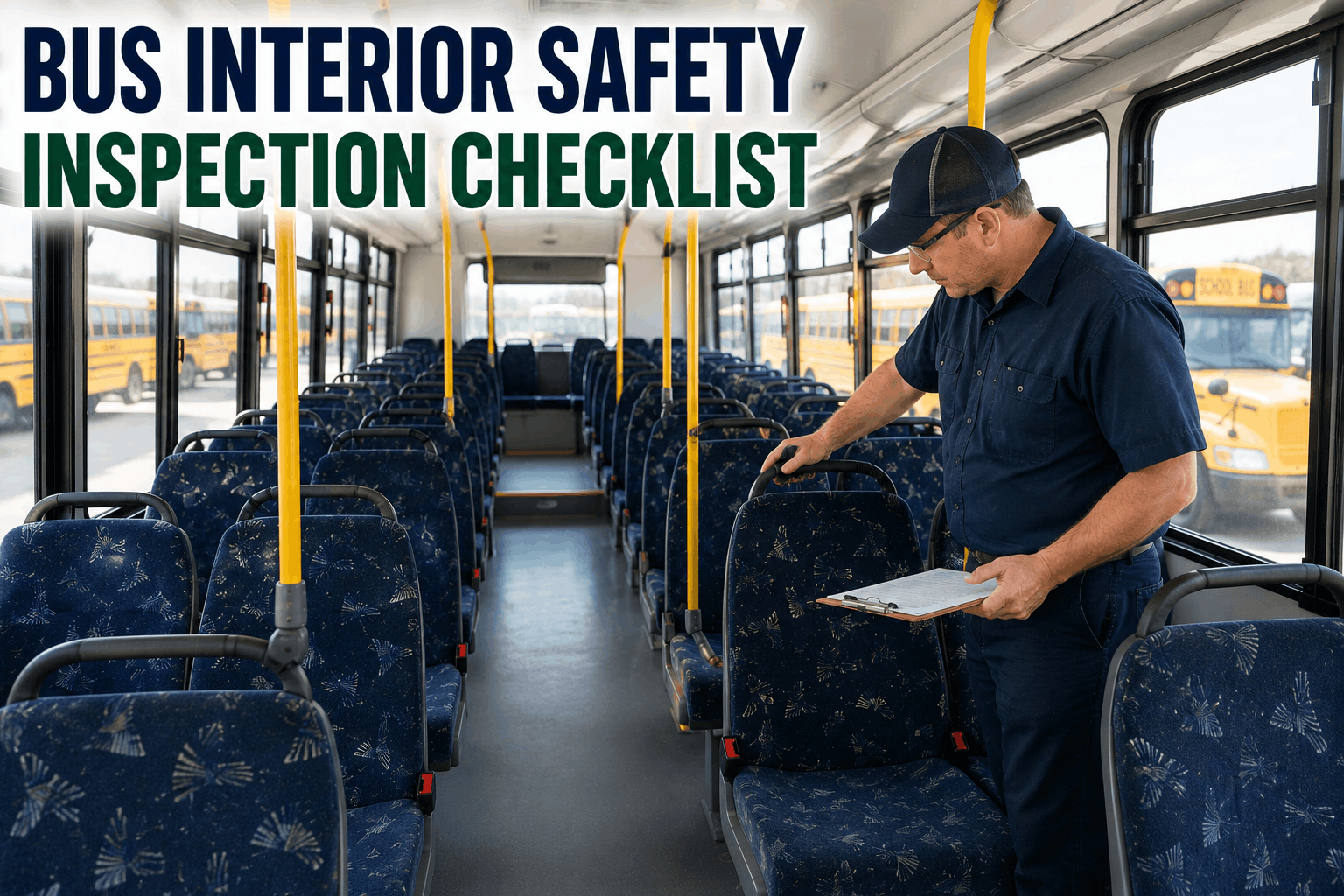
The interior of a bus is where passengers spend their entire journey. Loose seats, broken seat belts, obstructed aisles, damaged handrails, and missing emergency signage are not just comfort issues—they are safety hazards that can cause injury during normal operation or prevent evacuation during an emergency. A seat that breaks loose during a collision can become a projectile. An obstructed aisle can prevent rapid evacuation. A missing emergency exit sign can confuse passengers during a crisis. This comprehensive bus interior safety inspection checklist covers seat anchorage, seat belt function (if equipped), aisle clearance, handrail integrity, flooring condition, interior panel security, and emergency information signage. Use it as your standard procedure for every interior safety inspection and annual DOT inspection.
Interior Safety Guide 2026
Bus Interior Safety Inspection Checklist (Seats, Belts, Aisles)
Bus interior safety inspection workflow. Seats anchorage, belts (if equipped), aisles, handrails, flooring, panels and emergency information signage.
Why Interior Safety Inspections Are Critical: The Passenger Protection Reality
Interior safety failures are often overlooked during PM inspections, yet they directly affect passenger safety and comfort. A loose seat can cause serious injury during hard braking or a collision. An obstructed aisle can prevent passengers from evacuating quickly in an emergency. A broken handrail can cause passenger falls. The most common interior safety issues include: loose or damaged seat anchors, non-functional seat belts (if equipped), obstructed aisles (cargo, luggage, or debris), broken or loose handrails, damaged flooring or tripping hazards, loose interior panels, and missing or illegible emergency signage.
FMCSA and state DOT regulations require specific interior safety standards for passenger-carrying vehicles. Annual DOT inspections include interior safety verification. A structured interior safety inspection process is the most effective way to ensure passenger protection and regulatory compliance.
Interior Safety Categories: The Complete Breakdown
Seats and Anchorage
Inspect all seats for secure mounting, structural integrity, and fabric/foam condition. Test seat anchorage bolts for tightness. Verify no cracks in seat frames or mounting brackets.
Seat Belts (if equipped)
Test all seat belts for function and condition. Verify retractors work, latches engage securely, and webbing is not frayed or damaged. Replace any non-functional belts.
Aisle Clearance
Verify aisles are clear of cargo, luggage, and debris. Check aisle width meets regulations (typically 12-15 inches minimum). Ensure no tripping hazards in aisles.
Handrails and Grab Bars
Inspect handrails for secure mounting and structural integrity. Check for cracks, bends, or damage. Verify all grab bars are present and properly positioned.
Flooring Condition
Inspect flooring for damage, loose sections, or tripping hazards. Check for moisture or contamination. Verify slip resistance of flooring material.
Interior Panels
Inspect all interior panels for secure attachment, cracks, or damage. Check for exposed sharp edges. Verify panel seams are intact.
Interior Safety Inspection Checklist: The Complete Inspection
This comprehensive interior safety inspection checklist covers every required interior safety component. Use it during every interior safety PM service, pre-trip inspection, and annual DOT inspection.
Interior Safety Compliance Trends
The chart above shows interior safety compliance rates by component. Seat belts, flooring, and aisles have the lowest compliance rates—they are often overlooked during routine inspections. Seat belts may be damaged or non-functional. Flooring may develop loose sections or trip hazards. Aisles may become obstructed by cargo or debris. Regular inspections and documentation are essential to maintain passenger safety and regulatory compliance.
Common Interior Safety Issues and Root Causes
Loose Seats
Cause: Vibration loosening mounting bolts over time. Fix: Torque all seat bolts to specification. Use thread locker on critical fasteners.
Broken Seat Belts
Cause: Wear, contamination, or impact damage. Fix: Replace damaged belts immediately. Verify function of all seat belts.
Obstructed Aisles
Cause: Cargo, luggage, or debris in aisle. Fix: Clear all obstructions. Establish policy for secure stowage of passenger belongings.
Damaged Handrails
Cause: Impact damage, corrosion, or wear. Fix: Replace damaged handrails. Tighten loose mounts.
Loose Flooring
Cause: Adhesive failure, water damage, or wear. Fix: Repair or replace damaged flooring. Address moisture sources.
Missing Signage
Cause: Damage, removal, or fading. Fix: Replace missing or illegible signs. Ensure proper positioning.
We implemented this interior safety inspection checklist across our 85-bus fleet. In the first year, we found 47 loose seat mounting bolts, 32 damaged or non-functional seat belts, 18 obstructed aisles, and 21 broken or loose handrails. We also identified 15 areas of damaged flooring and 9 instances of missing or illegible emergency signage. The checklist gives our technicians a systematic process for interior safety inspections, and our passenger safety compliance improved to 100% in year one.
Digitize Your Interior Safety Inspection Process
BusCMMS guides technicians through every interior safety inspection point—seat anchorage, seat belt function, aisle clearance, handrail integrity, flooring condition, panel security, and emergency signage verification. Auto-schedule interior safety PM intervals based on mileage. Complete audit trail for every interior safety component in your fleet.
Bus Interior Safety FAQs
How often should seat belt inspections be performed?
Seat belts should be inspected daily during pre-trip inspections. Comprehensive seat belt inspections should be performed at every PM service (typically every 15,000–20,000 miles or 6 months). Annual DOT inspections require verification of all seat belts if equipped. Replace any damaged or non-functional belts immediately.
What is the minimum aisle width for a bus?
Minimum aisle width varies by bus type and DOT regulations. Typically 12-15 inches is required for emergency egress. School buses may have different requirements. Verify your specific bus manufacturer's specifications and state DOT requirements.
What are the signs of a loose bus seat?
Signs include: visible movement when pressure is applied, creaking or squeaking noises, visible gaps between seat and floor, cracked or damaged mounting brackets, and loose bolts. Any movement indicates the need for immediate inspection and repair.
How do I check seat belt function?
Test each seat belt: pull belt fully out, verify retractor function, latch and unlatch repeatedly, check for frayed webbing, verify mounting points are secure. Replace any belt that fails any of these tests. Document inspection results for each belt.
What interior signage is required on buses?
Required signage includes: emergency exit signs (marked and illuminated), emergency procedure instructions, "No Smoking" signs, and passenger capacity placards. School buses may require additional signage. Check state DOT regulations for specific requirements.
Can BusCMMS track interior safety inspection history?
Yes. BusCMMS tracks seat anchorage inspections, seat belt function tests, aisle clearance checks, handrail condition, flooring repairs, and signage verification. This creates a complete interior safety history for each bus, helping identify patterns and maintain compliance.
The Bottom Line
Bus interior safety inspections are essential for passenger protection and regulatory compliance. Loose seats, broken seat belts, obstructed aisles, and damaged handrails are preventable hazards that compromise passenger safety. Regular inspection of seat anchorage, seat belt function, aisle clearance, handrail integrity, flooring condition, and emergency signage is the most effective way to ensure passenger safety. This checklist provides the step-by-step procedure your technicians need to inspect every interior safety component. When combined with BusCMMS digital inspection forms, auto-scheduled PM intervals, and complete interior safety history tracking, your interior safety program becomes proactive—catching issues before they compromise passenger protection or compliance.