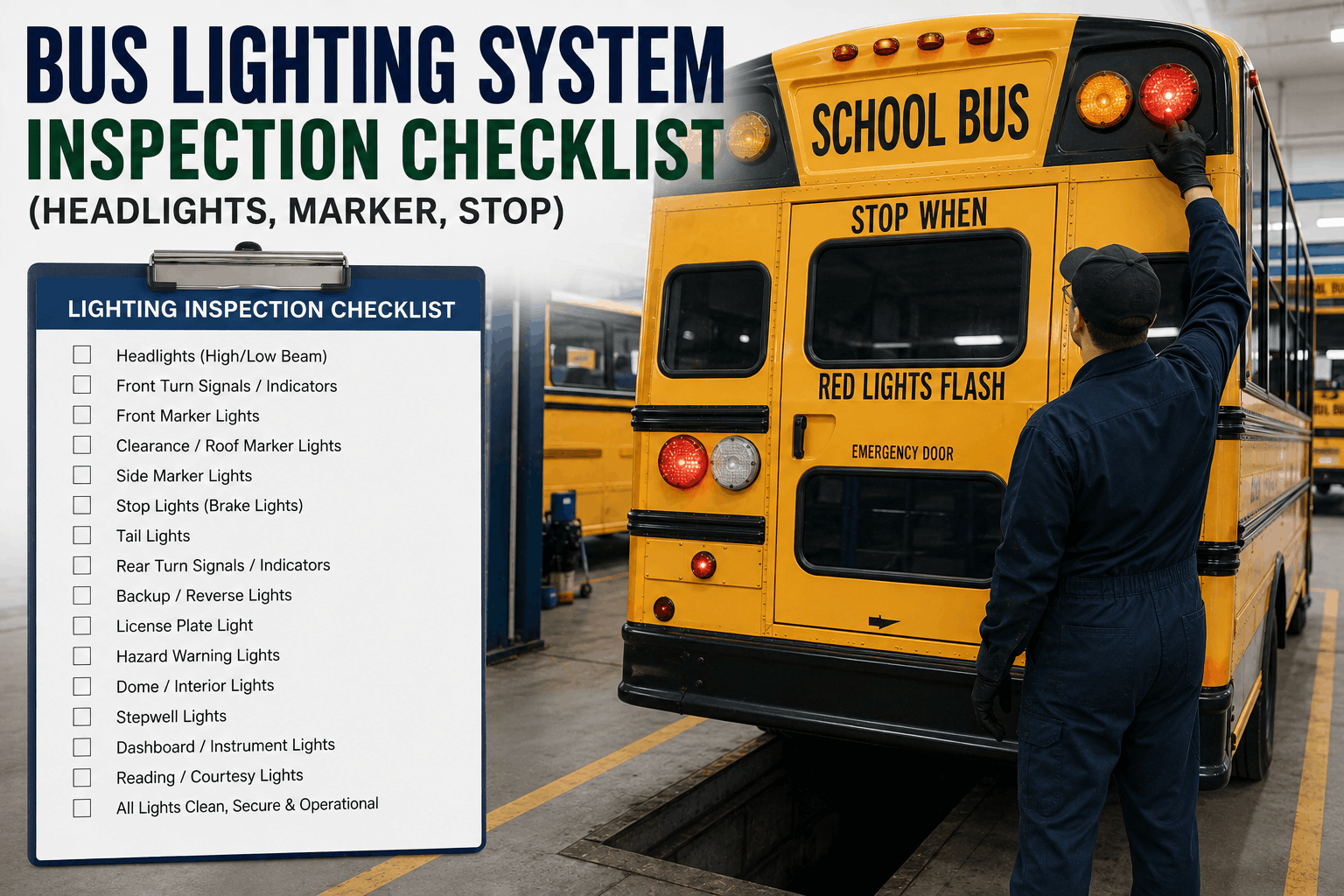
Lighting system failures are the third most common cause of roadside out-of-service violations, accounting for over 15% of all OOS orders. A single burned-out headlight, non-functioning brake light, or missing marker light can result in a citation and out-of-service order. Beyond compliance, lighting failures create serious safety risks—a bus without functioning brake lights is invisible to following traffic, and a bus without marker lights is difficult to see at night. This comprehensive bus lighting system inspection checklist covers headlights, taillights, marker lights, turn signals, brake lights, hazard lights, dome lights, reading lights, and dashboard lights. Use it as your standard procedure for every lighting inspection, pre-trip check, and annual DOT inspection.
Lighting Safety Guide 2026
Bus Lighting System Inspection Checklist (Headlights, Marker, Stop)
Bus lighting system inspection workflow. Headlights, taillights, marker lights, turn signals, brake lights, hazards, dome and reading lights — all checked.
Why Lighting Inspections Are Critical: The Out-of-Service Reality
Lighting violations are among the most common and most preventable roadside citations. According to CVSA data, lighting violations account for over 15% of all out-of-service orders—more than tires, suspension, or brakes in some inspection periods. The most common lighting violations include: burned-out headlights, non-functioning brake lights, missing or damaged marker lights, inoperative turn signals, and cracked or broken lens covers. Each of these violations is detectable during a proper pre-trip inspection. Each is preventable with consistent PM compliance.
Beyond compliance, lighting failures create serious safety risks. A bus with a burned-out headlight is difficult to see at night and has reduced visibility for the driver. A bus without functioning brake lights is invisible to following traffic, increasing rear-end collision risk. A bus with missing marker lights is difficult to see from the side, especially in poor weather. A structured lighting inspection process is the most effective way to prevent lighting failures and ensure passenger and driver safety.
Lighting System Categories: The Complete Breakdown
Headlights
Inspect high and low beams for function, aim, and clarity. Check lenses for cracks, fogging, or damage. Replace burned-out bulbs immediately. Verify headlight aim is within specification.
Taillights and Brake Lights
Inspect both taillights for function and condition. Verify brake lights illuminate when pedal is pressed. Check lenses for cracks or damage. Replace bulbs as needed.
Turn Signals
Inspect front and rear turn signals for function and flash rate. Verify both sides work correctly. Check lenses for damage. Replace burned-out bulbs immediately.
Marker and Clearance Lights
Inspect all marker and clearance lights for function and condition. Verify amber front markers, red rear markers, and side markers are all operational. Replace damaged fixtures.
Hazard Lights
Verify all hazard lights function correctly—both front and rear. Check flash rate. Replace burned-out bulbs. Test with ignition on and off.
Interior and Dashboard Lights
Inspect dome lights for function. Verify dashboard backlighting and warning lights. Check reading lights. Replace burned-out bulbs.
Lighting System Inspection Checklist: The Complete Inspection
This comprehensive lighting inspection checklist covers every required lighting component. Use it during every lighting PM service, pre-trip inspection, and annual DOT inspection.
Lighting System Compliance Trends
The chart above shows how regular lighting inspections improve overall compliance over time. As fleets implement systematic lighting inspection programs, compliance rates increase significantly. Headlight compliance typically improves first with consistent bulb checks, followed by overall lighting compliance as marker lights, brake lights, and turn signals are added to the inspection routine. Regular inspections are the most effective way to identify and address lighting failures before they become roadside citations.
Common Lighting Issues and Root Causes
Burned-Out Bulb
Cause: Normal wear, vibration, or electrical surge. Fix: Replace bulb. Check socket for corrosion. Clean contacts. Document replacement.
Cracked Lens
Cause: Impact damage or vibration. Fix: Replace lens assembly. Check for water intrusion. Seal new assembly properly.
Flickering Light
Cause: Loose connection, corroded socket, or failing bulb. Fix: Clean socket. Tighten connections. Replace bulb if needed.
Misaligned Headlight
Cause: Impact, vibration, or previous repair. Fix: Aim headlight to specification. Check mounting brackets. Verify operation.
Water Intrusion
Cause: Cracked lens or failed seal. Fix: Replace lens assembly. Check gaskets. Seal properly to prevent future intrusion.
Inoperative Brake Light
Cause: Burned-out bulb, failed switch, or wiring issue. Fix: Check bulb first. Test brake light switch. Inspect wiring for damage.
We implemented this lighting inspection checklist across our 95-bus fleet. In the first year, we caught 187 burned-out bulbs during inspections—before they became roadside violations. We identified 42 cracked lenses that would have failed inspection, and 16 misaligned headlights that were reducing night visibility. Our lighting-related roadside violations dropped from 28 in the previous year to 2 in year one. The checklist gives our technicians a systematic process for checking every light on every bus.
Digitize Your Lighting Inspection Process
BusCMMS guides technicians through every lighting inspection point—headlights, taillights, brake lights, turn signals, marker lights, hazard lights, and interior lights. Auto-schedule lighting PM intervals based on mileage. Complete audit trail for every lighting component in your fleet.
Bus Lighting System FAQs
How often should bus lights be inspected?
Bus lights should be inspected daily during pre-trip inspections. Comprehensive lighting inspections should be performed at every PM service (typically every 15,000–20,000 miles or 6 months). Annual DOT inspections require complete lighting verification. Any burned-out bulb should be replaced immediately—do not wait for the next inspection cycle.
What are the most common lighting violations?
The most common lighting violations include: burned-out headlights (especially high beams), non-functioning brake lights (single or both), inoperative turn signals (front or rear), missing or damaged marker lights, and cracked or broken lens covers. Headlight aim violations are also common during roadside inspections.
How do I check headlight aim?
Headlight aim should be checked on a level surface with a wall or screen 25 feet in front of the bus. The bright spot center should be at or below the headlight height and aimed slightly to the right. Most states require professional headlight aiming during annual inspections. Misaligned headlights can reduce visibility and blind oncoming traffic.
What causes frequent bulb burnout?
Frequent bulb burnout is typically caused by: vibration (loose mounting), electrical surges (voltage regulator issues), corrosion in sockets, using incorrect bulb type, or poor-quality bulbs. If a bus experiences frequent bulb burnout, check the voltage regulator and inspect sockets for corrosion.
Are LED lights allowed on buses?
Yes, LED lights are allowed and recommended for buses. LED lights last longer, use less power, and are more durable than traditional bulbs. Many fleets are retrofitting to LED lights to reduce maintenance frequency and improve visibility. Check DOT regulations for specific LED requirements.
Can BusCMMS track lighting inspection history?
Yes. BusCMMS tracks bulb replacements, lens repairs, headlight alignment checks, and all lighting inspection results. This creates a complete lighting history for each bus, helping identify patterns of bulb failure and predict maintenance needs before components fail.
The Bottom Line
Bus lighting system inspections are not optional—they are safety-critical maintenance tasks that protect your passengers, your drivers, and your fleet's reputation. Lighting violations are among the most common roadside citations, and lighting failures create serious safety risks. Regular inspection of headlights, taillights, brake lights, turn signals, marker lights, and hazard lights is the most effective way to prevent lighting failures and ensure compliance. This checklist provides the step-by-step procedure your technicians need to inspect every lighting component. When combined with BusCMMS digital inspection forms, auto-scheduled PM intervals, and complete lighting history tracking, your lighting maintenance program becomes proactive—catching issues before they become roadside violations or safety hazards.