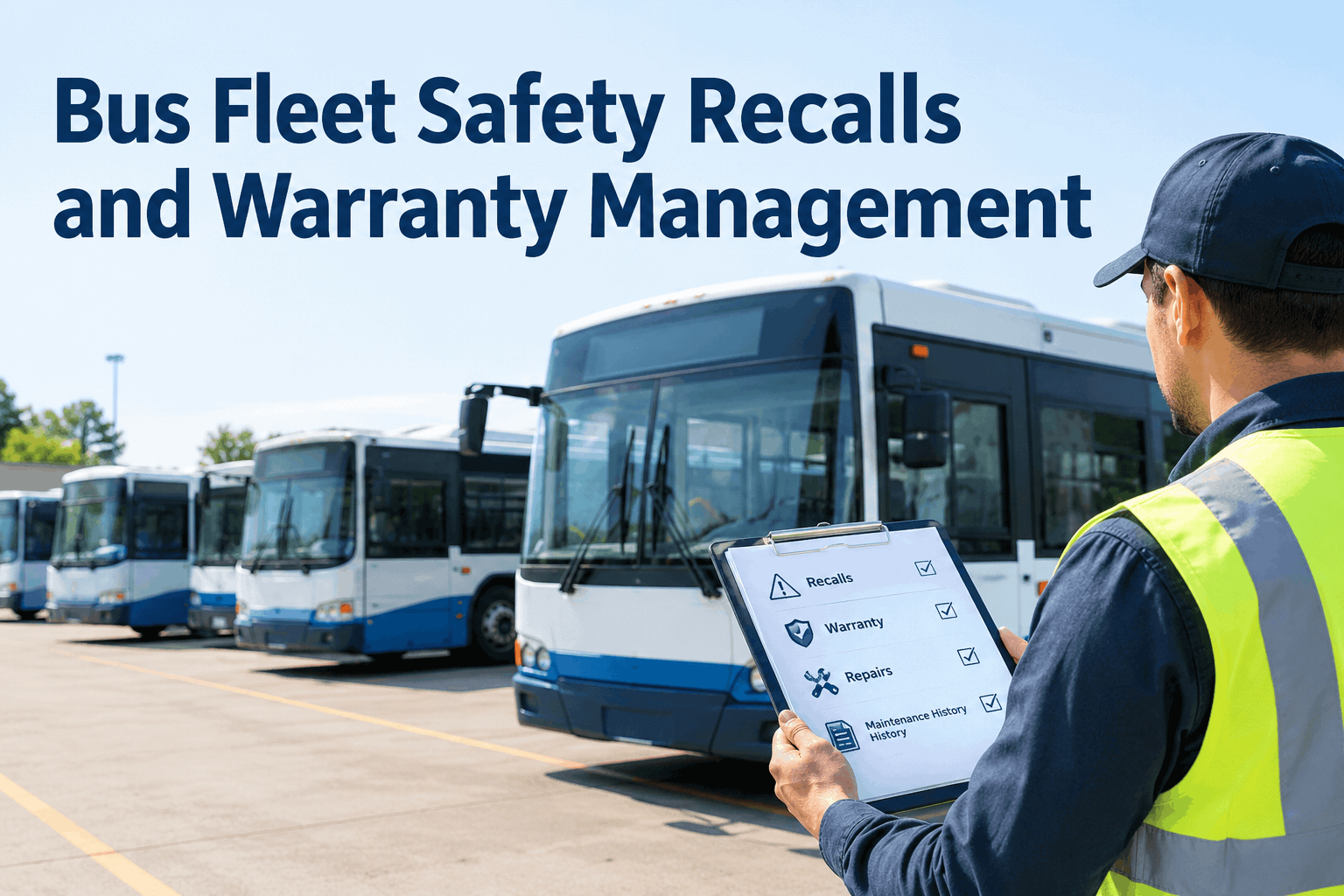
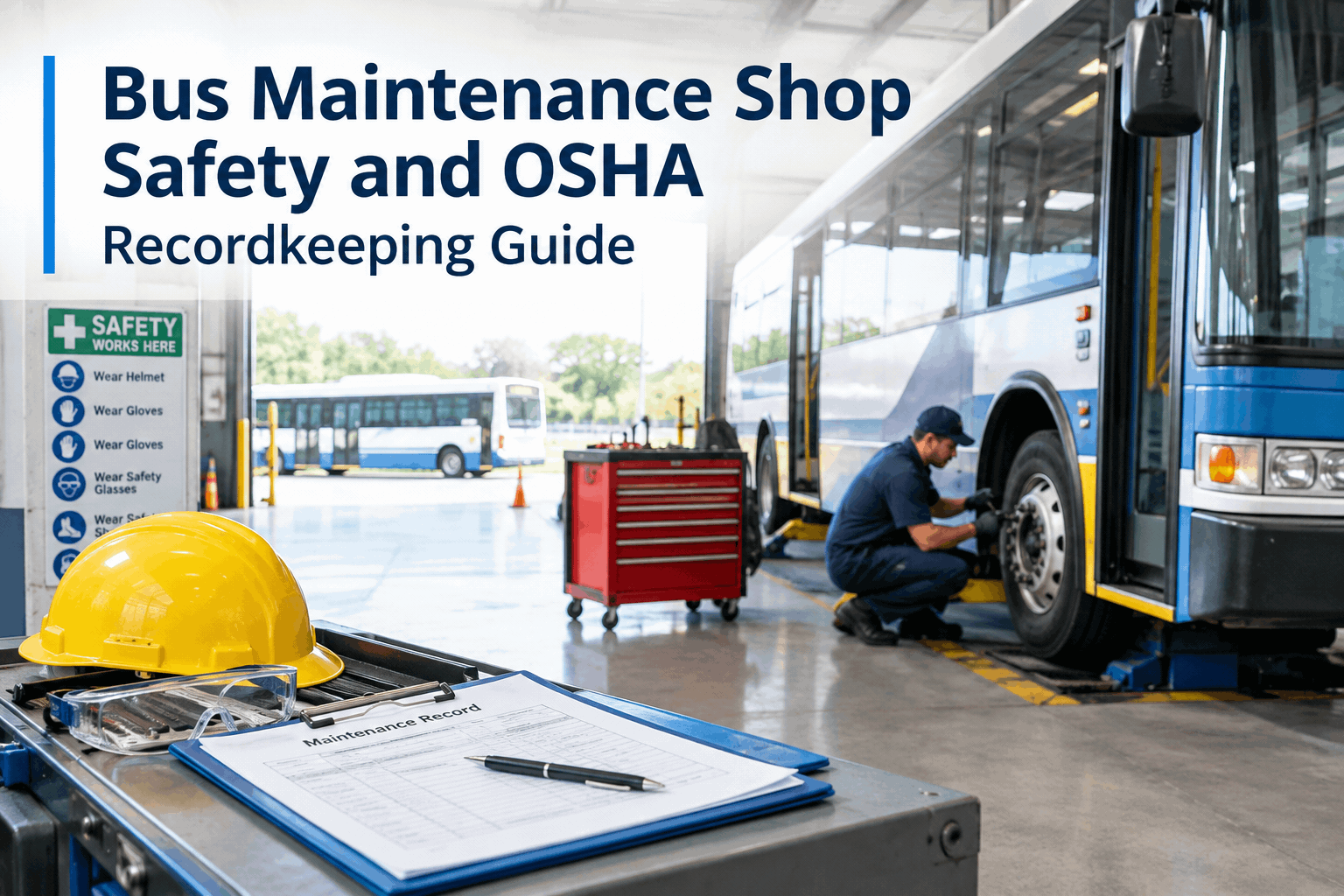
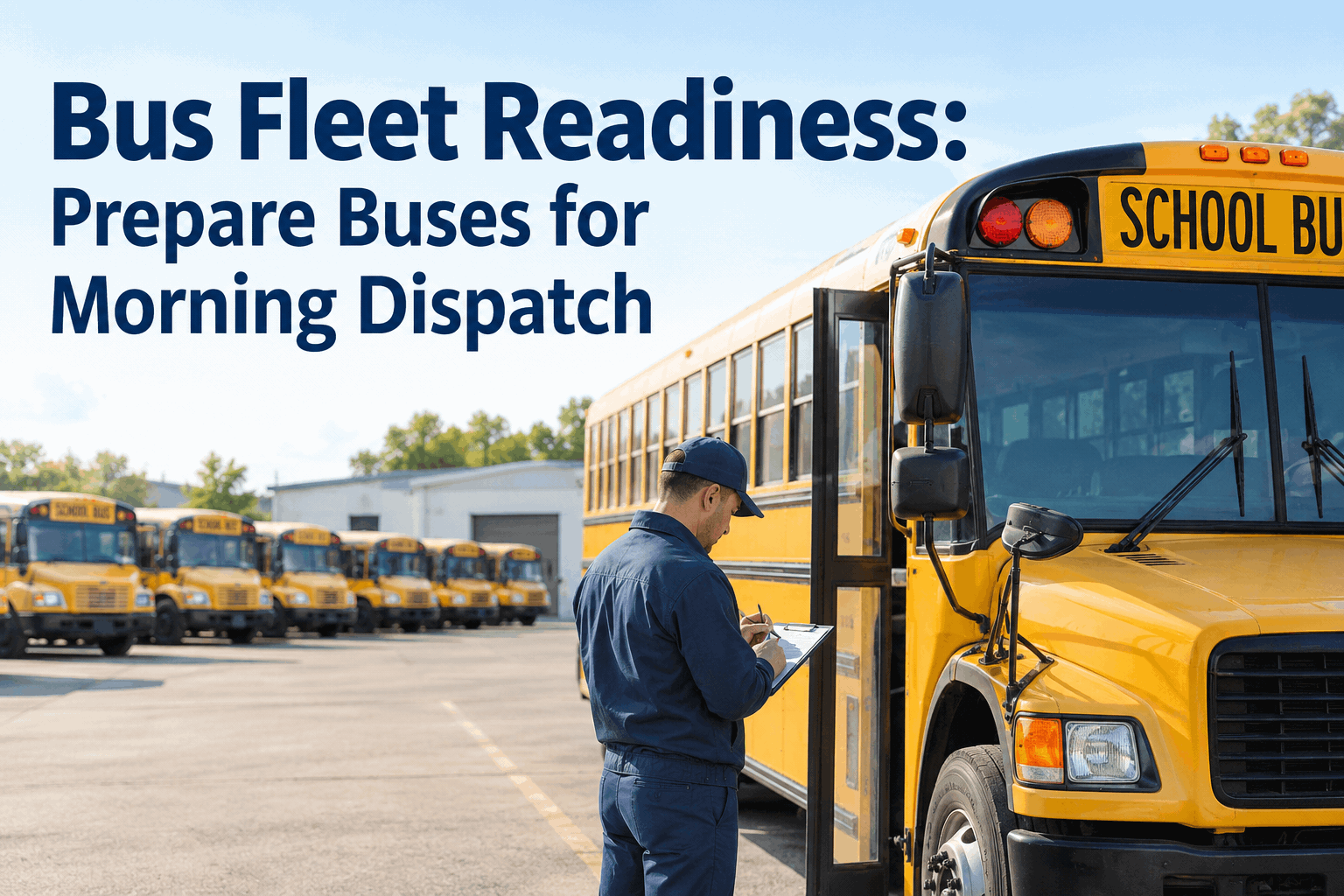
A comprehensive bus maintenance checklist catches 80% of mechanical problems before they strand your fleet on the road. Whether you manage school buses, transit vehicles, or charter coaches—this guide covers exactly what to inspect daily, weekly and monthly to maximize uptime, reduce costs, and stay DOT compliant.
Get Your Free Bus Maintenance Checklist
Printable PDF with daily, weekly & monthly inspection items. Or try our digital version with auto-scheduling.
$8,500
Avg. breakdown cost
80%
Issues caught by checklists
$2,100
Annual savings per bus
10-15
Minutes per daily check
Daily Bus Inspection Checklist (Pre-Trip & Post-Trip)
Daily bus inspections are required by DOT regulations (49 CFR 396.13) and take just 10-15 minutes. This preventive maintenance checklist for buses covers all critical pre-trip items that drivers must verify before every route.
DAILY
10-15 min
Pre-Trip Inspection
Exterior Lights
Headlights (high/low), brake lights, turn signals, hazards, clearance lights, stop arm lights
Mirrors & Glass
All mirrors clean & adjusted, windshield clear, wipers functional
Fluid Levels
Engine oil, coolant, brake fluid, power steering, DEF (diesel)
Brake System
Pedal firm, parking brake holds, air pressure builds (air brakes)
Tires (Visual)
No obvious damage, proper inflation, lug nuts present
Safety Equipment
Fire extinguisher charged, first aid kit stocked, emergency triangles
Emergency Exits
All exits open freely from inside and outside
Instruments
No warning lights, gauges normal, horn works
Required under DOT 49 CFR 396.13
Post-Trip Inspection (After Last Route)
Walk-around for new damage
Check for fluid leaks
Interior sweep - no students left
Report any defects found
Record odometer reading
Sign inspection form
Weekly Bus Maintenance Checklist
Weekly detailed inspections go deeper than daily checks. Schedule 30-45 minutes per vehicle on a non-route day. This fleet bus maintenance schedule catches developing problems before they become failures.
WEEKLY
30-45 min
Detailed Component Inspection
Tires & Wheels
- Tire pressure (all tires + spare)
- Tread depth measurement
- Sidewall damage check
- Lug nut torque verification
Brake System
- Brake pad/lining thickness
- Brake adjustment check
- Air system leak-down test
- Brake line inspection
Electrical
- Battery terminals clean
- Battery charge level
- All interior lights test
- Backup camera function
Undercarriage
- Exhaust system check
- Suspension components
- Steering linkage
- Drive shaft & U-joints
Monthly Bus Service Checklist
Monthly service tasks require 1-2 hours per vehicle. Align these with oil change intervals for efficiency. This comprehensive bus preventive maintenance checklist ensures long-term reliability.
MONTHLY
1-2 hours
Full Service Tasks
Fluids & Filters
- Engine oil & filter change
- Transmission fluid check
- Air filter inspection
- Fuel filter inspection
Safety Systems
- Emergency exit alarms test
- Child check system test
- Camera system review
- GPS/telematics function
HVAC
- Heater output test
- A/C performance (seasonal)
- Defroster function
- Cabin air filter
Lubrication
- Chassis grease fittings
- Door hinges & latches
- Hood latch mechanism
- Compartment latches
Service Interval Quick Reference
Service Item
Interval
Engine Oil & Filter
5,000-7,500 mi
Transmission Service
30,000-50,000 mi
Coolant Flush
50,000 mi / 2 years
Brake Inspection
15,000 mi
Air Filter
15,000-30,000 mi
Annual DOT Inspection
Every 12 months
Quick Visual Checkpoints
Use these interactive checkpoints during your inspections. Check off each item as you complete it:
Exterior Walk-Around
3-4 min
Under the Hood
2-3 min
Interior & Safety
2-3 min
Operational Test
2-3 min
28
Checkpoints
10-15
Minutes
80%
Issues Caught
Tired of Paper Checklists?
Automate these inspections with digital checklists. Drivers complete on mobile, defects auto-create work orders, audit reports generate in seconds.
What Breaks Most Often (And What It Costs)
Focus your bus maintenance checklist attention where failures actually happen. These are the top breakdown causes across US bus fleets:
Brake System
23% of breakdowns
$800-3,000
Cooling System
18% of breakdowns
$1,200-4,000
Electrical/Battery
15% of breakdowns
$300-1,500
Tire Failures
12% of breakdowns
$400-1,200
HVAC System
10% of breakdowns
$500-2,500
Key Insight
Brake and cooling system issues cause 41% of all bus breakdowns—but they're also the most preventable with weekly checks. See our complete cost breakdown →
School Bus Maintenance Checklist: Safety Items
School buses require additional safety checks beyond standard commercial vehicles. These school bus maintenance checklist items protect students and ensure state compliance:
Stop Arm & Lights
Extends fully, proper flash sequence, no physical damage
Check: Daily
Emergency Exits
All exits open freely, alarms sound when opened
Check: Daily + 90-day DOT
Child Check System
Activates after ignition off, requires walk to rear
Check: Daily
Camera System
Interior & exterior cameras recording properly
Check: Weekly
Crossing Arm
Deploys when door opens, minimum 6-foot extension
Check: Daily
Seat Condition
High-back padding intact, secure mounting, no tears
Check: Weekly
For complete safety requirements, see our guide to bus maintenance and safety compliance.
DOT Bus Maintenance Requirements (49 CFR 396)
Understanding DOT bus maintenance requirements is critical for fleet compliance. Here's what federal regulations require:
49 CFR 396.3
Systematic Maintenance
Every motor carrier must systematically inspect, repair, and maintain all vehicles. Records retained 1 year minimum.
49 CFR 396.11
Driver Vehicle Inspection Report
Drivers must complete written DVIRs at end of each day. Must cover brakes, steering, lights, tires, horn, wipers, mirrors.
49 CFR 396.13
Pre-Trip Inspection
Before driving, drivers must verify vehicle is safe, review last DVIR, and acknowledge defects have been repaired.
49 CFR 396.17
Annual Inspection
Every CMV must be inspected annually by qualified inspector. Report retained 14 months.
Violation Penalties
Non-compliance fines range from $1,500 to $16,000 per violation. Out-of-service orders can ground vehicles until repairs are complete.
Your fleet bus maintenance schedule must align with these FMCSA standards. For buses specifically, pushout windows, emergency exits, and emergency door lights must be inspected every 90 days under federal requirements.
Paper vs Digital: Honest Comparison
Paper checklists work for small fleets. But beyond 15-20 buses, the administrative overhead often exceeds software costs. Here's the real comparison:
Paper
Traditional Checklists
Daily inspection
12-15 min
Find bus history
30+ min
Audit report
2-4 hours
Defect tracking
Often missed
50-bus annual cost
~$8,500
Forms, filing cabinets, admin time
VS
Digital
CMMS Software
Daily inspection
6-8 min
Find bus history
30 seconds
Audit report
2 minutes
Defect tracking
Auto-assigned
50-bus annual cost
~$5/bus/mo
All features, mobile app, reports
Digital costs less than paper overhead, and saves 10+ admin hours weekly. See our 2026 software pricing guide for detailed comparisons.
The ROI Math
$8,500
One prevented breakdown
>
~$5
Per bus/month
One prevented breakdown ($8,500) pays for the software across your entire fleet. Most fleets prevent 3-5 breakdowns in year one—delivering 400-500% ROI.
Ready to digitize your maintenance?
Try Digital Checklists Free for 14 Days
See how mobile inspections, automated PM scheduling, and instant audit reports work for your fleet.
No credit card required
•
Cancel anytime
•
150+ fleets using BusCMMS
Frequently Asked Questions
What should I check daily on a bus?
Daily bus checks should cover: all exterior lights (headlights, brake lights, turn signals, stop arm), mirrors, windshield and wipers, fluid levels (oil, coolant, brake fluid, DEF), brake operation, parking brake, steering response, horn, safety equipment (fire extinguisher, first aid kit, emergency exits), and warning lights. Takes 10-15 minutes and is required by DOT 49 CFR 396.13.
How often do buses need preventive maintenance?
Buses need daily inspections (pre-trip and post-trip), weekly detailed checks (tires, brakes, electrical, undercarriage), and monthly service tasks (oil changes, filters, safety systems). Oil changes typically every 5,000-7,500 miles for diesel engines. Annual DOT inspections are required by law.
Is a paper checklist enough for DOT compliance?
Yes, paper checklists can meet DOT requirements under 49 CFR 396.11 if properly completed, signed, and retained. However, paper creates compliance risk through lost forms, incomplete records, and difficult retrieval during audits. Digital systems provide automatic documentation, timestamps, and instant audit reports.
How much does bus maintenance cost annually?
Average annual bus maintenance costs range from $4,100-6,700 per vehicle, including preventive maintenance ($1,800-2,400), brake service ($600-1,000), tires ($800-1,200), and unscheduled repairs ($500-1,500). Fleets with strong PM programs stay at the lower end; reactive maintenance pushes costs higher.
What causes most bus breakdowns?
The top causes of bus breakdowns are: brake system issues (23% of failures), cooling system problems (18%), electrical/starting failures (15%), tire failures (12%), and HVAC issues (10%). Regular checklist compliance prevents most of these—41% of breakdowns come from brakes and cooling alone.
What are DOT requirements for bus maintenance records?
Under 49 CFR 396.3, maintenance records must be retained for 1 year minimum, and 6 months after vehicle leaves your control. Daily DVIRs must be kept for 3 months. Annual inspection reports must be retained for 14 months. Records must include date, nature of inspection/repair, and identification of person performing work.