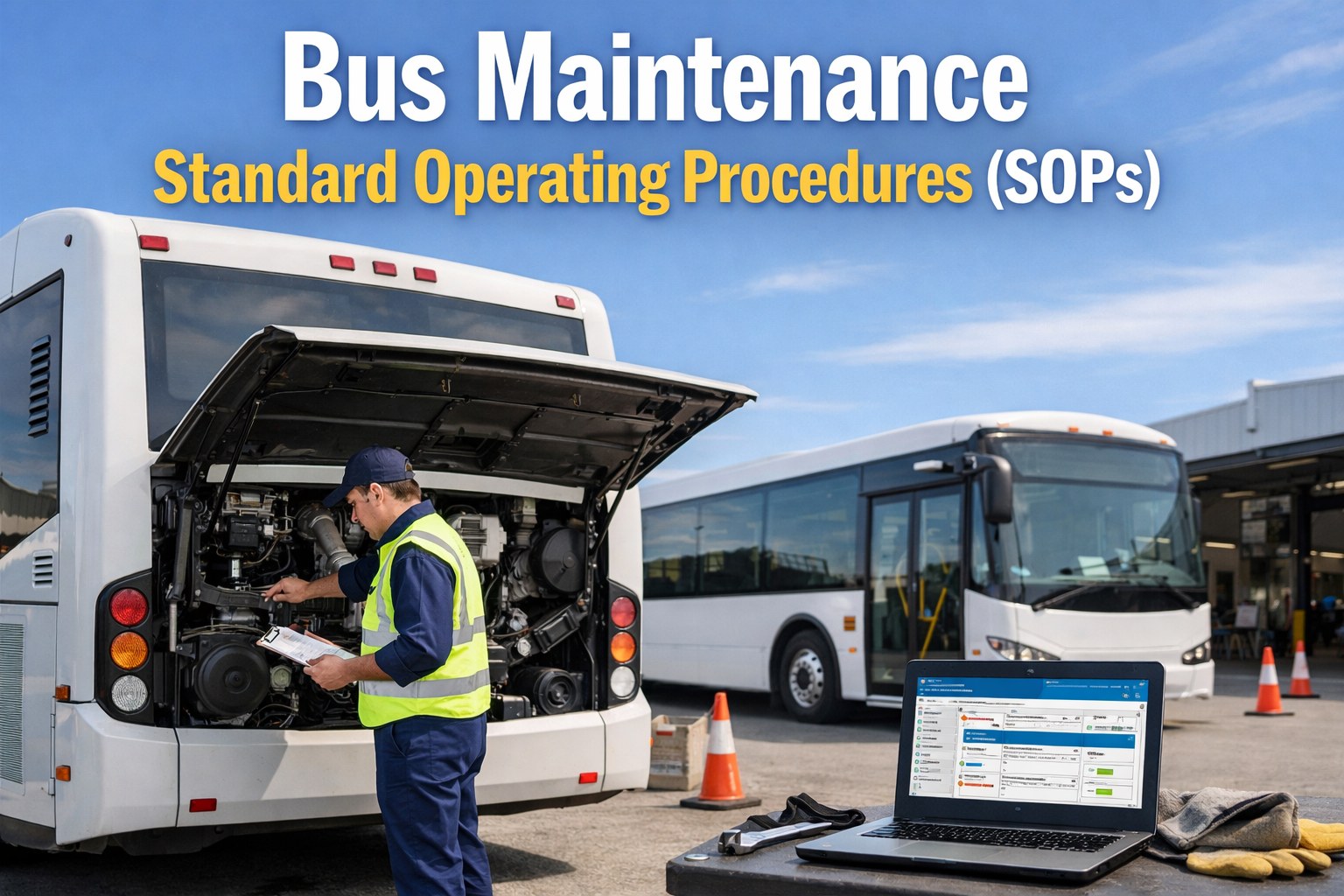
Every missed step in bus maintenance is a potential breakdown waiting to happen. Standard Operating Procedures eliminate guesswork, ensure consistency across technicians, and create the documentation trail auditors and regulators require. Yet many transit agencies still rely on tribal knowledge passed from senior techs to new hiresa system that fails the moment someone retires or calls in sick.
This guide covers how to build, implement, and digitize maintenance SOPs that actually get followed. Whether you're formalizing procedures for the first time or modernizing paper-based systems, these frameworks will help you reduce errors, speed up inspections, and stay audit-ready year-round. Many transit agencies start with a platform demo to see how digital SOPs work before building their library.
Why SOPs Matter
73%
of maintenance errors come from inconsistent procedures
2.5x
faster onboarding with documented SOPs
40%
reduction in repeat repairs with standardized processes
Without SOPs
- Each tech does it "their way"
- Critical steps get skipped
- New hires take months to train
- Audit failures and fines
- Inconsistent repair quality
- Knowledge leaves when people leave
With SOPs
- Every job done the same way
- Checklists ensure completeness
- New techs productive in days
- Audit-ready documentation
- Predictable, quality outcomes
- Institutional knowledge preserved
Agencies that implement digital SOP management report 40% fewer repeat repairs and cut new technician training time in half. Schedule a 15-minute demo to see how embedded checklists enforce compliance on every work order.
Core Maintenance Procedures
Every bus fleet needs documented SOPs for these essential maintenance categories:
Pre-Trip Inspection
Frequency: Before every route
Time: 10-15 minutes
1 Walk-around exterior check (lights, tires, mirrors, body damage)
2 Check fluid levels (oil, coolant, washer fluid)
3 Test all lights and signals
4 Verify brake operation (service and parking)
5 Check emergency equipment (extinguisher, first aid, triangles)
6 Test doors, wheelchair lift, and safety systems
7 Document and report any defects
PM-A Service (30-Day)
Frequency: Every 30 days or 3,000 miles
Time: 45-60 minutes
1 Complete pre-trip inspection items
2 Check and adjust tire pressure
3 Inspect belt condition and tension
4 Check battery terminals and connections
5 Inspect brake pads/shoes thickness
6 Lubricate door hinges and mechanisms
7 Test HVAC operation
PM-B Service (90-Day)
Frequency: Every 90 days or 10,000 miles
Time: 2-3 hours
1 Complete all PM-A items
2 Change engine oil and filter
3 Replace fuel filters
4 Inspect steering components
5 Check suspension bushings and mounts
6 Test charging system output
7 Inspect exhaust system
Brake System Service
Frequency: As needed / Annual
Time: 3-4 hours
1 Secure vehicle and release parking brake
2 Remove wheels and inspect rotors/drums
3 Measure pad/shoe thickness (document)
4 Inspect calipers and wheel cylinders
5 Check brake lines and hoses for wear
6 Replace components as needed
7 Bleed system and test operation
Compliance Alignment
Bus maintenance SOPs, must align with federal, state, and manufacturer requirements. Here's how to ensure your procedures meet compliance standards:
DOT/FMCSA Requirements
Pre-trip and post-trip inspection documentation
Driver Vehicle Inspection Reports (DVIRs)
Annual vehicle inspections by certified inspector
Brake adjustment and air system records
90-day record retention minimum
FTA Transit Requirements
State of Good Repair documentation
Asset management plan alignment
Preventive maintenance program records
Safety performance metrics tracking
ADA equipment inspection logs
OEM Warranty Requirements
Manufacturer-specified PM intervals
Approved fluids and parts documentation
Service performed by qualified technicians
Complete maintenance history records
Warranty claim supporting documentation
Fleets using CMMS platforms with built-in compliance tracking pass audits 95% faster because all required documentation is automatically organized and accessible. Create a free account to explore compliance-ready SOP templates for DOT and FTA requirements.
Digital SOP Management
Paper SOPs get lost, damaged, and ignored. Digital SOP management through CMMS transforms how procedures are created, distributed, and enforced. Agencies that switch to digital workflows see immediate improvements in compliance and consistency:
Embedded Checklists
SOPs built directly into work orders. Technicians can't close a job without completing every step—no shortcuts, no missed items.
Photo Documentation
Require photo evidence at critical steps. Before/after images prove work was done correctly and protect against liability claims.
Version Control
Update SOPs once, deploy everywhere instantly. No more outdated paper copies floating around the shop.
Time Tracking
See how long each SOP actually takes. Identify training needs when a tech consistently runs slow on specific procedures.
Compliance Reports
One-click audit reports showing every SOP execution with timestamps, technician signatures, and supporting photos.
See Digital SOPs in Action
Watch how Bus CMMS embeds procedures directly into work orders—ensuring every step gets done, every time.
Building Your SOP Library
Creating SOPs from scratch can feel overwhelming. Start with these high-priority procedures and expand from there:
Safety-Critical Procedures
Pre-trip inspections, brake service, steering repairs, tire changes, emergency equipment checks
Preventive Maintenance
PM-A, PM-B, PM-C services, fluid changes, filter replacements, belt inspections
Specialized Repairs
HVAC service, transmission work, electrical diagnostics, body repairs, ADA equipment
For each SOP, document: purpose, required tools, safety precautions, step-by-step procedure, quality checkpoints, and sign-off requirements. Agencies that build SOPs inside their CMMS can link procedures directly to parts, labor times, and compliance requirements—see how it works in a live demo.
Implementation Steps
Audit Current Practices
Shadow your best technicians. Document how they actually perform each task—this becomes your baseline SOP.
Identify Compliance Gaps
Compare current practices against DOT, FTA, and OEM requirements. Flag any missing documentation or steps.
Draft and Review
Write SOPs in clear, simple language. Have senior techs review for accuracy and completeness.
Digitize in CMMS
Build SOPs as checklists inside your maintenance software. Link to parts, tools, and safety documentation. Start with a free account and upload your first SOP in minutes.
Train and Enforce
Roll out to technicians with training. Make SOP completion mandatory for closing work orders.
Review and Improve
Analyze SOP completion times and outcomes quarterly. Update procedures based on real-world feedback.
Standardize Your Fleet Maintenance
Join transit agencies using Bus CMMS to enforce consistent procedures, pass audits, and reduce repeat repairs.
Schedule Demo Start Free AccountFrequently Asked Questions
What should a bus maintenance SOP include?
Every SOP should include: purpose/scope, required tools and parts, safety precautions, step-by-step procedure with checkpoints, quality verification steps, documentation requirements, and sign-off/approval section. Digital SOPs should also link to relevant compliance requirements and parts inventory.
How often should maintenance SOPs be updated?
Review SOPs annually at minimum, plus whenever OEM recommendations change, new regulations take effect, or you identify recurring problems with a procedure. Digital CMMS platforms make updates instant—change once, deploy everywhere.
How do SOPs help with compliance?
SOPs create the documentation trail auditors require. When every inspection and repair follows a documented procedure with timestamps and technician signatures, you have proof of compliance. This speeds up DOT, FTA, and insurance audits significantly.
What's the difference between paper and digital SOPs?
Paper SOPs get outdated, lost, and ignored. Digital SOPs embedded in CMMS work orders force compliance—technicians can't close jobs without completing every step. Plus, digital systems provide automatic version control, photo documentation, and instant audit reports.
How long does it take to implement maintenance SOPs?
Start with safety-critical procedures (2-4 weeks), then expand to preventive maintenance (4-6 weeks), then specialized repairs (ongoing). Most fleets have core SOPs operational within 60-90 days. Using CMMS templates accelerates this significantly.