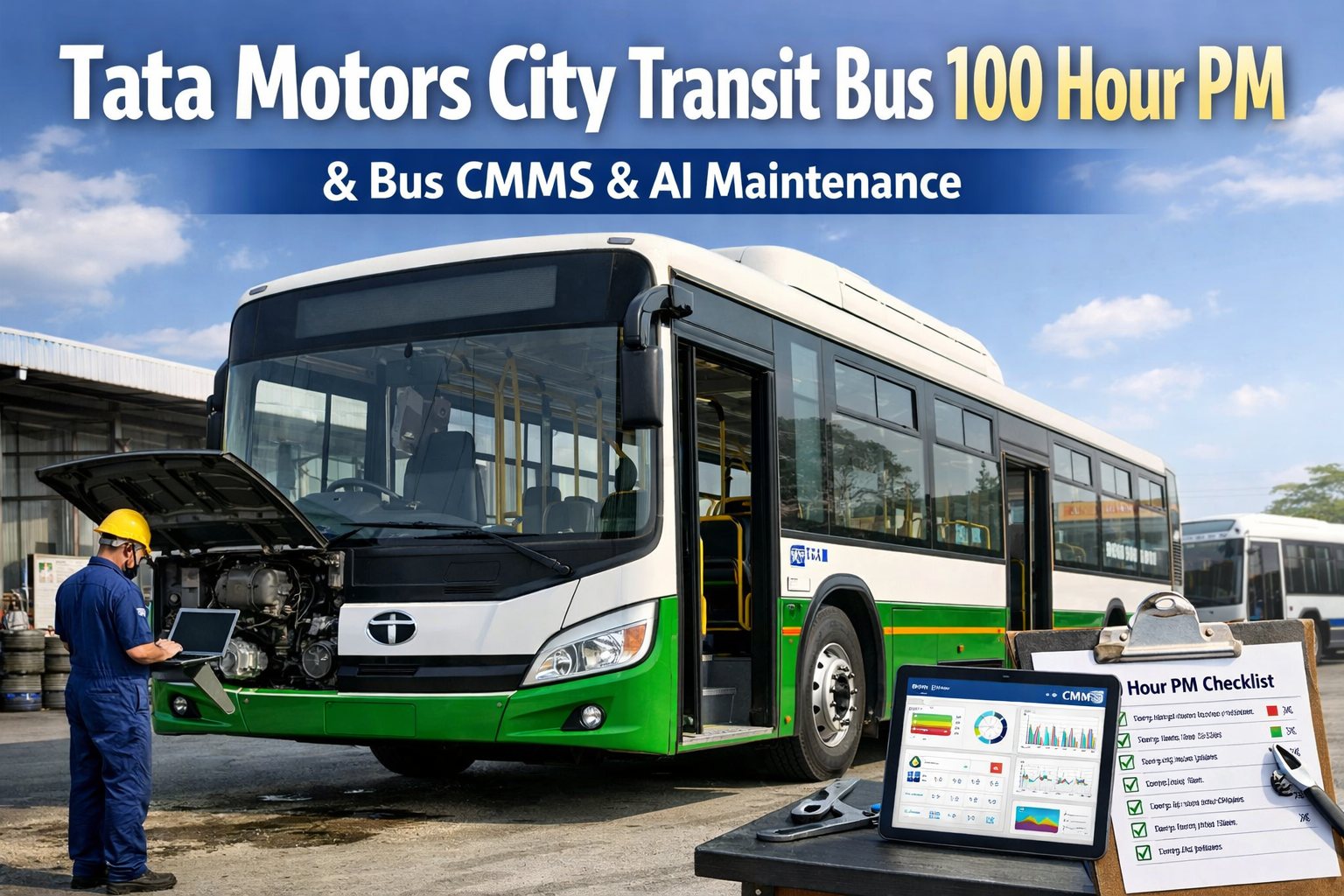
Tata Motors dominates India's city transit market with reliable workhorses like the Starbus and Ultra series. But reliability doesn't happen by accidentit requires disciplined preventive maintenance at precise intervals. The 100-hour PM is your first major service checkpoint, catching wear patterns before they become roadside breakdowns.
This guide provides the complete 100-hour PM checklist for Tata Motors city transit buses, organized by system for efficient workflow execution. Transit agencies using digital PM scheduling complete these inspections 40% faster while capturing every data point for compliance reporting.
Why 100-Hour PM Matters
City transit buses face punishing duty cycles—constant stop-and-go traffic, heavy passenger loads, and 16+ hour daily operations. The 100-hour interval catches problems at the earliest stage:
68%
of major failures show early warning signs detectable at 100-hour inspections
$2,400
average repair cost avoided per bus annually with consistent PM compliance
97%+
fleet availability achieved by transit agencies following OEM PM schedules
Complete 100-Hour PM Checklist
Organized by vehicle system for efficient workflow. Each section includes inspection points, service actions, and documentation requirements.
Engine SystemGet this checklist as a digital work order template
Parts & Supplies Checklist
Have these items ready before starting the 100-hour PM to avoid delays:
Consumables
Engine oil (15W-40 CI-4, ~12L)
Oil filter element
Air filter element (if due)
Fuel filter (if due)
Chassis grease (NLGI #2)
Coolant (for top-up)
Tools Required
Oil filter wrench
Torque wrench (wheel lugs)
Grease gun
Tire pressure gauge
Multimeter
Brake thickness gauge
Documentation
PM checklist form
Vehicle service history
OEM specifications
Defect report forms
Parts usage log
Technician sign-off sheet
Fleets using integrated parts management automatically track inventory levels and generate purchase orders when stock runs low—no more delayed PMs waiting for parts.
CMMS Integration Benefits
Paper checklists get lost. Digital PM workflows in CMMS ensure every task gets completed, documented, and linked to the vehicle's permanent record:
Automated Scheduling
CMMS tracks operating hours from telematics and triggers PM work orders automatically at 100-hour intervals. No manual tracking required.
Digital Checklists
Technicians complete inspections on tablets with mandatory fields. Can't close work order without documenting every task.
Photo Documentation
Capture images of wear items like brake pads and tires. Creates visual history for trend analysis and warranty claims.
Compliance Dashboard
Real-time visibility into PM completion rates, overdue inspections, and upcoming services across entire fleet.
AI-Powered Maintenance Insights
Modern CMMS platforms use AI to analyze PM data and surface insights human reviewers might miss:
Predictive Alerts
AI identifies buses likely to need brake service or other repairs before the next scheduled PM based on wear patterns and operating conditions.
Parts Forecasting
Machine learning predicts parts consumption 30-60 days ahead, ensuring inventory levels match actual demand without overstocking.
Anomaly Detection
Flags vehicles with unusual patterns—like one bus burning oil faster than fleet average—for targeted investigation.
Labor Optimization
Analyzes technician productivity and suggests optimal scheduling to balance workloads and reduce overtime.
Transit agencies using AI-powered CMMS report 23% fewer unplanned breakdowns. See AI maintenance insights in action during a live platform demo.
Digitize Your Tata Motors PM Program
Join transit agencies using Bus CMMS for automated scheduling, digital checklists, and AI-powered fleet insights.
Frequently Asked Questions
What is included in a Tata Motors bus 100-hour PM?
The 100-hour PM includes comprehensive inspection of engine systems (oil, coolant, filters, belts), brake system checks, steering and suspension inspection with greasing, electrical system testing, tire and wheel inspection, and safety equipment verification. It typically takes 2.5-3 hours to complete properly.
How often should city transit buses receive preventive maintenance?
City transit buses typically follow a tiered PM schedule: daily pre-trip inspections, 100-hour minor service, 250-hour intermediate service, and 500-hour major service. The 100-hour interval catches early wear patterns before they escalate into failures.
How does CMMS improve bus PM compliance?
CMMS automatically tracks operating hours via telematics integration and generates work orders at the right intervals. Digital checklists ensure every task is completed and documented. Compliance dashboards show real-time PM status across the entire fleet.
What AI features help with bus maintenance?
AI-powered CMMS provides predictive alerts for likely failures, parts demand forecasting, anomaly detection to identify problem vehicles, and labor optimization suggestions. These features help prevent breakdowns and optimize maintenance spending.
What parts are needed for a 100-hour PM on Tata buses?
Standard consumables include engine oil (15W-40 CI-4, approximately 12 liters), oil filter element, chassis grease, and coolant for top-up. Air and fuel filters may be replaced if inspection shows restriction or contamination.







