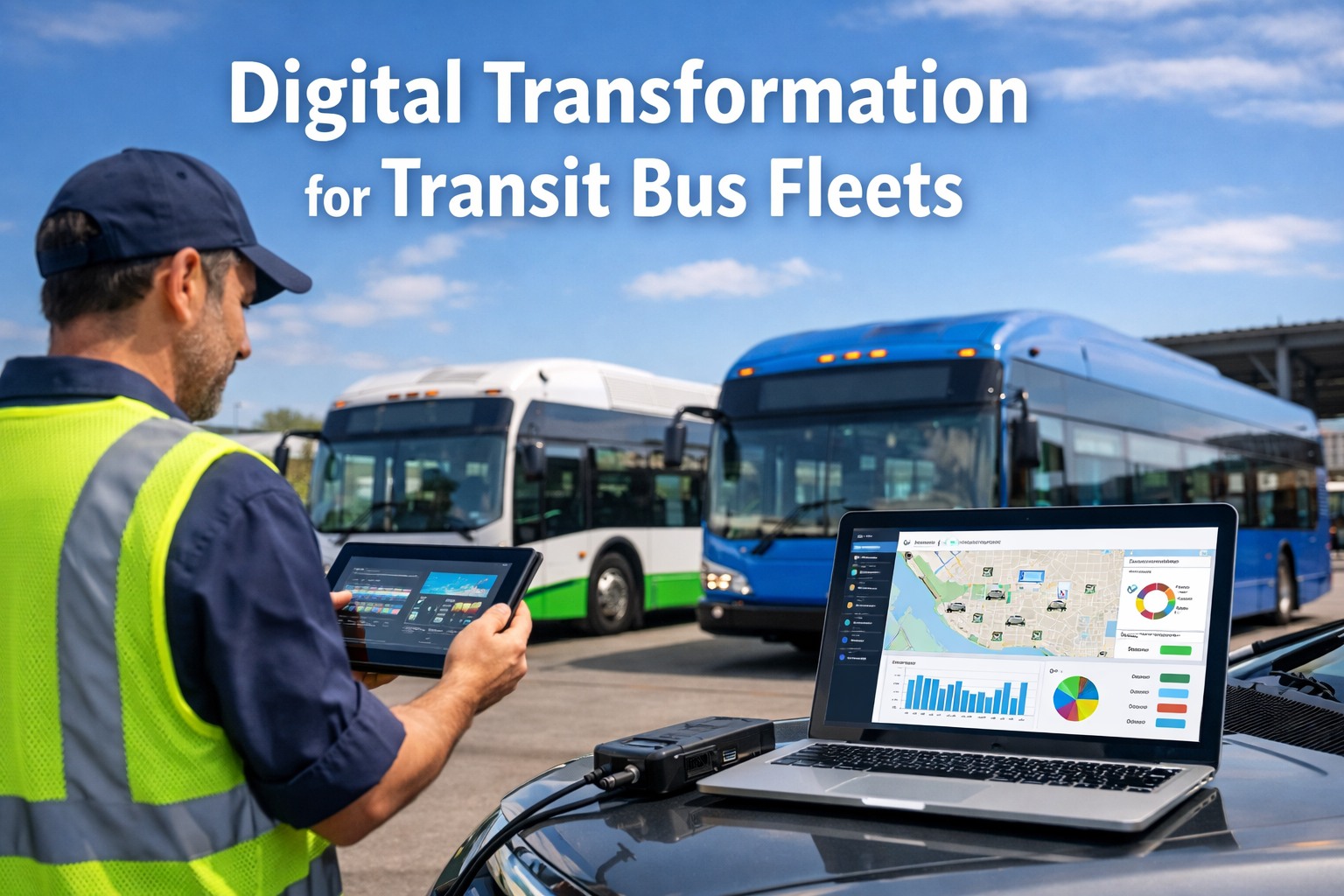
The U.S. fleet management market hit $9.5 billion in 2024 and is projected to reach $35 billion by 2030. Transit agencies still running on spreadsheets and paper work orders are falling behind—fast. Digital transformation isn't about buying new software. It's about connecting every bus, technician, and data point into one intelligent system that prevents problems before they happen.
Real-time tracking and data analytics can reduce delivery delays by 30% and improve route planning by 25%. For transit fleets, this means fewer roadcalls, lower maintenance costs, and buses that actually show up on time. Here's how leading agencies are making the switch—and how you can too.
Why Transit Fleets Need Digital Transformation
Transit agencies face mounting pressure from every direction—tighter budgets, aging fleets, workforce shortages, and riders who expect reliable service. Paper-based maintenance systems can't keep up. When a technician retires, decades of knowledge walks out the door. When parts run out, nobody knew they were low. When a bus breaks down mid-route, it's already too late.
Digital transformation solves these problems by creating a single source of truth for your entire operation. Every inspection, every repair, every part—tracked automatically and available instantly. The agencies that have made the switch report 25-30% reductions in maintenance costs and 40% less time spent on paperwork. That's not a technology upgrade. That's a complete operational transformation.
The Real Cost of Staying Manual
Ready to see what digital maintenance looks like? Book a free demo and we'll show you exactly how it works for transit fleets.
Core Technologies That Power Modern Fleets
Digital transformation isn't a single tool—it's an ecosystem of connected technologies working together. Here are the five pillars that every modern transit fleet needs:
CMMS Platform (Computerized Maintenance Management System)
The central hub for work orders, PM schedules, parts inventory, and compliance records. Everything starts here. When a PM comes due, the system generates the work order automatically. When a technician completes a repair, the parts inventory updates instantly. When an auditor asks for records, you export them in seconds.
Telematics Integration
Real-time vehicle data flows from GPS and onboard sensors directly into your maintenance system. Mileage, engine hours, fault codes—all updated automatically. No more manual odometer readings. No more guessing when a bus hit its service interval. The data comes to you.
Predictive Analytics & AI
Machine learning analyzes patterns across your fleet to spot failures before they happen. Which buses are trending toward brake issues? Which engines are showing early signs of trouble? AI prioritizes your maintenance queue so you fix the right bus at the right time—before it leaves someone stranded.
Mobile Workflows
Technicians complete inspections, log labor, and close work orders from phones or tablets. Photos attach directly to records. Time tracking happens automatically. The paperwork that used to take hours now takes minutes—and it's actually legible.
Analytics Dashboard
KPIs visualized in real-time so leadership can make informed decisions. Fleet availability, cost per mile, PM compliance, technician productivity—everything you need to run a data-driven operation. Custom reports generate automatically and land in inboxes on schedule.
Want to see these technologies working together? Create a free account and explore the platform yourself.
Start Free Account Book a DemoWhat Results Look Like
Transit agencies that complete digital transformation typically see measurable results within 6-12 months. Here's what the data shows:
← Swipe to see more →
These aren't projections—they're actual results from transit agencies that made the switch. The ROI typically hits positive within 12-18 months, and compounds every year after that.
Implementation Roadmap
Digital transformation doesn't happen overnight, but it doesn't have to take years either. Most transit agencies complete full implementation in 8-12 weeks using this phased approach:
Foundation
Import fleet asset data, configure PM schedules based on OEM specs, set up parts inventory with reorder points, create user accounts and permissions.
Integration
Connect telematics feeds for automatic mileage/hour updates, deploy mobile app to technicians, migrate historical maintenance records.
Pilot
Go live with one depot or route. Train team on daily workflows, refine processes based on real usage, build confidence before full rollout.
Scale & Optimize
Roll out fleet-wide, enable predictive analytics, build custom dashboards for leadership, automate compliance reports. Continuous improvement begins.
Not sure where to start? Schedule a demo and we'll walk through exactly how implementation works for your fleet size and setup.
Start Your Digital Transformation
Join transit agencies across the US that are cutting costs, reducing breakdowns, and running smarter operations with Bus CMMS.
Frequently Asked Questions
What is digital transformation for transit fleets?
Digital transformation means replacing paper-based processes with integrated software platforms—CMMS for maintenance, telematics for real-time vehicle data, analytics for decision-making, and mobile apps for field workers. The goal is connected, data-driven operations that improve efficiency and reduce costs across your entire fleet.
How long does implementation take?
Most transit agencies complete core implementation in 8-12 weeks using a phased approach. Foundation setup takes 2 weeks, integration another 2 weeks, pilot testing 2 weeks, and full rollout with optimization fills the remaining time. Smaller fleets can often go faster.
What ROI can we expect?
Transit agencies typically see 15-25% reduction in maintenance costs, 30-60% fewer roadcalls, and 40-80% less administrative time within the first year. Most achieve full ROI within 12-18 months of deployment, with benefits compounding each year after.
Does this work with existing telematics systems?
Yes. Modern CMMS platforms integrate with major telematics providers through APIs—Samsara, Geotab, Verizon Connect, and others. Your existing GPS and vehicle diagnostic data flows automatically into the maintenance system without manual entry.
How do we get staff to adopt new technology?
Start with a pilot group at one depot, demonstrate quick wins, and expand gradually. Mobile-first interfaces require minimal training—most technicians are productive within 30 minutes. When staff see how much easier their job becomes, adoption follows naturally.