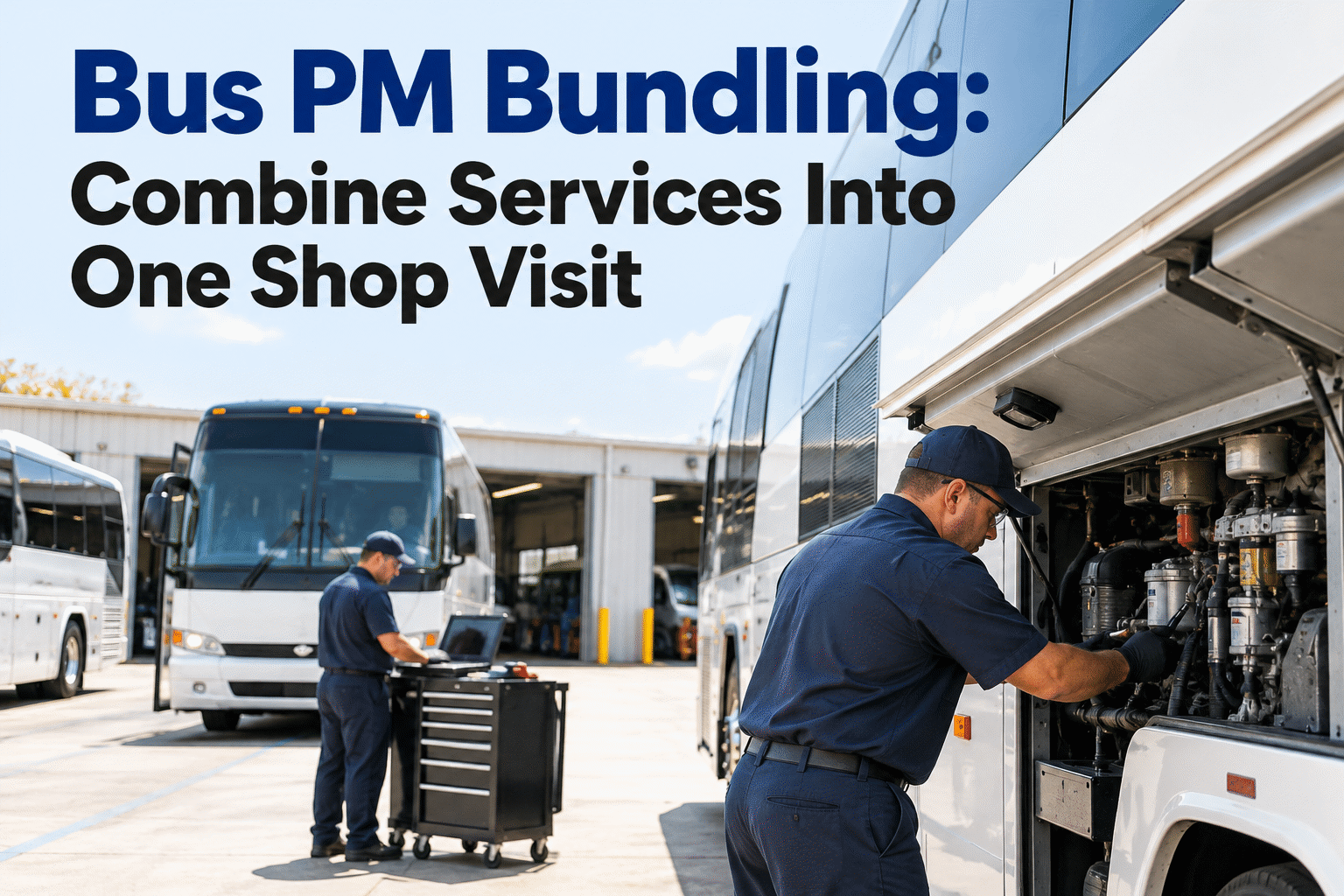
Bus 214 came in Monday for its A-service, back two weeks later for a near-due filter, and again for a small repair you knew about both times. Three pulls, three bay slots, three chances for trouble on a route in between — for one bus's worth of work. Bus PM bundling, grouping near-due services onto one visit, is how you stop pulling the same bus over and over. You can see near-due tasks bundled onto one visit in a short demo.
PREVENTIVE MAINTENANCE · PM PLANNING
Bus PM Bundling: Combine Services Into One Shop Visit
Every time a bus comes into the shop, you pay the same setup cost whether you do one task or five. Bundling sweeps the near-due work into the visit you are already making — fewer pulls from service, less repeat downtime, a bay plan that holds. Here is how to do it without pulling tasks too early.
THREE PULLS BECOME ONE
Illustrative. The repair work is the same either way — what bundling removes is the repeat setup: three pulls from service, three bay slots, three windows where a known-but-deferred issue could strand the bus on a route.
Why Repeat Shop Visits Cost More Than the Repairs
The hours a tech spends wrenching are only part of a shop visit. Every pull carries setup that repeats whether you do one task or five: moving the bus in, the walk-around, the paperwork, a spare covering its route, and the plain fact that a bus in the bay is not earning its keep.
OUT-OF-SERVICE TIME: THREE PULLS VS ONE BUNDLE
Illustrative hours. A bundled visit runs longer than any single task, but far shorter than three separate pulls — because you pay the setup once, not three times. The repair hours barely move; the downtime is cut in half.
The Look-Ahead Window: How Bus PM Bundling Actually Works
Bundling is not guesswork — it is a window. When a bus is due for a PM, you look ahead a few weeks and sweep in anything else coming due soon, so it rides along on the visit you are already making. The trick is the window size: wide enough to catch real savings, tight enough that you are not throwing away good service life.
SWEEP IN WHAT'S NEAR DUE — LEAVE WHAT ISN'T
Illustrative. The PM, filter, and belt all fall inside the window, so they ride on one visit. The major service in week 7 is too far out — pulling it forward would waste weeks of good interval, so it stays on its own schedule.
Done right, bundling is a quick routine, not a planning project. Four steps turn a scattered set of pulls into one planned visit the shop can prep for.
1
Flag due and near-due
When a PM comes up, pull the look-ahead list for that bus — everything due now or within the window, by mileage and date.
2
Check it's worth pulling forward
Skip anything with real interval left — bundling weeks early trades downtime savings for wasted service life. Close counts; far does not.
3
Stage the parts first
Pull the parts for the whole bundle before the bus comes in, so the visit does not stall waiting on a filter.
4
One work order, one pull
Put the bundled tasks on one work order so the tech does them in one sitting and records stay clean.
Bundling is a tool, not a rule. Done well it saves pulls; done carelessly it wastes parts and crams a bay. Run each candidate through this short list before it rides along.
It's inside the look-ahead windowDue now or within a few weeks — close enough that the saved pull beats the lost interval.
BUNDLE
The parts are on hand or stageableIf you can have the parts ready before the bus rolls in, it belongs in the bundle.
BUNDLE
It shares access with the main jobAlready pulling a panel or lifting the bus? Anything behind the same access is a free add-on.
BUNDLE
It has real interval leftWeeks or thousands of miles to go — pulling it forward just throws away good service life.
LEAVE IT
It would blow the bay timeA bundle so big it holds the bay all day can hurt the schedule more than two planned visits would.
Bundling by hand means cross-checking a dozen intervals every time a bus is due — which is why most shops skip it. BusCMMS does the cross-check for you, surfacing the whole window on one screen so bundling takes seconds, not a planning session.
Due and near-due on one screen
Every task due now or within your window shows together, by mileage and date, so the bundle builds itself.
Fuel-type-aware intervals
Diesel, CNG, and electric each carry their own PM logic, so the window shows the right tasks for the right bus, not a generic list.
Bundle onto one work order
Group the chosen tasks onto one work order in a couple of clicks — one pull, one tech, one record.
Parts staged ahead
The work order lists every part the bundle needs, so inventory stages them before the bus arrives.
95%+fleet availability — BusCMMS's own reported customer result25–35%maintenance cost reduction within 12 months, as reported by BusCMMS2–4 wkstypical rollout — bus-specific, so PM planning starts fast
Those are BusCMMS's own reported figures from customer data — and fewer, fuller shop visits feed both, because every pull you avoid is downtime you keep and setup cost you do not pay twice.
A PM Planner's Take
Key Takeaways on Bus PM Bundling
Bundling turns repeat shop visits into one planned one — without wasting service life. Four things to hold onto.
01
The setup is the cost
You pay the pull, the paperwork, the spare once per visit — not per task.
02
Bundle by a window
Sweep in what's near due; leave what still has real interval left.
03
Stage parts first
A bundle that stalls waiting on a part is just one slower visit.
04
Don't over-bundle
Too early wastes life; too big blows the bay. Close counts; far does not.
See the whole window, bundle what's genuinely near due, and stage the parts — and bus PM bundling hands back fleet availability with no new hire and no new equipment. The work was always going to get done; bundling just means the bus comes in once to get it.
FAQ
Bus PM Bundling: Common Questions
What is bus PM bundling?+
PM bundling means combining several preventive maintenance tasks onto one shop visit instead of pulling a bus in separately for each. When a bus is due, you look ahead a few weeks, find anything else coming due soon — a filter, a belt, a small repair — and do it all in the same visit. The point is to pay the cost of a shop visit once, not three times. Every pull carries setup that repeats no matter how small the task: moving the bus in, the walk-around, the paperwork, a spare covering its route. Bundling removes that repeat setup, so the same work gets done with far less total downtime and fewer chances for a deferred issue to strand the bus on a route.
How do I decide which services to bundle together?+
Use a look-ahead window. When a bus is due, pull the list of everything due now or within a set window — a few weeks or a few thousand miles — and bundle what falls inside it. Bundle a task when it is close to due, the parts are on hand or stageable, or it shares access with the main job (already pulling a panel means anything behind it is nearly free). Leave it when it still has real interval left, because pulling it weeks early throws away service life, or when adding it would hold the bay so long it hurts the schedule. The skill is the window size: wide enough to catch real savings, tight enough that you are not doing everything early just because the bus is in.
Doesn't bundling waste service life by doing things early?+
It can, if you bundle carelessly — which is why the window matters. Pulling a task forward a few days to avoid a whole separate visit is almost always worth it; the sliver of lost interval is tiny next to the saved pull, spare coverage, and downtime. Pulling it forward weeks or thousands of miles is not, because now you are paying for service life you never used. Bundling is a trade-off, and good bundling respects it: sweep in what is genuinely near due, leave anything with real interval left on its own schedule. A system that shows how much interval remains on each task makes that call easy instead of a guess.
How much downtime can PM bundling actually save?+
It depends on how often your buses make repeat shop trips, but the savings come from the same place: the setup cost you stop paying twice. If a bus would otherwise make three separate four-hour visits in a month, bundling can roughly halve the total out-of-service time, because the wrench hours barely change while the repeated pulls, walk-arounds, and spare coverage collapse into one. You also cut how often a bus comes off a route and the windows where a known-but-deferred issue could break down. The biggest wins are on fleets that treat every PM and small repair as its own event — that is where the repeat visits hide.
How does BusCMMS help with PM bundling?+
BusCMMS does the cross-checking that makes bundling practical. It tracks what is due and near-due on every bus by mileage and date, across diesel, CNG, and electric, and shows the whole look-ahead window on one screen — so when a PM comes up, you see everything coming due without hunting through a dozen intervals. From there you bundle the chosen tasks onto a single work order in a couple of clicks, and because the work order lists every part the bundle needs, inventory stages them before the bus arrives so the visit does not stall. That turns bundling from a planning project into a quick routine the shop can do every time. BusCMMS reports customer fleet availability of 95% or higher and cost reductions of 25 to 35% within 12 months, company-reported figures from its own data, both helped by fewer, fuller shop visits.