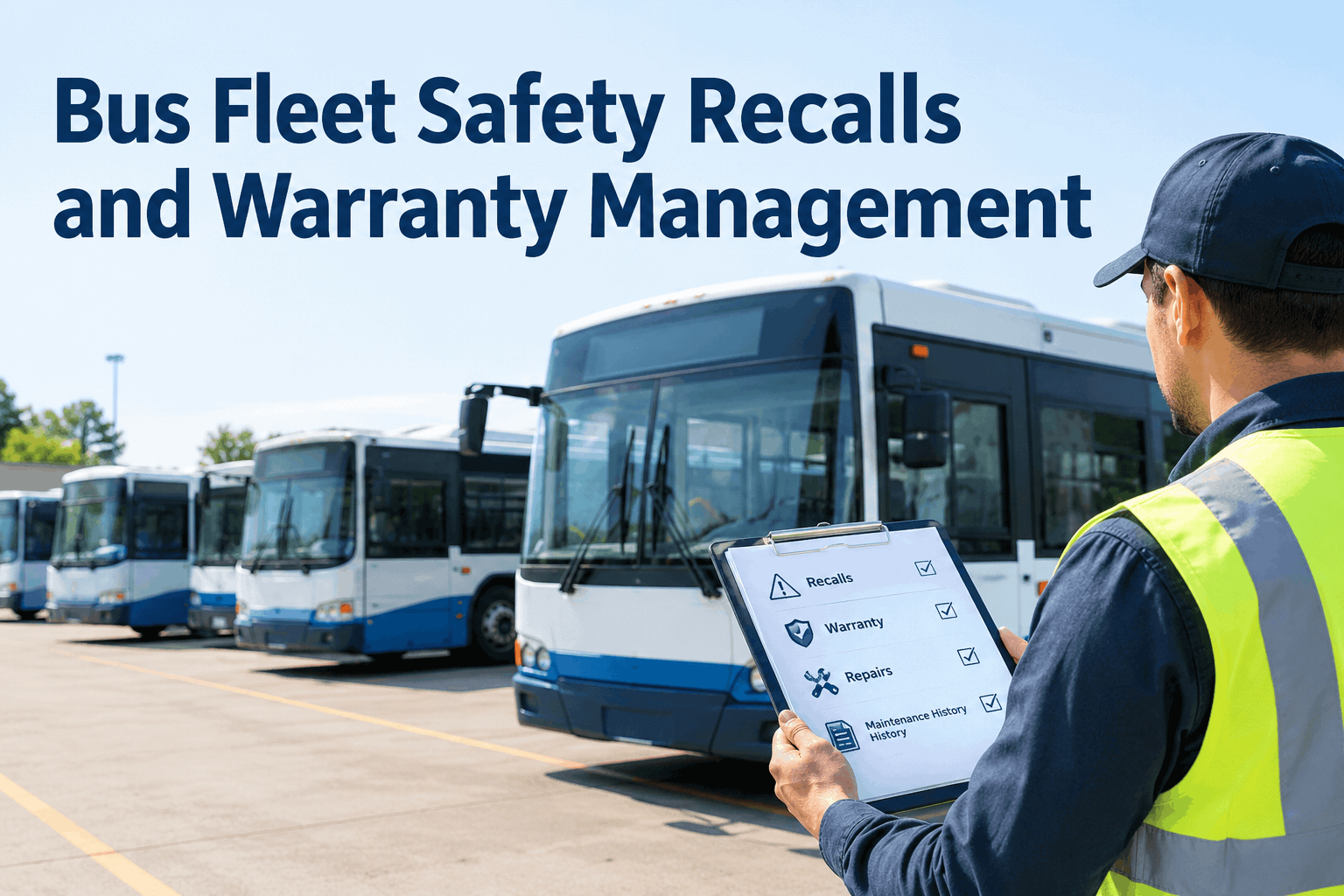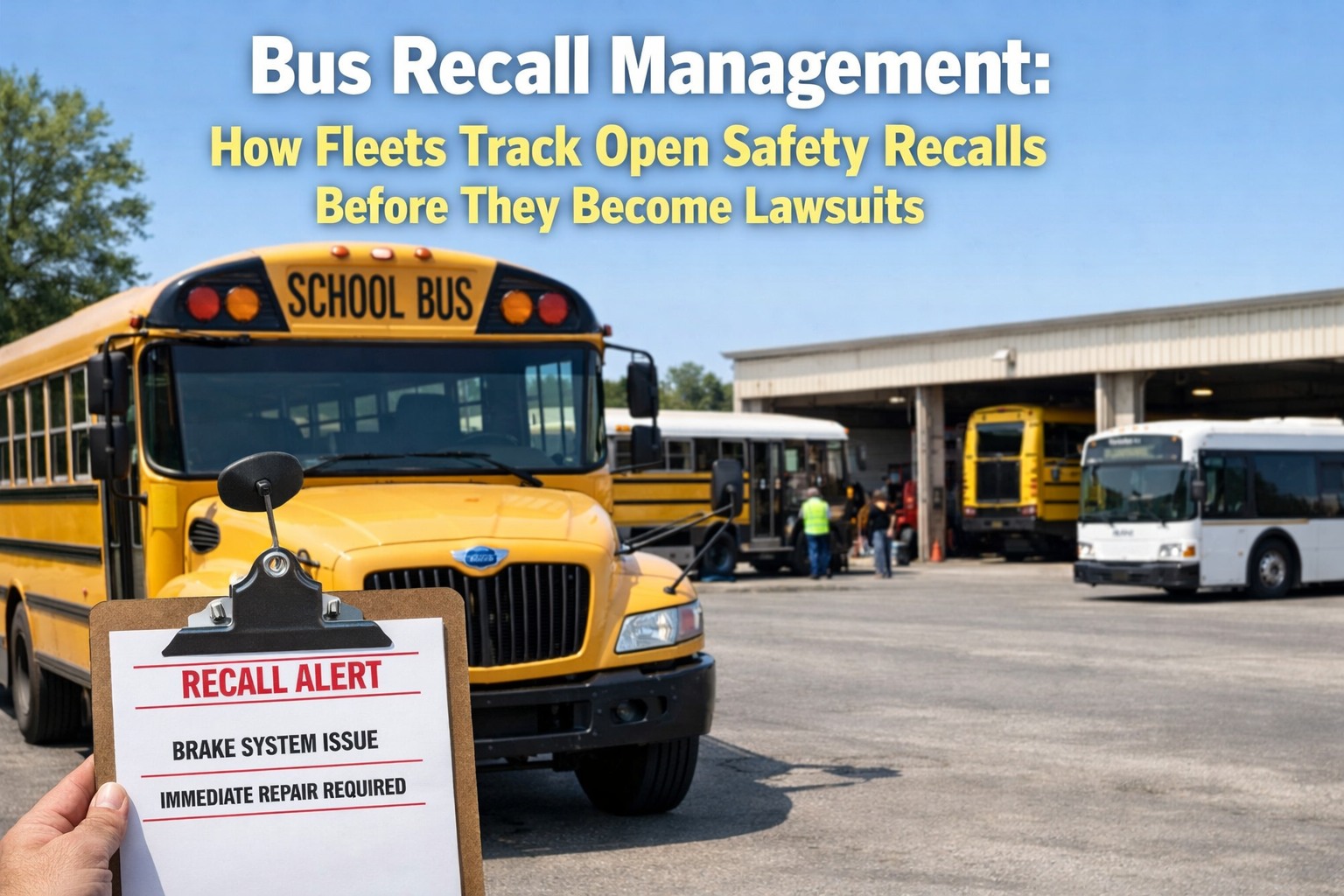
That steering shimmy your driver reported last month? It could be a symptom of an active safety recall you don't even know about. Over 29 million vehicles were recalled in 2024 alone—and about one-third of all recalled vehicles never get repaired. For bus fleets, an unresolved brake, steering, or fire safety recall isn't just a maintenance issue—it's a lawsuit waiting to happen. This guide shows you how recalls work, what your legal exposure is, and how to build a bulletproof recall tracking system.
How Bus Recalls Work
When NHTSA or a manufacturer identifies a safety defect, the recall process begins. Understanding this timeline is critical for fleet compliance.
The problem? Owner notifications go to the registered address—which may be outdated for fleet vehicles. Notices get lost in mail rooms. And there's no legal mechanism forcing you to act. But that doesn't mean you're protected. Sign up for BusCMMS to automate VIN-level recall monitoring.
Your Legal Exposure
Operating a bus with a known, unrepaired safety recall creates catastrophic liability. Here's what you're risking.
The legal standard is clear: you have a duty to operate safe vehicles. Ignorance isn't a defense when recalls are publicly searchable. Book a demo to see how automated recall alerts protect your fleet.
Expert Review: Why Fleets Miss Recalls
Even well-managed fleets miss recalls. The system wasn't designed for commercial operations.
Your buses likely fall into the older categories where recall completion rates are lowest. That's exactly where automated monitoring matters most. Sign up now and close the recall gap.
Building Your Recall Management System
A complete recall management workflow connects monitoring, documentation, and repair tracking into one auditable system.
Documentation is your legal shield. If you can prove you acted promptly upon learning of a recall, you've demonstrated due diligence. Book a demo to see complete recall workflow management.
Frequently Asked Questions
How do I check if my buses have open recalls?
You can manually check each vehicle's VIN at NHTSA.gov/recalls. However, this requires individual lookups for every vehicle and must be repeated regularly since new recalls are issued constantly. A CMMS with automated recall monitoring checks your entire fleet against NHTSA databases continuously and alerts you when any vehicle is affected.
What happens if I operate a bus with an unrepaired recall?
There's no legal mechanism forcing immediate repair, but you assume significant liability. If an accident occurs related to the recalled defect, you face negligence claims, potential punitive damages, and insurance complications. Courts have held that operating a vehicle with a known defect demonstrates failure to maintain safe vehicles—creating direct liability for injuries.
Are recall repairs always free?
Yes. Manufacturers are required to provide free repairs for safety recalls. If you already paid for a repair that was later covered by a recall, you can request reimbursement from the manufacturer within certain timeframes. Recall remedies may include repair, replacement, refund, or in rare cases, vehicle repurchase.
How long do I have to complete a recall repair?
There's no legal deadline for owners to complete recall repairs. However, operating a vehicle with a known safety defect creates ongoing liability exposure. Best practice is to schedule repairs as soon as remedy parts are available. For critical "Do Not Drive" recalls, vehicles should be immediately removed from service until repaired.
What documentation should I keep for recall compliance?
Maintain records of: when you received recall notification, date repair was scheduled, completion date with repair details, parts replaced, and technician performing the work. A CMMS automatically creates this audit trail. If litigation arises, this documentation proves you acted with due diligence upon learning of the recall—your strongest legal defense.