In today's rapidly evolving transit landscape, bus safety and compliance have become more critical than ever before. With federal regulations tightening, technology advancing, and public expectations rising, manufacturing professionals in the transit industry must navigate an increasingly complex web of compliance requirements while maintaining the highest safety standards. Whether you're managing school bus fleets, public transit systems, or specialized transportation services, understanding the latest compliance frameworks and safety protocols is essential for operational success and regulatory adherence.
The integration of advanced fleet software, CMMS systems, and telematics tools has transformed how manufacturers and operators approach bus safety and compliance. Modern fleet management solutions now provide real-time insights into vehicle diagnostics, driver management, and compliance tracking, enabling proactive safety measures that protect passengers while ensuring regulatory requirements are met consistently.
Regulatory Compliance Framework: Navigating Federal and State Requirements
The regulatory landscape for bus operations encompasses multiple federal agencies and state-specific requirements that impact every aspect of fleet management. The Federal Motor Carrier Safety Administration (FMCSA) sets comprehensive standards for commercial vehicle operations, while the Environmental Protection Agency (EPA) drives emission compliance requirements that directly affect vehicle specifications and maintenance protocols.
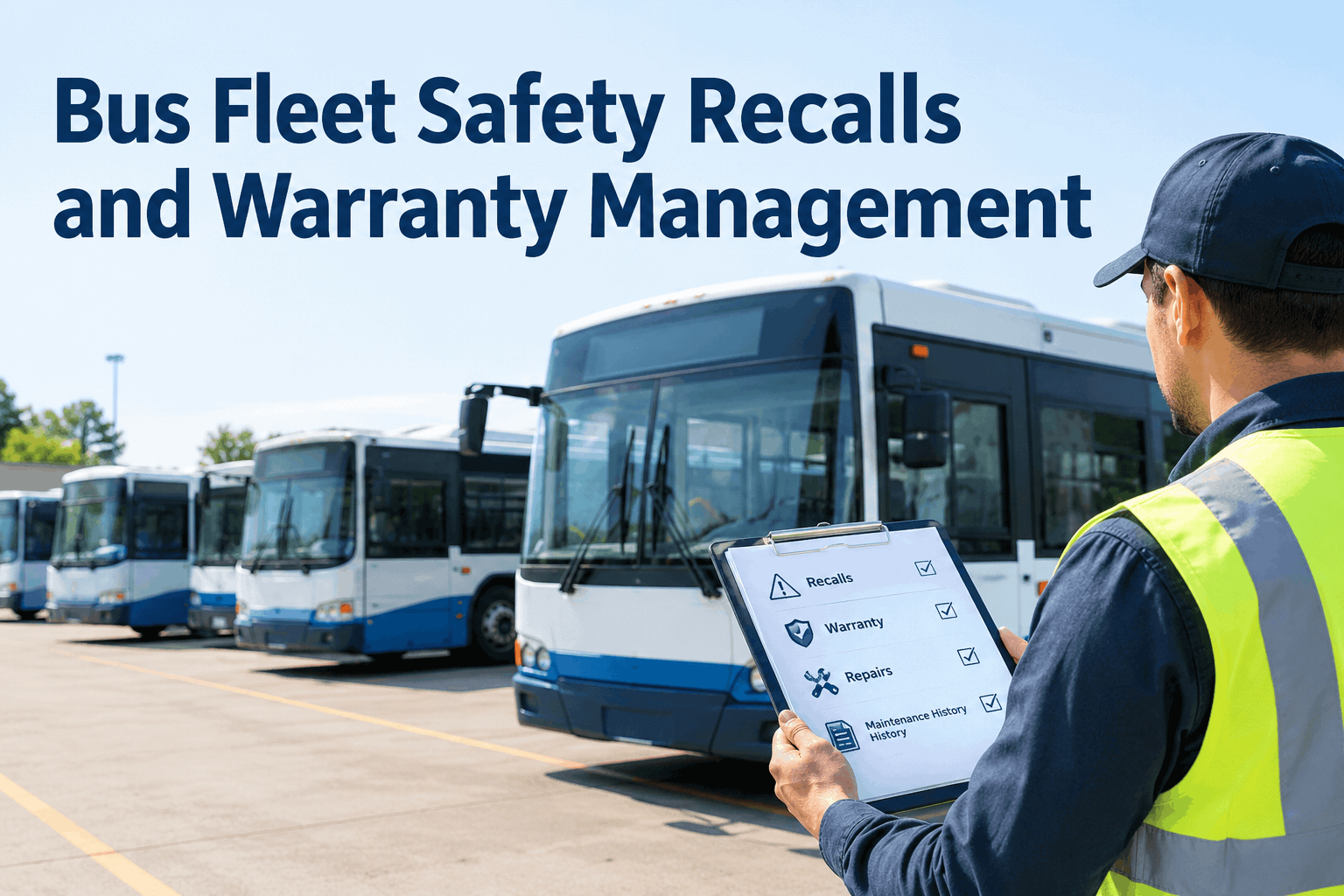
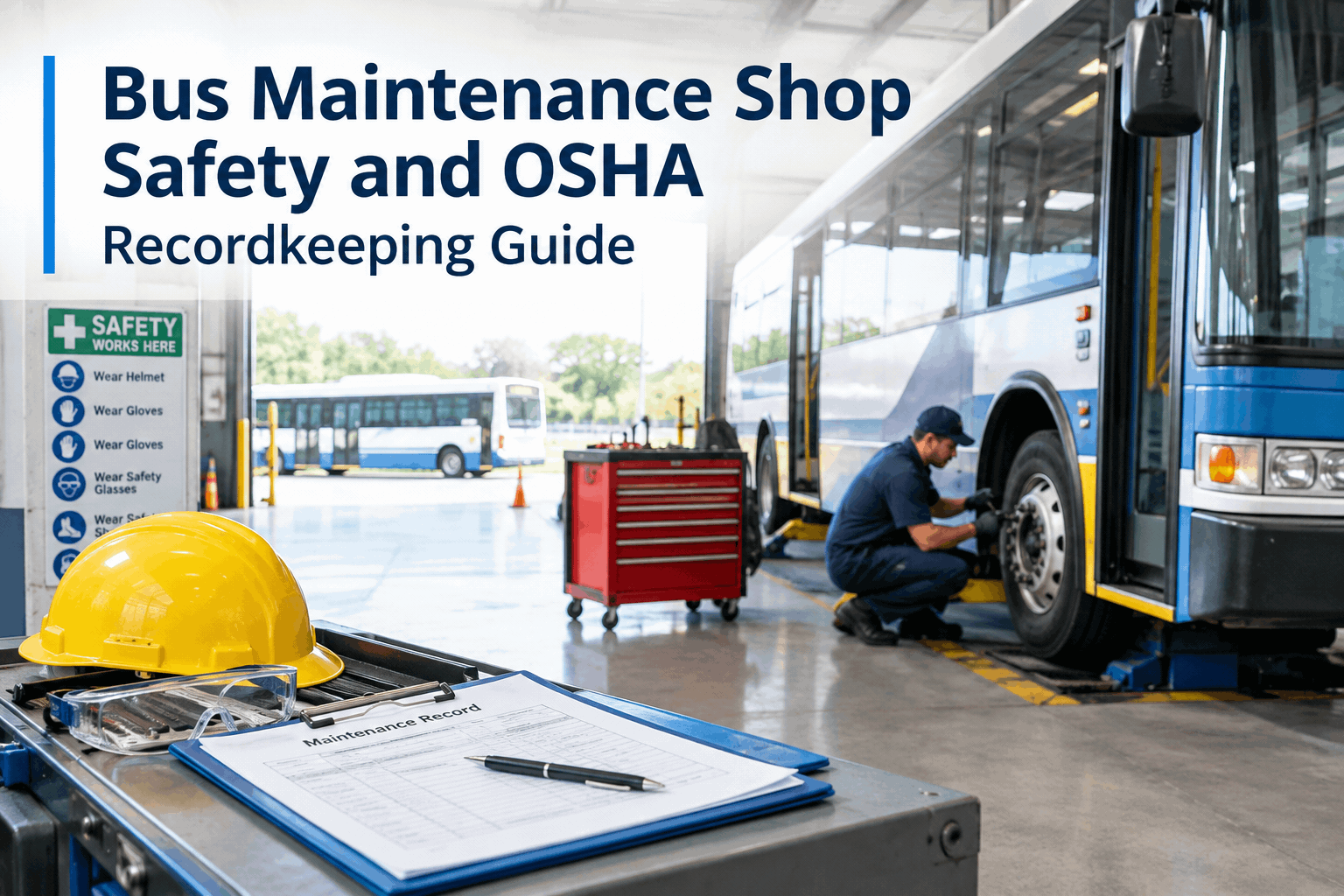
Key compliance areas include driver qualification standards, vehicle inspection protocols, maintenance record keeping, and environmental emission standards. Modern fleet software solutions help automate compliance tracking across these diverse requirements, reducing the risk of violations while streamlining administrative processes.
For school bus operations specifically, additional layers of safety regulations apply, including child safety standards, route safety protocols, and specialized driver training requirements. Manufacturing professionals working in this sector must ensure their vehicles and systems support comprehensive compliance tracking that covers federal Department of Transportation requirements alongside state-specific school transportation regulations.
Advanced Vehicle Diagnostics and Predictive Maintenance for Safety
Modern bus safety depends heavily on sophisticated vehicle diagnostics systems that monitor critical components in real-time. Advanced telematics tools now provide continuous monitoring of engine performance, brake systems, transmission health, and other safety-critical components, enabling maintenance teams to address potential issues before they become safety hazards.
Predictive maintenance strategies powered by fleet tracking technology and data analytics have revolutionized how manufacturers and operators approach bus safety. By analyzing patterns in vehicle performance data, maintenance software can predict component failures with remarkable accuracy, allowing for proactive repairs that prevent safety incidents and compliance violations.
Safety Innovation: Leading transit operations now use AI-powered diagnostic systems that can predict brake wear, tire degradation, and engine problems weeks in advance. This predictive approach has reduced safety-related breakdowns by up to 70% while ensuring continuous compliance with inspection requirements.
Integration of CMMS systems with vehicle diagnostics creates a comprehensive maintenance ecosystem that tracks every component, schedules preventive maintenance, and maintains detailed compliance records. This integration is particularly valuable for manufacturing professionals who need to demonstrate regulatory compliance while optimizing operational efficiency and safety performance.
Driver Management and Training Compliance Systems
Driver safety and compliance represent one of the most critical aspects of bus operations, with regulations covering everything from initial qualification to ongoing training requirements. Modern driver management systems integrate with fleet software to provide comprehensive tracking of driver certifications, training records, and performance metrics.
Advanced telematics tools now monitor driver behavior in real-time, tracking metrics such as harsh braking, rapid acceleration, speed compliance, and route adherence. This data not only supports safety improvements but also provides documented evidence of compliance with safety protocols for regulatory reporting purposes.
For transit operations, driver management extends beyond basic qualification to include specialized training for passenger safety, emergency procedures, and accessibility compliance. Fleet tracking systems help ensure drivers complete required training modules, maintain current certifications, and demonstrate ongoing competency in safety protocols.
Environmental Compliance and Emission Standards
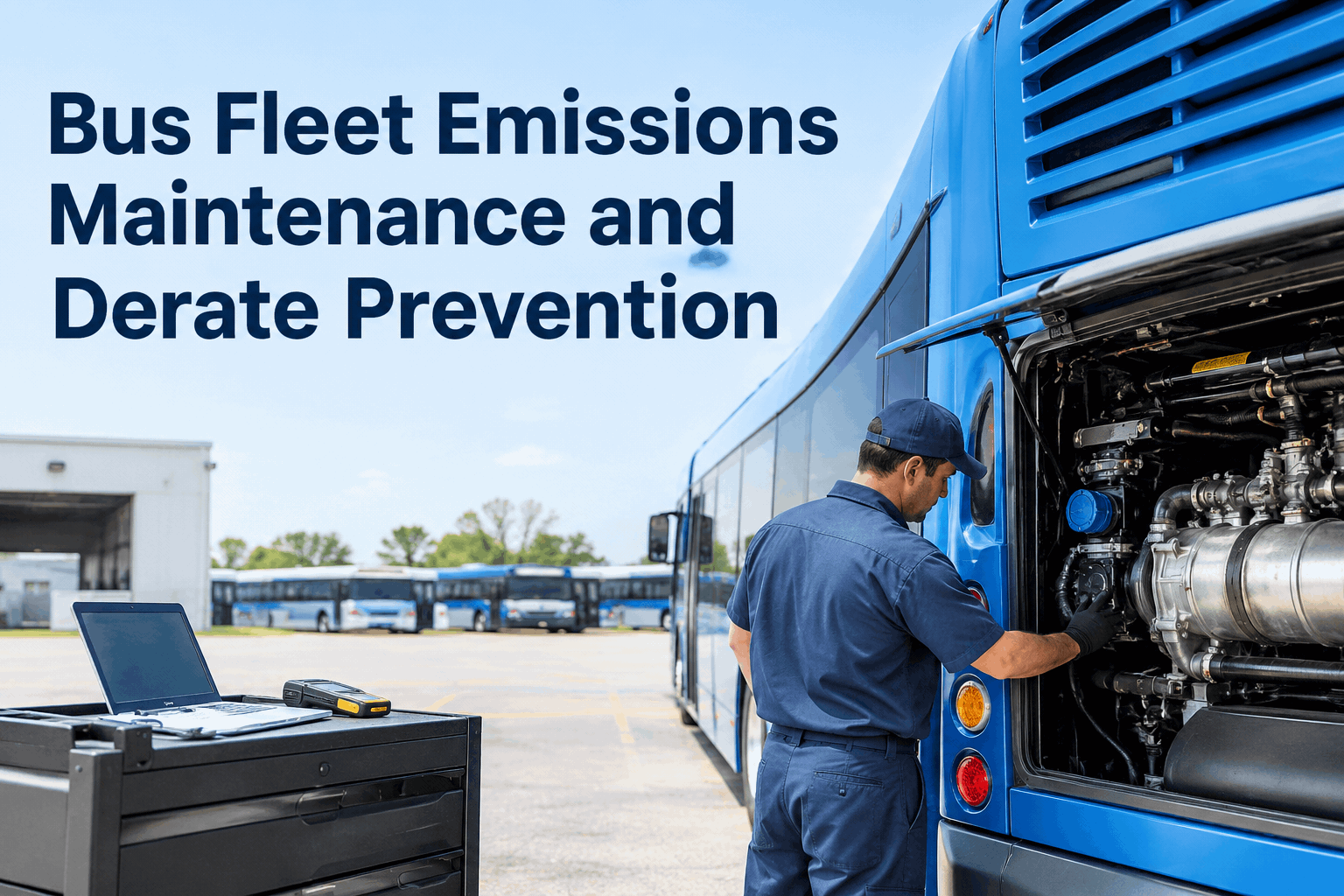
Environmental compliance has become increasingly complex as federal and state agencies implement stricter emission standards for public transport and school bus operations. The transition to zero-emission vehicles introduces new compliance requirements while traditional diesel and natural gas fleets must meet evolving emission standards.
Fleet software solutions now include specialized modules for tracking emission compliance, managing alternative fuel reporting requirements, and monitoring environmental performance metrics. These tools are essential for manufacturing professionals working with transit agencies that must demonstrate compliance with federal Low- and No-Emission Vehicle grant requirements.
Route optimization technology plays a crucial role in environmental compliance by reducing unnecessary mileage, optimizing fuel efficiency, and minimizing emissions per passenger mile. Advanced fleet management systems can model the environmental impact of route changes, helping operators make data-driven decisions that support both operational efficiency and environmental compliance goals.
Technology Integration for Comprehensive Safety Management
The most effective bus safety and compliance programs leverage integrated technology platforms that connect vehicle diagnostics, driver management, maintenance software, and compliance tracking into unified systems. This integration enables manufacturing professionals to provide comprehensive solutions that address all aspects of safety and compliance management.
Modern CMMS systems serve as the central hub for safety and compliance management, integrating data from telematics tools, maintenance records, driver performance metrics, and regulatory requirements. This comprehensive approach ensures that safety decisions are based on complete information while compliance reporting becomes an automated process rather than a manual administrative burden.
Successful integration requires careful attention to data flow between systems, user training for new technologies, and ongoing support for system optimization. Manufacturing professionals who understand these integration challenges can provide more effective solutions that deliver measurable improvements in safety performance and compliance outcomes.
Ready to transform your bus fleet safety and compliance management with cutting-edge technology solutions?
Getting StartedBook a Demo
Bus safety and compliance management continues to evolve as technology advances and regulations become more sophisticated. Manufacturing professionals who embrace integrated solutions for vehicle diagnostics, driver management, and compliance tracking position themselves at the forefront of industry innovation.
The future of bus safety lies in proactive, data-driven approaches that prevent incidents rather than simply responding to them. By leveraging advanced fleet software, CMMS systems, and telematics tools, transit operations can achieve unprecedented levels of safety performance while maintaining full regulatory compliance.
Frequently Asked Questions
Q: What are the most critical compliance requirements for bus fleet management?
A: Key compliance areas include FMCSA driver qualification standards, vehicle inspection protocols (pre-trip, periodic, and annual), maintenance record keeping, environmental emission standards, and specialized requirements for school bus operations. Modern fleet software helps automate tracking across these diverse requirements while maintaining comprehensive audit trails.
Q: How do CMMS systems improve bus safety and compliance management?
A: CMMS systems centralize all safety and compliance data, automate maintenance scheduling based on regulatory requirements, track driver certifications and training, monitor vehicle diagnostics in real-time, and generate compliance reports automatically. This integration reduces manual errors and ensures consistent adherence to safety protocols.
Q: What role do telematics tools play in bus fleet compliance?
A: Telematics tools provide real-time monitoring of vehicle performance, driver behavior, route compliance, and safety metrics. They enable predictive maintenance, automated inspection alerts, driver performance tracking, and comprehensive data collection for regulatory reporting. This technology transforms compliance from reactive to proactive management.
Q: How can fleet operators ensure compliance with environmental regulations?
A: Environmental compliance requires tracking emission standards, managing alternative fuel reporting, monitoring fuel efficiency metrics, and documenting environmental performance. Advanced fleet software includes specialized modules for environmental compliance tracking, route optimization for emission reduction, and automated reporting for federal grant programs.
Q: What are the benefits of integrated safety management systems for bus operations?
A: Integrated systems provide comprehensive visibility across all safety and compliance activities, reduce administrative burden through automation, improve decision-making with complete data, enable proactive safety management, and ensure consistent compliance across diverse regulatory requirements. This approach typically results in 60-85% improvements in safety metrics and compliance performance.