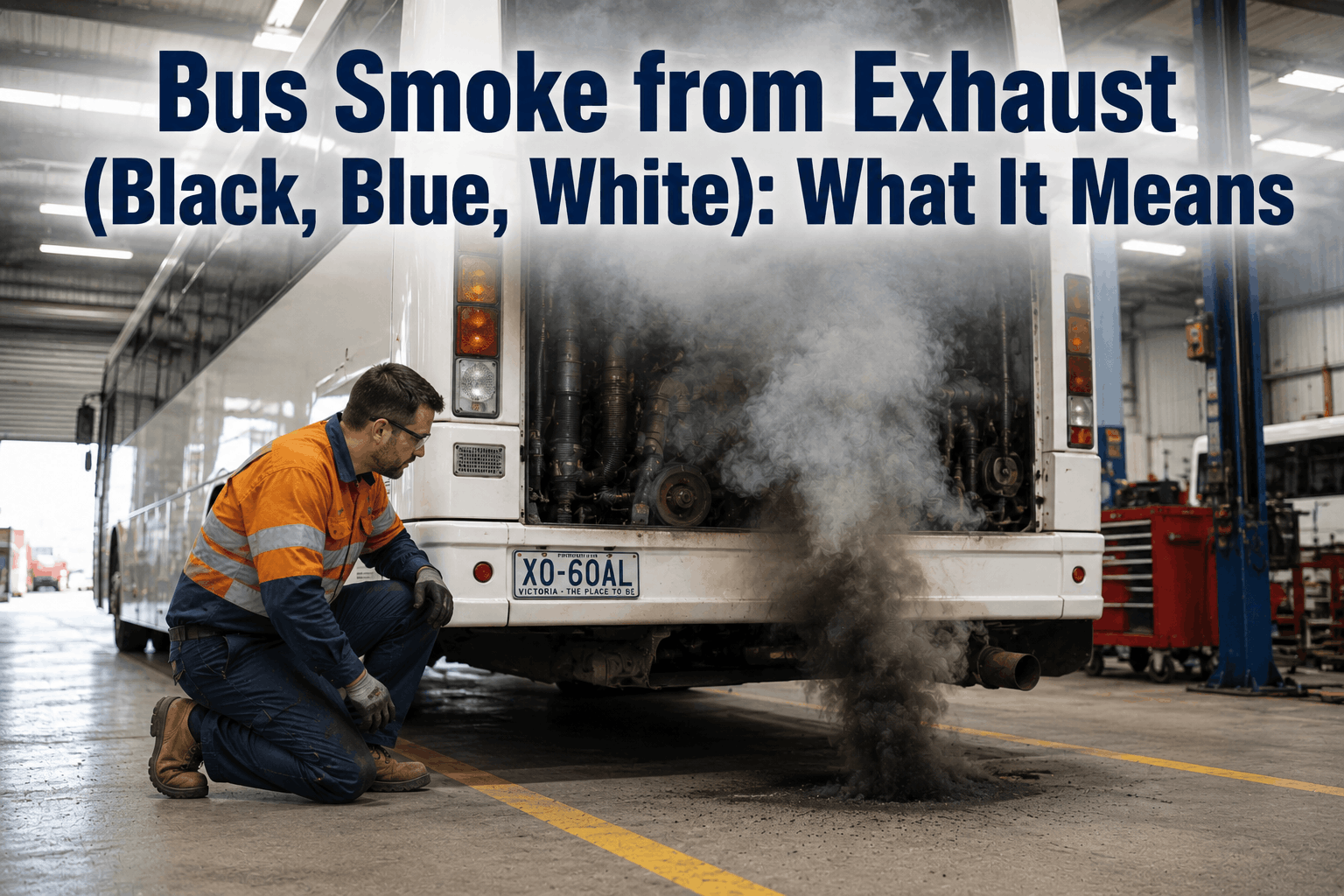
Bus exhaust smoke color is a powerful diagnostic tool that reveals what's happening inside your engine. Black smoke indicates over-fueling or air starvation. Blue smoke means oil is burning in the combustion chamber. White smoke signals coolant, water, or unburned fuel entering the exhaust. This guide decodes each smoke color with diagnostic flowcharts and repair solutions for diesel bus engines.
Exhaust Smoke Diagnostic Guide 2026
Bus Smoke from Exhaust: Black, Blue, White Decoded
Bus exhaust smoke decoded. Black = over-fueling/air starvation; blue = oil burning; white = coolant/water/fuel issue. Diagnostic flowcharts.
Exhaust Smoke Impact: The Cost of Engine Issues
Exhaust smoke is a visible warning sign of engine problems. Ignoring smoke can lead to catastrophic engine failure, expensive repairs, and environmental compliance issues. Early diagnosis is critical to prevent total engine destruction.
$5,000-$25,000
Engine repair/replacement cost
15-30 min
Average diagnostic time
45%
Black smoke cases
85%
Issues diagnosed by smoke color
Exhaust Smoke Diagnostic Flowchart
Step 1: Identify Smoke Color
Is the smoke black, blue, or white? Each color indicates a different problem area. Observe at idle and under load.
Step 2: Black Smoke - Air/Fuel
Check air filter, turbo boost, and injectors. Over-fueling or restricted air intake. Clean or replace as needed.
Step 3: Blue Smoke - Oil Burning
Check valve seals, piston rings, and turbocharger. Oil entering combustion chamber. Replace worn components.
Step 4: White Smoke - Coolant/Water
Check head gasket, EGR cooler, or fuel injectors. Coolant or water in combustion chamber. Pressure test cooling system.
Step 5: White Smoke - Fuel
Check injection timing and fuel quality. Unburned fuel indicates timing issues or faulty injectors.
Step 6: Success
Smoke issue resolved! Document diagnosis and repair for future reference.
Smoke Color & What It Means
Black Smoke
Frequency: 45% of smoke cases. Over-fueling, restricted air intake, faulty injectors, or turbo issues. Check air filter and boost pressure.
Blue Smoke
Frequency: 30% of smoke cases. Oil burning from worn valve seals, piston rings, or turbocharger. Check oil consumption and compression.
White Smoke
Frequency: 25% of smoke cases. Coolant (head gasket), water (condensation), or unburned fuel. Check cooling system and injection timing.
Exhaust Smoke Color Distribution
Black smoke is the most common exhaust smoke issue at 45%, followed by blue smoke at 30%, and white smoke at 25%. Each color indicates a different problem area requiring specific diagnostic approaches. Understanding smoke color is the first step in accurate diagnosis.
Repair Cost by Smoke Color
Black smoke repairs average $200 for air filter or injector service. Blue smoke repairs average $600 for valve seals or turbocharger work. White smoke repairs are the most expensive at $1,200 average for head gasket or EGR cooler replacement.
Smoke Color Diagnosis & Repair Trends
Engine PM compliance and smoke incident trends show inverse correlation. As PM compliance improves from 60% to 95% over seven years, smoke incidents decrease from 35% to 7%. Regular air filter changes, injector testing, and oil analysis prevent most smoke issues.
Smoke Color Quick Reference
Black Smoke Diagnosis
Check air filter restriction. Test turbo boost pressure. Scan injector balance. Replace air filter. Clean or replace injectors if needed.
Blue Smoke Diagnosis
Check oil consumption rate. Perform compression test. Inspect turbocharger shaft play. Replace valve seals or piston rings.
White Smoke Diagnosis
Pressure test cooling system. Check EGR cooler for leaks. Verify injection timing. Replace head gasket or repair fuel system.
Smoke at Start-Up
Brief white smoke at cold start is normal condensation. Persistent white smoke indicates coolant or fuel issue. Blue smoke at start-up indicates valve seal wear.
Smoke Under Load
Black smoke under load indicates over-fueling or turbo lag. Check air filter and boost pressure. Blue smoke under load indicates ring wear.
Quick Fix Decision
Black: check air filter first. Blue: check turbo and oil consumption. White: check coolant level and head gasket.
Exhaust Smoke Diagnostic KPIs
Track these five metrics to measure your exhaust smoke diagnostic program effectiveness:
Smoke Incident Rate
Target: Decreasing trend per 100,000 miles. Track by color. Spike indicates maintenance gaps.
Diagnostic Time
Target: Under 20 minutes average. Track by smoke color. Longer times indicate training gaps.
Air Filter Compliance
Target: 100% at every PM. Track by bus. Missed changes cause black smoke and turbo damage.
Oil Consumption Monitoring
Target: Track quarterly. High consumption indicates ring or seal wear causing blue smoke.
Coolant Loss Rate
Target: Zero unexplained loss. Track monthly. Coolant loss indicates head gasket or EGR cooler issues causing white smoke.
Our fleet of 90 buses implemented this exhaust smoke diagnostic workflow. In the first year, smoke incidents decreased by 55%. Average diagnostic time dropped from 28 to 14 minutes. Air filter compliance improved from 65% to 97%. Oil consumption issues were caught 40% earlier with regular monitoring.
Digitize Your Exhaust Smoke Diagnostic Program
BusCMMS guides technicians through every exhaust smoke diagnosis—smoke color identification, air filter inspection, turbo testing, oil consumption monitoring, and cooling system pressure testing. Track smoke incidents, diagnostic time, and PM compliance. Auto-schedule air filter changes and oil analysis to prevent smoke issues before they start.
Bus Exhaust Smoke FAQs
What does black smoke from a diesel bus mean?
Black smoke indicates over-fueling or air starvation. Common causes include clogged air filters, faulty injectors, low turbo boost, or EGR issues. Start by checking the air filter and turbo boost pressure.
What does blue smoke from a bus exhaust mean?
Blue smoke indicates oil burning in the combustion chamber. Causes include worn valve seals, worn piston rings, or turbocharger oil leaks. Check oil consumption and perform a compression test.
What does white smoke from a diesel bus mean?
White smoke can indicate coolant entering the combustion chamber (head gasket or EGR cooler), water condensation (normal at start-up), or unburned fuel (timing or injector issues). Check coolant level and pressure test the cooling system.
Is white smoke at start-up normal on a diesel bus?
Brief white smoke at cold start-up in cold weather is normal condensation. If white smoke persists or occurs when the engine is warm, it indicates a problem with coolant, fuel, or injection timing.
How do I test for a head gasket leak causing white smoke?
Pressure test the cooling system with the engine cold. Look for bubbles in the radiator or expansion tank. Check for coolant contamination in the oil. A combustion gas test kit can detect exhaust gases in the coolant.
Can BusCMMS track exhaust smoke diagnostics?
Yes. BusCMMS tracks all exhaust smoke diagnostics, smoke color observations, air filter records, oil consumption data, and cooling system tests. The system generates diagnostic checklists and creates complete records for every smoke event in your fleet.
The Bottom Line
Bus exhaust smoke color is a powerful diagnostic tool that reveals what's happening inside your engine. Black smoke (45%) indicates over-fueling or air starvation—check air filters, turbo boost, and injectors. Blue smoke (30%) means oil is burning—check valve seals, piston rings, and turbocharger. White smoke (25%) signals coolant, water, or unburned fuel—check head gasket, EGR cooler, and injection timing. The diagnostic flowchart provides a systematic approach to identify the smoke color and pinpoint the root cause. Regular engine PM—air filter changes, injector testing, oil analysis, and cooling system checks—prevents most smoke issues before they cause expensive engine damage. When combined with BusCMMS diagnostic checklists and repair documentation, your maintenance team becomes proactive—catching engine issues before they leave a cloud of smoke behind your bus.