A bus that pulls to one side is not just annoying—it's a safety concern that causes driver fatigue, uneven tire wear, and reduced fuel economy. Whether the pull is to the left or right, the cause is often straightforward to diagnose. This guide ranks the most common causes—tire pressure mismatch, alignment issues, brake drag, suspension wear, and frame damage—with a diagnostic decision tree to help you identify and fix the problem quickly.
Steering Pull Diagnostic Guide 2026
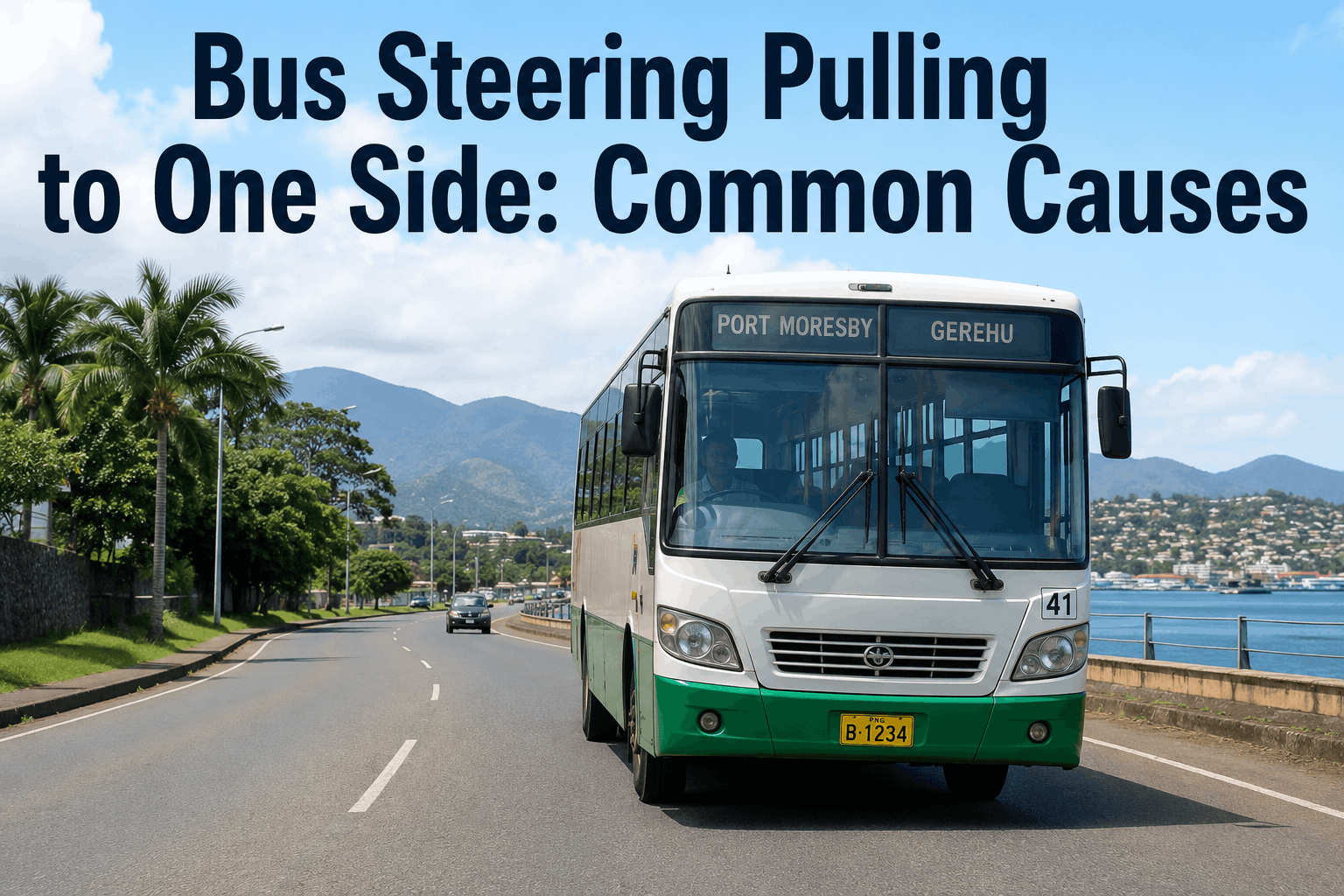
Bus Steering Pulling to One Side: Common Causes
Bus pulling to one side? Causes ranked: tire pressure mismatch, alignment, brake drag, suspension wear, frame damage. Diagnostic decision tree included.
Steering Pull Impact: The Cost of Poor Handling
A bus that pulls to one side causes driver fatigue, uneven tire wear, and reduced fuel economy. Ignoring a steering pull can lead to premature tire replacement, alignment damage, and unsafe driving conditions.
$800-$2,000
Premature tire replacement
15-30 min
Average diagnostic time
5-10%
Fuel economy penalty from pull
55%
Issues related to tire pressure
Steering Pull Diagnostic Decision Tree
Step 1: Check Tire Pressures
Check all tire pressures. Low pressure on one side causes pull to that side. Inflate to proper spec and retest.
Step 2: Check Tire Wear
Inspect for uneven wear patterns. Feathering or cupping indicates alignment or suspension issues.
Step 3: Check Brake Drag
Check for dragging brake on one side. Warm wheel indicates stuck caliper or adjustment issue.
Step 4: Check Alignment
Inspect tie rod ends and ball joints. Misalignment causes pull and uneven tire wear.
Step 5: Check Suspension
Inspect springs, bushings, and shocks. Worn components cause steering pull.
Step 6: Check Frame
Inspect frame for damage or misalignment. Frame damage requires professional repair.
Step 7: Success
Steering pull resolved! Document diagnosis and repair for future reference.
Top 5 Causes of Bus Steering Pull
1. Tire Pressure Mismatch
Frequency: 35% of pull cases. Low pressure on one side causes pull to that side. Check and adjust all tire pressures.
2. Alignment Issues
Frequency: 25% of pull cases. Misalignment from curb hits or worn components. Check tie rod ends and set alignment.
3. Brake Drag
Frequency: 18% of pull cases. Sticking caliper or brake adjustment. Check for heat on wheels. Repair or replace brake components.
4. Suspension Wear
Frequency: 15% of pull cases. Worn bushings, ball joints, or springs. Inspect and replace worn suspension parts.
5. Frame Damage
Frequency: 7% of pull cases. Bent or misaligned frame from accident or curb impact. Requires professional frame repair.
Steering Pull Causes Distribution
Tire pressure mismatch is the #1 cause at 35%, followed by alignment issues at 25%. Brake drag accounts for 18%. Together, these three causes represent 78% of all steering pull failures. Suspension wear and frame damage make up the remaining 22%.
Repair Cost by Cause
Tire pressure adjustment costs $0 (free). Brake repair averages $120. Alignment averages $200. Suspension repair averages $400. Frame repair is the most expensive at $1,500 average.
Steering Pull & PM Trends
Tire and alignment PM compliance and steering pull trends show inverse correlation. As PM compliance improves from 60% to 95% over seven years, steering pull incidents decrease from 35% to 6%. Regular tire pressure checks, rotations, and alignments prevent most steering pull issues.
Steering Pull Quick Reference
Tire Pressure Check
Check all tire pressures cold. Inflate to spec. Low pressure on one side causes pull to that side. Most common and easiest fix.
Tire Wear Inspection
Look for feathering, cupping, or uneven wear. Outside wear indicates alignment issue. Center wear indicates over-inflation.
Brake Drag Test
After driving, check wheel temperatures. A hot wheel indicates brake drag. Check caliper and brake adjustment.
Alignment Check
Inspect tie rod ends and ball joints for wear. Check caster, camber, and toe settings. Align to manufacturer spec.
Suspension Inspection
Check bushings, ball joints, and springs. Worn parts cause steering pull. Replace worn components.
Quick Fix Decision
Check tire pressures first (free). If pull persists, check brakes. Then alignment. Then suspension. Frame damage is rare but possible.
Steering Diagnostic KPIs
Track these five metrics to measure your steering diagnostic program effectiveness:
Steering Pull Incidents
Target: Decreasing trend per 100,000 miles. Track monthly. Spike indicates PM gaps.
Diagnostic Time
Target: Under 20 minutes average. Track by cause. Longer times indicate training gaps.
Tire Pressure Compliance
Target: 100% checked at every PM. Track by bus. Missed checks cause tire wear and fuel waste.
Alignment Interval
Target: Align every 50,000 miles or as needed. Track by bus. Regular alignment prevents tire wear.
Uneven Tire Wear Rate
Target: Decreasing trend. Track monthly. High rate indicates alignment or suspension issues.
Our fleet of 90 buses implemented this steering pull diagnostic workflow. In the first year, steering pull incidents decreased by 58%. Average diagnostic time dropped from 28 to 14 minutes. Tire pressure compliance improved from 62% to 97%. Uneven tire wear decreased by 45%, saving $15,000 in premature tire replacement.
Digitize Your Steering Diagnostic Program
BusCMMS guides technicians through every steering pull diagnosis—tire pressure verification, tire wear inspection, brake drag testing, alignment checking, and suspension inspection. Track steering pull incidents, diagnostic time, and PM compliance. Auto-schedule tire rotations and alignments to prevent steering pull before it starts.
Bus Steering Pull FAQs
What causes a bus to pull to one side?
The most common causes are tire pressure mismatch (low pressure on one side), alignment issues, brake drag on one wheel, worn suspension components, or frame damage. Start by checking tire pressures—it's the most common and easiest fix.
How do I check for a brake drag causing a pull?
After driving the bus for a few miles, carefully check the temperature of each wheel with an infrared thermometer or by touch (carefully). A wheel that is significantly hotter than the others indicates brake drag on that side. Check the caliper and brake adjustment.
How often should bus alignment be checked?
Bus alignment should be checked at every PM service and aligned at least every 50,000 miles or whenever new tires are installed. Align immediately if you notice uneven tire wear or steering pull.
Can tire pressure cause a steering pull?
Yes. A tire with lower pressure on one side creates more rolling resistance on that side, causing the bus to pull toward the lower-pressure tire. Check all tire pressures cold and inflate to manufacturer specification.
How do I know if the steering pull is frame damage?
Frame damage is suspected when all other causes have been ruled out and the vehicle has been in an accident or hit a large curb. A frame shop can measure the frame for misalignment. Frame repair is expensive and requires professional equipment.
Can BusCMMS track steering diagnostics?
Yes. BusCMMS tracks all steering diagnostics, tire pressure readings, alignment records, brake inspections, and suspension repairs. The system generates diagnostic checklists and creates complete records for every steering issue in your fleet.
The Bottom Line
Bus steering pulling to one side is a common but easily diagnosable issue that affects safety, tire life, and fuel economy. Understanding the top 5 causes—tire pressure mismatch (35%), alignment issues (25%), brake drag (18%), suspension wear (15%), and frame damage (7%)—helps technicians diagnose problems fast and make smart repair decisions. The diagnostic decision tree provides a systematic approach: check tire pressures first, then tire wear, brake drag, alignment, suspension, and finally frame damage. Most diagnoses can be completed in under 20 minutes, and many fixes are simple and low-cost. Regular tire pressure checks, tire rotations, and alignments prevent most steering pull issues before they affect drivers and passengers. When combined with BusCMMS diagnostic checklists and repair documentation, your maintenance team becomes proactive—catching steering issues before they cause driver fatigue, tire wear, or safety concerns.