Steering system failures are among the most critical safety risks in bus fleet operations. A steering failure at highway speed is catastrophic—loss of vehicle control, potential rollover, and serious passenger injury. Unlike brake or tire failures that often provide warning signs, steering failures can be sudden and without warning. FMCSA roadside inspection data consistently shows steering and suspension violations among the top out-of-service categories. This comprehensive bus steering system inspection checklist covers steering wheel play measurement, tie rod inspection, drag link and pitman arm condition, idler arm wear, ball joint integrity, power steering fluid level and condition, and the specific out-of-service triggers that inspectors look for. Use it as your standard procedure for every steering system PM and annual DOT inspection.
Steering System Guide 2026
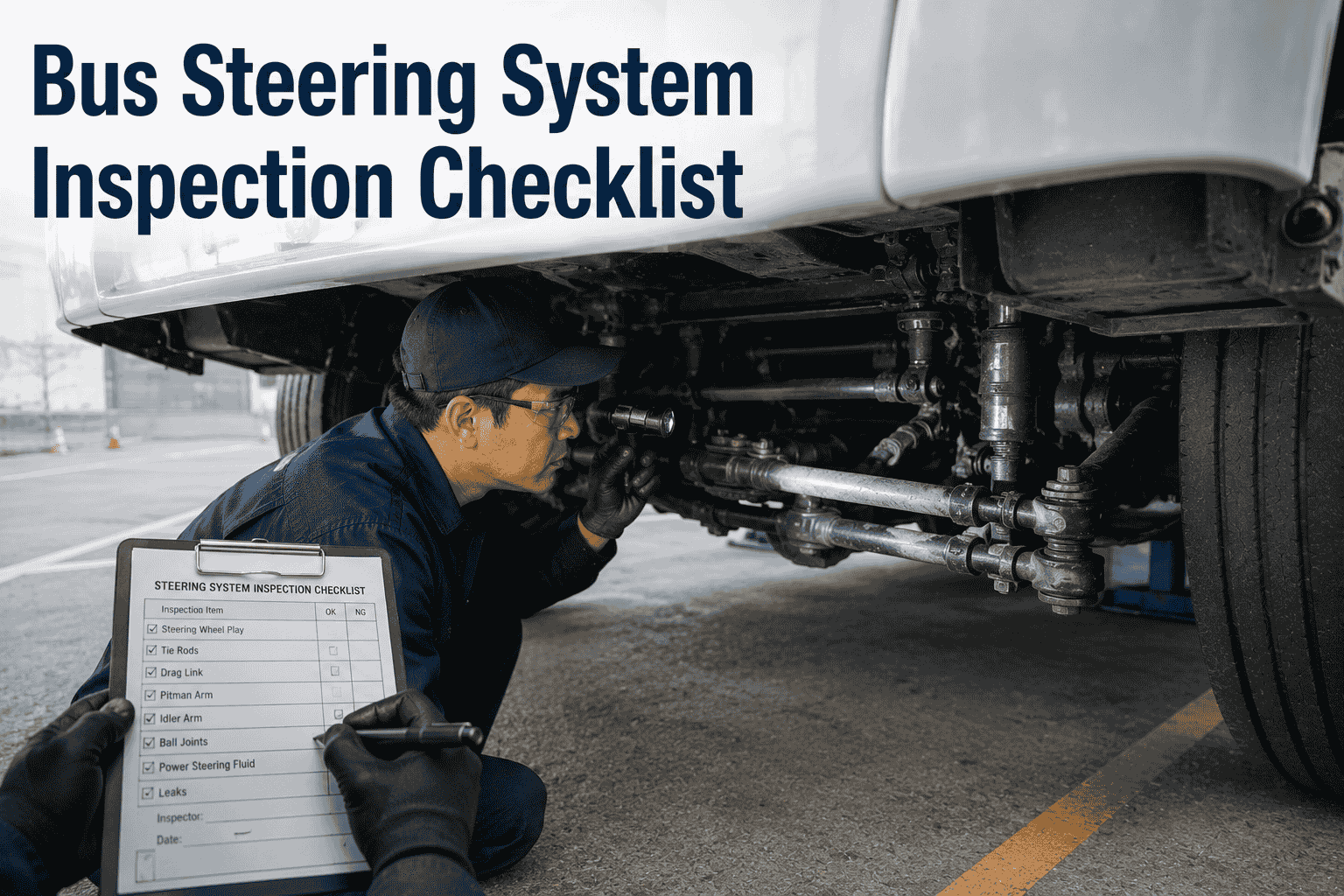
Bus Steering System Inspection Checklist (Power Steering + Linkage)
Bus steering inspection workflow. Steering wheel play, tie rods, drag link, pitman arm, idler arm, ball joints and power steering fluid integrity.
Why Steering Inspections Are Critical: The Out-of-Service Reality
Steering system violations account for approximately 8-12% of all commercial vehicle out-of-service orders. The most common steering violations include: excessive steering wheel free play (over 10 degrees or 2 inches), worn or loose tie rod ends, damaged or loose drag link, loose pitman arm, worn ball joints, and power steering fluid leaks. Each of these violations is detectable during a proper steering inspection. Each is preventable with consistent PM compliance.
The financial and safety impact of steering failures is severe. A single steering-related roadside violation can result in a $11,000+ civil penalty, out-of-service order, and towing costs. More importantly, steering failures cause accidents—FMCSA data shows that steering-related issues contribute to approximately 6-8% of all large bus and truck accidents. A structured steering inspection process is the most effective way to prevent these outcomes.
Steering System Inspection Categories: The Complete Checklist
This comprehensive steering inspection checklist covers every major steering component. Use it during every steering PM service, pre-trip inspection, and annual DOT inspection.
Steering Wheel Free Play: How to Measure Correctly
Steering wheel free play is the most common steering violation found during roadside inspections. Proper measurement technique is critical for accurate assessment.
Step 1: Prepare Vehicle
Park on level ground. Start engine and let it idle. Turn steering wheel to straight-ahead position. Ensure front wheels are pointed straight.
Step 2: Mark Reference Point
Place a mark on the steering wheel at the top center position. Place a reference mark on the dashboard or steering column directly below the wheel mark.
Step 3: Measure Free Play
Turn steering wheel gently in each direction until you feel resistance from the steering linkage. Measure the distance between the two marks on each side. Total free play should not exceed 2 inches or 10 degrees.
Step 4: Compare to Specification
If free play exceeds specification, inspect steering linkage components for wear. Replace any worn components. Re-measure after repairs. Document measurement in inspection records.
Steering Component Wear Patterns
Steering components typically wear gradually until they reach approximately 50% of their service life, then wear accelerates rapidly. This pattern means that inspections must be thorough—a component that appears to have minor wear at 50% life can fail quickly if not replaced proactively. Regular measurement and documentation of steering component wear is essential for predicting replacement needs and preventing sudden failures.
Common Steering Issues and Root Causes
Vehicle Pulls to One Side
Cause: Tire pressure mismatch, misalignment, or worn steering components. Fix: Check tire pressure, inspect alignment, examine tie rod and drag link for wear.
Excessive Steering Play
Cause: Worn tie rod ends, drag link, or steering gearbox. Fix: Replace worn components. Adjust steering gearbox if applicable. Re-measure free play after repairs.
Steering Wander
Cause: Worn ball joints, tie rods, or suspension components. Fix: Inspect all steering and suspension components. Replace worn parts. Check alignment.
Steering Binding
Cause: Damaged steering column universal joints, lack of lubrication, or damaged steering gearbox. Fix: Lubricate components. Replace damaged joints or gearbox.
Power Steering Noise
Cause: Low fluid, air in system, or worn pump. Fix: Check fluid level and condition. Bleed air from system. Replace pump if worn.
Power Steering Leak
Cause: Damaged hoses, seals, or gearbox. Fix: Identify leak source. Replace damaged hoses or seals. Rebuild or replace gearbox as needed.
We implemented this steering inspection checklist after a tie rod end failure caused a bus to lose steering control at 35 mph. The driver was able to stop safely, but it was a wake-up call. In the first six months of using this checklist, we caught 17 steering components with excessive wear—14 tie rod ends, 2 drag links, and 1 pitman arm—during scheduled PM inspections before they could fail on route. Our steering-related roadside violations dropped to zero in 2025.
Digitize Your Steering System Inspection Process
BusCMMS guides technicians through every steering inspection point—free play measurement, tie rod wear check, drag link and pitman arm inspection, ball joint testing, and power steering fluid verification. Auto-schedule steering PM intervals based on mileage. Complete audit trail for every steering component in your fleet.
Bus Steering System FAQs
What is the maximum allowable steering wheel free play for a bus?
Maximum allowable steering wheel free play is 10 degrees or approximately 2 inches at the rim of a 20-inch steering wheel. Free play beyond this limit is an out-of-service violation. Some manufacturers specify tighter limits—always check your bus manufacturer's specification.
How often should steering components be inspected?
Steering components should be inspected at every preventive maintenance service (typically every 15,000–20,000 miles or 6 months). Annual DOT inspections require comprehensive steering system inspection. Pre-trip inspections include a basic steering check daily.
What are the signs of a failing tie rod end?
Warning signs include: excessive steering play, uneven tire wear, pulling to one side, clunking noise during steering, and visible play in the joint. A torn boot on the tie rod end allows contamination that accelerates wear. Replace immediately if any play is detected.
How do I check power steering fluid properly?
Check power steering fluid with the engine running and the steering wheel turned to straight-ahead position. Fluid should be clear or light amber—dark or burnt fluid indicates contamination or overheating. Low fluid level indicates a leak that must be repaired. Use manufacturer-specified fluid only.
What causes steering wander in buses?
Steering wander is typically caused by worn ball joints, tie rod ends, or suspension components. Other causes include incorrect alignment, tire pressure issues, worn steering gearbox, or damaged drag link. Diagnosis requires systematic inspection of all steering and suspension components.
Can BusCMMS track steering component wear history?
Yes. BusCMMS tracks steering component inspection results, free play measurements, and component replacement history. This creates a complete steering system history for each bus, helping identify wear patterns and predict replacement needs before component failure occurs.
The Bottom Line
Steering system inspections are not optional—they are safety-critical maintenance tasks that protect your passengers, your drivers, and your fleet's reputation. A single steering failure can cause catastrophic accidents, serious injuries, and significant liability. This checklist provides the step-by-step procedure your technicians need to inspect every steering component, measure every free play, and catch every worn part before it fails. When combined with BusCMMS digital inspection forms, auto-scheduled PM intervals, and complete steering system history tracking, your steering maintenance program becomes proactive—catching issues before they become safety hazards or roadside violations.