The best bus mechanic in your shop is retiring in six weeks, and most of what he knows is in his head. Which 2012 buses need the crossing-gate switch checked twice, how your district likes a brake job documented, which CNG units get the early fuel-system look. None of it is written down. That is the quiet crisis behind every bus technician onboarding plan: the standard lives in people, not in the shop, and when a person walks out the door, the standard goes with them. A good onboarding system fixes that by putting the standard somewhere a new hire can actually learn it — and somewhere it stays after the veteran is gone.
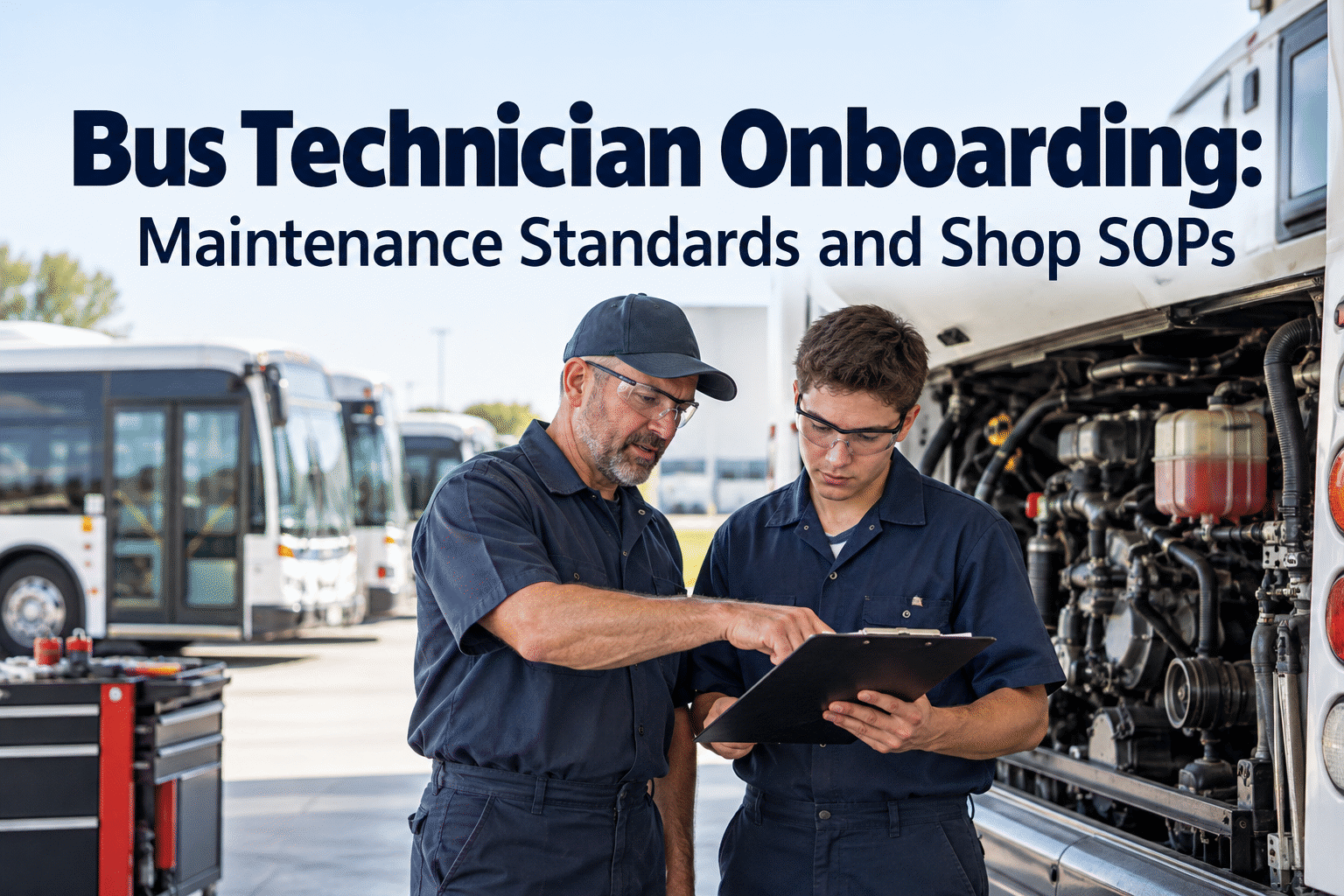
Bus Technician Onboarding: Maintenance Standards and Shop SOPs
Turn a new hire into a signed-off, trusted bus technician on a defined ramp — with the shop's standards, documentation, and supervisor checks built into the work instead of a binder nobody opens.
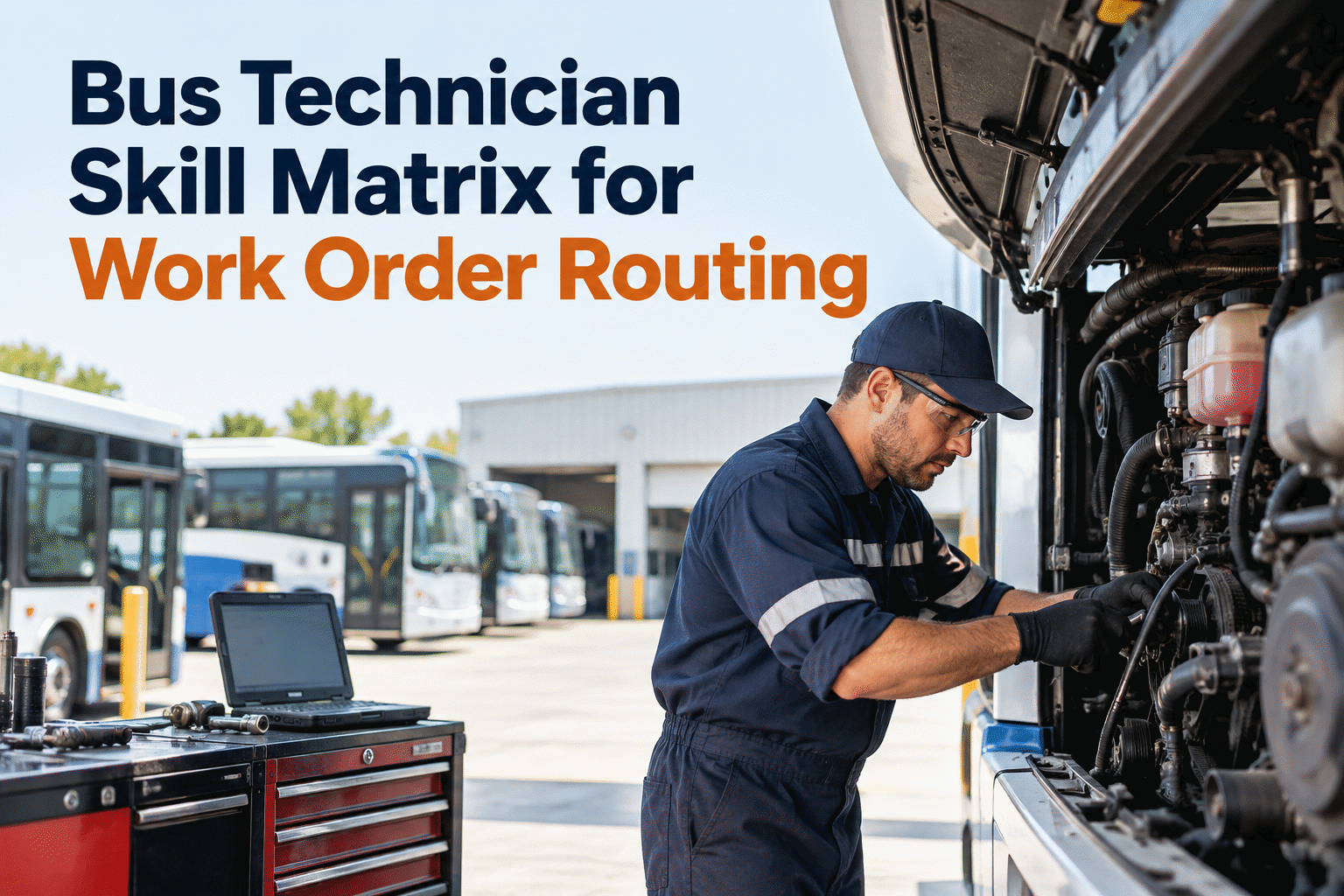
Illustrative. The ramp is the point: a new tech earns trust in defined stages, and each stage has a standard to meet before the next one opens — not a vague “he'll pick it up.”
Why the knowledge walks out the door
Most bus shops run on tribal knowledge — the unwritten rules a senior tech carries in his head. It works right up until that tech retires, quits, or is out sick the week a new hire starts. Then the new person learns by guessing or by redoing jobs that come back. That is not an onboarding plan; it is a gamble, and the stakes are a bus full of kids.
The fix is not a thicker binder. It is moving the standard out of one person's memory and into the work itself — the inspection forms, the work-order steps, the sign-off that says this job was done the shop's way. When the standard lives in the system, a new tech learns the same thing whether the veteran is there or not.
The onboarding question is really this: when your most experienced tech leaves, does the standard leave too? If you want a new mechanic trained the same way every time, the standard has to live somewhere other than a person — which is exactly what a bus-specific CMMS walkthrough is built to show.
Build the technician competency checklist
An onboarding plan without a competency checklist is just a start date. The checklist is what tells you — and the new tech — what “trained” actually means in a bus shop, which is not the same as a truck or car shop. A bus mechanic has to prove they can handle the systems unique to passenger transport and tied directly to student and rider safety.
That means the checklist covers the real bus items: the pre-trip DVIR points (stop arms, crossing gates, 8-light warning systems, emergency exits, student mirrors), preventive maintenance that changes by fuel type across diesel, CNG, and electric, and the safety-critical systems where a missed defect is not an option — brakes, steering, and the wheelchair lift with its own ADA inspection cadence. Track each as a skill the tech demonstrates, not a box a manager ticks on faith — something you can set up as a competency record and build on from the first week.
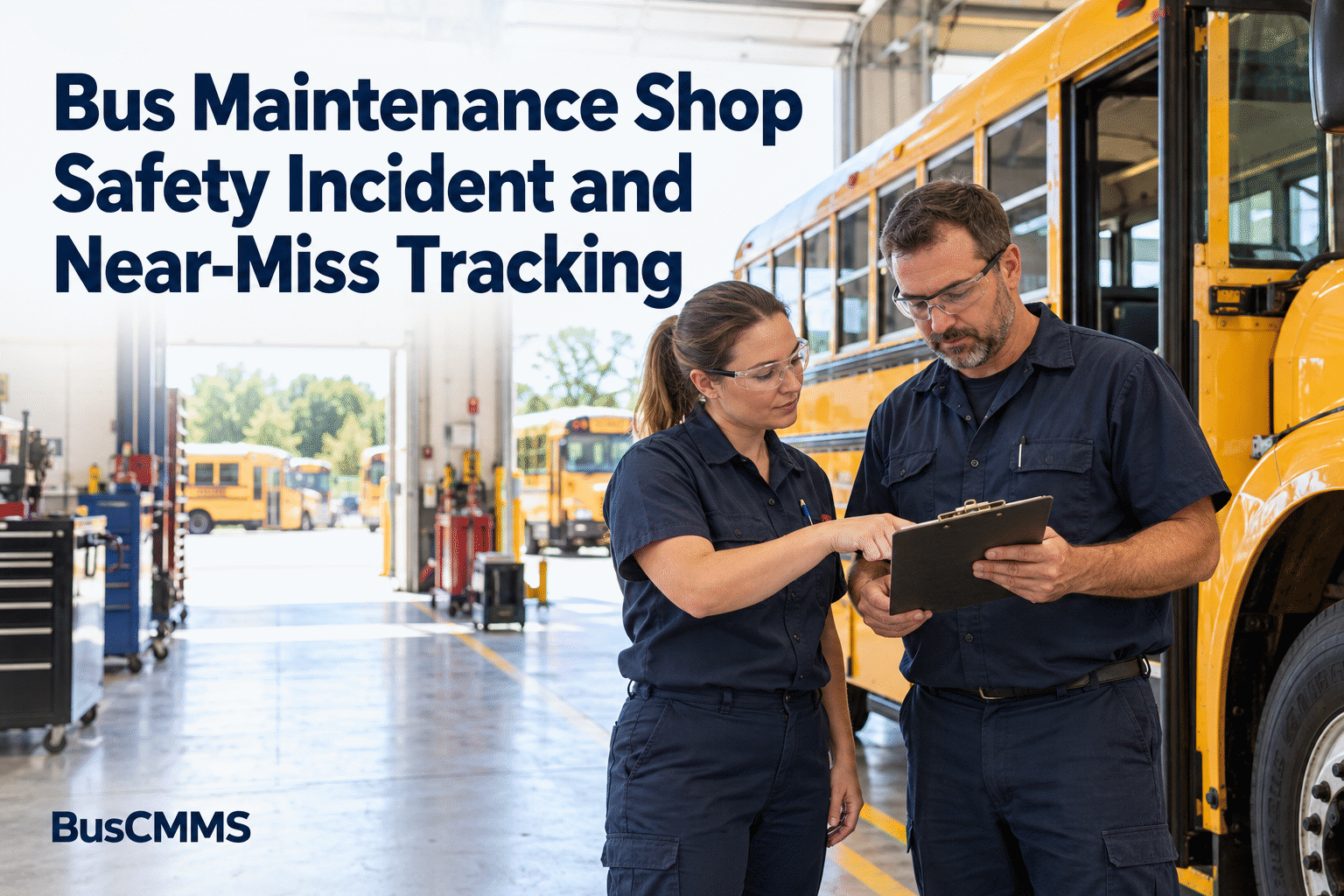
Illustrative. The value is seeing the gaps: this tech is ready to run DVIRs and most PM solo, but the lift and ADA work is not there yet — so that is the next supervised job, not a solo assignment.
Make the standard something a new tech can learn
BusCMMS ships with bus-specific DVIRs, fuel-type PM logic, and work-order steps already built in — so onboarding teaches your standard, not a generic one. See it on your own fleet, or start setting it up today.
Supervisor sign-off: the competency gate
Here is where a real onboarding plan earns its keep. A new tech should not close a work order unsupervised on day one — and they should not be stuck shadowing on day ninety either. The bridge between those two is a sign-off gate: the new tech does the job, a supervisor reviews it before it closes, and only once they have proven a task type clean, consistently, are they signed off to run it solo.
This is not babysitting. It is how you catch the comeback before it leaves the bay, coach in the moment instead of after a defect goes out on a route, and build a record that says this person is cleared to do this work. The gate is the most important piece of maintenance technician onboarding, because it protects the bus while the tech is still learning.
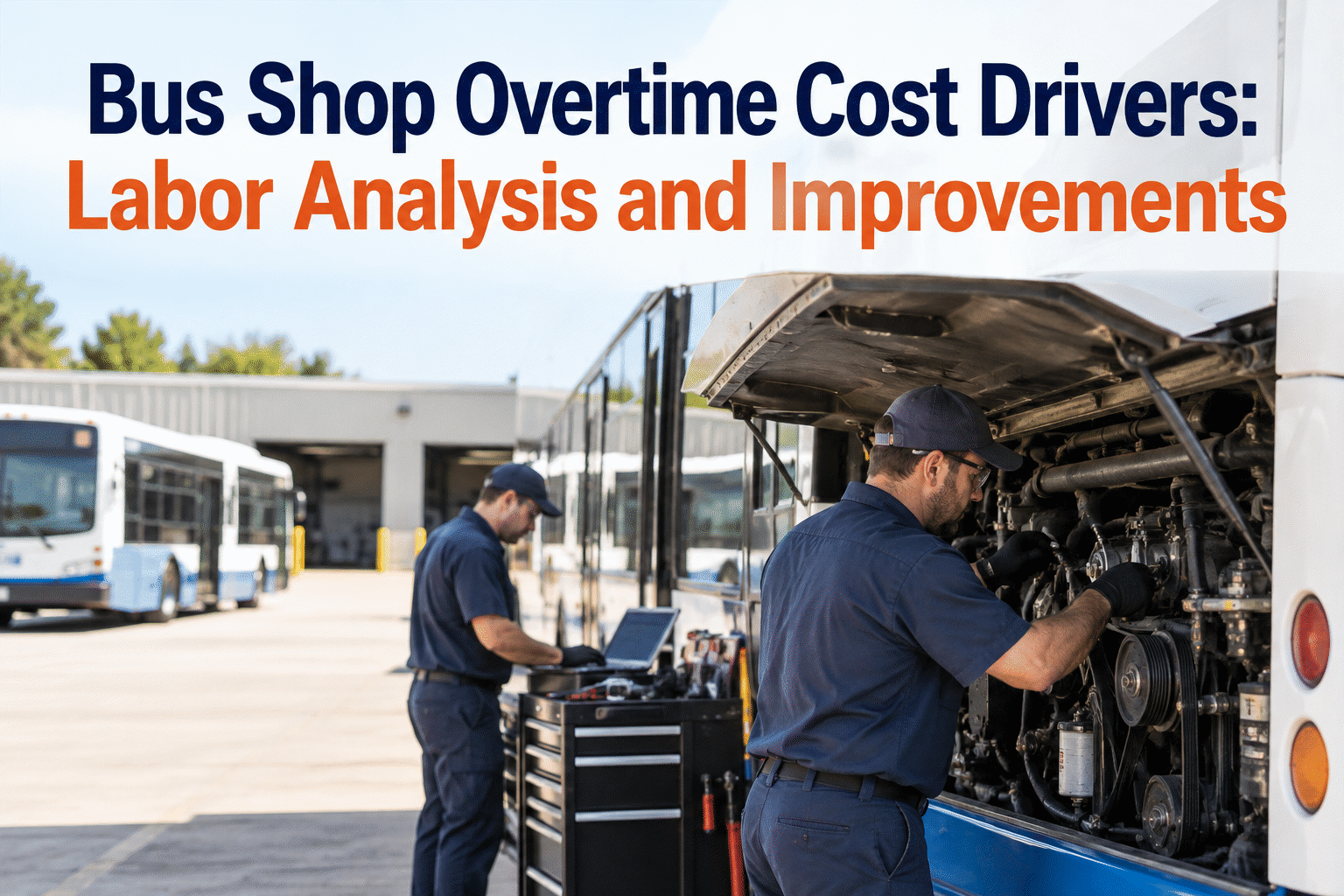
Illustrative. Clean passes through the gate are what sign-off is made of — once a tech runs a task type right every time, the gate opens and they work it solo.
What goes in the onboarding plan
A plan you can hand to a supervisor beats a plan in your head. Here is the backbone of a bus technician onboarding checklist — the first day, the first weeks, and the habits that never stop. Tagged by when each piece happens so nothing gets skipped in the rush of a short-staffed shop.
- Safety & shop orientationLockout/tagout, lift and jack-stand rules, bay layout, PPE, and where the bus-specific hazards are before any wrench turns.DAY 1
- Walk the DVIR on a real busStop arm, crossing gate, 8-light system, emergency exits, student mirrors, lift — shown and practiced, not read off a sheet.DAY 1
- Work-order disciplineHow your shop opens, documents, photographs, and closes a WO — labor logged, parts recorded, the standard way every time.WEEK 1
- Fuel-type PM by the bookThe PM intervals and steps for the buses they'll touch — diesel, CNG, or electric — run against the schedule, not from memory.WEEK 1
- Sign-off & training recordsEach task type signed off by a supervisor when proven, logged in the tech's record — the proof that holds up in an audit or a dispute.ONGOING
How BusCMMS carries the standard
Onboarding is hard in most shops because the standard has no home. It is not in the generic fleet tool — built for trucks or equipment, it does not know a stop arm from a crossing gate. BusCMMS is purpose-built for buses, so the standard a new tech needs is already in the software, and every bit of their work builds the record that proves they learned it. You can walk through exactly how on a live demo.
Bus-specific DVIRs built in
A new tech learns the real inspection items — stop arms, lifts, 8-light systems — from the forms, not a veteran's memory.
Fuel-type PM logic
Diesel, CNG, and electric each carry their own PM steps and intervals, so a rookie runs the right procedure for the right bus.
Standardized work orders
Required steps, photos, labor, and parts captured the same way on every WO — the SOP is the workflow, not a binder.
Sign-off & competency records
Supervisor review and signed-off task types logged per tech — audit-ready proof of who is cleared to do what.
When my lead retired, I realized half our shop ran on what he knew and never wrote down. The first new guy I brought in after that, I onboarded straight off the system — the forms told him what to check, and nothing closed till I signed it. He was solo on PMs in five weeks and I actually trusted it, because I could see every job he'd done.
Key takeaways on bus technician onboarding
A new hire is only as good as the standard you can transfer. Four things to hold onto.
Get the standard out of heads
If it lives in one veteran's memory, it leaves when they do. Put it in the forms and the workflow.
Onboard on a ramp, not a day
Shadow, supervised, semi-solo, signed off — defined stages with a standard to meet at each.
Gate solo work on sign-off
A supervisor reviews until a task type is proven clean — it protects the bus while the tech learns.
Keep the training record
Signed-off competencies per tech are your proof — for audits, for disputes, for knowing who can do what.
Do onboarding this way and a new bus technician stops being a risk you absorb and becomes a tech you can count on — on a timeline you can see, to a standard that does not walk out the door. Build the plan once, hold it in the system, and every hire after learns the same right way. You can set up your shop standard and start onboarding against it this week, or walk the whole flow with our team first on a bus fleet software demo.
Train your next bus tech on the shop's standard, not someone's memory
Give every new hire the same bus-specific forms, PM logic, and sign-off gate from day one — and keep the competency record that proves they're ready. Start free, or see it on your fleet first.