Bus tires are the only connection between your vehicle and the road. They are also one of the most common causes of roadside out-of-service violations—tire and wheel violations account for 21.4% of all commercial vehicle OOS orders. A tire blowout at highway speed is not just a compliance violation; it is a catastrophic safety event that can cause loss of vehicle control, passenger injury, and multi-vehicle accidents. This comprehensive bus tire inspection and rotation checklist covers pressure standards, tread depth limits, sidewall damage inspection, lug nut torque specifications, dual tire matching, and rotation patterns. Use it as your standard procedure for every tire inspection and rotation service.
Tire Safety Guide 2026
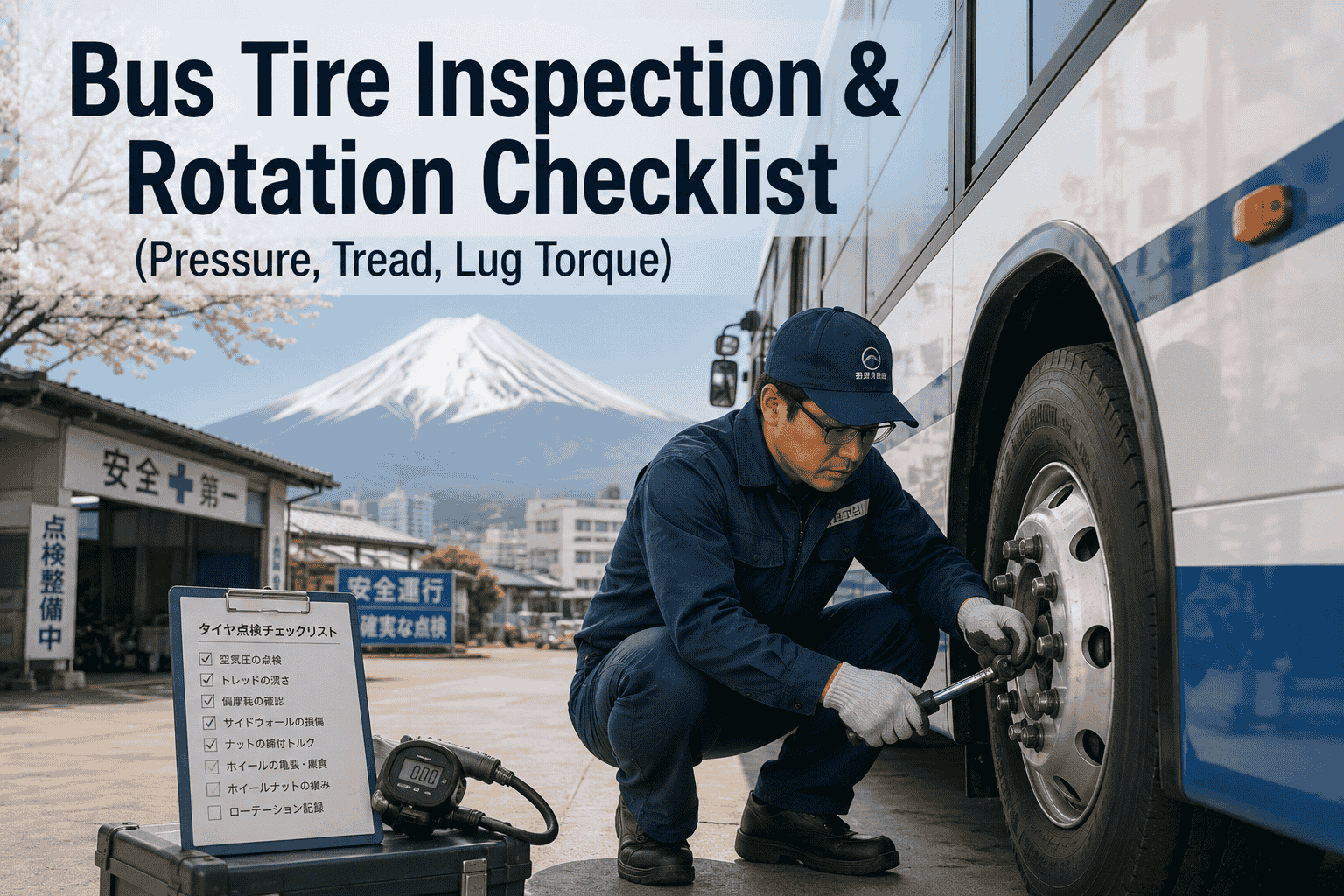
Bus Tire Inspection & Rotation Checklist (Pressure, Tread, Lug Torque)
Bus tire inspection and rotation workflow. Pressure standards, tread depth limits, sidewall damage, lug torque, dual matching and rotation patterns.
Why Tire Inspections Are Critical: The Out-of-Service Reality
Tire and wheel violations are consistently among the top five out-of-service violations in CVSA International Roadchecks. In 2025, tire-related violations accounted for 21.4% of all vehicle OOS orders. The most common tire violations include: tread depth below minimum (steer axle 4/32", other axles 2/32"), visible cord or belt material, cuts or bulges in the sidewall, tire pressure below specification, and missing or loose lug nuts. Each of these violations is detectable during a proper tire inspection. Each is preventable with consistent PM compliance.
The financial impact of tire-related breakdowns is significant. A single roadside tire violation can result in a $11,000+ civil penalty, out-of-service order, towing costs, and service disruption. A tire blowout at speed can cause wheel-end damage, brake system damage, and potential accident liability. A structured tire inspection and rotation process is the most effective way to prevent these outcomes.
Tire Inspection Categories: The Complete Checklist
This comprehensive tire inspection checklist covers every aspect of tire condition. Use it during every tire PM service, pre-trip inspection, and annual DOT inspection.
Tire Rotation Patterns for Buses
Regular tire rotation extends tire life by 15-25% and ensures even wear across all axle positions. The rotation pattern depends on the type of bus, drive axle configuration, and whether tires are directional or non-directional.
Standard Transit / School Bus
Rotate every 15,000–20,000 miles. Pattern: steer → drive (right). Drive → drive (left). Ensure proper dual tire matching after rotation. Mark rotation date and mileage on tire record.
Three-Axle Motorcoach
Rotate every 12,000–15,000 miles. Pattern: steer → tag, tag → drive, drive → steer (right). More complex rotation pattern requires careful documentation.
Directional Tires
Directional tires must be rotated on the same side only (front to rear, same side). Do not cross-rotate directional tires. Follow manufacturer rotation direction arrows.
Non-Directional Tires
Cross-rotation is acceptable: steer left → drive right, steer right → drive left. This provides the most even wear across all positions.
Tire Pressure Standards by Axle Position
Tire pressure varies by axle position, tire type, and bus manufacturer. Always reference the bus manufacturer's placard (usually on the driver's door jamb) for specific pressure requirements for your vehicle. Check tire pressure cold—before the bus has been driven or when tires have been stationary for at least 3 hours. Tire pressure increases by approximately 1 PSI for every 10°F increase in ambient temperature.
Common Tire Wear Patterns and Causes
Recognizing tire wear patterns helps identify underlying mechanical issues before they cause tire failure. This is a critical diagnostic tool for fleet technicians.
Center Wear
Tread worn more in the center than at edges. Cause: overinflation. Reduce pressure to manufacturer specification. Check pressure gauge calibration.
Edge Wear
Tread worn more on both edges than in center. Cause: underinflation. Increase pressure to specification. Check for load rating compliance.
Cupping / Scalloping
Diagonal wear pattern with high and low spots. Cause: worn shocks or struts, loose steering components, or imbalanced tires. Inspect suspension and steering.
Diagonal Wear
Uneven wear at an angle across the tread. Cause: misalignment, worn tie rods, or incorrect camber/caster. Schedule alignment check.
Feathering / Heel-Toe
Tread blocks worn at an angle with a sawtooth pattern. Cause: misalignment or worn suspension components. Check toe-in and toe-out settings.
Flat Spots
Single flat area on tire. Cause: locked brakes (skidding) or flat-spotting from parking. Check brake system function.
We implemented this tire inspection checklist as our standard PM procedure for all 67 buses. In the first year, we caught 12 tires with sidewall damage during inspections—before they became blowouts. We identified 8 misalignment cases causing premature wear and corrected them. Our tire replacement costs dropped by 22% because we're rotating tires on schedule and catching wear patterns early. The checklist gives our technicians a consistent process for every tire PM.
Digitize Your Tire Inspection Process
BusCMMS guides technicians through every tire inspection point—pressure measurement, tread depth, sidewall inspection, lug torque verification, and rotation documentation. Auto-schedule tire PM intervals based on mileage. Complete audit trail for every tire in your fleet.
Bus Tire Inspection FAQs
What is the minimum tread depth for bus tires?
Steer axle tires require minimum 4/32" tread depth. All other axles require minimum 2/32". Any tire with visible cord or belt material is an automatic out-of-service violation regardless of tread depth. Replace tires before they reach minimum depth to ensure safety and avoid OOS orders.
How often should bus tires be rotated?
Tire rotation intervals depend on bus type and manufacturer recommendation. Standard transit and school buses: every 15,000–20,000 miles. Three-axle motorcoaches: every 12,000–15,000 miles. Directional tires must be rotated on the same side only. Non-directional tires can be cross-rotated. BusCMMS auto-schedules tire rotation PM intervals based on mileage.
What is the correct lug nut torque for bus wheels?
Recommended lug nut torque is 450-500 ft-lbs for standard studs on most transit buses and motorcoaches. Always verify with your bus manufacturer's specification. Torque should be checked after the first 50 miles of driving when new wheels are installed. Use a calibrated torque wrench and mark with torque seal after tightening.
How can I identify tire age?
Check the DOT date code on the tire sidewall. The last four digits indicate the week and year of manufacture. Example: "DOT XXXXXX 4325" = week 43 of 2025. Replace any tire over 6 years old, regardless of tread depth. Tire rubber degrades over time, increasing failure risk. Check date codes on all tires, including spares.
What causes uneven tire wear on buses?
Common causes include: misalignment (causing diagonal wear), worn shocks (cupping), improper inflation (center wear or edge wear), worn steering or suspension components, and incorrect tire pressure. Regular tire inspection catches wear patterns early, identifying underlying mechanical issues before they cause tire failure.
Can BusCMMS track tire life and replacement history?
Yes. BusCMMS tracks tire serial numbers, installation dates, mileage at installation, rotation history, tread depth measurements, and replacement history. This creates a complete tire lifecycle record for each tire in your fleet, helping you optimize tire replacement timing and vendor performance.
The Bottom Line
Bus tire inspections and rotations are not optional—they are safety-critical maintenance tasks that protect your passengers, your drivers, and your fleet's reputation. This checklist provides the step-by-step procedure your technicians need to inspect every tire, check every pressure, verify every lug nut, and rotate every tire on schedule. When combined with BusCMMS digital inspection forms, auto-scheduled PM intervals, and complete tire lifecycle tracking, your tire program becomes proactive rather than reactive—catching issues before they become roadside violations or blowouts.