The transmission is the most expensive component to repair or replace in a bus, second only to the engine. A major transmission failure typically costs $8,000–$18,000 for a rebuild or $22,000–$35,000 for a replacement. Yet many fleet managers treat transmission maintenance as an afterthought—changing fluid only when problems appear rather than on a scheduled basis. Allison, ZF, and Voith transmissions all have specific service intervals, fluid requirements, and inspection points that must be followed to maximize service life. This comprehensive bus transmission service checklist covers automatic and manual transmissions, fluid and filter intervals, lockup clutch function, shift quality assessment, fault code retrieval, and the specific inspection points that predict transmission failure before it happens.
Transmission Service Guide 2026
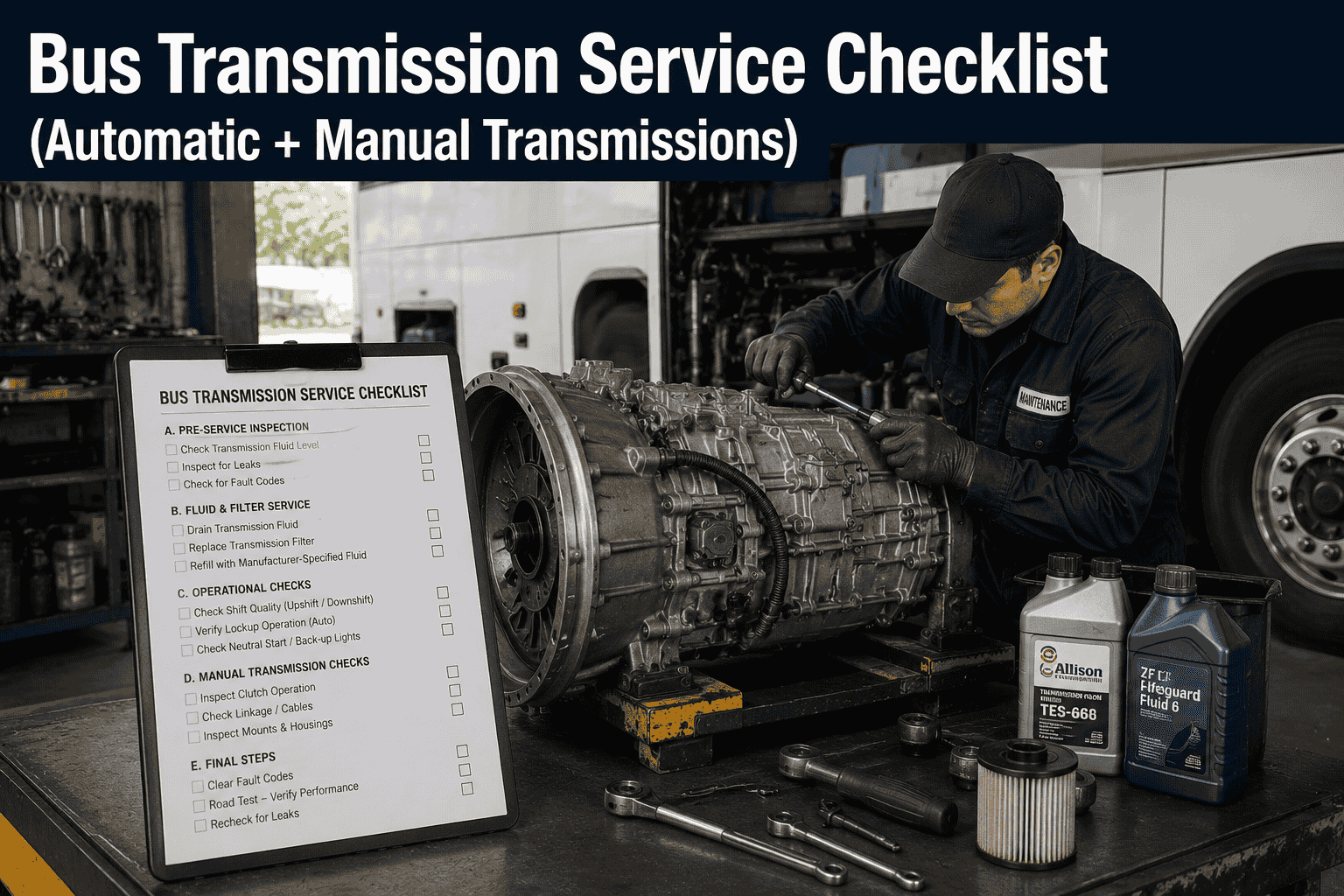
Bus Transmission Service Checklist (Automatic + Manual Transmissions)
Bus transmission service checklist for automatic and manual gearboxes. Fluid intervals, filters, lockup, shift quality, fault codes and inspection points.
Why Transmission Maintenance Is Critical: The Cost of Neglect
Transmission failures are among the most expensive and disruptive breakdowns in bus fleet operations. A single transmission failure removes a bus from service for 3-7 days, costs $8,000–$35,000 in repairs, and causes significant route disruption. The most common transmission failures include: fluid contamination or degradation, filter clogging, solenoid failure, torque converter wear, clutch failure (manual transmissions), and electronic control unit failure. Each of these failures is preventable with systematic PM compliance.
Transmission fluid is the lifeblood of automatic transmissions. It lubricates, cools, transmits power, and cleans internal components. When fluid degrades from heat or contamination, it loses its protective properties and causes accelerated wear. Regular fluid and filter changes are the single most effective way to extend transmission life and prevent costly failures.
Transmission Types: Inspection Points by System
Allison Automatic
Common in transit buses and motorcoaches. Inspect fluid level and condition. Check filter condition. Monitor shift quality and lockup clutch function. Retrieve fault codes. Look for leaks at cooler lines.
ZF EcoLife / Voith DIWA
Common in European and modern transit buses. Inspect fluid level and temperature. Check filter condition. Monitor shift quality. Retrieve fault codes. Check for leaks at electrical connectors.
Manual Transmission
Common in some school buses and medium-duty applications. Check fluid level and condition. Inspect clutch operation. Check for leaks at seals. Monitor shift quality and gear engagement.
Transmission Service Checklist: The Complete Inspection
This comprehensive transmission service checklist covers every major inspection point. Use it during every transmission PM service, fluid change, and annual DOT inspection.
Transmission Fluid Service Intervals and Costs
The chart above shows the dramatic cost difference between regular transmission maintenance and major repairs. A simple fluid and filter service costs $250–$600 and takes 1–2 hours. A valve body repair costs $1,200–$2,800. A transmission rebuild costs $8,000–$18,000. A transmission replacement costs $22,000–$35,000. The ROI of transmission PM is undeniable—every dollar spent on transmission fluid and filter changes saves $20–$30 in future repair costs.
Common Transmission Issues and Root Causes
Hard Shifting
Cause: Low fluid, contaminated fluid, worn solenoids, or valve body issues. Fix: Check fluid level and condition. Replace fluid and filter. Diagnose solenoid and valve body function.
Slipping
Cause: Low fluid, worn clutches, or torque converter failure. Fix: Check fluid level. Inspect for leaks. Perform pressure test. Internal repair likely required.
Delayed Engagement
Cause: Low fluid, worn pump, or valve body issues. Fix: Check fluid level. Inspect filter for blockage. Diagnose valve body and pump function.
Fluid Leaks
Cause: Worn seals, damaged cooler lines, or loose fittings. Fix: Identify leak source. Replace seals or damaged lines. Tighten fittings.
Transmission Overheating
Cause: Low fluid, cooler blockage, or heavy load conditions. Fix: Check fluid level. Inspect cooler for blockage. Verify cooler fan function.
Clutch Slipping (Manual)
Cause: Worn clutch disc, incorrect adjustment, or glazed flywheel. Fix: Adjust clutch. Replace worn components. Resurface flywheel.
We implemented this transmission service checklist across our 95-bus fleet after a series of expensive transmission failures. In the first year, we caught 27 transmission issues during PM inspections—12 fluid contamination cases, 8 worn filters, 5 solenoid failures, and 2 valve body issues. We prevented 9 major transmission failures by catching problems early. Our transmission-related repair costs dropped by 65% in year one, and we extended transmission service life by an average of 150,000 miles per bus.
Digitize Your Transmission Service Process
BusCMMS guides technicians through every transmission inspection point—fluid level and condition, filter replacement, shift quality assessment, lockup clutch verification, fault code retrieval, and leak inspection. Auto-schedule transmission PM intervals based on mileage. Complete audit trail for every transmission component in your fleet.
Bus Transmission Service FAQs
How often should transmission fluid be changed on a bus?
Fluid change intervals vary by transmission type and duty cycle. Allison transmissions: 50,000 miles (highway) or 25,000 miles (urban). ZF EcoLife: 50,000–75,000 miles. Voith DIWA: 50,000–75,000 miles. Severe-duty applications may require shorter intervals. Always follow the manufacturer's specific recommendations.
What are the signs of a failing automatic transmission?
Warning signs include: hard shifting, delayed engagement, slipping between gears, unusual noise (whining or grinding), fluid leaks, burnt-smelling fluid, and illuminated warning lights. Any of these symptoms should trigger immediate diagnostic action to prevent catastrophic failure.
What transmission fluid does Allison recommend?
Allison recommends TES 295-approved fluids for most applications, or TES 468 for extended-life applications. Always use Allison-approved fluids to maintain warranty coverage and ensure optimal transmission performance. Non-approved fluids can cause shifting issues and reduce transmission life.
How do I check transmission fluid level correctly?
Check transmission fluid with the engine running and the transmission in neutral (or park, depending on manufacturer). The fluid should be at operating temperature. Use the dipstick to check level—add fluid as needed. Overfilling can cause foaming and shifting issues.
What causes transmission overheating?
Common causes include: low fluid level, contaminated fluid, blocked cooler, failed cooler fan, heavy load conditions, and stop-and-go driving. Monitor transmission temperature regularly. Install auxiliary coolers for severe-duty applications.
Can BusCMMS track transmission service history?
Yes. BusCMMS tracks fluid changes, filter replacements, fault code history, repair records, and component replacement history. This creates a complete transmission service record for each bus, helping identify patterns and predict maintenance needs before failures occur.
The Bottom Line
Bus transmission maintenance is not optional—it is a critical investment in fleet reliability and cost control. A single transmission failure costs $8,000–$35,000 and removes a bus from service for up to a week. Regular fluid and filter changes cost a fraction of that and extend transmission life by hundreds of thousands of miles. This checklist provides the step-by-step procedure your technicians need to service every transmission—fluid level, filter condition, shift quality, lockup function, and fault codes. When combined with BusCMMS digital inspection forms, auto-scheduled PM intervals, and complete transmission history tracking, your transmission maintenance program becomes proactive—catching issues before they become catastrophic failures.