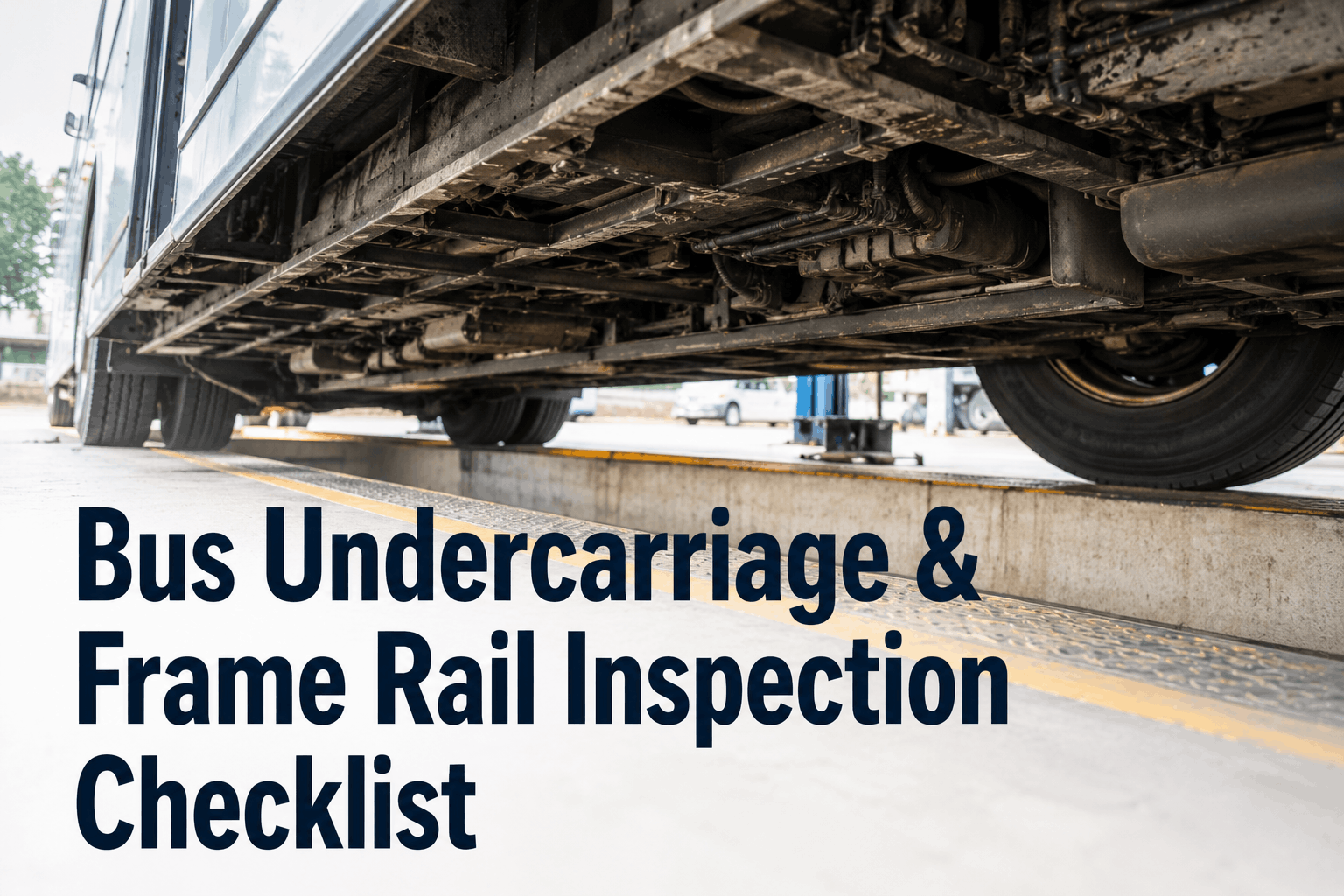
The undercarriage and frame rails are the structural foundation of every bus. A cracked frame rail can cause catastrophic failure during operation. A corroded crossmember can compromise the entire chassis structure. Damaged brake lines can lead to brake failure. A loose fuel line clamp can cause a leak and fire hazard. This comprehensive bus undercarriage and frame rail inspection checklist covers frame rail integrity, crossmember welds, brake line routing and condition, fuel line clamps and condition, corrosion mapping, and overall underbody structural health. Use it as your standard procedure for every undercarriage inspection, annual structural inspection, and post-accident assessment.
Structural Safety Guide 2026
Bus Undercarriage & Frame Rail Inspection Checklist
Bus undercarriage and frame rail inspection workflow. Frame rail integrity, crossmember welds, brake line routing, fuel line clamps and corrosion mapping.
Why Undercarriage and Frame Rail Inspections Are Critical: The Structural Reality
Undercarriage and frame rail failures are among the most dangerous bus breakdowns. A cracked frame rail can cause loss of vehicle control. A corroded crossmember can collapse, affecting drivetrain alignment and braking. Damaged brake lines can cause brake failure. The most common undercarriage failures include: frame rail cracks (especially around suspension and steering mounts), crossmember corrosion or cracks, brake line damage or corrosion, fuel line damage or loose clamps, and corrosion in structural areas.
The financial and safety impact of structural failures is severe. Frame rail repair or replacement costs $8,000–$20,000. Crossmember replacement costs $2,000–$5,000. Brake line replacement costs $1,000–$3,000. A structured undercarriage and frame rail inspection process is the most effective way to catch these issues early and prevent catastrophic failures.
Undercarriage Categories: The Complete Breakdown
Frame Rails
Inspect frame rails for cracks, bends, or damage. Check around suspension mounts, steering box mounts, and engine mounts. Any crack requires immediate repair.
Crossmembers
Inspect crossmembers for corrosion, cracks, or damage. Check weld integrity at attachment points. Corrosion through crossmember requires replacement.
Brake Lines
Inspect brake lines for corrosion, chafing, or damage. Check routing for contact with sharp edges. Verify line condition and secure mounting.
Fuel Lines
Inspect fuel lines for corrosion, chafing, or leaks. Check clamps and fittings for tightness. Verify proper routing and secure mounting.
Corrosion Assessment
Document all corrosion areas. Assess depth and extent. Corrosion near structural mounting points is critical. Create corrosion repair plan.
Structural Welds
Inspect critical welds for cracking or separation. Key areas: suspension mounting brackets, steering gear mounts, and body-to-chassis connections.
Undercarriage and Frame Rail Inspection Checklist: The Complete Inspection
This comprehensive undercarriage inspection checklist covers every major structural component. Use it during every undercarriage PM service, annual structural inspection, and post-accident assessment.
Undercarriage Structural Health Trends
The chart above shows undercarriage structural health by component. Corrosion has the lowest compliance rate—it is often hidden and discovered only during detailed inspections. Frame rails and crossmembers also have low compliance rates due to fatigue and corrosion. Fuel lines and brake lines typically have higher compliance rates because they are more visible during routine inspections. Regular undercarriage inspections are essential to identify structural issues before they compromise safety.
Common Undercarriage Issues and Root Causes
Frame Rail Crack
Cause: Fatigue from heavy loads, stress from suspension or steering, or impact damage. Fix: Weld repair or rail replacement. Reinforce area after repair.
Crossmember Corrosion
Cause: Road salt, moisture, and debris trapped in crossmember channels. Fix: Replace corroded crossmembers. Apply rust prevention coating to new parts.
Brake Line Corrosion
Cause: Road salt and moisture exposure. Fix: Replace corroded brake lines. Use coated lines for corrosion resistance.
Fuel Line Leak
Cause: Corrosion, chafing, or loose clamps. Fix: Replace damaged lines. Tighten or replace clamps. Inspect for proper routing.
Structural Weld Failure
Cause: Poor weld quality, fatigue, or corrosion. Fix: Repair or replace failed welds. Inspect adjacent areas for stress damage.
Corrosion Through Frame
Cause: Advanced corrosion from years of exposure. Fix: Replace corroded sections. Apply corrosion protection. Consider early replacement if extensive.
We implemented this undercarriage and frame rail inspection checklist across our 95-bus fleet. In the first year, we found 8 frame rail cracks that would have caused catastrophic failure, 14 corroded crossmembers, 27 brake lines with corrosion damage, and 12 fuel line issues. We also identified extensive corrosion on 6 buses that required major structural repairs. Our undercarriage-related breakdowns dropped by 85%. The checklist gives our technicians a systematic process for every undercarriage inspection.
Digitize Your Undercarriage Inspection Process
BusCMMS guides technicians through every undercarriage and frame rail inspection point—frame rail integrity, crossmember condition, brake and fuel line condition, corrosion assessment, weld integrity, and structural documentation. Auto-schedule undercarriage PM intervals based on mileage. Complete audit trail with photo documentation for every structural component in your fleet.
Bus Undercarriage and Frame Rail FAQs
How often should undercarriage inspections be performed?
Undercarriage inspections should be performed at every annual structural inspection. Additional inspections should be performed after any accident, after severe weather events, and when corrosion is suspected. High-mileage buses in snow belt states require more frequent inspections.
What are the most common frame rail failure points?
Frame rails typically fail around suspension mounting points, steering box mounts, and engine mounts. These areas experience the highest stress and are most susceptible to fatigue cracking. Corrosion often starts at these same points due to trapped moisture and debris.
How do I check for corrosion under the bus?
Use a flashlight and probe (screwdriver or awl) to test suspect areas. Tap with a hammer to listen for solid vs. hollow sounds. Focus on frame rails, crossmembers, and mounting points. Remove any undercoating or debris to inspect the metal surface. Document all findings with photos.
What causes brake line corrosion?
Brake lines corrode from road salt, moisture, and debris exposure. They are especially vulnerable at points where they contact other components. Regular washing of the undercarriage and application of anti-corrosion coatings prevent brake line corrosion.
How much does frame rail repair cost?
Frame rail repair or replacement costs $8,000–$20,000 depending on the extent of damage and the bus model. Early detection through regular inspections is far less expensive—repairing a small crack costs $500–$2,000. Neglecting structural issues leads to much higher costs and safety risks.
Can BusCMMS track undercarriage inspection history?
Yes. BusCMMS tracks frame rail condition, crossmember condition, brake line condition, fuel line condition, corrosion assessment results, and structural repair records. This creates a complete undercarriage history for each bus, helping identify deterioration patterns and plan lifecycle replacements.
The Bottom Line
Bus undercarriage and frame rail inspections are essential for structural integrity and passenger safety. A cracked frame rail, corroded crossmember, or damaged brake line can cause catastrophic failure during operation. Regular inspection of frame rails, crossmembers, brake lines, fuel lines, and corrosion areas is the most effective way to identify structural issues before they compromise safety. This checklist provides the step-by-step procedure your technicians need to inspect every undercarriage component—frame rails, crossmembers, lines, welds, and corrosion. When combined with BusCMMS digital inspection forms, photo documentation, and complete structural history tracking, your undercarriage inspection program becomes proactive—catching issues before they cause catastrophic failures or costly repairs.