Wheel and hub assemblies are among the most critical safety components on any bus. A wheel separation at highway speed is catastrophic—loss of control, potential rollover, and serious injuries. Hub seal failure can cause bearing failure and wheel detachment. Loose or missing lug nuts are one of the most common roadside violations. This comprehensive bus wheel and hub inspection checklist covers wheel bearing condition, hub seal leaks, wheel studs, lug nut torque verification, bearing endplay measurement, hub oil level and condition, and the critical re-torque schedule after wheel installation. Use it as your standard procedure for every wheel and hub PM service and annual DOT inspection.
Wheel Safety Guide 2026
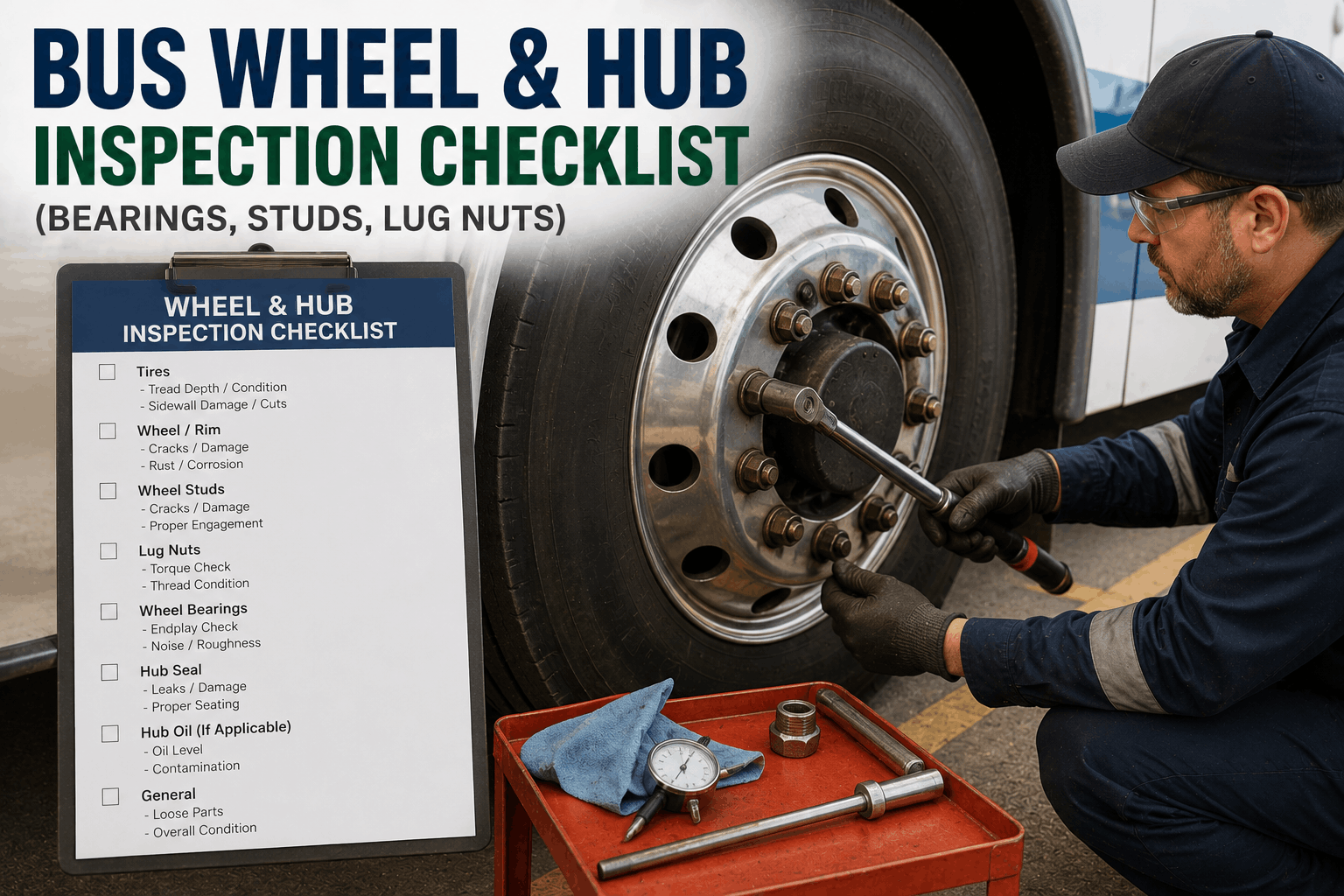
Bus Wheel & Hub Inspection Checklist (Bearings, Studs, Lug Nuts)
Bus wheel and hub inspection workflow. Wheel bearings, hub seal leaks, studs, lug nuts, bearing endplay, hub oil level and re-torque schedule.
Why Wheel and Hub Inspections Are Critical: The Safety Reality
Wheel and hub failures are among the most dangerous bus breakdowns. A wheel separation can cause loss of vehicle control, passenger injury, and multi-vehicle accidents. The most common wheel and hub failures include: loose or missing lug nuts (most common violation), failed wheel bearings (causes wheel wobble and separation), hub seal leaks (allows contamination and lubricant loss), and cracked or damaged wheel studs. Each of these failures is preventable with systematic PM compliance.
FMCSA roadside inspection data shows that wheel and hub violations consistently rank among the top out-of-service categories. Loose lug nuts alone account for over 10,000 out-of-service violations annually. A structured wheel and hub inspection process is the most effective way to prevent these failures and ensure passenger safety.
Wheel and Hub Inspection Categories: The Complete Checklist
This comprehensive wheel and hub inspection checklist covers every major component. Use it during every wheel and hub PM service, tire rotation, and annual DOT inspection.
Lug Nut Torque Compliance Data
The chart above shows how inspection frequency affects lug nut torque compliance. Fleets that check lug nut torque weekly achieve 95% compliance. Monthly inspections drop to 72%. Quarterly inspections drop to 58%. Semi-annual inspections drop to 42%. Annual inspections drop to 28%. Regular lug nut torque checks are the most effective way to prevent wheel separation and roadside violations.
Common Wheel and Hub Issues and Root Causes
Loose Lug Nuts
Cause: Improper torque, missing re-torque schedule, or wheel removal/installation error. Fix: Re-torque to specification. Mark with torque seal. Schedule re-torque at 50-100 miles after installation.
Wheel Bearing Failure
Cause: Lubrication loss, contamination, or improper preload. Fix: Replace bearings. Check hub seal. Set endplay to specification. Use proper grease/oil.
Hub Seal Leak
Cause: Worn seal, damaged seal surface, or contamination. Fix: Replace seal. Inspect seal surface. Check oil level and condition. Address root cause.
Damaged Wheel Stud
Cause: Cross-threading, over-torque, or impact damage. Fix: Replace stud immediately. Inspect mating components. Use torque wrench, not impact gun, for final torque.
Wheel Separation
Cause: Catastrophic lug nut failure, bearing failure, or stud failure. Fix: Immediate inspection of all wheel-end components. Address root cause. Document corrective action.
Hub Overheating
Cause: Bearing failure, dragging brake, or low oil level. Fix: Inspect bearing condition. Check brake adjustment. Verify oil level. Replace worn components.
We implemented this wheel and hub inspection checklist across our 95-bus fleet. In the first year, we caught 42 loose lug nuts during weekly inspections—before they became roadside violations. We identified 8 hub seal leaks, 6 wheel bearing issues caught early, and 12 damaged wheel studs replaced before failure. Our wheel-related roadside violations dropped to zero in year one. The checklist gives our technicians a systematic process for every wheel and hub inspection, and the torque seal marking helps us verify that every lug nut was properly torqued.
Digitize Your Wheel and Hub Inspection Process
BusCMMS guides technicians through every wheel and hub inspection point—lug nut torque verification, wheel stud condition, bearing endplay measurement, hub seal inspection, oil level and condition check, and re-torque schedule tracking. Auto-schedule wheel and hub PM intervals based on mileage. Complete audit trail for every wheel in your fleet.
Bus Wheel and Hub FAQs
What is the correct lug nut torque for bus wheels?
Recommended lug nut torque is 450-500 ft-lbs for standard studs on most transit buses and motorcoaches. Always verify with your bus manufacturer's specification. Torque should be checked after the first 50-100 miles of driving when new wheels are installed. Use a calibrated torque wrench and mark with torque seal after tightening.
How often should lug nuts be re-torqued?
Lug nuts should be re-torqued at 50-100 miles after wheel installation, then at every PM service (typically every 15,000-20,000 miles). More frequent checks are recommended for buses operating on rough roads or with frequent wheel removal. Weekly torque checks are best practice for high-mileage fleets.
What are the signs of a failing wheel bearing?
Warning signs include: unusual noise (grinding, rumbling, or clicking) when turning, excessive wheel play or endplay, hub overheating (too hot to touch), oil leaks at the hub seal, and vibration felt through the steering wheel. Any of these symptoms should trigger immediate inspection.
How do I check hub oil level and condition?
Check hub oil level at the fill plug—oil should be just below the fill hole. Check oil condition—clean oil should be clear and amber. Milky oil indicates water contamination. Dark or burnt oil indicates overheating. Metallic particles indicate bearing wear requiring immediate attention.
What causes hub seal failure?
Hub seal failure is typically caused by: improper installation, worn seal surface, contamination, excessive wheel bearing endplay, or age. Regular inspection catches seal leaks early—replacing a seal is far less expensive than replacing bearings or repairing wheel separation damage.
Can BusCMMS track wheel and hub inspection history?
Yes. BusCMMS tracks lug nut torque readings, bearing endplay measurements, hub seal condition, oil level and condition, and re-torque schedule compliance. This creates a complete wheel and hub history for each bus, helping identify wear patterns and predict maintenance needs before component failure occurs.
The Bottom Line
Bus wheel and hub inspections are not optional—they are safety-critical maintenance tasks that protect your passengers, your drivers, and your fleet's reputation. A single wheel separation can cause catastrophic accidents, serious injuries, and significant liability. Regular inspection of lug nut torque, wheel studs, bearing endplay, hub seals, and oil condition is the most effective way to prevent wheel and hub failures. This checklist provides the step-by-step procedure your technicians need to inspect every wheel and hub component. When combined with BusCMMS digital inspection forms, auto-scheduled PM intervals, and complete wheel history tracking, your wheel and hub maintenance program becomes proactive—catching issues before they become safety hazards or roadside violations.