Wiper and defrost systems are often overlooked during PM inspections, yet they are critical for driver visibility and safety. A failed wiper motor during a downpour, worn blades that streak across the windshield, or a defroster that cannot clear fog can create dangerous driving conditions in seconds. FMCSA regulations require functioning wipers, washer systems, and defrosters on all commercial vehicles. This comprehensive bus wiper and defrost system inspection checklist covers wiper blade condition, washer fluid level and function, wiper motor operation, defrost vent function, rear window defroster, and visibility verification. Use it as your standard procedure for every wiper and defrost PM inspection and pre-trip check.
Visibility Safety Guide 2026
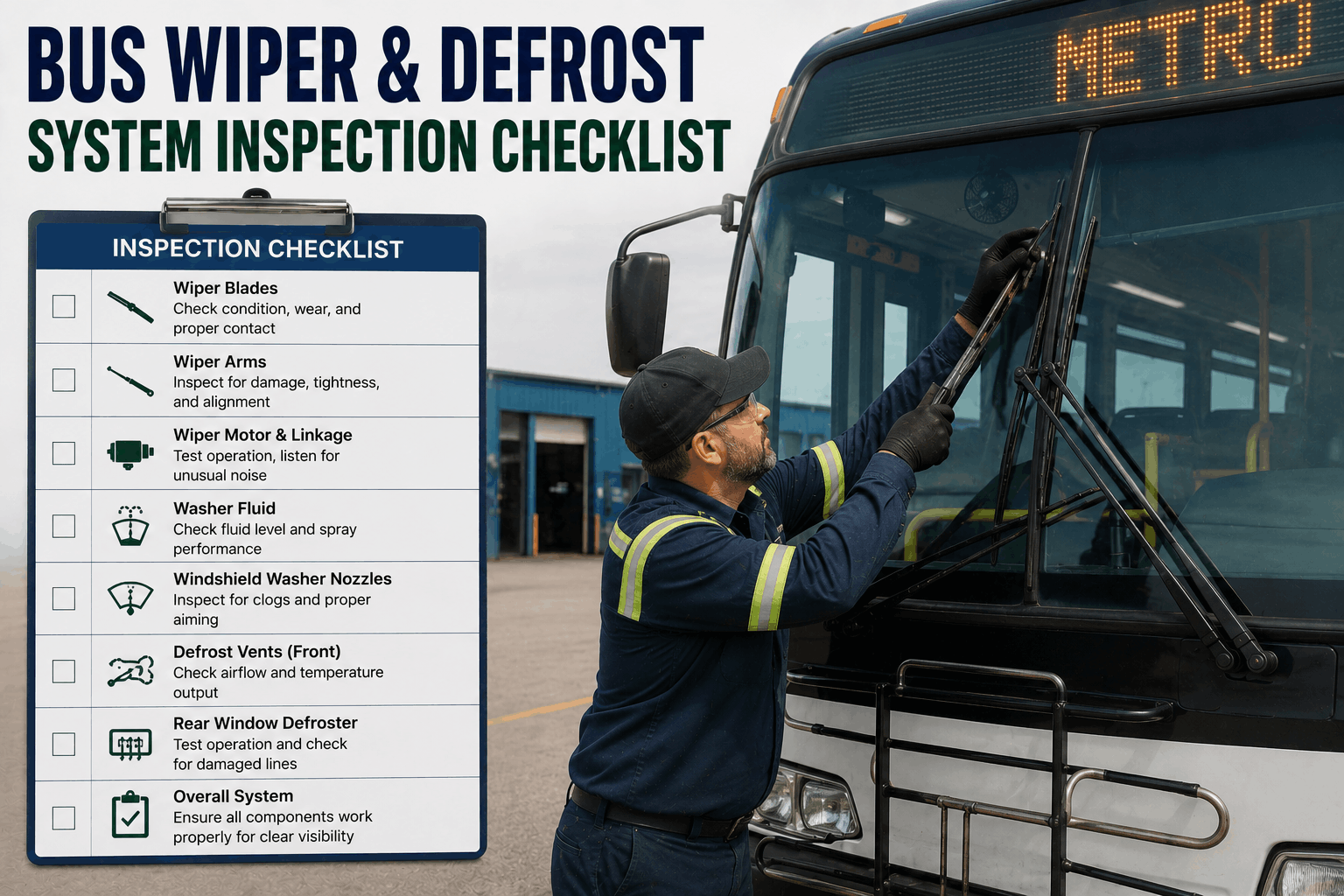
Bus Wiper & Defrost System Inspection Checklist
Bus wiper and defrost inspection workflow. Wiper blade condition, washer fluid, motor function, defrost vents and rear window defroster.
Why Wiper and Defrost Inspections Are Critical: The Safety Reality
Visibility failures are a leading cause of bus accidents, especially during inclement weather. A bus with worn wiper blades cannot clear rain effectively, reducing driver visibility and increasing stopping distance in emergency situations. A defroster that fails to clear fog can obscure the windshield completely, leaving the driver unable to see the road. The most common wiper and defrost failures include: worn wiper blades (streaking, chattering, or skipping), empty or frozen washer fluid, failed wiper motor, blocked defrost vents, and inoperative rear defroster.
FMCSA regulations require fully functioning wipers, washers, and defrosters for commercial vehicle operation. Annual DOT inspections include wiper and defrost verification. A structured wiper and defrost inspection process is the most effective way to ensure driver visibility is never compromised.
Wiper and Defrost System Components: The Complete Breakdown
Wiper Blades
Inspect for wear, cracks, and condition. Replace blades that streak, chatter, skip, or are visibly worn. Winter-grade blades should be installed for cold climates.
Washer System
Check washer fluid level and quality. Use winter-grade fluid in cold climates to prevent freezing. Verify washer nozzles are aimed correctly and deliver adequate spray.
Wiper Motor and Linkage
Inspect wiper motor function at all speeds. Check linkage for wear, looseness, or binding. Listen for unusual noise during operation. Lubricate linkage if needed.
Defrost Vents
Verify defrost vents deliver adequate airflow to windshield. Check for blockage or damage. Ensure vents are aimed at the windshield, not at the driver.
Rear Window Defroster
If equipped, verify rear defroster function. Check for broken grid lines or electrical issues. Test operation and visual clearing.
Heater Core and Blower
Inspect heater core for leaks. Verify blower motor function. Check cabin temperature performance to ensure defrost effectiveness.
Wiper and Defrost Inspection Checklist: The Complete Inspection
This comprehensive wiper and defrost inspection checklist covers every required component. Use it during every wiper and defrost PM service, pre-trip inspection, and annual DOT inspection.
Wiper Performance Compliance Trends
The chart above shows how regular wiper and defrost inspections improve reliability over time. Wiper compliance typically improves faster than defrost compliance because wiper blade replacement is straightforward. Defrost compliance improves as fleets address heater core issues, blower motor problems, and vent blockages. Regular seasonal inspections—especially before winter—are the most effective way to ensure wiper and defrost systems are ready when needed.
Common Wiper and Defrost Issues and Root Causes
Wiper Streaking
Cause: Worn or cracked wiper blade, debris on windshield, or bent wiper arm. Fix: Replace blade. Clean windshield. Straighten or replace wiper arm.
Wiper Chatter
Cause: Worn blade, dry windshield, or bent wiper arm. Fix: Replace blade. Clean windshield thoroughly. Check wiper arm alignment.
No Washer Fluid
Cause: Empty reservoir, frozen fluid, or blocked nozzle. Fix: Top up fluid. Use winter-grade fluid. Clean or replace nozzles.
Wiper Motor Failure
Cause: Electrical failure, worn brushes, or linkage binding. Fix: Test motor and linkage. Replace motor if failed. Lubricate linkage.
Defrost Not Working
Cause: Blocked vents, failed blower motor, heater core issues, or low coolant. Fix: Inspect vents. Test blower motor. Check heater core and coolant level.
Fogging Windows
Cause: Inadequate defrost, moisture in cabin, or heater core leak. Fix: Verify defrost function. Use AC to dehumidify. Check heater core for leaks.
We implemented this wiper and defrost inspection checklist across our 85-bus fleet. In the first year, we identified and replaced 127 worn wiper blades during PM inspections—before they failed during rainstorms. We repaired 18 defrost vents that were blocked or damaged, and replaced 11 faulty wiper motors. We also found 6 heater cores with slow leaks that were causing fogging issues. Our visibility-related driver complaints dropped by 85% in year one.
Digitize Your Wiper and Defrost Inspection Process
BusCMMS guides technicians through every wiper and defrost inspection point—blade condition, washer fluid level, motor function, defrost vent airflow, blower motor operation, and visibility verification. Auto-schedule wiper and defrost PM intervals based on season or mileage. Complete audit trail for every visibility component in your fleet.
Bus Wiper and Defrost FAQs
How often should wiper blades be replaced?
Wiper blades should be replaced every 6-12 months, or when they show signs of wear—streaking, chattering, skipping, or visible cracks. Seasonal changes (spring and fall) are ideal times for replacement. Winter-grade blades should be installed before cold weather.
What type of washer fluid should I use?
Use washer fluid appropriate for your climate. In winter, use winter-grade fluid with freeze protection down to -20°F or lower. Do not use plain water—it can freeze in cold weather and damage the washer system. Summer-grade fluid can be used in warmer climates.
Why does my defroster take so long to clear the windshield?
Slow defrost clearing is typically caused by: blocked or misaimed vents, low coolant level, partially plugged heater core, or failing blower motor. Start with checking coolant level. If low, top up and check for leaks. If vents are blocked, clear them. If the issue persists, inspect the heater core.
What causes fogging on the inside of bus windows?
Interior fogging is caused by moisture in the cabin. Common causes include: inadequate defrost performance, wet floors or seats, heater core leak (coolant smell), and high humidity. Use the AC to dehumidify the cabin. Address any moisture sources promptly.
How do I test the rear defroster?
Turn on the rear defroster and wait a few minutes. You should see ice or fog clearing from the grid lines. If sections don't clear, there are broken grid lines. Use a multimeter to test for continuity. Repair kits are available for broken grid lines.
Can BusCMMS track wiper and defrost inspection history?
Yes. BusCMMS tracks wiper blade replacement dates, washer fluid refills, defrost vent inspections, blower motor testing, and visibility verification results. This creates a complete visibility system history for each bus, helping identify seasonal patterns and predict maintenance needs.
The Bottom Line
Bus wiper and defrost system inspections are critical for driver visibility and safety. Worn wiper blades, empty washer fluid, failed defrosters, and blocked vents are preventable failures that can compromise safety in adverse weather. Regular inspection of wiper blade condition, washer fluid level, motor function, defrost vent airflow, and blower motor operation is the most effective way to ensure driver visibility is never compromised. This checklist provides the step-by-step procedure your technicians need to inspect every wiper and defrost component. When combined with BusCMMS digital inspection forms, auto-scheduled PM intervals, and complete visibility system history tracking, your wiper and defrost maintenance program becomes proactive—catching issues before they compromise driver safety.