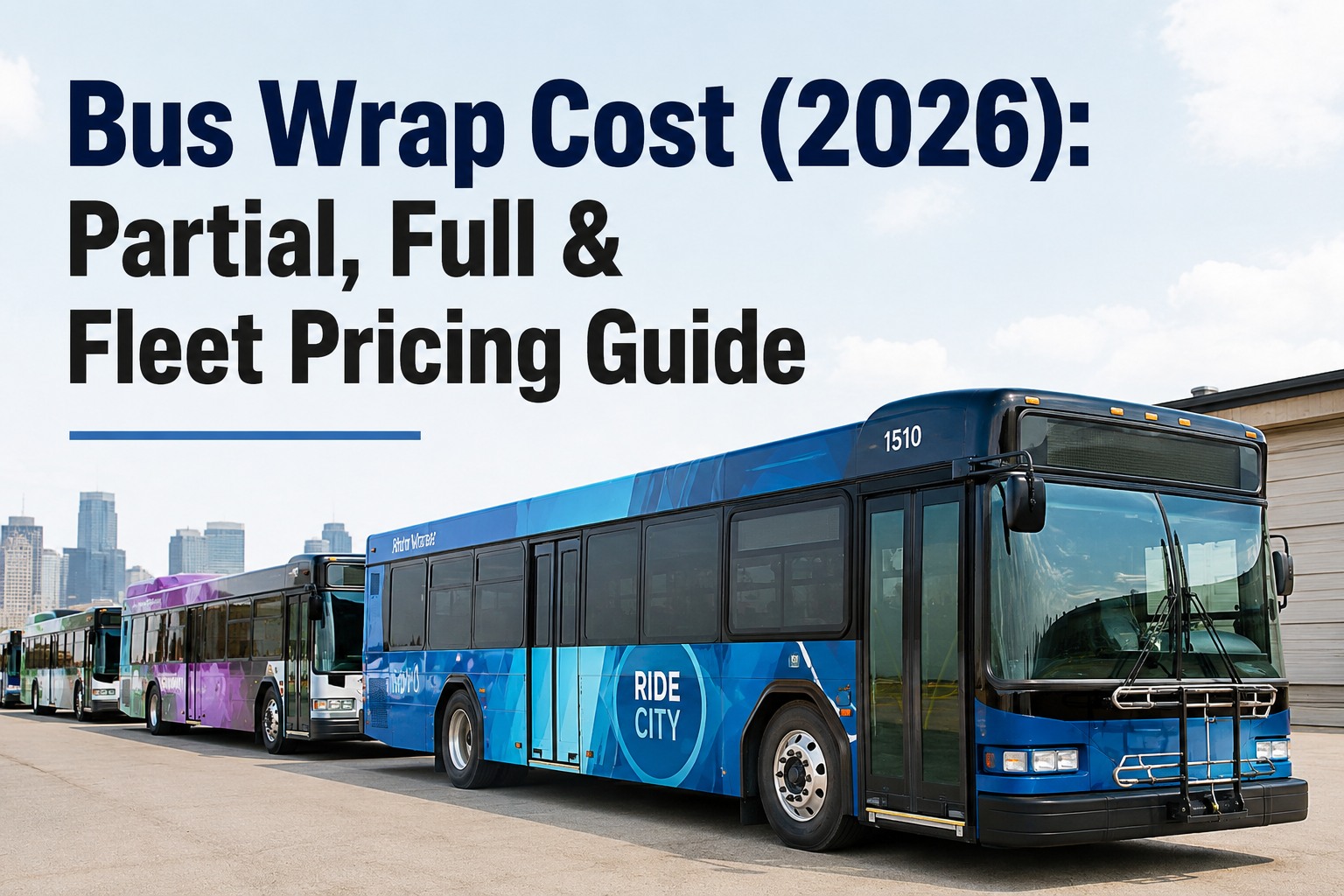
Ask a wrap shop what it costs to wrap a bus and the first answer is always "depends." That's true -- but the ranges are actually narrower than most fleet managers think. This is a straight-forward pricing walkthrough for school buses, transit buses, motorcoaches, and mini buses, with real 2026 numbers, wrap-vs-paint math, and the piece most guides skip: how to track wraps as a fleet asset once they're installed. See wrap warranty and re-wrap tracking in BusCMMS → book a 20-min demo.
Bus Wrap Cost: Partial, Full & Fleet Pricing
Real cost ranges by bus type, wrap coverage, and materials -- plus the wrap-vs-paint math and the asset-tracking angle nobody talks about.
Full Wrap vs Partial Wrap vs Decals
3 coverage levels. 10x cost spread.
Decals + Logo Only
- Door logos, safety text, contact info
- 4–10 sqft coverage
- 2–4 hour install
- Fastest option for basic branding
Partial Wrap
- Side panels, rear, or above beltline
- 40–150 sqft coverage
- 15–40 hour install
- Common formats: Full Ribbon, Back Graphics
Full Wrap (King Kong)
- Both sides + front + rear (no roof)
- 200–300 sqft coverage
- 40–80 hour install
- Highest visual impact, longest install window
The industry shorthand: "King Kong" covers both sides, front, and rear. "Queen Kong" is both sides only. "Full Ribbon" is the belt-line-up band on both sides. Knowing the format names cuts quote turnaround by half.
The 6 Factors That Drive Your Quote
Same bus, same shop -- your quote can swing $4K on these.
Bus Size & Surface Area
A 25-ft mini bus is ~140 sqft. A 40-ft transit is ~280 sqft. Motorcoach can exceed 320 sqft.
Vinyl Grade & Laminate
3M IJ180Cv3 or Avery MPI 1105 cast vinyl at 2.5–3.0 mil, with UV laminate. Cheaper calendared vinyl fails faster.
Design Complexity
Full-color gradients, metallics, and specialty finishes add material waste and install time. Solid colors install faster.
Surface Prep Needs
Old paint, corrosion, or existing wrap removal all add hours. Bus body must be clean and undamaged for warranty.
Install Location
Shop install is cheapest. On-site install at the depot adds mobilization fees. Rural areas run 10–25% higher.
Fleet Volume Discount
5+ buses: 10–15% off. 20+ buses: 15–25% off. Multi-year re-wrap commitments unlock the deepest pricing.
Fleet quotes get sharper when the shop sees historical wrap data per bus. See wrap history logged per VIN in BusCMMS → book a demo.
Wrap vs Paint: The 10-Year Math
Not the same tool. Not the same job. Not the same cost.
Vinyl Wrap
- Lifespan: 3-5 yrs (7 with premium laminate)
- Removal: Yes, $500–$2,000
- Design change: Re-wrap only
- Protects paint: Yes
- 10-yr cost: ~$20–$25K (2 cycles)
Full Repaint
- Lifespan: 8-12 yrs
- Removal: No, sanded/repainted
- Design change: Full repaint
- Protects paint: Is the paint
- 10-yr cost: ~$8–$15K (1 cycle)
The honest verdict
Paint wins on straight 10-year cost. Wrap wins on flexibility, protection, and downtime -- a wrap installs in a week; a full repaint pulls the bus out of service for 3-4 weeks. Fleets with rotating branding (school year themes, sponsorships, campaign changes) almost always come out ahead with wraps. Fleets with static livery for a decade come out ahead with paint.
Wrap or paint, the 10-year math needs real fleet data underneath it. See your fleet's actual branding cost per bus → book a demo.
Lifespan & Warranty: What Actually Fails
Manufacturer warranties are 3 years. Field lifespan is different.
UV Fade
Reds and yellows fade first. Southern-tier fleets see it by year 3; northern fleets stretch to year 5.
Edge Lift
Panel edges lift near door seals, mirror mounts, and wheel wells. Pressure washer damage accelerates it.
Impact Damage
Road debris, low-hanging branches, and scraping tears sections. Spot patches are common but visible.
Ghosting on Removal
Old wrap left past year 5 leaves adhesive residue that adds $500–$1K to re-wrap prep.
Track install date, warranty window, and damage events per bus. See wrap lifecycle logged in your fleet dashboard → book a demo.
The Piece Every Wrap Guide Skips: Wraps Are Assets
Install cost is one number. Fleet management is what determines the second.
What most fleets do NOT track
Install Date Per Bus
Fleets know "when we got the wraps done." Almost nobody knows the per-VIN install date -- so warranty windows expire silently.
Warranty Expiration Alerts
Manufacturer warranties end at year 3. Damage after that is out of pocket. Alerts 60 days before expiration = real savings.
Damage Event Log
Every scrape, tear, or peel logged with photo and bus VIN. Warranty claims need documentation the day they happen.
Re-Wrap Schedule
Rolling schedule tied to each bus's install date, not the fleet average. Batches of buses get replaced ahead of failure, not after.
Vendor Performance
Which shop's wraps last longest? Which shop had the most peel-back returns? BusCMMS tracks vendor by outcome per install.
Total Wrap Spend Per Bus
Install + patches + removal + re-wrap over 10 years. The number that tells you if wraps beat paint for your specific operation.
Wraps are the most-visible, least-tracked asset in your fleet. Sign up free and log your first wrap install today →
Procurement Playbook: How Fleets Get 15% Cheaper Quotes
5 moves that separate the fleets that overpay from the ones that don't.
- 1
Ask for Sqft-Based Pricing
Not per-bus totals. $12/sqft installed is comparable across shops; "$8,500 per bus" isn't. Lock the unit rate first.
- 2
Specify Vinyl Grade in Writing
3M IJ180Cv3 or Avery MPI 1105, 2.5-3.0 mil, with matching UV laminate. Vague specs = cheap vinyl = year-2 fade.
- 3
Batch the Fleet Install
10 buses at once beats 10 buses over 6 months. Shop mobilization and design amortize. Real fleet discounts kick in at 5+ units.
- 4
Negotiate the Removal Clause
Include end-of-life removal at fixed rate in the original contract. Shops charge full retail for removal 3 years later if not pre-negotiated.
- 5
Log Everything Per VIN
Install date, warranty terms, spec sheet, shop contact. Not knowing which shop did which bus is what makes year-4 warranty claims impossible.
Where BusCMMS Fits Your Wrap Program
Six ways wrap data lives inside the maintenance system.
Install Date + Warranty Alerts
Every wrap tied to a VIN. Alerts 60 days before warranty ends so claims get filed in time.
Damage Event Log
Scrape, tear, or peel = photo + work order attached to that bus. Warranty claim ready in one click.
Vendor Performance Tracking
Which shop's wraps last longest per your fleet. Real data replaces sales pitches for the next procurement.
Re-Wrap Scheduling
Buses batched for re-wrap by install-date cohort. No more scrambling at year 5.
Total Wrap Cost Per Bus
Install + patches + removal + re-wrap rolled up per VIN. Board sees the real per-bus branding cost.
Spec Sheet Storage
Vinyl grade, laminate, color code, and shop contact stored per bus. Year-4 warranty claim doesn't need archaeology.
We wrapped 22 buses in 2022. Fast-forward to 2025 -- one shop went out of business, we couldn't find our spec sheet for a warranty claim, and eight buses started fading at different rates because we couldn't tell which ones had premium laminate and which didn't. Total mess. Now every wrap install is a record in the CMMS. Photos on day one, warranty date on the calendar, shop contact locked in. When we re-wrapped 14 of them last year, we got a 22% discount because we could show the bidder our exact install history.
Still deciding wrap vs paint? The real question isn't which one -- it's whether you're tracking either as a fleet asset. See wrap + livery tracking in 20 min →
Frequently Asked Questions
How much does it cost to wrap a bus in 2026?
A full vinyl wrap on a standard 35-40 ft bus (excluding the roof) typically runs $8,000-$13,000, with most Type C school bus projects landing between $4,200 and $8,000 depending on size and design complexity. Motorcoaches and larger transit buses can reach $15,000-$20,000 for high-end wraps with premium laminate. Partial wraps -- side panels, rear, or above-beltline "Full Ribbon" formats -- run $500-$5,000. Simple decals and logos for basic branding start around $300-$800 per bus. Per-square-foot pricing generally falls between $8 and $20 installed, with a standard bus needing 200-300 sqft of exterior coverage.
How long does a bus wrap last?
Premium cast vinyl wraps (3M IJ180Cv3, Avery MPI 1105) at 2.5-3.0 mil thickness with UV-protective laminate typically last 3-5 years in standard service, and up to 7 years with proper care and covered storage. Southern-tier fleets see faster UV fade -- reds and yellows go first, often by year 3. Northern fleets stretch closer to year 5. Manufacturer warranties are usually 3 years. Field lifespan depends heavily on pressure-washer avoidance, edge-seal maintenance, and impact protection. Wraps left past year 5 often leave adhesive ghosting that adds $500-$1,000 to re-wrap prep.
What's the difference between a full wrap and a partial wrap?
A full wrap (industry shorthand "King Kong") covers both sides, front, and rear of the bus -- typically 200-300 sqft of vinyl and 40-80 hours of installation. A partial wrap covers a subset: "Queen Kong" is both sides only; "Full Ribbon" is the belt-line-up band on both sides; back graphics only covers the rear panel. Partial wraps run 40-150 sqft of coverage and 15-40 hours of install. Full wraps cost $8K-$15K on standard buses; partial wraps cost $500-$5K. The right choice depends on brand visibility needs and budget -- full wraps deliver the strongest visual impact and paint protection; partial wraps get more units done for the same budget.
Is wrapping a bus cheaper than repainting?
Over a single install, wrapping and repainting are surprisingly close in cost -- both land in the $8K-$15K range for a standard bus. Over 10 years, paint typically wins on straight cost because it lasts 8-12 years vs 3-5 for wraps, so most fleets do only one repaint cycle in that window versus two wrap cycles. Wraps win on flexibility, install speed (a week vs 3-4 weeks for full repaint), and paint protection underneath. Fleets that change branding, run sponsorships, or want the bus back on the road fast almost always come out ahead with wraps. Fleets with static livery for a decade often come out ahead with paint.
Do fleets get discounts on wrap pricing?
Yes -- fleet volume is the single biggest lever on unit price. Shops typically offer 10-15% discount on 5+ buses committed at once, and 15-25% on 20+ buses. Multi-year re-wrap commitments unlock the deepest pricing because shops can amortize their design, mobilization, and material orders across a longer window. Two other levers that get overlooked: asking for square-foot-based unit pricing (comparable across bidders) rather than per-bus totals, and pre-negotiating end-of-life removal in the original contract. Removal after 3 years at retail rate can run $500-$2,000 per bus -- fleets that lock that in upfront often cut it in half.